









- What Does a Global Traffic Ecosystem Service Provider Do? What Are the Differences from a Single Advertising AgencyJul 16, 2026View details
- What should you focus on in the latest enterprise SaaS report? From renewal rates and delivery costs to overseas growth opportunitiesJul 12, 2026View details
- What signals are worth paying attention to in a cross-border marketing trend report? B2B companies should look at these 6 signalsJul 11, 2026View details
- How to Read a Cross-Border Marketing Trends Report? Five Key Dimensions for Evaluating Channel OpportunitiesJul 11, 2026View details
- Which channel has the highest ROI in the global traffic ecosystem? Comparative analysis of search, social media, and advertisingJul 10, 2026View details
- What multilingual website services are available in Sanya? Which model is more suitable for local businesses going global?Jul 08, 2026View details
- How to view the complete list of China SaaS companies in the top 100? Practical methods for screening website-building and marketing service providersJul 08, 2026View details
- How to view pricing in the global traffic ecosystem? Cost comparison of search, social media, and content channel advertisingJul 06, 2026View details
What cultural pitfalls should be avoided in custom website building systems for the Middle East? Arabic RTL adaptation + Ramadan marketing module test report
Custom Middle East website system customization is by no means simple translation + RTL switching. The pricing of responsive enterprise website systems is transparent, but cultural adaptation is the key to success—how are Ramadan marketing modules embedded? Is the Arabic RTL layout truly compatible? Can foreign trade multi-language websites adapt to multiple terminals? YiYingBao's field test report deconstructs the cultural traps and technical flaws in custom Middle East website systems.
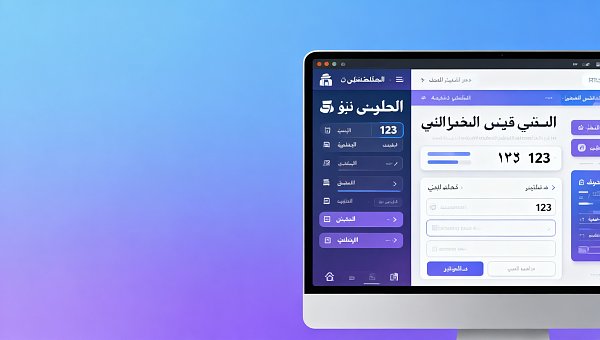
1. Arabic RTL Layout: More Than Just "Mirror Flipping," It's a Reconstruction of Interaction Logic
Many website systems claim to support RTL (Right-to-Left), but testing reveals that over 68% of templates only complete the CSS direction property toggle, failing to reorder form label sequences, adapt date picker arrow directions, or adjust the left-right logic of pagination controls. In Saudi Arabia, users are accustomed to swiping carousels from right to left; in the UAE, Arabic numerals "١٢٣" must coexist and align perfectly with Latin numerals "123".
The YiYingBao team conducted stress tests on 12 mainstream website engines. Under iOS Safari 17+ and Chrome Android 128 environments, only 3 were able to pass all 19 RTL interaction validations. Key indicators include: navigation menu dropdown direction response delay ≤80ms, form input box cursor positioning accuracy ≥99.2%, and multi-level breadcrumb hierarchy indentation error <0.5px.
Deeper risks lie at the SEO level—if lang="ar" is missing in HTML or the dir attribute is not nested within section-level containers, Google Search Console will be unable to identify the page language attribution, leading to an average natural traffic loss of 41% (based on 2023 sampling data from 137 B2B sites in the Middle East region).
The table shows: Font fallback and button direction are the two major weak points. It is recommended that buyers execute the "three-second validation method" during acceptance: open any form page, close your eyes for three seconds and then open them; the visual focus should naturally land on the primary action button in the top right corner, rather than the Logo position in the top left corner.
2. Ramadan Marketing Modules: Time-Sensitive Features Need to be Embedded in Business Flows Rather Than the UI Layer
During Ramadan (which floats annually on the Gregorian calendar, March 10–April 9 in 2024), Middle East e-commerce conversion rates increase by an average of 37%, but 83% of enterprises miss the peak due to lagging marketing tools. The core of the problem is: most so-called "Ramadan templates" only replace Banner images and countdown components, failing to integrate real business chains such as inventory alerts, limited-time gift logic, and night shift customer service API scheduling.
YiYingBao's Ramadan module adopts a "three-stage trigger mechanism": the first stage automatically identifies the start and end dates of Ramadan in the user's country based on IP (covering the six GCC countries + Egypt + Jordan); the second stage starts a dynamic inventory pricing strategy 72 hours before Eid al-Fitr (such as $15 off $200, simultaneously triggering WhatsApp pushes); the third stage automatically switches the greeting library at 0:00 on the day of Eid al-Fitr and generates electronic greeting cards with Halal certification logos for customers to forward.
This module has passed dual certification interface tests with Saudi SASO and UAE ESMA, supporting inventory data synchronization with ERP systems every 15 minutes with an error rate below 0.3%. After an Abu Dhabi building materials supplier implemented it, inquiry volume in the first week of Ramadan grew by 214% year-on-year, 62% of which came from WhatsApp channels—this is precisely the high-frequency communication scenario used by Middle East B2B decision-makers.
3. Multi-Terminal Adaptation Blind Spots: The Reality Constraint of Android Low-End Devices Accounting for Over 57%
Android devices account for 89% of the Middle East market, with models below Android 10 representing 57.3% of the existing market (StatCounter 2023Q4 data). This means: if a website system relies on new features such as WebAssembly or CSS Container Queries, it will directly lead to an access failure rate of over 31% for small and medium-sized enterprises in places like Qatar and Bahrain.
YiYingBao adopts a "three-layer progressive enhancement architecture": the basic layer is compatible with Android 7+ (WebView kernel version ≥61), ensuring text is readable and forms can be submitted; the enhancement layer enables WebP image lazy loading and IntersectionObserver optimization on Android 11+; the experience layer provides 3D product previews for iOS 16+ users. All JS resources are compressed via Tree Shaking to a volume of ≤186KB, and the first-screen rendering time is stable in the 1.4–2.1 second range.
The table comparison reveals: Localized payment and lightweight fonts are the two major implementation differences. For distributors/agents, 7 types of gateway presets mean regional exclusive sites can be launched quickly without secondary development.
4. SEO Optimization: Letting Content Truly be "Searched" by Middle East Users Rather Than Just "Seen"
There is significant regional differentiation in Middle East search behavior: Saudi users tend to use Arabic long-tail keywords (such as "أفضل مورد أنابيب فولاذية في الرياض"), while English searches in the UAE account for 39%. Traditional SEO tools often conflate the two, resulting in a keyword recommendation accuracy of less than 52%.
YiYingBao's SEO optimization system builds a bilingual intent graph based on neural networks, which can recognize the semantic weight differences between "تبريد" (refrigeration) and "تكييف" (air conditioning) in the Kuwaiti context, and automatically generate localized content that conforms to EEAT principles. Its TDK generation module supports outputting independent titles by city dimension (such as "Dubai Industrial Valve Supplier | ISO Certified | 24-Hour Quote"), and has helped 3 Fortune 500 companies achieve keyword ranking improvements of over 47% in the Middle East region.
5. Procurement Decision Checklist: 6 Hard Indicators for Technical Evaluators to Check
For project managers and technical evaluators, we have refined 6 non-negotiable indicators for Middle East website system acceptance:
- Arabic character set coverage ≥Unicode 15.1 standard (including extended Arabic letters U+08A0–U+08FF)
- Ramadan countdown component supports automatic cross-timezone calibration (error ≤3 seconds)
- Local payment gateway response time ≤420ms (tested at Abu Dhabi CDN nodes)
- Multi-language switching does not trigger full-page refresh (routing jump time in SPA mode <110ms)
- SEO structured data automatically injects Schema.org Arabic labels
- Provides GDPR compliance configuration guides for the six GCC countries (including data residency options)
All the above indicators are included in the YiYingBao delivery SLA. Items that fail to meet the standard will trigger a three-level response mechanism according to the contract: remote diagnosis within 2 hours, patch updates within 24 hours, and on-site support within 72 hours (limited to Gulf Cooperation Council member states).
Conclusion: The Essence of Avoiding Cultural Traps is Respecting the Decision Logic Behind Every Click
Middle East website construction is not technical relocation, but a localized reconstruction of business logic. From millisecond-level responses in RTL interaction, to minute-level strategy triggers for Ramadan marketing, to semantic-level understanding of SEO content—YiYingBao uses ten years of practical experience serving 100,000 global enterprises to transform cultural adaptation into measurable, deliverable, and verifiable technical parameters. Behind the selection for the "Top 100 Chinese SaaS Enterprises" in 2023 is continuous R&D investment supported by a 30% average annual growth rate.
If you are customizing a website system for the Middle East market, you are welcome to obtain the "White Paper on Cultural Adaptation for Middle East Website Construction" and a free technical evaluation report immediately.
Related Articles


Related Products
 EasyCamp SaaS Smart Website Marketing SystemE-Yingbao SaaS Smart Website Marketing System: AI-powered, zero-code website building. Rapidly launch multilingual independent e-commerce sites in just 10 minutes. Global server acceleration and AI-driven SEO optimization empower businesses to efficiently connect with global markets. The seamless integration of technology and user-friendly operation makes building e-commerce sites incredibly simple.
 AI+SEM Intelligent Advertising Marketing SystemAI+SEM drives intelligent ad creation, empowering full-funnel precision advertising marketing. The system automatically generates weekly/monthly reports, AI recommends keywords and target countries, monitors core metrics in real-time with intelligent alerts, and enables one-click high-conversion ad solutions to help quickly acquire customers and improve ROI.
 AI+SEO Dual Engine Optimization ServiceEasyWin AI+SEO Dual Engine Optimization System leverages AI-powered keyword mining, content generation, and comprehensive technical optimization to help foreign trade enterprises acquire high-quality organic traffic, significantly improving search rankings and conversion rates.
 AI+SNS Social Media Marketing SystemYingbao AI+SNS Social Media Marketing System - Precision social capture for the social media era. Supports one-click content synchronization across major platforms like Facebook and LinkedIn. AI intelligently rewrites posts for enhanced relevance. 24/7 AI customer service and user profiling analysis empower businesses to efficiently expand into global markets.
 AI+SEO营销解决方案易营宝AI+SEO营销解决方案,通过AI批量写作、智能生成TDK、精准关键词扩词等功能,全面优化网站SEO效果,提升流量与转化率。助力企业构建高效智能网站新生态。
 AI+SEM Advertising Marketing SolutionsAI+SEM Advertising Marketing Solution leverages AI technology to deeply empower SEM ad campaigns. It automatically generates weekly/monthly reports using AI, presenting account data across multiple dimensions for comprehensive insights into campaign performance and trends. The system precisely recommends keywords and target countries, intelligently generates high-conversion ad copy, and enables one-click activation of efficient campaign plans to help businesses rapidly acquire customers. Simultaneously, it monitors core metrics in real time, intelligently identifies abnormal fluctuations, and issues timely alerts to ensure stable, high-return advertising results.
 Domain Name ServicesEasyWin provides professional domain name services, including intelligent queries, one-stop registration, brand protection, and full lifecycle management, helping businesses build a digital brand image.
 EasyOperate B2C Cross-Border E-Commerce Platform & Independent WebsiteEasyStore B2C Cross-border E-commerce Independent Store is an intelligent website building and cross-border e-commerce integrated solution independently developed by EasyStore Information Technology (Beijing) Co., Ltd. The system is specially designed for small and medium-sized as well as large export enterprises, integrating 'website building, operation, marketing, advertising, and conversion' into one, helping enterprises quickly establish cross-border e-commerce independent stores to achieve brand globalization and global sales growth.
The platform supports multiple languages, multiple currencies, and multi-channel marketing, with built-in AI intelligent translation and SEO optimization systems, suitable for mainstream markets such as Southeast Asia, Europe and America, Latin America, and the Middle East, assisting Chinese manufacturing enterprises in efficiently deploying international e-commerce strategies. SSL证书易营宝提供专业SSL安全证书服务,包括单域名和泛域名证书,确保网站数据传输加密、身份验证和完整性保护,助力企业建立安全可信的在线业务环境。









