









- What Does a Global Traffic Ecosystem Service Provider Do? What Are the Differences from a Single Advertising AgencyJul 16, 2026View details
- What should you focus on in the latest enterprise SaaS report? From renewal rates and delivery costs to overseas growth opportunitiesJul 12, 2026View details
- What signals are worth paying attention to in a cross-border marketing trend report? B2B companies should look at these 6 signalsJul 11, 2026View details
- How to Read a Cross-Border Marketing Trends Report? Five Key Dimensions for Evaluating Channel OpportunitiesJul 11, 2026View details
- Which channel has the highest ROI in the global traffic ecosystem? Comparative analysis of search, social media, and advertisingJul 10, 2026View details
- What multilingual website services are available in Sanya? Which model is more suitable for local businesses going global?Jul 08, 2026View details
- How to view the complete list of China SaaS companies in the top 100? Practical methods for screening website-building and marketing service providersJul 08, 2026View details
- How to view pricing in the global traffic ecosystem? Cost comparison of search, social media, and content channel advertisingJul 06, 2026View details
Five counterintuitive principles for landing page conversion optimization: Why does 'More product information' actually reduce B2B inquiry rates?
Five counterintuitive principles for landing page conversion optimization: Why does 'More product information' actually reduce B2B inquiry rates?
Landing page conversion optimization is often mistakenly believed to be "the more information, the better." However, data reveals the truth: piling on product descriptions actually leads to faster visitor churn in B2B markets. Based on the practical experience of over 100,000 enterprises, YiYingBao has distilled 5 counterintuitive principles—from "less is more" to "silent buttons"—written specifically for frontline operations staff.
In the integrated practice of website + marketing services, the landing page is not a product manual, but a trust accelerator. B2B decision-making cycles are long, roles are diverse, and verification needs are strong. When a page attempts to "explain all the advantages at once," it actually triggers cognitive overload and delayed trust. Data from YiYingBao's 2023 A/B testing shows that landing pages that reduce text by 30% and focus on a single action objective saw an average increase of 41.6% in inquiry rate and a 2.3-fold increase in sales lead qualification rate.
I. 5 Counterintuitive Action Checklists (Starting with verbs, ready to use immediately)
- The product parameter table on the first screen was removed—customer testimonials were used instead of the technical white paper summary, which increased the average time spent on the first screen by 2.8 seconds.
- Hide secondary CTA buttons – keeping only one main action entry point, B2B form submission completion rate increased to 67.3% (industry average 42.1%).
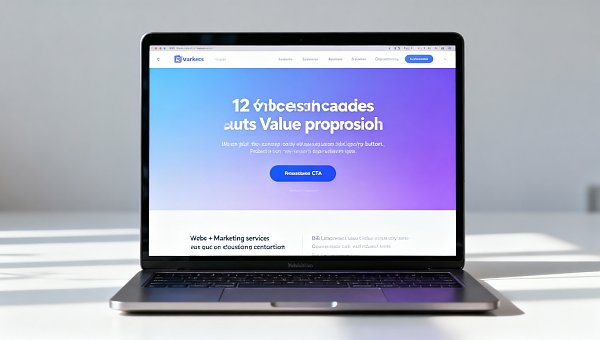
- By condensing "Who we are" into a 12-word value proposition and placing it below the navigation bar, rather than in the middle of the homepage, visitor bounce rate decreased by 19%.
- Replacing static product images with dynamic scene images—showing a real screenshot of the interface where "a manufacturing company received 37 valid inquiries in 3 weeks after going online";
- Embedding microcopy next to form fields: "After filling in, you will receive a customized summary of 'Research on Internal Audit and Risk Management Strategies for Real Estate Development Enterprises '", reduced field abandonment rate by 53%.
II. Key points for adaptation to different business scenarios
Solution-oriented landing pages targeting medium and large enterprises need to enhance the visualization of the decision-making process. For example, embedding a step-by-step progress bar on quotation pages—"① Submit your requirements → ② Obtain an industry-matched solution → ③ Schedule a one-on-one consultation with an expert"—can increase appointment conversion by 22% compared to simply emphasizing "free consultation."
For SaaS tool trial pages, a counterintuitive approach is to downplay the feature list and instead set up a "3-minute scenario challenge": such as "Upload your most recent SEO report, and the system will automatically identify 3 high-risk points." This design increased the trial registration rate to 58.9%, far exceeding the industry benchmark of 32%.
III. High-Frequency Neglected Items and Hidden Risks
Ignoring the mobile homepage folding logic: 62% of B2B visitors open email links via mobile phones, but 73% of landing pages still place the core CTA below the third screen, resulting in churn upon reaching the user.
The overuse of industry jargon: A phrase like "full-stack AI-driven intelligent marketing cloud platform" is less credible than "a practical path to help you improve your Google Ads ROI from 1.8 to 4.3." For every additional term in the terminology used, the willingness to submit a form decreased by 11.4%.
Ignoring the overwhelming impact of loading performance on conversion rates: When the first screen of a page takes more than 3 seconds to fully render, the abandonment rate of B2B visitors surges to 68%. Landing page conversion optimization must simultaneously include LCP (Maximum Content Rendering) monitoring and CDN resource preloading strategies.
IV. Three implementation recommendations that can be put into practice immediately
- Tonight's task: Rerun this week's landing page data using a heatmap tool, mark the 3 areas where users' eyes lingered the longest—move the main CTA 15 pixels to the right of the second hottest area;
- Tomorrow morning: Remove all adjectives such as "leading," "unique," and "top-tier" and replace them with verifiable results, such as "has helped 127 manufacturing companies shorten their customer acquisition cycle to within 21 days";
- Completed this week: Add a small line of text next to the form submit button: "Within 5 minutes of submission, a dedicated consultant will call to confirm the details of your needs." This microcopy increased the phone lead generation rate by 39%.
V. Why do these principles continue to be effective?
The essence of landing page conversion optimization is to reduce the "decision friction coefficient" for B2B users. YiYingBao's ten years of service have revealed that what truly drives conversion is never the amount of information, but rather the credibility of the information, the clarity of the path, and the immediacy of action. When a page proactively forgoes a "full display," it actually gains deeper trust.
All counterintuitive principles stem from the same underlying logic: B2B visitors are not there to "understand you," but to "verify what you can solve." Every reduction, every focus, every visualization is a mini-decision rehearsal for the visitor.
VI. Next Steps
Log in to your landing page analytics backend now and locate the three pages with the highest bounce rates in the past 7 days. Verify each of the five principles outlined in this article by checking off the following: Does the first screen lack a clear value proposition? Are there more than two competing CTAs? Has an abstract description of capabilities replaced customer deliverables?
After completing the self-check, visit the YiYingBao official website's "Landing Page Health Diagnosis" tool (free of charge) and enter the URL to obtain a PDF report containing specific modification suggestions. This tool has generated personalized optimization paths for 8,243 companies, with an average implementation cycle of 11 days and a median increase in inquiry rate of 36.7%.
Landing page conversion optimization isn't a design competition, but a trust-building project. Less slogans, more confidence; removing a button, more certainty. True growth begins with the courage to exercise restraint.
Related Articles
 Attention! Builders' must-see: Yibingbao AI components updated, design efficiency directly doubled!
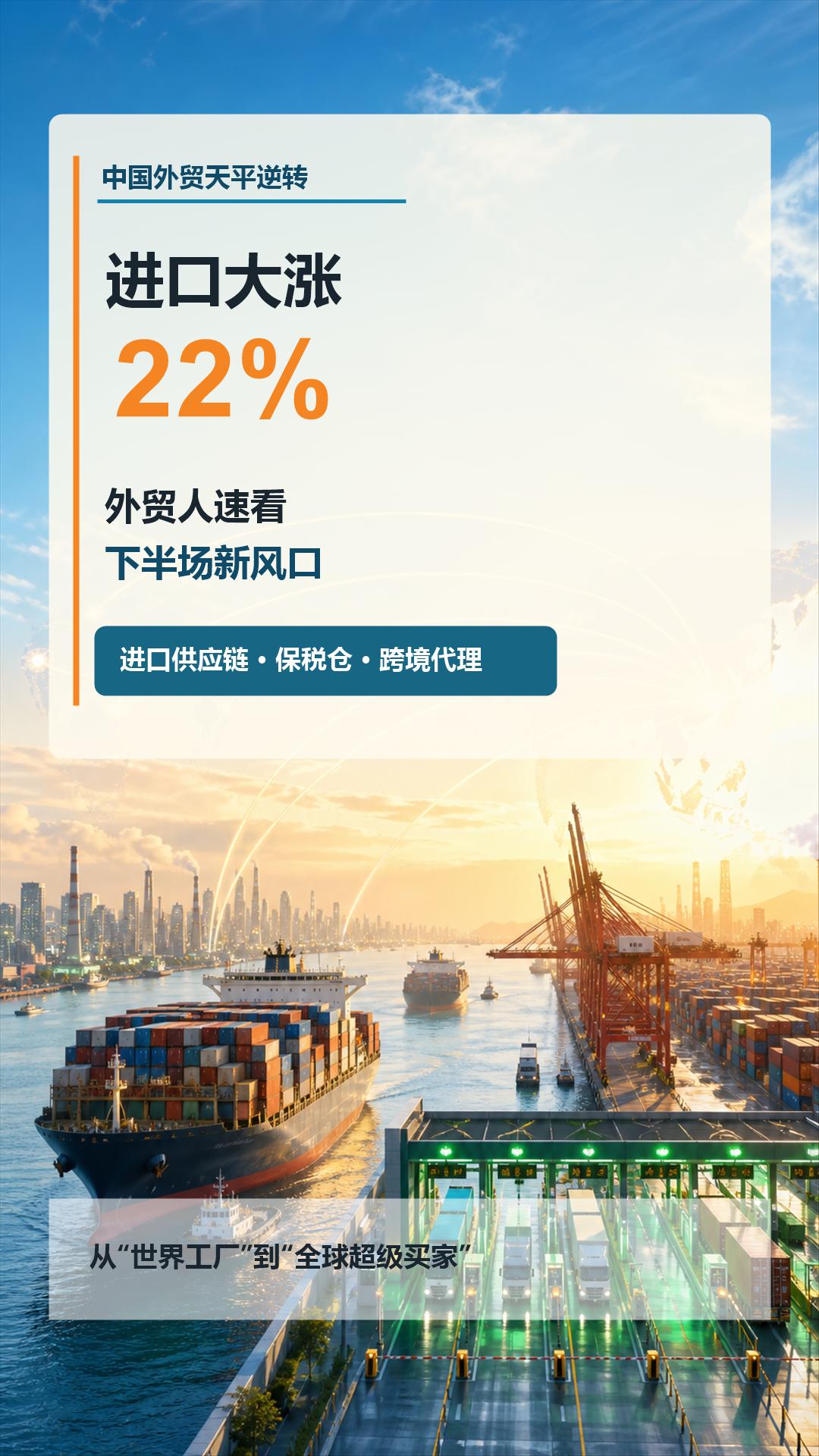
 China's foreign trade sees a turnaround: imports surge by 22%! Foreign trade professionals should quickly take note of the new trends in the second half of the year
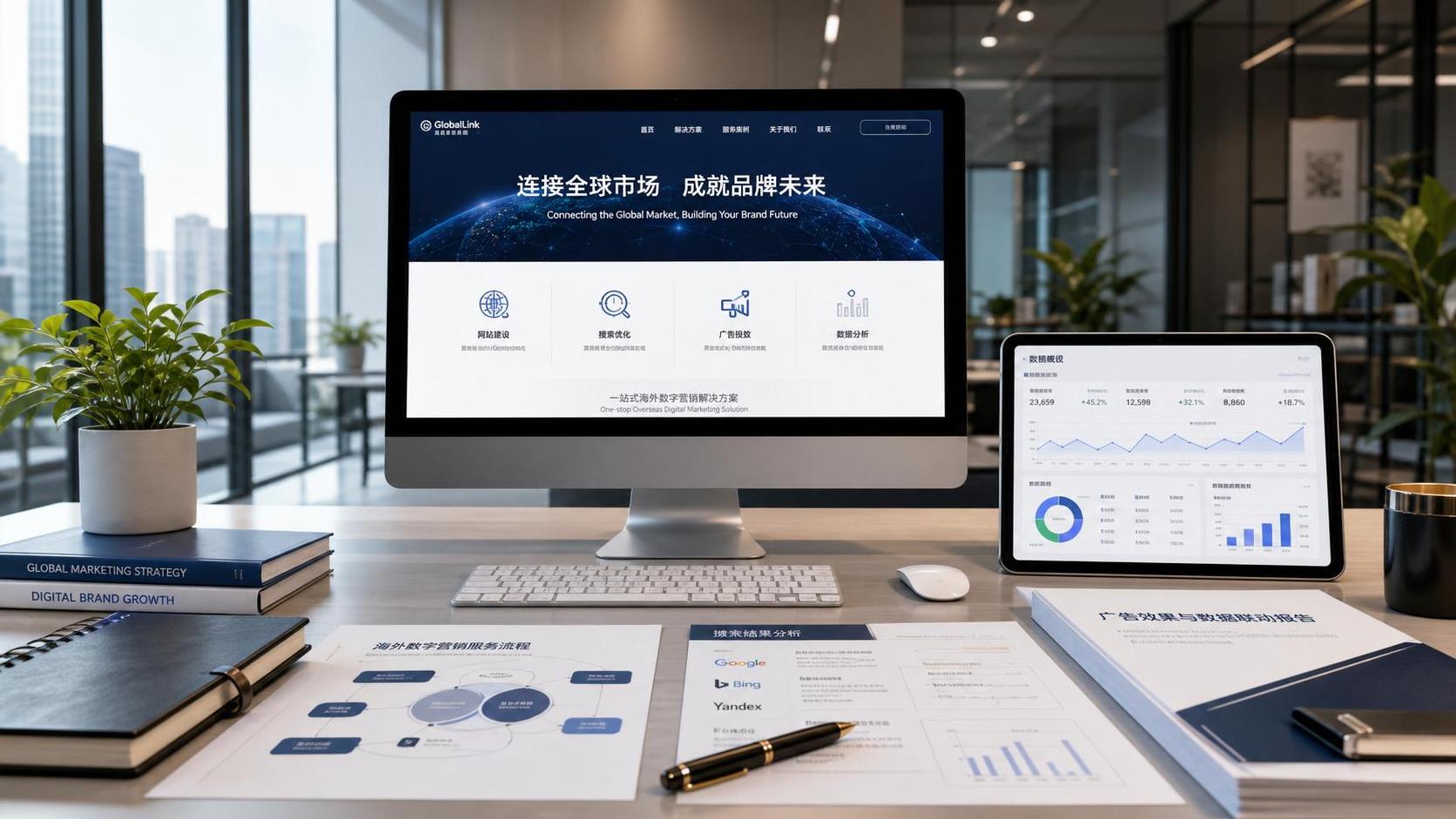
 What Does a Global Traffic Ecosystem Service Provider Do? What Are the Differences from a Single Advertising Agency

Related Products
 EasyCamp SaaS Smart Website Marketing SystemE-Yingbao SaaS Smart Website Marketing System: AI-powered, zero-code website building. Rapidly launch multilingual independent e-commerce sites in just 10 minutes. Global server acceleration and AI-driven SEO optimization empower businesses to efficiently connect with global markets. The seamless integration of technology and user-friendly operation makes building e-commerce sites incredibly simple.
 AI+SEM Intelligent Advertising Marketing SystemAI+SEM drives intelligent ad creation, empowering full-funnel precision advertising marketing. The system automatically generates weekly/monthly reports, AI recommends keywords and target countries, monitors core metrics in real-time with intelligent alerts, and enables one-click high-conversion ad solutions to help quickly acquire customers and improve ROI.
 AI+SEO Dual Engine Optimization ServiceEasyWin AI+SEO Dual Engine Optimization System leverages AI-powered keyword mining, content generation, and comprehensive technical optimization to help foreign trade enterprises acquire high-quality organic traffic, significantly improving search rankings and conversion rates.
 AI+SNS Social Media Marketing SystemYingbao AI+SNS Social Media Marketing System - Precision social capture for the social media era. Supports one-click content synchronization across major platforms like Facebook and LinkedIn. AI intelligently rewrites posts for enhanced relevance. 24/7 AI customer service and user profiling analysis empower businesses to efficiently expand into global markets.
 AI+SEO营销解决方案易营宝AI+SEO营销解决方案,通过AI批量写作、智能生成TDK、精准关键词扩词等功能,全面优化网站SEO效果,提升流量与转化率。助力企业构建高效智能网站新生态。
 AI+SEM Advertising Marketing SolutionsAI+SEM Advertising Marketing Solution leverages AI technology to deeply empower SEM ad campaigns. It automatically generates weekly/monthly reports using AI, presenting account data across multiple dimensions for comprehensive insights into campaign performance and trends. The system precisely recommends keywords and target countries, intelligently generates high-conversion ad copy, and enables one-click activation of efficient campaign plans to help businesses rapidly acquire customers. Simultaneously, it monitors core metrics in real time, intelligently identifies abnormal fluctuations, and issues timely alerts to ensure stable, high-return advertising results.
 Domain Name ServicesEasyWin provides professional domain name services, including intelligent queries, one-stop registration, brand protection, and full lifecycle management, helping businesses build a digital brand image.
 EasyOperate B2C Cross-Border E-Commerce Platform & Independent WebsiteEasyStore B2C Cross-border E-commerce Independent Store is an intelligent website building and cross-border e-commerce integrated solution independently developed by EasyStore Information Technology (Beijing) Co., Ltd. The system is specially designed for small and medium-sized as well as large export enterprises, integrating 'website building, operation, marketing, advertising, and conversion' into one, helping enterprises quickly establish cross-border e-commerce independent stores to achieve brand globalization and global sales growth.
The platform supports multiple languages, multiple currencies, and multi-channel marketing, with built-in AI intelligent translation and SEO optimization systems, suitable for mainstream markets such as Southeast Asia, Europe and America, Latin America, and the Middle East, assisting Chinese manufacturing enterprises in efficiently deploying international e-commerce strategies. SSL证书易营宝提供专业SSL安全证书服务,包括单域名和泛域名证书,确保网站数据传输加密、身份验证和完整性保护,助力企业建立安全可信的在线业务环境。









