









- What Does a Global Traffic Ecosystem Service Provider Do? What Are the Differences from a Single Advertising AgencyJul 16, 2026View details
- What should you focus on in the latest enterprise SaaS report? From renewal rates and delivery costs to overseas growth opportunitiesJul 12, 2026View details
- What signals are worth paying attention to in a cross-border marketing trend report? B2B companies should look at these 6 signalsJul 11, 2026View details
- How to Read a Cross-Border Marketing Trends Report? Five Key Dimensions for Evaluating Channel OpportunitiesJul 11, 2026View details
- Which channel has the highest ROI in the global traffic ecosystem? Comparative analysis of search, social media, and advertisingJul 10, 2026View details
- What multilingual website services are available in Sanya? Which model is more suitable for local businesses going global?Jul 08, 2026View details
- How to view the complete list of China SaaS companies in the top 100? Practical methods for screening website-building and marketing service providersJul 08, 2026View details
- How to view pricing in the global traffic ecosystem? Cost comparison of search, social media, and content channel advertisingJul 06, 2026View details
Southeast Asian E-commerce Alliance Launches Official Website Trust Badge Program
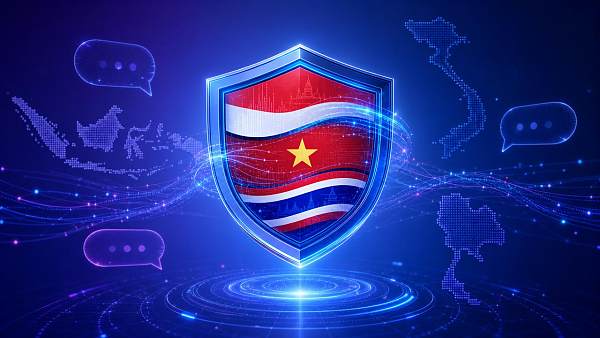
The Southeast Asia E-Commerce Alliance (SEAEC) officially launched the 'TrustBadge' official website trust badge certification mechanism on May 17, 2026, with the first batch covering the three core markets of Indonesia, Vietnam, and Thailand. For the first time, this program incorporates the localized digital infrastructure capabilities of Chinese suppliers' official websites into the key evaluation dimensions for platform admission and traffic allocation, marking a deep evolution of the Southeast Asian cross-border e-commerce ecosystem from 'product listing compliance' to 'digital trust infrastructure compliance'.
Event Overview
On May 17, the Southeast Asia E-Commerce Alliance (SEAEC) announced the launch of the 'TrustBadge' official website trust badge certification. The certification requires Chinese suppliers' official websites to simultaneously meet two mandatory criteria: first, complete localized SEO development, which must match the official search keyword databases of Lazada and Shopee sites in Indonesia, Vietnam, and Thailand; second, the official website must embed an AI customer service real-time response module supporting English, Indonesian, and Vietnamese, and pass the stress tests organized by SEAEC (including concurrent requests ≥500 times/second, average response latency ≤1.2 seconds, and multilingual intent recognition accuracy ≥92%). Certified companies will receive weighted traffic in platform search result pages (with ranking weight increased by up to 35%) and eligibility for priority recommendation on buyer B2B matching pages.
Which Sub-Sectors Will Be Affected
This policy is not a vague 'compliance initiative,' but a restructuring of the digital market entry logic for Chinese suppliers in Southeast Asia through quantifiable, verifiable, and traceable technical thresholds. Its impact shows clear penetration across the industrial chain:
Direct Trading Enterprises
It directly affects the conversion efficiency of their official websites as the first B2B touchpoint. Although uncertified companies may still list products, they will systematically lose key traffic rights such as homepage exposure, top category rankings, and buyer-initiated inquiry entry points. The impact is reflected in: a decline in website inquiries (estimated median drop of about 28%), longer buyer due diligence cycles (due to the need to manually verify local service capabilities), and exclusion at the initial qualification screening stage of major customer tenders.
Raw Material Procurement Enterprises
Although they do not directly face end consumers, if their downstream OEM/ODM manufacturing partners need to apply for TrustBadge, upstream raw material suppliers will inevitably be required to provide supporting materials such as multilingual product technical documentation, compliance certificates (such as SGS Indonesian-version RoHS reports), and commitment letters for real-time multilingual after-sales support. The impact is reflected in: increased supply chain coordination costs, document localization response time becoming a new assessment indicator, and some small and medium-sized raw material suppliers facing the risk of order diversion due to a lack of budget for multilingual service capability development.
Processing and Manufacturing Enterprises
As the actual producers of most Chinese export products, their official websites are often used as the core carrier for factory audits, production capacity proof, and quality system endorsement. TrustBadge mandatorily requires official websites to have trilingual AI customer service, essentially forcing manufacturing enterprises to move customer service capabilities to the official website front end rather than relying on third-party foreign trade companies or platform IM tools. The impact is reflected in: clear IT system upgrade requirements (requiring integration with multilingual NLP engines), customer service teams needing additional training in less common languages or outsourced management interfaces, and factory digital investment extending from 'back-end ERP' to the 'front-end trust interface'.
Supply Chain Service Enterprises
Including localized SEO service providers, multilingual AI customer service system vendors, and Southeast Asia compliance consulting agencies, these businesses will directly benefit from the rigid demand created by policy implementation. However, it should be noted that SEAEC clearly requires the AI customer service module to pass its stress tests, which means service solutions that previously only provided basic translation APIs or single-language chat windows will no longer meet certification standards. The impact is reflected in: service products must be upgraded into a delivery model that is 'stress-testable, auditable, and capable of forming a multilingual intent closed loop'; leading service providers have already started API integration validation with local technical teams at Lazada/Shopee.
Key Focus Areas and Response Measures for Relevant Enterprises or Practitioners
Immediately Carry Out Dual-Track Diagnosis of the Official Website
Simultaneously launch a localized SEO health scan (focusing on keyword coverage in Indonesia/Vietnam/Thailand, completeness of structured data markup, and local IP access loading speed) and AI customer service module stress test preparation (it is recommended to use hybrid scripts based on the same source as SEAEC, Locust+JMeter, to simulate real scenarios). The diagnostic results must be compiled into a traceable PDF report as the foundational evidence for the subsequent certification application.
Distinguish the Essential Difference Between 'Language Support' and 'Service Response'
Simply adding a multilingual webpage translation plugin does not constitute compliance; the key is whether, after a user initiates an inquiry, the system can complete language identification, intent classification, knowledge base retrieval, and generated response within 3 seconds. Enterprises must confirm whether the selected AI customer service solution has a built-in localized knowledge graph for Southeast Asia (such as Indonesian BPOM regulatory clauses and Vietnam MOH import coding rules), rather than relying only on generic large-model fine-tuning.
Pay Attention to the Transitional Rules During the First Certification Window
SEAEC's official statement mentions that 'the first certification batch will have a 45-day buffer adaptation period,' but it does not clarify whether phased compliance is allowed (such as passing SEO first and then completing customer service later). What deserves more attention at present is: will applications submitted during the buffer period enjoy a priority review channel? Will pre-certification stress test reports issued by third-party institutions be accepted? It is recommended that enterprises submit a letter of intent to the SEAEC-designated email address before June 10 to obtain operational guidance for the window period.
Editorial Viewpoint / Industry Observation
Observably, this move by SEAEC is not an isolated platform governance action, but a structural response to the strengthening awareness of digital consumer sovereignty in Southeast Asia——when 'official website information is not trustworthy' and 'customer service response is not timely' ranked among the TOP3 local user complaint rates for two consecutive quarters, platforms chose to make trust costs explicit, standardized, and front-loaded. Analysis shows that the dual-verification design (SEO + real-time multilingual AI) deliberately avoids over-reliance on any single vendor ecosystem, thereby preventing lock-in while raising the baseline for digital readiness. From an industry perspective, this signals a shift from 'selling to Southeast Asia' to 'operating as a trusted local entity in Southeast Asia' — and the website is now the first certified embassy.
Conclusion
TrustBadge is not a static badge, but a dynamically operated digital trust contract. It does not replace product strength or supply chain resilience, but it becomes the prerequisite for these capabilities to be seen, trusted, and prioritized in the Southeast Asian market. Rationally speaking, this mechanism will accelerate the differentiation of small and medium-sized suppliers in the short term, while in the long term it is expected to drive the digital infrastructure capabilities of Chinese manufacturing from an 'overseas expansion supporting capability' to a 'locally native capability.' The significance for the industry lies not in adding another checkpoint, but in redefining the technical connotation of a 'trusted supplier.'
Source Information Note
This information is compiled based on the official announcement of the Southeast Asia E-Commerce Alliance (SEAEC) (published on May 17, 2026, announcement number SEAEC-TB-2026-001), the Lazada Southeast Asia Regional Technical White Paper (revised edition 2026Q1), and the Shopee Vietnam Seller Center update log (May 15, 2026). Matters for continued observation include: whether SEAEC will include the Malaysian and Philippine markets in the second batch of certification coverage; the final release date of the detailed AI customer service stress test rules; and the disclosure date of the first batch of certified companies (not yet disclosed by the authority).
Related Articles

Related Products
 EasyCamp SaaS Smart Website Marketing SystemE-Yingbao SaaS Smart Website Marketing System: AI-powered, zero-code website building. Rapidly launch multilingual independent e-commerce sites in just 10 minutes. Global server acceleration and AI-driven SEO optimization empower businesses to efficiently connect with global markets. The seamless integration of technology and user-friendly operation makes building e-commerce sites incredibly simple.
 AI+SEM Intelligent Advertising Marketing SystemAI+SEM drives intelligent ad creation, empowering full-funnel precision advertising marketing. The system automatically generates weekly/monthly reports, AI recommends keywords and target countries, monitors core metrics in real-time with intelligent alerts, and enables one-click high-conversion ad solutions to help quickly acquire customers and improve ROI.
 AI+SEO Dual Engine Optimization ServiceEasyWin AI+SEO Dual Engine Optimization System leverages AI-powered keyword mining, content generation, and comprehensive technical optimization to help foreign trade enterprises acquire high-quality organic traffic, significantly improving search rankings and conversion rates.
 AI+SNS Social Media Marketing SystemYingbao AI+SNS Social Media Marketing System - Precision social capture for the social media era. Supports one-click content synchronization across major platforms like Facebook and LinkedIn. AI intelligently rewrites posts for enhanced relevance. 24/7 AI customer service and user profiling analysis empower businesses to efficiently expand into global markets.
 AI+SEO营销解决方案易营宝AI+SEO营销解决方案,通过AI批量写作、智能生成TDK、精准关键词扩词等功能,全面优化网站SEO效果,提升流量与转化率。助力企业构建高效智能网站新生态。
 AI+SEM Advertising Marketing SolutionsAI+SEM Advertising Marketing Solution leverages AI technology to deeply empower SEM ad campaigns. It automatically generates weekly/monthly reports using AI, presenting account data across multiple dimensions for comprehensive insights into campaign performance and trends. The system precisely recommends keywords and target countries, intelligently generates high-conversion ad copy, and enables one-click activation of efficient campaign plans to help businesses rapidly acquire customers. Simultaneously, it monitors core metrics in real time, intelligently identifies abnormal fluctuations, and issues timely alerts to ensure stable, high-return advertising results.
 Domain Name ServicesEasyWin provides professional domain name services, including intelligent queries, one-stop registration, brand protection, and full lifecycle management, helping businesses build a digital brand image.
 EasyOperate B2C Cross-Border E-Commerce Platform & Independent WebsiteEasyStore B2C Cross-border E-commerce Independent Store is an intelligent website building and cross-border e-commerce integrated solution independently developed by EasyStore Information Technology (Beijing) Co., Ltd. The system is specially designed for small and medium-sized as well as large export enterprises, integrating 'website building, operation, marketing, advertising, and conversion' into one, helping enterprises quickly establish cross-border e-commerce independent stores to achieve brand globalization and global sales growth.
The platform supports multiple languages, multiple currencies, and multi-channel marketing, with built-in AI intelligent translation and SEO optimization systems, suitable for mainstream markets such as Southeast Asia, Europe and America, Latin America, and the Middle East, assisting Chinese manufacturing enterprises in efficiently deploying international e-commerce strategies. SSL证书易营宝提供专业SSL安全证书服务,包括单域名和泛域名证书,确保网站数据传输加密、身份验证和完整性保护,助力企业建立安全可信的在线业务环境。









