









- How to view pricing in the global traffic ecosystem? Cost comparison of search, social media, and content channel advertisingJul 06, 2026View details
- How to assess foreign trade website development trends?Looking at 2026 changes from multilingual,AI content to conversion pathsJul 04, 2026View details
- What are the new trends in multilingual marketing data analytics tools in 2026? Focus on attribution、automation and complianceJul 04, 2026View details
- Is Brand Globalization Marketing Consulting Worth Buying? At What Stage Should Companies Bring It InJul 01, 2026View details
- Cross-Border Marketing Trend Research: Why More and More Companies Are Starting to Deploy AI Search and GEO OptimizationJun 30, 2026View details
- Cross-Border Marketing Trend Research: How Independent Sites, AI Content, and Short-Video Customer Acquisition Are ChangingJun 30, 2026View details
- How Can a Brand Updates Page Be Made More SEO-Friendly? Analysis of Update Frequency, Content Structure, and Internal Linking StrategyJun 28, 2026View details
- What stages does the cross-border services ecosystem include? How do website building, promotion, payment, and compliance work togetherJun 22, 2026View details
G7 focuses on the security of critical mineral supply chains, driving B2B official websites to embed ESG and traceability modules
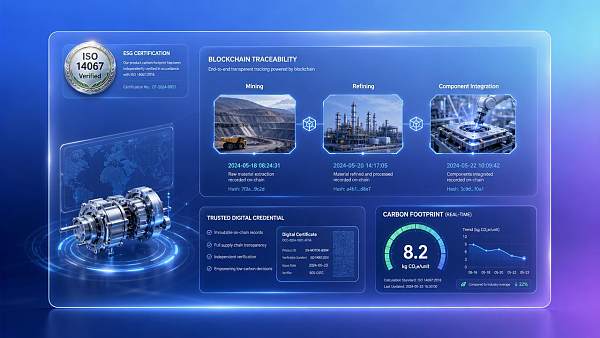
On May 6, 2026, G7 trade ministers convened a meeting in Paris and formally designated ‘rare earth and critical mineral supply chain security’ as a core topic for multilateral coordination. This policy direction is accelerating the reshaping of global B2B trade rules for industrial goods, creating systemic compliance pressure in particular for Chinese exporters of high-end manufacturing, new energy equipment, and industrial components serving European and North American markets — their official websites are shifting from traditional product display platforms to ‘trusted digital portals for supply chains’ carrying ESG disclosures, carbon footprint verification, and full-chain traceability capabilities.
Event Overview
At the G7 trade ministers’ meeting in Paris on May 6, a joint statement was adopted that explicitly requires member states to establish a ‘green procurement whitelist’ system; the statement notes that, starting in 2027, B2B products such as industrial equipment, energy storage systems, and electric mobility components imported into G7 countries will require suppliers’ official websites to mandatorily disclose three digital credentials: (1) third-party ESG certification reports on the origin of raw materials; (2) carbon footprint calculation models and parameter descriptions compliant with ISO 14067 standards; (3) permissioned blockchain-based mineral traceability links (covering mining, smelting, refining, and component integration stages). At present, the European Commission, Japan’s Ministry of Economy, Trade and Industry, and the U.S. Department of Commerce have simultaneously launched drafting work for their respective domestic implementation rules.
Which Market Segments Will Be Affected
This policy is not a broad and vague sustainability initiative, but a substantive compliance threshold that leverages import customs clearance and uses digital disclosure as the entry point, with impacts covering multiple roles across the industrial chain:
Direct Trading Enterprises
Companies exporting complete industrial equipment or core components to G7 countries (such as wind power converters, photovoltaic inverters, and industrial robot body exporters) will face ‘official website compliance pre-screening’ before importer factory audits. The impact is reflected in the following ways: official websites that do not embed verifiable traceability links may be placed on procurement risk watchlists; if ESG reports are provided only as PDF downloads and are not structurally embedded into webpage metadata, automated compliance screening will fail.
Raw Material Procurement Enterprises
Companies procuring intermediate products of critical minerals such as neodymium-iron-boron magnetic materials, high-purity ytterbium oxide, and lithium cobaltate for export products will need to extend their due diligence responsibilities upstream. The impact is reflected in the following ways: they must obtain and verify the blockchain IDs and ESG audit reference numbers of mineral suppliers, and implement bidirectional linked disclosure in the ‘supply chain map’ module on their own official websites, otherwise they will be unable to meet downstream OEMs’ compliance endorsement requirements.
Processing and Manufacturing Enterprises
Manufacturers engaged in critical mineral refining, alloy preparation, or functional material synthesis (such as rare earth separation plants and producers of electronic-grade silicon materials), although not directly exporting, have already become a ‘hidden threshold’ for whitelist admission. The impact is reflected in the following ways: their production process carbon emission monitoring systems must open API interfaces for downstream access; existing ERP/MES systems must support generating data packages that meet LCA (life cycle assessment) requirements, and automatically map them to the official website’s carbon footprint module.
Supply Chain Service Enterprises
Third-party institutions providing international certification, blockchain traceability platform deployment, and carbon accounting SaaS services are seeing a shift in demand structure. The impact is reflected in the following ways: clients no longer purchase only standalone certification services, but instead require integrated delivery of ‘certification + system embedding + continuous data feeding’; for example, institutions such as TUV Rheinland have already launched an ‘ESG website readiness package’ including code plugins, metadata templates, and quarterly compliance inspection services.
Key Focus Areas and Response Measures for Relevant Enterprises or Practitioners
Immediately Review Official Website Technical Architecture Compatibility
Focus on evaluating whether the current CMS supports structured data markup (Schema.org SupplyChainEvent and EnvironmentalImpact types), and whether it has API gateway capabilities to connect with third-party carbon accounting platforms and blockchain explorers. Avoid adopting purely static pages or closed website-building tools (such as some low-code platforms).
Build Verifiable Disclosure Capabilities in Phases
Phase 1 (within 2026): complete the digital upload of ESG certificates for key raw materials and machine-readable metadata tagging; Phase 2 (before Q1 2027): connect to at least one G7-recognized blockchain traceability network (such as Circulor, MineHub, or the ‘Rare Metal Chain’ led by the China Nonferrous Metals Industry Association); Phase 3 (starting from Q3 2027): achieve dynamic updates of carbon footprint model parameters and third-party audit trail retention.
Redefine Procurement Contract Clauses
When signing new contracts with upstream mineral suppliers, a ‘data collaboration obligation’ clause must be added: explicitly require the other party to provide standardized API access permissions, allow online verification of its ESG audit reports, and stipulate the on-chain upload frequency and field granularity of blockchain node data (for example, each batch of ore must include GPS coordinates, mining timestamps, and power consumption mix ratios).
Establish a Cross-Functional Digital Compliance Task Force
Members should include supply chain management, IT system operations and maintenance, ESG officers, and legal personnel, with responsibilities including: maintaining version control and audit trails for official website disclosure content; responding to real-time data access requests initiated by importers; and quarterly comparing updates to implementation rules among G7 member states to identify regional differences (for example, Japan places greater emphasis on water resource consumption indicators, while Germany emphasizes the utilization rate of recycled materials).
Editor’s Viewpoint / Industry Observation
显然,这不仅仅是一个‘绿色标签’要求,而是向‘将数字化尽职调查作为贸易基础设施’的结构性转变。G7的这一举措实际上将供应链监测成本外部化给出口商,同时在不同司法辖区之间标准化了验证逻辑。分析显示,拥有成熟MES/PLM系统并且已具备IATF 16949或AS9100体系认证经验的中国制造商具备6–12个月的实施优势 — 其数据可追溯性基础已经部分对齐。然而,更大的瓶颈不在于技术,而在于上游可视性:根据2025年中国信息通信研究院行业调查,中国超过68%的稀土磁体出口商仍然从非正规回收渠道采购无法追溯的废料基钕。这一缺口表明,该政策将加速二级材料供应商的整合,而不是在一夜之间触发大范围的数字化转型。
Conclusion
This policy marks the entry of global industrial goods trade into the era of ‘trusted digital credentials’: official websites are no longer marketing windows, but statutory carriers of supply chain credibility. For Chinese enterprises, the short-term challenge lies in technology adaptation and the reconstruction of data governance capabilities; the long-term significance lies in forcing greater upstream transparency across the industrial chain and promoting a new generation of industrial collaboration models that balance security, low carbon, and efficiency. More notably, if this mechanism is incorporated into WTO negotiations on Trade and Environment, it may be elevated into a multilateral trade rule, with impacts far beyond the G7 scope.
Information Source Notes
Official document basis: G7 Trade Ministers’ Joint Statement on Critical Minerals Security, Paris, 6 May 2026 (pending formal publication in the EU/OJ L series official bulletin); European Commission, Roadmap for Implementing the Green Procurement Whitelist (Draft) (COM(2026) 212 final, 2026-04-18); U.S. Department of Commerce BIS notice, Guidance on ESG Information Disclosure for Imported B2B Industrial Goods (Draft for Comments), FR Doc #2026-08932.
Subject to continued observation: Japan’s Ministry of Economy, Trade and Industry will release the Detailed Rules for the Implementation of the Critical Mineral Supply Chain Act in Q3 2026; China’s Ministry of Industry and Information Technology is organizing the drafting of the General Rules for Carbon Footprint Accounting of Key Products in the Industrial Sector (Draft for Comments), with industry pilots planned to be completed before the end of 2026.
Related Articles



Related Products
 EasyCamp SaaS Smart Website Marketing SystemE-Yingbao SaaS Smart Website Marketing System: AI-powered, zero-code website building. Rapidly launch multilingual independent e-commerce sites in just 10 minutes. Global server acceleration and AI-driven SEO optimization empower businesses to efficiently connect with global markets. The seamless integration of technology and user-friendly operation makes building e-commerce sites incredibly simple.
 AI+SEM Intelligent Advertising Marketing SystemAI+SEM drives intelligent ad creation, empowering full-funnel precision advertising marketing. The system automatically generates weekly/monthly reports, AI recommends keywords and target countries, monitors core metrics in real-time with intelligent alerts, and enables one-click high-conversion ad solutions to help quickly acquire customers and improve ROI.
 AI+SEO Dual Engine Optimization ServiceEasyWin AI+SEO Dual Engine Optimization System leverages AI-powered keyword mining, content generation, and comprehensive technical optimization to help foreign trade enterprises acquire high-quality organic traffic, significantly improving search rankings and conversion rates.
 AI+SNS Social Media Marketing SystemYingbao AI+SNS Social Media Marketing System - Precision social capture for the social media era. Supports one-click content synchronization across major platforms like Facebook and LinkedIn. AI intelligently rewrites posts for enhanced relevance. 24/7 AI customer service and user profiling analysis empower businesses to efficiently expand into global markets.
 AI+SEO营销解决方案易营宝AI+SEO营销解决方案,通过AI批量写作、智能生成TDK、精准关键词扩词等功能,全面优化网站SEO效果,提升流量与转化率。助力企业构建高效智能网站新生态。
 AI+SEM Advertising Marketing SolutionsAI+SEM Advertising Marketing Solution leverages AI technology to deeply empower SEM ad campaigns. It automatically generates weekly/monthly reports using AI, presenting account data across multiple dimensions for comprehensive insights into campaign performance and trends. The system precisely recommends keywords and target countries, intelligently generates high-conversion ad copy, and enables one-click activation of efficient campaign plans to help businesses rapidly acquire customers. Simultaneously, it monitors core metrics in real time, intelligently identifies abnormal fluctuations, and issues timely alerts to ensure stable, high-return advertising results.
 Domain Name ServicesEasyWin provides professional domain name services, including intelligent queries, one-stop registration, brand protection, and full lifecycle management, helping businesses build a digital brand image.
 EasyOperate B2C Cross-Border E-Commerce Platform & Independent WebsiteEasyStore B2C Cross-border E-commerce Independent Store is an intelligent website building and cross-border e-commerce integrated solution independently developed by EasyStore Information Technology (Beijing) Co., Ltd. The system is specially designed for small and medium-sized as well as large export enterprises, integrating 'website building, operation, marketing, advertising, and conversion' into one, helping enterprises quickly establish cross-border e-commerce independent stores to achieve brand globalization and global sales growth.
The platform supports multiple languages, multiple currencies, and multi-channel marketing, with built-in AI intelligent translation and SEO optimization systems, suitable for mainstream markets such as Southeast Asia, Europe and America, Latin America, and the Middle East, assisting Chinese manufacturing enterprises in efficiently deploying international e-commerce strategies. SSL证书易营宝提供专业SSL安全证书服务,包括单域名和泛域名证书,确保网站数据传输加密、身份验证和完整性保护,助力企业建立安全可信的在线业务环境。









