









- What Does a Global Traffic Ecosystem Service Provider Do? What Are the Differences from a Single Advertising AgencyJul 16, 2026View details
- What should you focus on in the latest enterprise SaaS report? From renewal rates and delivery costs to overseas growth opportunitiesJul 12, 2026View details
- What signals are worth paying attention to in a cross-border marketing trend report? B2B companies should look at these 6 signalsJul 11, 2026View details
- How to Read a Cross-Border Marketing Trends Report? Five Key Dimensions for Evaluating Channel OpportunitiesJul 11, 2026View details
- Which channel has the highest ROI in the global traffic ecosystem? Comparative analysis of search, social media, and advertisingJul 10, 2026View details
- What multilingual website services are available in Sanya? Which model is more suitable for local businesses going global?Jul 08, 2026View details
- How to view the complete list of China SaaS companies in the top 100? Practical methods for screening website-building and marketing service providersJul 08, 2026View details
- How to view pricing in the global traffic ecosystem? Cost comparison of search, social media, and content channel advertisingJul 06, 2026View details
Why Facebook Ad Optimization Keeps Getting More Expensive
Why does Facebook ad optimization become more expensive the more you tweak it? The problem often lies not only in bidding, but also in audience overlap, creative fatigue, and the conversion path. This article will combine Facebook ad delivery strategies with Meta ad delivery techniques to break down the causes of cost overruns.
Why do many companies end up with higher costs after optimizing Facebook ad delivery?
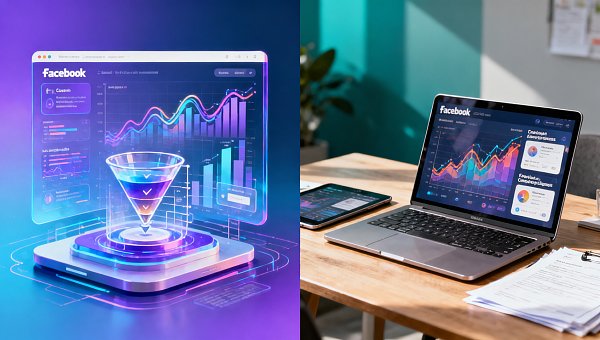
In an integrated website + marketing service scenario, Facebook ad delivery is not an isolated traffic-generating action, but a complete chain from website building, landing pages, and data tracking to lead recovery. Many companies frequently adjust budgets, audiences, and creatives during weeks 1 to 3 of delivery. On the surface, this looks like “optimization,” but in reality it interrupts system learning, causing conversion costs to keep rising.
For technical evaluators and project managers, the most common misjudgment is attributing all rising costs to more expensive bidding. In fact, when Facebook ad optimization becomes more expensive the more it is adjusted, it is often caused by the overlap of 3 types of issues: audience size is too narrow, creative click-through rates decline, and on-site conversion paths are blocked. Looking only at cost per click often hides the real points of waste.
Business decision-makers care more about result stability. If an ad account makes more than 3 major bid changes and more than 2 audience restructurings within 7 days, the algorithm will re-enter the learning phase. When conversion volume is insufficient, fluctuations of 20%—50% in cost per lead can easily occur. This fluctuation may not necessarily persist long term, but it will directly affect budget judgment and confidence in scaling.
Yiyingbao Information Technology (Beijing) Co., Ltd. has long served global growth scenarios, and its core advantage lies in diagnosing ad delivery within the full funnel. Based on experience validated by more than 100,000 companies: adjusting only the ad backend often cannot solve more than 70% of cost overrun issues; only by coordinating intelligent website building, SEO optimization, social media marketing, and ad delivery management can optimization avoid becoming more expensive over time.
See clearly first: rising costs are usually not caused by a single point issue
Price changes in Facebook ad delivery are usually jointly affected by 4 levels: the bidding environment, account structure, creative quality, and conversion handling. If a company focuses only on bids while ignoring landing page loading speed, form length, and event return completeness, it will end up with the typical imbalance of “clicks are fine, but conversions are expensive.”
- Bidding level: holidays, peak industry seasons, and an increase in competitors in the same region can all drive CPM up in the short term.
- Structure level: if ad sets are split too finely and daily budgets are insufficient, learning data gets fragmented, making it hard for the system to consistently find high-converting audiences.
- Content level: after the same creative runs continuously for 7—14 days, frequency rises, click-through rate drops, and conversion rate declines at the same time.
- Website level: slow website loading, unclear mobile layouts, and form processes with more than 3 steps can all significantly increase customer acquisition costs.
If a company is doing overseas customer acquisition, it especially needs to view ad data together with website behavioral data. For distributors, agents, and after-sales maintenance teams, this integrated judgment is more valuable than simply adjusting ad buttons, because it directly affects inquiry quality, follow-up efficiency, and channel conversion rates.
Which stages are most likely to make Facebook ad optimization “more expensive the more you tweak it”?
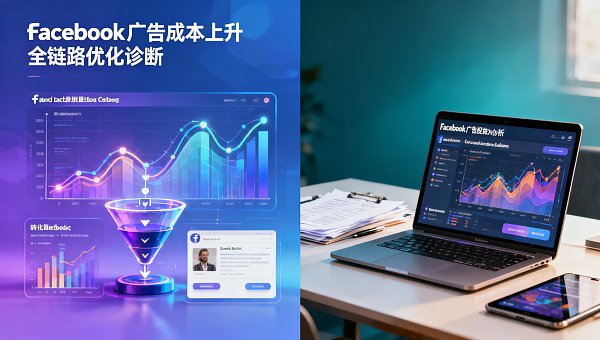
What truly drives up costs is often not a single mistake, but the accumulation of continuous small deviations. Especially in the application of Meta ad delivery techniques, many teams interpret “more testing” as “more changes,” resulting in accounts that remain in an unstable state. When budgets are limited, this kind of trial and error becomes even more expensive.
The table below is suitable for information researchers, technical evaluators, and business decision-makers to make quick judgments: when costs rise, which layer should be checked first, which metrics deserve priority attention, and which actions should not be executed immediately.
As can be seen from this table, there are at least 4 high-frequency triggers behind rising Facebook ad delivery costs. If technical teams and marketing teams work separately, the problem will be further amplified: the front end believes it is an ad issue, the ad team believes it is a website issue, and in the end the budget is consumed inefficiently.
Audience overlap: looks more precise, but is actually internal bidding competition
Many companies stack region, interests, job titles, and behaviors very finely, thinking the narrower it is, the more precise it becomes. But in B2B lead generation campaigns, an overly narrow audience pool often means insufficient learning samples. When multiple ad sets target similar audiences, “self-competition” forms within the account, and costs naturally get pushed higher and higher.
A more stable approach is usually to keep 2—3 core audience categories: basic interest packs, industry job-title packs, and remarketing packs. Each audience category needs enough impression and conversion room to give the algorithm a chance to identify high-intent users, instead of repeatedly trialing and failing within extremely small samples.
Creative fatigue: not an aesthetic issue, but a conversion efficiency issue
Both end consumers and B2B procurement groups experience “information numbness.” After seeing the same set of ads multiple times in a row, willingness to click declines. Especially in stable campaigns running for more than 7 days, if frequency keeps rising while creatives do not introduce new value points, proof points, or scenario shifts, click-through rate and conversion rate usually decline together.
Refreshing creatives is not just about changing images, but also about changing the communication angle, for example switching from “low price” to “delivery cycle,” or from “basic introduction” to “service process.” This is especially important in the website + marketing service integration industry, because customer decision cycles are usually not just 1 day and often require multiple touchpoints and different layers of information to support them.
Conversion path too long: the ad is fine, but the website is leaking visitors
The real problem in many projects lies on the site. For example, landing pages taking more than 3 seconds to load, inquiry forms with more than 6 fields, unclear mobile buttons, or case study content too far from the consultation entry point can all cause drop-off after the click. Project leaders are most likely to overlook this layer, because the ad backend still appears to have “traffic.”
In content planning, some teams even place research-oriented content directly on campaign landing pages. If the goal is to serve information researchers, it is better to naturally lead them from the content page to more professional material entry points, such as Research on the Current Status and Optimization Strategies of Human Resource Management in Public Hospitals. This kind of topic-based content is more suitable as mid- to late-stage nurturing material, rather than directly serving as a strong-conversion landing page.
How can you control Facebook ad delivery costs with an integrated approach?
The key to solving “the more you tweak it, the more expensive it gets” is not adjusting less, but adjusting in the right order. First verify the data, then confirm the conversion handling, then optimize the creatives, and only after that adjust the budget and bids. For teams that need to see lead improvement within 2 weeks, this order is especially important because it reduces ineffective trial and error.
The full-funnel service advantage of Yiyingbao Information Technology (Beijing) Co., Ltd. is well suited to handling this kind of cross-stage issue. Intelligent website building solves conversion handling efficiency, SEO optimization supplements organic traffic, social media marketing enhances content reach, and ad delivery is responsible for accelerating customer acquisition. Once these 4 work together, companies can more easily determine which costs are necessary investments and which are true waste.
It is recommended to adopt a 4-step troubleshooting process instead of making chaotic changes at the same time
- First validate the data: check whether pixels, events, form return data, and call tracking are complete. It is recommended to conduct 1 round of verification before every major change.
- Then review the website: focus on first-screen value expression, mobile loading, form steps, and the placement of consultation buttons. Usually, key issues can be identified within 1—3 pages.
- Then replace creatives: keep 1 stable creative in each round and add 2—3 test creatives to avoid replacing everything at once and distorting judgment.
- Finally adjust the budget: try to keep each single budget adjustment within the 20%—30% range and give the system at least a 3-day observation window.
This process is also more friendly for technical evaluation and quality control personnel, because every step can be verified without relying on a single experience-based judgment. Compared with fragmented operations such as “lower the price today, change the audience tomorrow, modify the page the day after,” layered optimization is more likely to build reusable rules.
During procurement and vendor selection, which service capabilities should be prioritized?
If a company is preparing to introduce an external ad service provider, it should not only ask about the “managed ad service price,” but should also assess whether the provider has the ability to coordinate website, content, data, and advertising. Otherwise, the provider can only repeatedly adjust parameters inside the account and will struggle to solve the problem of inflated customer acquisition costs.
The table below is suitable for companies comparing integrated website + marketing service providers. It can be used before procurement to evaluate 3 categories of core capabilities, 5 key checkpoints, and regular delivery rhythms.
For business decision-makers, choosing a team capable of integrated delivery is often more controllable than choosing low-cost single-point services. Although the latter may have lower initial costs, once problems arise with landing pages, content, or data tracking, the additional repair costs will quickly consume the budget originally saved.
Common misconceptions and FAQ: which “optimization actions” actually hurt costs the most?
Many companies do not lack execution, but rather execute in the wrong direction. Especially during the Facebook ad optimization phase, excessively pursuing immediate results often pushes accounts toward higher costs. The following questions are the most worth paying attention to before procurement, during delivery, and during review.
Why does adjusting the budget every day make lead costs even more unstable?
Because the system needs continuous data to determine who is more likely to convert. If the budget is changed every day, especially with a one-time increase or decrease of more than 30%, the delivery rhythm will be disrupted. A more reasonable approach is to use 3 days as one observation unit and judge based on 3 layers of metrics—impressions, clicks, and conversions—instead of looking only at single-day lead prices.
Does a more precise audience always save more money?
Not necessarily. Precision and narrowness are not the same thing. An overly narrow audience leads to insufficient samples, excessively high frequency, and internal competition. Especially in the B2B industry, procurement chains often involve technical evaluation, management, and user departments. Over-focusing on a single audience group can instead cause you to miss the real decision influencers.
The website is already live, so why do we still need to keep changing landing pages?
Going live does not mean it is suitable for advertising. Ad landing pages emphasize conversion efficiency, not information stacking. They usually need to be designed around 1 core action, such as submitting an inquiry, booking a demo, or obtaining a proposal. If a page simultaneously carries multiple tasks such as brand introduction, news display, and resource center functions, the conversion rate is easily diluted.
How should content assets be integrated into the advertising funnel?
For information researchers and customers with longer decision cycles, content assets are very important, but they should be placed in mid- to late-stage nurturing rather than directing all traffic straight to the sales form. Topic-based content such as Research on the Current Status and Optimization Strategies of Human Resource Management in Public Hospitals is more suitable for remarketing, email follow-up, or in-depth education of high-intent users.
Why choose us: not just ad management, but helping you truly streamline your customer acquisition funnel
If your Facebook ad delivery is already facing situations such as “clicks are there, but inquiries are not increasing,” “the more it is optimized, the more expensive it gets,” or “the team cannot determine where the problem is,” then it is more suitable to choose a service team with full-funnel capabilities. Since 2013, Yiyingbao Information Technology (Beijing) Co., Ltd. has been deeply engaged in global digital marketing. Driven by artificial intelligence and big data, it can solve problems collaboratively across websites, SEO, social media, and ad delivery.
For information researchers, we can help sort out Facebook ad delivery strategies and cost diagnosis frameworks; for technical evaluators, we can connect tracking points, events, page conversion handling, and data return checks; for business decision-makers, we can provide budget structures, phase goals, and 2—4 week optimization path recommendations; for channel partners and end customers, we can further refine lead quality and follow-up efficiency improvement plans.
If you are comparing different service solutions, it is recommended to prioritize consulting on the following: current account issue assessment, whether audience structures overlap, creative refresh rhythm, landing page conversion paths, delivery cycle, scope of customized solutions, and quotation communication methods. Clarifying these questions in advance often reduces long-term customer acquisition costs more effectively than blindly increasing the budget.
When ad delivery and website conversion handling truly work together, Facebook ad delivery does not have to fall into the cycle of “the more you tweak it, the more expensive it gets.” The earlier the funnel diagnosis is completed, the more ineffective spending can be reduced, and the more the budget can be concentrated on the stages with real conversion potential.
Related Articles
 Attention! Builders' must-see: Yibingbao AI components updated, design efficiency directly doubled!
 China's foreign trade sees a turnaround: imports surge by 22%! Foreign trade professionals should quickly take note of the new trends in the second half of the year
 What Does a Global Traffic Ecosystem Service Provider Do? What Are the Differences from a Single Advertising Agency

Related Products
 EasyCamp SaaS Smart Website Marketing SystemE-Yingbao SaaS Smart Website Marketing System: AI-powered, zero-code website building. Rapidly launch multilingual independent e-commerce sites in just 10 minutes. Global server acceleration and AI-driven SEO optimization empower businesses to efficiently connect with global markets. The seamless integration of technology and user-friendly operation makes building e-commerce sites incredibly simple.
 AI+SEM Intelligent Advertising Marketing SystemAI+SEM drives intelligent ad creation, empowering full-funnel precision advertising marketing. The system automatically generates weekly/monthly reports, AI recommends keywords and target countries, monitors core metrics in real-time with intelligent alerts, and enables one-click high-conversion ad solutions to help quickly acquire customers and improve ROI.
 AI+SEO Dual Engine Optimization ServiceEasyWin AI+SEO Dual Engine Optimization System leverages AI-powered keyword mining, content generation, and comprehensive technical optimization to help foreign trade enterprises acquire high-quality organic traffic, significantly improving search rankings and conversion rates.
 AI+SNS Social Media Marketing SystemYingbao AI+SNS Social Media Marketing System - Precision social capture for the social media era. Supports one-click content synchronization across major platforms like Facebook and LinkedIn. AI intelligently rewrites posts for enhanced relevance. 24/7 AI customer service and user profiling analysis empower businesses to efficiently expand into global markets.
 AI+SEO营销解决方案易营宝AI+SEO营销解决方案,通过AI批量写作、智能生成TDK、精准关键词扩词等功能,全面优化网站SEO效果,提升流量与转化率。助力企业构建高效智能网站新生态。
 AI+SEM Advertising Marketing SolutionsAI+SEM Advertising Marketing Solution leverages AI technology to deeply empower SEM ad campaigns. It automatically generates weekly/monthly reports using AI, presenting account data across multiple dimensions for comprehensive insights into campaign performance and trends. The system precisely recommends keywords and target countries, intelligently generates high-conversion ad copy, and enables one-click activation of efficient campaign plans to help businesses rapidly acquire customers. Simultaneously, it monitors core metrics in real time, intelligently identifies abnormal fluctuations, and issues timely alerts to ensure stable, high-return advertising results.
 Domain Name ServicesEasyWin provides professional domain name services, including intelligent queries, one-stop registration, brand protection, and full lifecycle management, helping businesses build a digital brand image.
 EasyOperate B2C Cross-Border E-Commerce Platform & Independent WebsiteEasyStore B2C Cross-border E-commerce Independent Store is an intelligent website building and cross-border e-commerce integrated solution independently developed by EasyStore Information Technology (Beijing) Co., Ltd. The system is specially designed for small and medium-sized as well as large export enterprises, integrating 'website building, operation, marketing, advertising, and conversion' into one, helping enterprises quickly establish cross-border e-commerce independent stores to achieve brand globalization and global sales growth.
The platform supports multiple languages, multiple currencies, and multi-channel marketing, with built-in AI intelligent translation and SEO optimization systems, suitable for mainstream markets such as Southeast Asia, Europe and America, Latin America, and the Middle East, assisting Chinese manufacturing enterprises in efficiently deploying international e-commerce strategies. SSL证书易营宝提供专业SSL安全证书服务,包括单域名和泛域名证书,确保网站数据传输加密、身份验证和完整性保护,助力企业建立安全可信的在线业务环境。









