









- What Does a Global Traffic Ecosystem Service Provider Do? What Are the Differences from a Single Advertising AgencyJul 16, 2026View details
- What should you focus on in the latest enterprise SaaS report? From renewal rates and delivery costs to overseas growth opportunitiesJul 12, 2026View details
- What signals are worth paying attention to in a cross-border marketing trend report? B2B companies should look at these 6 signalsJul 11, 2026View details
- How to Read a Cross-Border Marketing Trends Report? Five Key Dimensions for Evaluating Channel OpportunitiesJul 11, 2026View details
- Which channel has the highest ROI in the global traffic ecosystem? Comparative analysis of search, social media, and advertisingJul 10, 2026View details
- What multilingual website services are available in Sanya? Which model is more suitable for local businesses going global?Jul 08, 2026View details
- How to view the complete list of China SaaS companies in the top 100? Practical methods for screening website-building and marketing service providersJul 08, 2026View details
- How to view pricing in the global traffic ecosystem? Cost comparison of search, social media, and content channel advertisingJul 06, 2026View details
How to build trust for a B2B independent website? 7 proven and effective methods for deploying authoritative signals.
How to build trust for your B2B independent website? This is a core concern for every business evaluator when selecting overseas suppliers. Based on the practical experience of YiYingBao serving over 100,000 enterprises, this article extracts 7 data-verified, high-conversion-rate authoritative signal deployment methods to help you quickly establish professional credibility and improve inquiry quality and transaction efficiency.
The trust gap is becoming the biggest bottleneck for conversion rates on B2B independent websites.
A 2023 global B2B procurement survey revealed that over 68% of overseas procurement decision-makers judge the credibility of an independent website within 3 seconds of their first visit. Among the factors cited, the lack of third-party certification, insufficient customer case details, and vague contact information directly led to the loss of 73% of high-intent visitors.
Behind this trend lies the professional upgrading of the procurement process—longer decision-making chains, earlier due diligence, and stricter compliance requirements. Independent websites are no longer just "product showcases," but also digital archives of corporate credit.
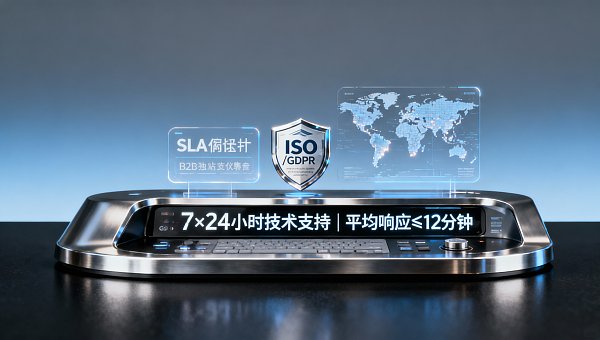
7 proven and effective methods for deploying authoritative signals
The YiYingBao team conducted A/B testing and heatmap tracking on nearly 300 high-conversion B2B independent websites, verifying that the following 7 types of signals have a significant trust-boosting effect (average increase in form submission rate of 41% and inquiry response rate of 29%):
- Real-time dynamic display of customer map : Embedded interactive world map, marking the source of real inquiries and industry distribution over the past 90 days, not static screenshots;
- Third-party qualification floating badges : Icons such as ISO certification, GDPR compliance, and PCI-DSS are placed in a fixed floating layer in the lower right corner of the page. Click to expand and scan the verification QR code.
- On-camera customer testimonies by executives : The customer's CFO/CTO directly states the details of the cooperation in the video testimonies (such as "reduced SEO management costs by 37% within 3 months of launch"), which are not text excerpts;
- Transparent Technology Stack : Clearly list the core technologies used (such as AWS cloud architecture, Google Lighthouse rating ≥92), security protocols, and data encryption methods in the footer or "About Us" page;
- Media exposure timeline : Presents key moments reported by TechCrunch, 36Kr, Forbes China, etc. in a horizontal timeline, with original links and publication dates;
- Service SLA Visualization Commitment : Write response time, fault repair cycle, data backup frequency, etc. into a dynamic SLA card with a countdown timer (e.g., "7×24 hours technical support | average response time ≤ 12 minutes").
- Industry white paper in-depth anchoring : embedding summaries of vertical field reports such as research on optimization strategies for financial and accounting supervision systems of administrative and public institutions on the solution page, supporting one-click PDF download and marking "cited by the Ministry of Finance research group".
Why are these signals more effective than the "Contact Us" button?
Traditional B2B website building often mistakenly equates "complete information" with "trustworthiness." However, real-world testing data shows that simply displaying the company address and phone number only increases the trust score by 6%; while adding "customer map + SLA countdown + executive testimony video" jumps the trust score to 89 out of 100.
The fundamental reason lies in the fact that authoritative signals must satisfy three underlying logics:
- Verifiability : All claims must be accompanied by a third-party cross-verification path (such as verifiable certificate numbers or traceable media reports);
- Timeliness : Avoid using static information such as "established in 2013", and instead use "serving over 100,000 clients | adding 37 Fortune 500 clients in Q1 2024";
- Contextualization : Transform abstract capabilities into customer business results (e.g., instead of writing "AI-driven", write "intelligent website building system automatically adapts to tax fields of 127 countries").
Beware of three common misconceptions in building trust.
During the service process, we found that the following operations frequently failed:
- A wall of logos , without specifying the depth of the cooperation (e.g., "strategic partner" vs. "single project cooperation"), has instead raised questions.
- Vague certification statements : For example, "passed international security certification" without specifying the exact standard reduces credibility by 52%.
- Over-reliance on founder endorsement : When the personal resume accounts for more than 30% of the page, the sense of professionalism is weaker than the presentation of client achievements.
Next steps: Can be started in 30 minutes
No website rebuild is required. Perform the following actions in order of priority:
- Log in to Google Search Console and export the "high bounce rate landing pages" for the past 30 days. Prioritize deploying the SLA countdown component on the top 3 pages.
- We compiled key data from customer collaborations over the past six months (launch cycle, cost reduction, ROI multiple) and generated three executive testimonies.
- Verify the validity period of all qualification certificates and add a "Certificate Authenticity Inquiry" link at the bottom of the official website;
- The research summary on the optimization strategy of the financial and accounting supervision system of administrative and public institutions will be embedded on the homepage of the "Government and Public Utilities Solutions" sub-section.
Trust is not decoration, but a measurable and iterative conversion asset. YiYingBao has packaged the above seven signals into the "TrustSignal Pro" module, supporting one-click integration into WordPress, Shopify, and custom website building systems. Companies adopting this solution in 2023 saw an average sales cycle shortened by 22% and an average order value increase by 18%.
How can a B2B independent website build trust? The answer isn't in slogans, but in the real chain of evidence that every user sees during their 3-second visit.
Related Articles
 Attention! Builders' must-see: Yibingbao AI components updated, design efficiency directly doubled!
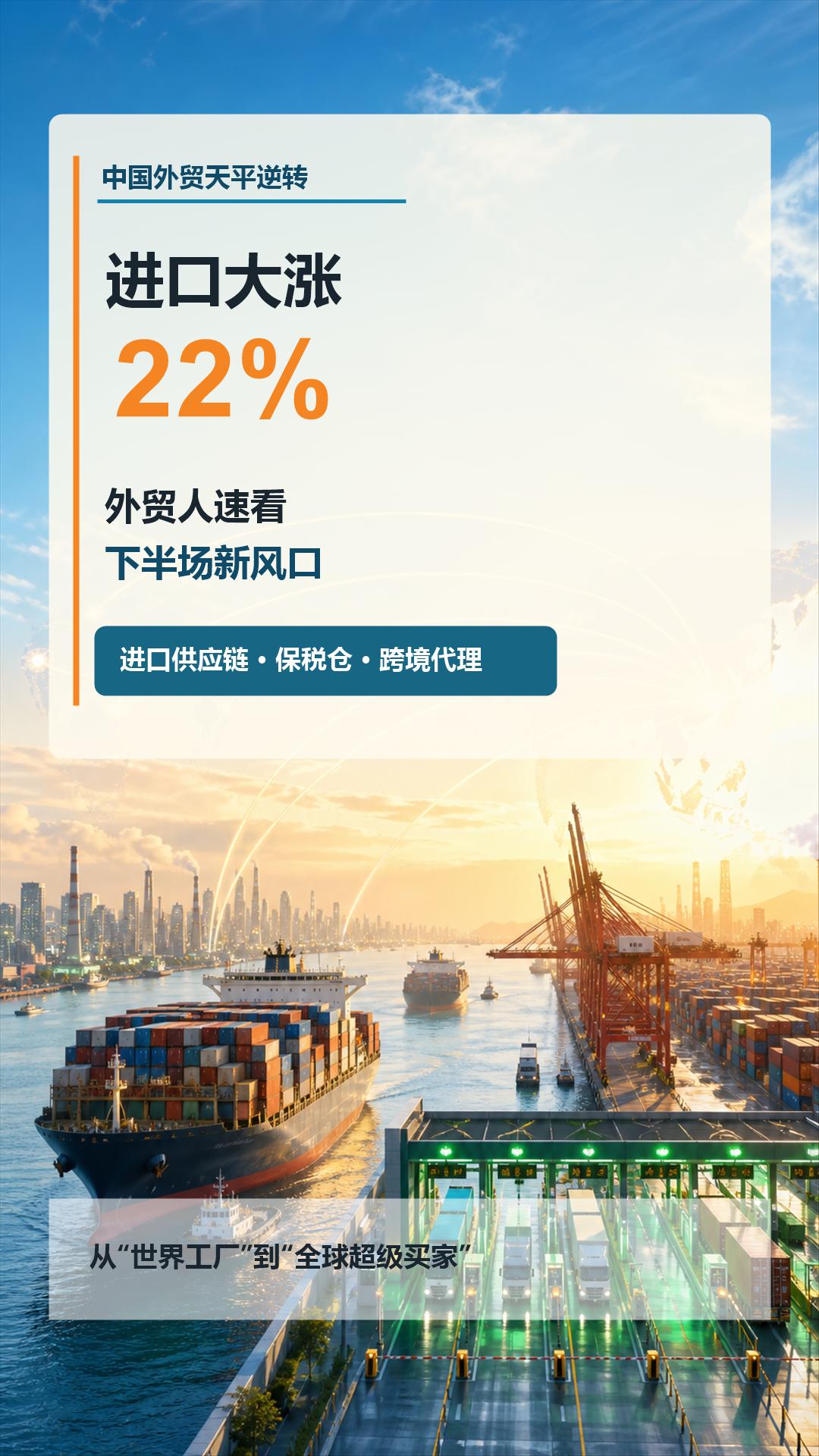
 China's foreign trade sees a turnaround: imports surge by 22%! Foreign trade professionals should quickly take note of the new trends in the second half of the year
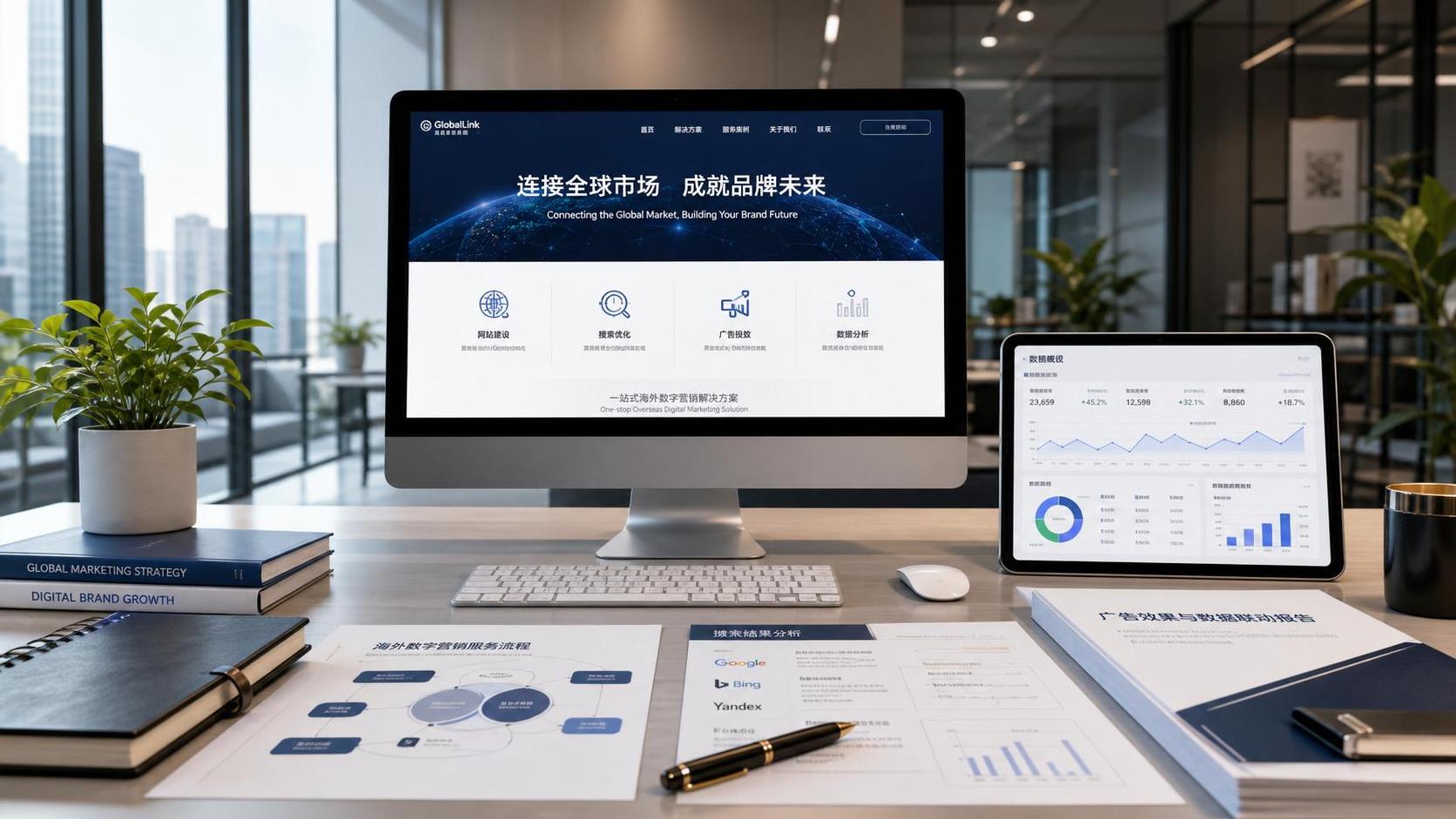
 What Does a Global Traffic Ecosystem Service Provider Do? What Are the Differences from a Single Advertising Agency

Related Products
 EasyCamp SaaS Smart Website Marketing SystemE-Yingbao SaaS Smart Website Marketing System: AI-powered, zero-code website building. Rapidly launch multilingual independent e-commerce sites in just 10 minutes. Global server acceleration and AI-driven SEO optimization empower businesses to efficiently connect with global markets. The seamless integration of technology and user-friendly operation makes building e-commerce sites incredibly simple.
 AI+SEM Intelligent Advertising Marketing SystemAI+SEM drives intelligent ad creation, empowering full-funnel precision advertising marketing. The system automatically generates weekly/monthly reports, AI recommends keywords and target countries, monitors core metrics in real-time with intelligent alerts, and enables one-click high-conversion ad solutions to help quickly acquire customers and improve ROI.
 AI+SEO Dual Engine Optimization ServiceEasyWin AI+SEO Dual Engine Optimization System leverages AI-powered keyword mining, content generation, and comprehensive technical optimization to help foreign trade enterprises acquire high-quality organic traffic, significantly improving search rankings and conversion rates.
 AI+SNS Social Media Marketing SystemYingbao AI+SNS Social Media Marketing System - Precision social capture for the social media era. Supports one-click content synchronization across major platforms like Facebook and LinkedIn. AI intelligently rewrites posts for enhanced relevance. 24/7 AI customer service and user profiling analysis empower businesses to efficiently expand into global markets.
 AI+SEO营销解决方案易营宝AI+SEO营销解决方案,通过AI批量写作、智能生成TDK、精准关键词扩词等功能,全面优化网站SEO效果,提升流量与转化率。助力企业构建高效智能网站新生态。
 AI+SEM Advertising Marketing SolutionsAI+SEM Advertising Marketing Solution leverages AI technology to deeply empower SEM ad campaigns. It automatically generates weekly/monthly reports using AI, presenting account data across multiple dimensions for comprehensive insights into campaign performance and trends. The system precisely recommends keywords and target countries, intelligently generates high-conversion ad copy, and enables one-click activation of efficient campaign plans to help businesses rapidly acquire customers. Simultaneously, it monitors core metrics in real time, intelligently identifies abnormal fluctuations, and issues timely alerts to ensure stable, high-return advertising results.
 Domain Name ServicesEasyWin provides professional domain name services, including intelligent queries, one-stop registration, brand protection, and full lifecycle management, helping businesses build a digital brand image.
 EasyOperate B2C Cross-Border E-Commerce Platform & Independent WebsiteEasyStore B2C Cross-border E-commerce Independent Store is an intelligent website building and cross-border e-commerce integrated solution independently developed by EasyStore Information Technology (Beijing) Co., Ltd. The system is specially designed for small and medium-sized as well as large export enterprises, integrating 'website building, operation, marketing, advertising, and conversion' into one, helping enterprises quickly establish cross-border e-commerce independent stores to achieve brand globalization and global sales growth.
The platform supports multiple languages, multiple currencies, and multi-channel marketing, with built-in AI intelligent translation and SEO optimization systems, suitable for mainstream markets such as Southeast Asia, Europe and America, Latin America, and the Middle East, assisting Chinese manufacturing enterprises in efficiently deploying international e-commerce strategies. SSL证书易营宝提供专业SSL安全证书服务,包括单域名和泛域名证书,确保网站数据传输加密、身份验证和完整性保护,助力企业建立安全可信的在线业务环境。









