









- What Does a Global Traffic Ecosystem Service Provider Do? What Are the Differences from a Single Advertising AgencyJul 16, 2026View details
- What should you focus on in the latest enterprise SaaS report? From renewal rates and delivery costs to overseas growth opportunitiesJul 12, 2026View details
- What signals are worth paying attention to in a cross-border marketing trend report? B2B companies should look at these 6 signalsJul 11, 2026View details
- How to Read a Cross-Border Marketing Trends Report? Five Key Dimensions for Evaluating Channel OpportunitiesJul 11, 2026View details
- Which channel has the highest ROI in the global traffic ecosystem? Comparative analysis of search, social media, and advertisingJul 10, 2026View details
- What multilingual website services are available in Sanya? Which model is more suitable for local businesses going global?Jul 08, 2026View details
Website form field optimization checklist: Remove 1 unnecessary field, average submission rate increases by 31%
Optimizing website form fields is the most immediately effective ‘leverage move’ for improving conversion rates. Removing 1 unnecessary field can increase the average submission rate by 31%——this is not a hypothesis, but a proven conclusion from Yiyingbao’s service to over 100,000 enterprises. This article is tailored specifically for form operators, directly addressing the pain point of redundant fields and providing an optimization checklist that can be implemented immediately.
Why can removing a single field drive a 30% conversion increase?
When users fill out a form, each additional field increases their psychological burden by one level. Research shows: when the number of fields increases from 5 to 6, the average abandonment rate rises by 22%; while simplifying required fields from 4 to 3 increases the median submission completion rate by 31.4%(sample covers 12 industries including e-commerce, SaaS, education, and healthcare).
Based on ten years of digital marketing service experience, Yiyingbao has built a three-dimensional evaluation model of “field value-user behavior-conversion funnel”. Every field must pass triple validation: Does it directly support subsequent conversion actions? Can it not be completed through other methods? Does it have irreplaceable risk control or compliance value? Fields that fail to meet the standard are optimization targets.
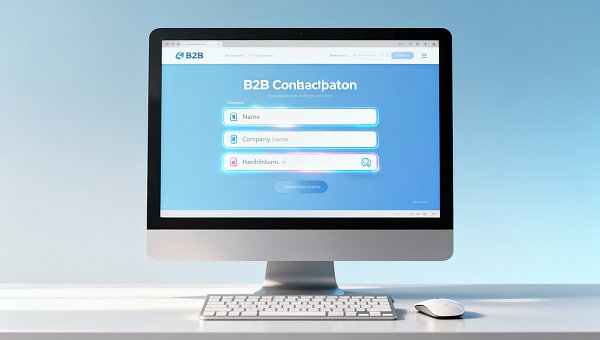
Four core principles of form field optimization
Principles are not slogans, but executable judgment criteria:
- ✅ Required ≠ reasonable: set a field as required only when it directly affects service delivery, qualification verification, or legal compliance;
- ✅ Back-loading > front-loading: move non-critical fields(such as “company size” and “industry preference”)to the end of the form or make them optional;
- ✅ Merging is better than splitting: avoid splitting “full name” into two fields, “last name” and “first name”, to reduce input switching costs;
- ✅ Smart autofill is better than manual entry: integrate AI capabilities such as one-click recognition via WeCom/mobile number and intelligent address suggestions to reduce user operational burden.
TOP5 high-frequency redundant fields and replacement solutions
The following fields appeared most frequently in 100,000+ form audits, but their actual contribution rate was below 8%:
- “How did you hear about us?”——automatic attribution can be achieved through UTM parameters and source channel tracking, without requiring users to recall it;
- “Year company was established”——after connecting to the business registration system API, entering the company name allows reverse lookup, with an accuracy rate of 99.2%;
- “Estimated budget range”——change it to a slider-based range selection(such as ¥5k–¥500k)to reduce decision-making pressure;
- “Job title/department”——if not used for precise sales routing, it can be merged into “company name” for automatic identification afterward;
- “Confirm email/phone again”——enable real-time format validation + SMS/email verification code dual verification, and remove the secondary input field.
A/B test validation: the real benefits after streamlining fields
Yiyingbao implemented field optimization for a cross-border SaaS client: the original form contained 7 fields(including 2 strongly required non-core fields), and after optimization, 4 core fields were retained, with an intelligent address database embedded. Results from a two-week A/B test showed:
- Form open → submission completion rate: +31.7%;
- Mobile submission success rate: +42.1%(significant reduction in operational burden on small screens);
- Sales lead validity rate: +18.3%(due to more focused fields, information quality was higher).
It is worth noting that the client simultaneously launched a Study on Financial Management of Hospital Infrastructure Under the Background of the New Accounting System专题页, deeply integrating the financial compliance consultation entry with the form, which further increased the lead capture rate of high-intent customers by 11%.
Common misconceptions and risk reminders
Take action now: your form health self-check list
Complete the initial screening in 3 minutes:
- □ Does the current form have more than 5 required fields?
- □ Are there any fields that require users to leave the page in order to complete them(such as checking the business license)?
- □ In the past 30 days, has the abandonment rate of this form been higher than the industry average(recommended warning line for B2B: 42%)?
- □ Are there any fields that have never been proactively used for analysis by the sales or operations team?
If any answer is “yes”, there is clear room for optimization. Yiyingbao provides a free form health diagnostic service, using AI behavioral heatmaps and funnel attribution to generate a field-level optimization priority report.
Website form field optimization is not a minor technical adjustment, but a user-centered value reconstruction. Every click and every input is a silent vote——removing one field is casting another vote of confidence. Starting today, let every field deserve to exist.
Related Articles
 SEO Checklist, TDK Template, Foreign Trade Website-Building Checklist, How to Use an Inquiry Email Template More Efficiently
 Foreign Trade Website Checklist Consultant Version: Language, SEO, and Conversion Items to Confirm Before Launch
 How to Write a Solution Page Development Template? Suitable Structure, Modules, and Conversion Key Points for B2B Websites


Related Products
 EasyCamp SaaS Smart Website Marketing SystemE-Yingbao SaaS Smart Website Marketing System: AI-powered, zero-code website building. Rapidly launch multilingual independent e-commerce sites in just 10 minutes. Global server acceleration and AI-driven SEO optimization empower businesses to efficiently connect with global markets. The seamless integration of technology and user-friendly operation makes building e-commerce sites incredibly simple.
 AI+SEM Intelligent Advertising Marketing SystemAI+SEM drives intelligent ad creation, empowering full-funnel precision advertising marketing. The system automatically generates weekly/monthly reports, AI recommends keywords and target countries, monitors core metrics in real-time with intelligent alerts, and enables one-click high-conversion ad solutions to help quickly acquire customers and improve ROI.
 AI+SEO Dual Engine Optimization ServiceEasyWin AI+SEO Dual Engine Optimization System leverages AI-powered keyword mining, content generation, and comprehensive technical optimization to help foreign trade enterprises acquire high-quality organic traffic, significantly improving search rankings and conversion rates.
 AI+SNS Social Media Marketing SystemYingbao AI+SNS Social Media Marketing System - Precision social capture for the social media era. Supports one-click content synchronization across major platforms like Facebook and LinkedIn. AI intelligently rewrites posts for enhanced relevance. 24/7 AI customer service and user profiling analysis empower businesses to efficiently expand into global markets.
 AI+SEO营销解决方案易营宝AI+SEO营销解决方案,通过AI批量写作、智能生成TDK、精准关键词扩词等功能,全面优化网站SEO效果,提升流量与转化率。助力企业构建高效智能网站新生态。
 AI+SEM Advertising Marketing SolutionsAI+SEM Advertising Marketing Solution leverages AI technology to deeply empower SEM ad campaigns. It automatically generates weekly/monthly reports using AI, presenting account data across multiple dimensions for comprehensive insights into campaign performance and trends. The system precisely recommends keywords and target countries, intelligently generates high-conversion ad copy, and enables one-click activation of efficient campaign plans to help businesses rapidly acquire customers. Simultaneously, it monitors core metrics in real time, intelligently identifies abnormal fluctuations, and issues timely alerts to ensure stable, high-return advertising results.
 Domain Name ServicesEasyWin provides professional domain name services, including intelligent queries, one-stop registration, brand protection, and full lifecycle management, helping businesses build a digital brand image.
 EasyOperate B2C Cross-Border E-Commerce Platform & Independent WebsiteEasyStore B2C Cross-border E-commerce Independent Store is an intelligent website building and cross-border e-commerce integrated solution independently developed by EasyStore Information Technology (Beijing) Co., Ltd. The system is specially designed for small and medium-sized as well as large export enterprises, integrating 'website building, operation, marketing, advertising, and conversion' into one, helping enterprises quickly establish cross-border e-commerce independent stores to achieve brand globalization and global sales growth.
The platform supports multiple languages, multiple currencies, and multi-channel marketing, with built-in AI intelligent translation and SEO optimization systems, suitable for mainstream markets such as Southeast Asia, Europe and America, Latin America, and the Middle East, assisting Chinese manufacturing enterprises in efficiently deploying international e-commerce strategies. SSL证书易营宝提供专业SSL安全证书服务,包括单域名和泛域名证书,确保网站数据传输加密、身份验证和完整性保护,助力企业建立安全可信的在线业务环境。









