









- What should you focus on in the latest enterprise SaaS report? From renewal rates and delivery costs to overseas growth opportunitiesJul 12, 2026View details
- What signals are worth paying attention to in a cross-border marketing trend report? B2B companies should look at these 6 signalsJul 11, 2026View details
- How to Read a Cross-Border Marketing Trends Report? Five Key Dimensions for Evaluating Channel OpportunitiesJul 11, 2026View details
- Which channel has the highest ROI in the global traffic ecosystem? Comparative analysis of search, social media, and advertisingJul 10, 2026View details
- What multilingual website services are available in Sanya? Which model is more suitable for local businesses going global?Jul 08, 2026View details
- How to view the complete list of China SaaS companies in the top 100? Practical methods for screening website-building and marketing service providersJul 08, 2026View details
Form Submission Rate Optimization≠Adding More Call-to-Action Buttons:3 Trust Signals That Influence B2B High-Value Lead Submissions
Optimizing form submission rates isn't about piling on CTA buttons, but about accurately conveying trust. For B2B procurement personnel, the birth of a high-value lead often begins with a three-second hesitation before submitting a form—behind this lies a comprehensive contest of security awareness, professional endorsement, and decision-making confidence. In the integrated website + marketing service scenario, forms are no longer simply information collection portals, but rather a critical point for brand credibility. When a visitor stays on a page for more than 45 seconds without submitting, the problem usually isn't the number of buttons, but whether trust signals have been effectively identified.
Why is this topic starting to attract more attention from various industries?
Over the past three years, the average cost of online customer acquisition for B2B companies has increased by 42%, but the lead conversion rate has stagnated in the 8% to 12% range. Among the more than 100,000 enterprise clients served by Yiyingbao Information Technology, 67% reported that the marginal benefits from optimizing form submission rates have significantly outweighed the traffic growth itself. This is not accidental—when the procurement decision-making cycle extends to more than 90 days, users' trust assessment of the official website is brought forward to the initial loading stage.
With the widespread adoption of technology-driven website building tools, "usability" is no longer the barrier; "trustworthiness" is the real dividing line. A form page lacking authoritative certification, no matter how prominent the CTA button, will struggle to break through psychological barriers.
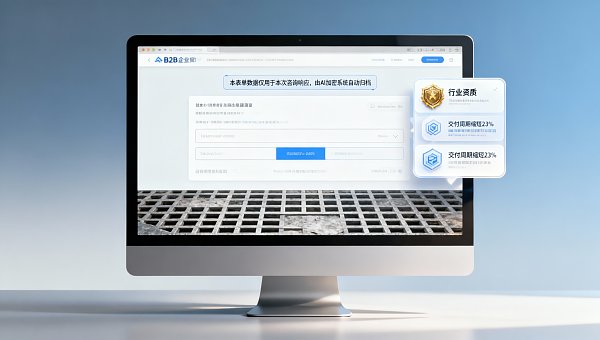
Three Underrated Trust Signals
What truly influences the submission of high-value leads are often those silent, unchanging details on the page that continuously convey certainty. They don't rely on visual stimulation, but on logical loops.
Signal 1: Visibility of Data Sovereignty
When users fill in their "company name," "job title," and "phone number," the implicit demand is for confirmation: How will this information be used? Will it be shared? Does it comply with GDPR or the Personal Information Protection Act?
Simply displaying a "Privacy Policy" link is far from sufficient. A more effective approach is to embed a line of microtext above the form: "The data in this form will only be used to respond to this inquiry and will be automatically archived by the YiYingBao AI encryption system. It will be automatically desensitized if no manual follow-up is triggered within 72 hours."
Signal Two: Structured Presentation of Professional Endorsements
Purchasers need to quickly verify whether service capabilities match their own needs. Static "client logo walls" have limited effectiveness, while dynamic case studies are more persuasive.
For example, in the architecture category form, the capabilities of " interior design, decoration, and architecture " solutions can be broken down into verifiable dimensions: a multinational hotel group's project delivery cycle was shortened by 23%, and a certain industrial park renovation project saw a 17% reduction in material wastage. The figures need to be real and traceable, rather than vague claims of "experience."
Signal Three: The Implicit Sense of Authority in Interactive Experience
The rhythm of page interaction itself conveys professionalism. Abrupt transitions, sudden pop-ups, and slow loading can all trigger subconscious risk warnings.
Among the benchmark clients served by YiYingBao, those websites that adopted an immersive full-screen flip-screen interactive design had an average form submission rate 31% higher. This design is not about showing off skills, but rather about using a precise grid layout to display material texture details and an asymmetrical dynamic layout to control the visual focus, allowing users to naturally develop the perception that "this company's execution precision is trustworthy" during the browsing process.
Judgment dimensions often overlooked in practical applications
Form submission rate optimization cannot be evaluated in isolation from the business logic. The following three dimensions determine whether optimization actions are truly implemented:
- How well do form fields match the procurement decision path: Does it request information that the other party is not yet prepared for (such as budget range)?
- Quality of immediate feedback after submission: Is a verifiable next step provided (e.g., "Sent to the account manager in the XX region, response within 2 hours")?
- Data consistency between the form page and other touchpoints: Does the delivery cycle promised by the SEO landing page match the example data at the bottom of the form page?
When these three dimensions deviate, no amount of CTA buttons can bridge the trust gap.
What are the next steps?
Optimizing form submission rates is not a one-time project, but a continuous calibration process. It's recommended to start with three lightweight actions:
First, review the bounce heatmaps of users who haven't submitted anything in the last 30 days to see which column they lingered on the longest and whether their mouse hovered over the safety icon.
Second, compare the current form side-by-side with three leading competitors, focusing on how they present their qualification certificates, case details, and data commitments.
Third, test a simplified version: keep only the company name, contact person, and core requirement description, and move the other fields to the subsequent communication stage, and observe the combined changes in submission rate and subsequent conversion rate.
True form submission rate optimization begins with respecting the psychology of purchasing decisions. It doesn't pursue instant clicks, but strives to make every submission the starting point of a two-way selection process.
Related Articles
 US Customs pilot independent station order direct link ACE
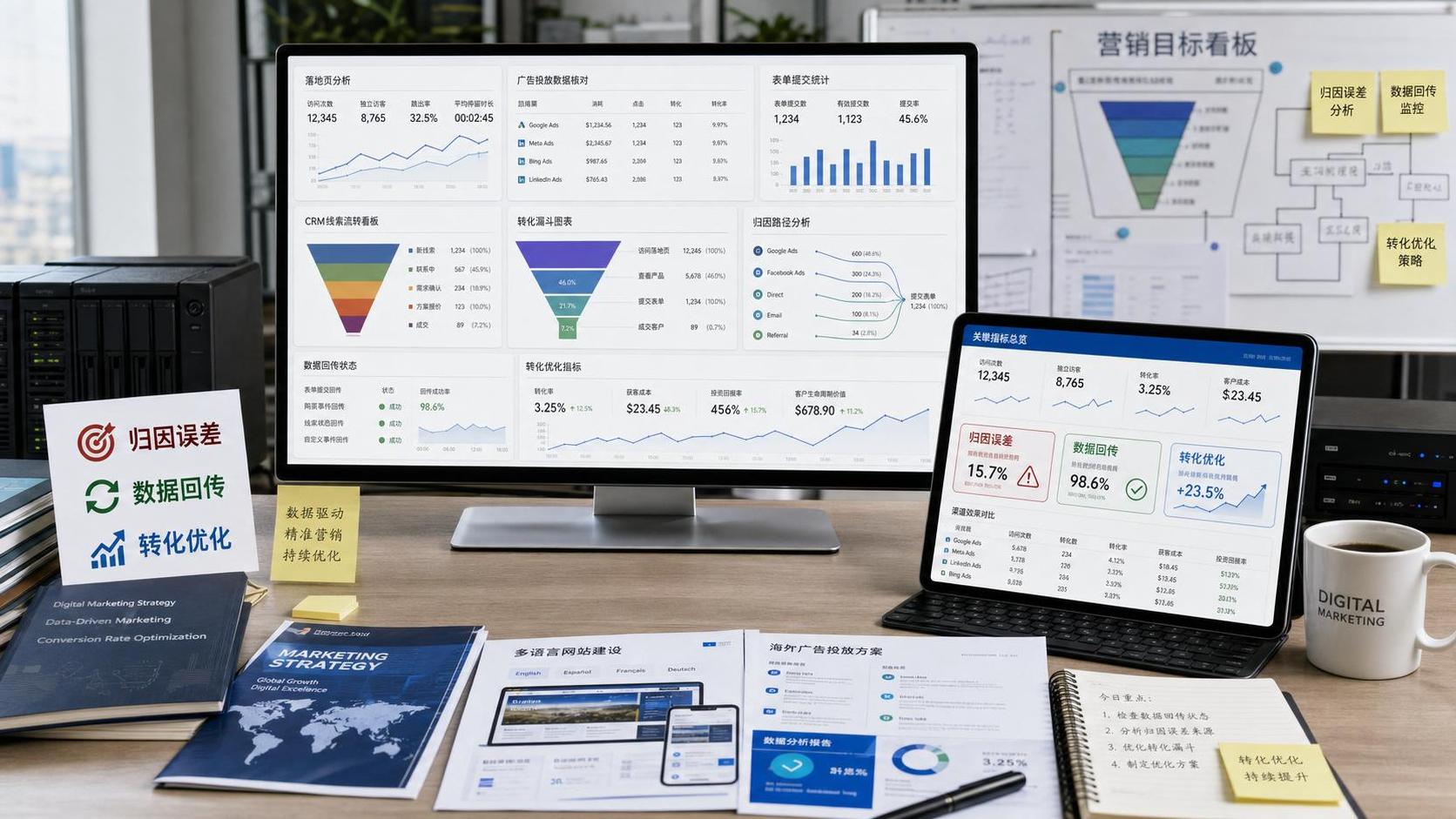
 Why Is AI Advertising Conversion So Volatile? Analysis of Common Attribution Errors and Optimization Directions
 What business scenarios is AI marketing trend forecasting suitable for? New product promotion, budget allocation, and content topic selection


Related Products
 EasyCamp SaaS Smart Website Marketing SystemE-Yingbao SaaS Smart Website Marketing System: AI-powered, zero-code website building. Rapidly launch multilingual independent e-commerce sites in just 10 minutes. Global server acceleration and AI-driven SEO optimization empower businesses to efficiently connect with global markets. The seamless integration of technology and user-friendly operation makes building e-commerce sites incredibly simple.
 AI+SEM Intelligent Advertising Marketing SystemAI+SEM drives intelligent ad creation, empowering full-funnel precision advertising marketing. The system automatically generates weekly/monthly reports, AI recommends keywords and target countries, monitors core metrics in real-time with intelligent alerts, and enables one-click high-conversion ad solutions to help quickly acquire customers and improve ROI.
 AI+SEO Dual Engine Optimization ServiceEasyWin AI+SEO Dual Engine Optimization System leverages AI-powered keyword mining, content generation, and comprehensive technical optimization to help foreign trade enterprises acquire high-quality organic traffic, significantly improving search rankings and conversion rates.
 AI+SNS Social Media Marketing SystemYingbao AI+SNS Social Media Marketing System - Precision social capture for the social media era. Supports one-click content synchronization across major platforms like Facebook and LinkedIn. AI intelligently rewrites posts for enhanced relevance. 24/7 AI customer service and user profiling analysis empower businesses to efficiently expand into global markets.
 AI+SEO营销解决方案易营宝AI+SEO营销解决方案,通过AI批量写作、智能生成TDK、精准关键词扩词等功能,全面优化网站SEO效果,提升流量与转化率。助力企业构建高效智能网站新生态。
 AI+SEM Advertising Marketing SolutionsAI+SEM Advertising Marketing Solution leverages AI technology to deeply empower SEM ad campaigns. It automatically generates weekly/monthly reports using AI, presenting account data across multiple dimensions for comprehensive insights into campaign performance and trends. The system precisely recommends keywords and target countries, intelligently generates high-conversion ad copy, and enables one-click activation of efficient campaign plans to help businesses rapidly acquire customers. Simultaneously, it monitors core metrics in real time, intelligently identifies abnormal fluctuations, and issues timely alerts to ensure stable, high-return advertising results.
 Domain Name ServicesEasyWin provides professional domain name services, including intelligent queries, one-stop registration, brand protection, and full lifecycle management, helping businesses build a digital brand image.
 EasyOperate B2C Cross-Border E-Commerce Platform & Independent WebsiteEasyStore B2C Cross-border E-commerce Independent Store is an intelligent website building and cross-border e-commerce integrated solution independently developed by EasyStore Information Technology (Beijing) Co., Ltd. The system is specially designed for small and medium-sized as well as large export enterprises, integrating 'website building, operation, marketing, advertising, and conversion' into one, helping enterprises quickly establish cross-border e-commerce independent stores to achieve brand globalization and global sales growth.
The platform supports multiple languages, multiple currencies, and multi-channel marketing, with built-in AI intelligent translation and SEO optimization systems, suitable for mainstream markets such as Southeast Asia, Europe and America, Latin America, and the Middle East, assisting Chinese manufacturing enterprises in efficiently deploying international e-commerce strategies. SSL证书易营宝提供专业SSL安全证书服务,包括单域名和泛域名证书,确保网站数据传输加密、身份验证和完整性保护,助力企业建立安全可信的在线业务环境。









