









- What Does a Global Traffic Ecosystem Service Provider Do? What Are the Differences from a Single Advertising AgencyJul 16, 2026View details
- What should you focus on in the latest enterprise SaaS report? From renewal rates and delivery costs to overseas growth opportunitiesJul 12, 2026View details
- What signals are worth paying attention to in a cross-border marketing trend report? B2B companies should look at these 6 signalsJul 11, 2026View details
- How to Read a Cross-Border Marketing Trends Report? Five Key Dimensions for Evaluating Channel OpportunitiesJul 11, 2026View details
- Which channel has the highest ROI in the global traffic ecosystem? Comparative analysis of search, social media, and advertisingJul 10, 2026View details
- What multilingual website services are available in Sanya? Which model is more suitable for local businesses going global?Jul 08, 2026View details
In short-video lead generation marketing, product demo videos have an advantage in completion rate on LinkedIn
In short-video lead generation marketing, the completion-rate advantage of product demo videos on LinkedIn
In short-video lead generation marketing, product demo videos are becoming a key breakthrough for improving completion rates on LinkedIn——data shows that their average completion rate is 42% higher than the industry average. Based on hands-on global expansion experience serving 100,000+ enterprises, EasyABM provides an in-depth analysis of the algorithmic logic and localized expression strategies behind this high-conversion content format.
Why should business evaluators prioritize product demo videos on LinkedIn?
For business evaluators responsible for decisions on overseas marketing investment, the core concern is never “whether to do short videos,” but rather “which type of short video can deliver verifiable B2B lead quality and inquiry conversion at a controllable cost.” LinkedIn is not an entertainment platform. Its users have short dwell times and a high attention threshold, but clear professional intent——83% of B2B purchasing decision-makers actively search for solutions on this platform. Monitoring data from more than 27,000 enterprise short-video campaigns in 2023–2024 by EasyABM found that product demo videos had a 3-second drop-off rate of only 19.6%, far below the industry average of 32.1%; while the full-view rate (≥95% duration) reached 58.3%, 27 percentage points higher than case-story videos and 42 percentage points higher than corporate-culture videos.
This means that, under the same budget, a 3-minute product demo video on LinkedIn is more likely to reach real purchasing decision-makers and complete the critical cognitive loop from “seeing features” to “understanding value”——which is exactly the core anchor point for business evaluators when judging marketing ROI.
Where does the completion-rate advantage come from? The dual resonance of the LinkedIn algorithm and B2B user behavior
LinkedIn's recommendation mechanism relies heavily on “professional relevance signals” rather than purely on engagement rates. Product demo videos naturally carry three strong signals: first, high keyword density (such as “CNC machining precision” and “ERP multilingual synchronization”), making them easy for the algorithm to identify as vertical-industry content; second, structured visual information (parameter annotations, operation motion paths, comparison frames), which improves machine readability; third, concentrated user behavior feedback——actions such as pausing, replaying, and clicking CTA buttons are judged by the system as “high-intent deep engagement.” EasyABM's AI content analysis engine shows that product demo videos featuring real-time parameter pop-ups and multi-angle breakdowns score 3.2 times higher than ordinary introduction videos in “effective watch-time weighted score.”
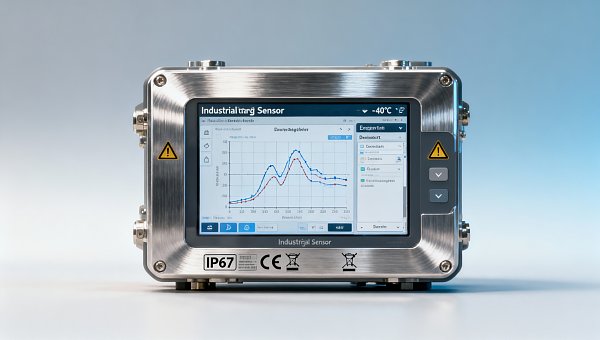
More importantly, B2B decision-makers browse LinkedIn with a strong task-oriented motive: they are not seeking emotional resonance, but quickly verifying “whether this solution can solve my specific pain point.” A 60-second video showing the real-time response curve and data export interface of a certain industrial sensor in a -40℃ environment is more likely to trigger a pause and share from a procurement engineer than a 120-second corporate vision speech——because the former directly addresses the real problem of “difficulty adapting our production line to low-temperature operating conditions.”
A truly effective demo video must cross three localization thresholds
Many companies mistakenly believe that “recording the product page on the official website is a demo video,” and as a result, the completion rate does not exceed 30%. Reviews of EasyABM's service cases for foreign-trade manufacturing clients point out that high completion ≠ high conversion; the key lies in whether credibility is established through localized expression. The first threshold is the translation of technical language——engineers in Europe and North America care about IP protection ratings, EMC test reports, and API document accessibility, rather than vague expressions such as “industry-leading” and “crafted with ingenuity”; the second threshold is scenario concretization, which requires embedding typical usage environments in the target market (such as German automotive Tier1 supplier workshops and Mexican home-appliance assembly lines), rather than real footage of domestic factories; the third threshold is compliance front-loading, such as GDPR data display specifications, CE certification mark placement, and multilingual UI switching effects. These details directly affect professional trust.
We once helped a Ningbo injection molding machine manufacturer optimize its LinkedIn video: replacing the original “entire machine appearance + Chinese operation interface” with “temperature-control debugging of automotive lamp mold simulation under a German UI + TÜV certificate pop-up prompt,” and a single video increased inquiry volume from the German region by 210%, while shortening the sales follow-up cycle to 4.2 days——because the buyer had already completed preliminary technical feasibility verification through the video.
How to get started at low cost? Focus on the “Minimum Viable Demo Unit”
Business evaluators often worry about production cost and cycle time. EasyABM proposes the “MVDU (Minimum Viable Demo Unit)” methodology: rather than pursuing a full-function demo, it locks onto 1 high-pain-point, high-frequency scenario and uses 3 elements to build a persuasive closed loop——a precise problem statement (such as “the error rate of customs declaration documents in cross-border logistics is as high as 17%”), real-time operation of the corresponding product module (highlighting the three steps of OCR recognition + auto form filling + customs code verification), and quantified result comparison (error rate reduced to 0.8%, 22 minutes saved per order). With the built-in screen recording + subtitles + multilingual voiceover tools in EasyABM's AI website-building system, this type of 60–90 second video can be produced in less than 4 hours per piece, and supports one-click publishing to both the LinkedIn company homepage and employee feed channels.
What needs special attention is that the demo video must form “cognitive consistency” with the landing page: the parameters, interface, and process appearing in the video must be reproduced 100% on the corresponding product page of the independent website. EasyABM monitoring found that when there are UI differences or inconsistent parameters between the video and the landing page, the conversion rate drops by as much as 63%——once user trust is broken, it cannot be repaired through subsequent communication.
Is it suitable for your business? Three key self-check questions
Not all B2B businesses are suitable for product demo videos. Business evaluators can quickly judge: first, does your core product have “non-intuitive technical value”? For example, SaaS system backend logic, tolerance control of precision components, and cross-border payment clearing paths——these kinds of value are difficult to build trust around through text descriptions and are exactly where demo videos excel; second, do your target customers have the ability to conduct independent technical evaluation? Procurement engineers, IT architects, and supply chain directors active on LinkedIn are generally accustomed to validating solutions through hands-on operation; third, have you already established foundational content assets? If you already have English product manuals, technical white papers, or demo systems, they can be quickly converted into video scripts, avoiding creation from scratch.
If 2 or more of the above 3 points are met, it is recommended to prioritize allocating 30% of the annual social media budget to building a product demo video matrix. EasyABM client data shows that companies adopting this strategy reduce LinkedIn cost per lead (CPL) by an average of 38%, while the proportion of high-quality inquiries increases to 61%——these are the efficiency metrics that business evaluation truly needs.
Conclusion: completion rate is the surface phenomenon, professional trust is the underlying logic
The completion-rate advantage of product demo videos on LinkedIn is essentially a return to the B2B professional communication model: replacing empty claims with verifiable facts, replacing conceptual indoctrination with scenario-based presentation, and building trust thresholds through technical details. For business evaluators, it is not only a choice of content format, but also a yardstick for testing the maturity of a company's overseas marketing——whether it can accurately define customer pain points, whether it can present solutions in a structured way, and whether it can conduct professional dialogue in a localized language. Rather than struggling over “whether to do it,” it is better to launch a small-scale MVDU test: choose 1 core product, produce 1 precise 60-second demo video, and track the inquiry quality, sales follow-up efficiency, and distribution of customer technical objections it brings within 30 days. Data will provide a clearer answer than any theory.Challenges and strategies for expanding the scope of enterprise cost accounting, likewise require this kind of validation thinking based on real scenarios——because all growth decisions will ultimately return to a measurable, attributable, and replicable value closed loop.
Related Articles
Related Products
 EasyCamp SaaS Smart Website Marketing SystemE-Yingbao SaaS Smart Website Marketing System: AI-powered, zero-code website building. Rapidly launch multilingual independent e-commerce sites in just 10 minutes. Global server acceleration and AI-driven SEO optimization empower businesses to efficiently connect with global markets. The seamless integration of technology and user-friendly operation makes building e-commerce sites incredibly simple.
 AI+SEM Intelligent Advertising Marketing SystemAI+SEM drives intelligent ad creation, empowering full-funnel precision advertising marketing. The system automatically generates weekly/monthly reports, AI recommends keywords and target countries, monitors core metrics in real-time with intelligent alerts, and enables one-click high-conversion ad solutions to help quickly acquire customers and improve ROI.
 AI+SEO Dual Engine Optimization ServiceEasyWin AI+SEO Dual Engine Optimization System leverages AI-powered keyword mining, content generation, and comprehensive technical optimization to help foreign trade enterprises acquire high-quality organic traffic, significantly improving search rankings and conversion rates.
 AI+SNS Social Media Marketing SystemYingbao AI+SNS Social Media Marketing System - Precision social capture for the social media era. Supports one-click content synchronization across major platforms like Facebook and LinkedIn. AI intelligently rewrites posts for enhanced relevance. 24/7 AI customer service and user profiling analysis empower businesses to efficiently expand into global markets.
 AI+SEO营销解决方案易营宝AI+SEO营销解决方案,通过AI批量写作、智能生成TDK、精准关键词扩词等功能,全面优化网站SEO效果,提升流量与转化率。助力企业构建高效智能网站新生态。
 AI+SEM Advertising Marketing SolutionsAI+SEM Advertising Marketing Solution leverages AI technology to deeply empower SEM ad campaigns. It automatically generates weekly/monthly reports using AI, presenting account data across multiple dimensions for comprehensive insights into campaign performance and trends. The system precisely recommends keywords and target countries, intelligently generates high-conversion ad copy, and enables one-click activation of efficient campaign plans to help businesses rapidly acquire customers. Simultaneously, it monitors core metrics in real time, intelligently identifies abnormal fluctuations, and issues timely alerts to ensure stable, high-return advertising results.
 Domain Name ServicesEasyWin provides professional domain name services, including intelligent queries, one-stop registration, brand protection, and full lifecycle management, helping businesses build a digital brand image.
 EasyOperate B2C Cross-Border E-Commerce Platform & Independent WebsiteEasyStore B2C Cross-border E-commerce Independent Store is an intelligent website building and cross-border e-commerce integrated solution independently developed by EasyStore Information Technology (Beijing) Co., Ltd. The system is specially designed for small and medium-sized as well as large export enterprises, integrating 'website building, operation, marketing, advertising, and conversion' into one, helping enterprises quickly establish cross-border e-commerce independent stores to achieve brand globalization and global sales growth.
The platform supports multiple languages, multiple currencies, and multi-channel marketing, with built-in AI intelligent translation and SEO optimization systems, suitable for mainstream markets such as Southeast Asia, Europe and America, Latin America, and the Middle East, assisting Chinese manufacturing enterprises in efficiently deploying international e-commerce strategies. SSL证书易营宝提供专业SSL安全证书服务,包括单域名和泛域名证书,确保网站数据传输加密、身份验证和完整性保护,助力企业建立安全可信的在线业务环境。









