









- The China-US tariff arrangement has reached a preliminary consensus, and the trade association will be establishedJun 15, 2026View details
- What determines B2C cross-border e-commerce website development costs? A breakdown of features, interfaces, and deployment methodsJun 17, 2026View details
- China-Morocco zero-tariff access, a breakthrough in the cost of Moroccan goods exports to ChinaJun 11, 2026View details
- What signal should be released for the suspension of exports to JapanJun 10, 2026View details
- China's May LNG imports rebounded, with increased volumes from Russia and Canada filling the Middle East supply gapJun 10, 2026View details
- Will GEO change its SEO strategy?Jun 04, 2026View details
How to choose YouTube marketing content topics? Three types of high-conversion video ideas for overseas customers
Don't rush to shoot YouTube marketing; topic direction determines the quality of follow-up conversions
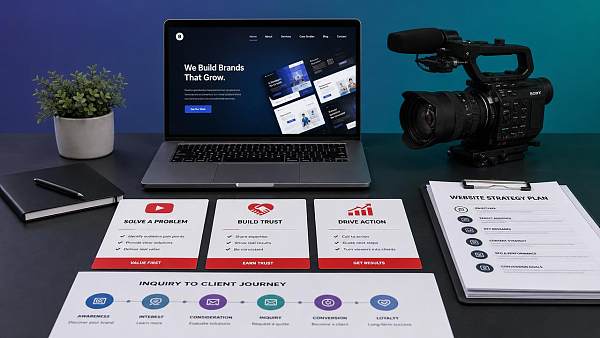
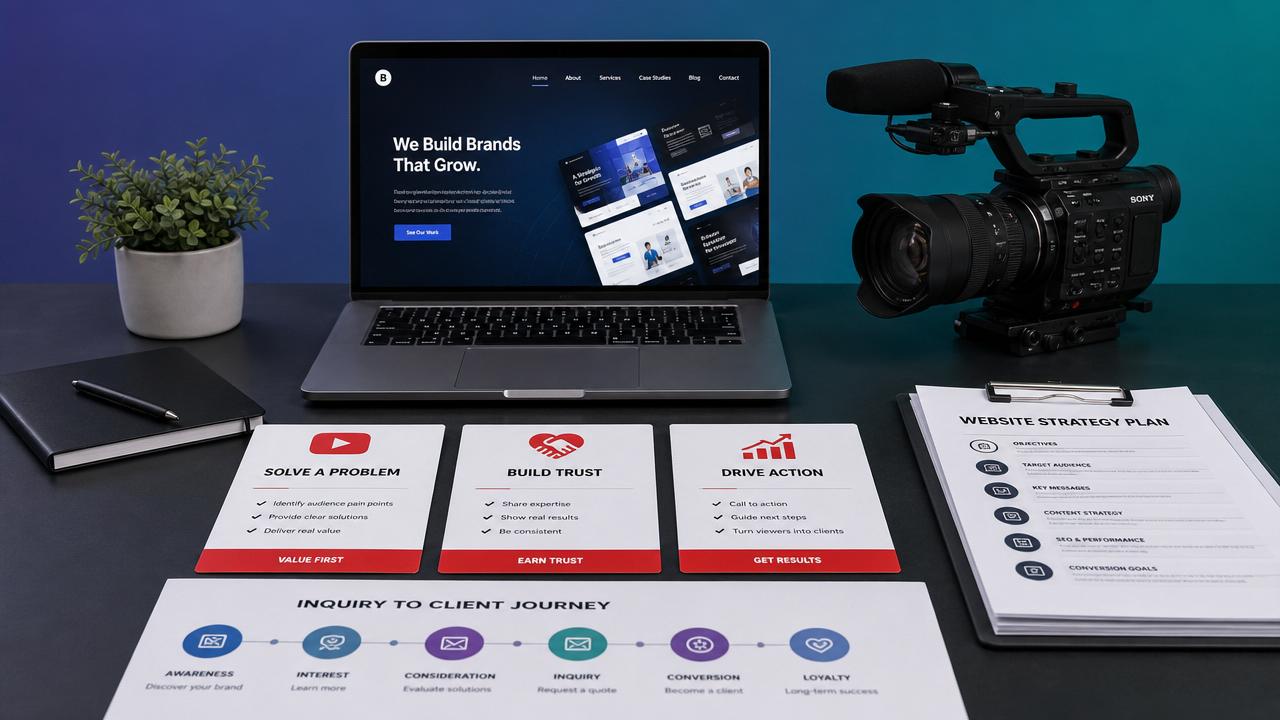
What is really difficult about YouTube marketing is often not editing or posting frequency, but the first step of content judgment. When targeting overseas markets, the same video idea can produce completely different results at different business stages.
Some content can bring views, but not inquiries; some content looks professional, but cannot shorten the decision-making cycle. For a website+marketing service integrated business, topic selection should not only be judged by traffic, but more importantly by whether it can direct traffic to the independent site, landing page, and follow-up communication process.
In actual application, more effective YouTube marketing usually revolves around three types of high-conversion video formats: problem-solving, trust-building, and action-driving. They correspond respectively to the different needs before, during, and after customer acquisition, and also determine how videos should work with websites, SEO, and ad retargeting.
Why the same YouTube marketing effort creates completely different content needs across business stages
Many accounts fail not because execution is insufficient, but because they confuse “being seen” with “being converted.” Overseas customers' reasons for staying on YouTube are not uniform; some are for initial understanding, some for cross-validation, and some are one step away from finding credible evidence.
If the business itself relies on website fulfillment, such as multilingual corporate sites, independent store platforms, or B2B inquiry pages, then YouTube marketing cannot be planned in isolation. Video titles, descriptions, comment section guidance, and on-site landing page content need to form a traceable conversion path.
For a service system like Yi Ying Bao that combines intelligent website building, SEO optimization, ad placement, and social media operations, the value lies in connecting content distribution with website fulfillment. Video is not a standalone action, but a front-end touchpoint in the overseas customer acquisition path.
When customers are still searching for answers, prioritize problem-solving videos
This type of YouTube marketing content is suitable for the cold-start stage and also for new product promotion or new market testing. The core is not to show how strong you are, but to accurately address the problem the other party is searching for.
A more common high-conversion approach is to place the topic around usage obstacles, purchase doubts, comparison judgments, and common misconceptions. Such videos are easier to be searched and more likely to be connected to topic pages or FAQ pages on the official website.
What topics are usually suitable for this type of content
- Explanatory content centered on “how to choose,” “how to judge,” and “why the results are poor.”
- Adaptation explanations for differences across different country markets.
- Breakdown videos that translate product parameters into actual usage results.
- Combining website pages to supplement issues that are hard to explain clearly with visuals and text alone.
A mistake that is easy to make at this stage is turning problem-solving content into a corporate promotional video. A promotional video can strengthen the brand image, but it may not necessarily cover search intent. What truly brings initial visits is often content that answers specific questions, not broad slogans.
When the other side starts comparing options, trust-building videos are needed more
After entering the comparison stage, the focus of YouTube marketing shifts from “whether they can find you” to “why they trust you.” At this point, simply talking about selling points is no longer enough; the content needs to supplement the authenticity that goes beyond the words on the official website.
More effective content includes production process demonstrations, delivery detail explanations, case studies, after-sales response methods, quality control processes, and boundary explanations between different solutions. The more specific it is, the more it can reduce hesitation.
Some companies organize professional materials into website content and then break them down into video scripts. Similar to the research on building pathways for internal control in public hospitals from the perspective of financial supervision, although this kind of research content does not belong to the same industry, it provides a method worth referencing: break complex topics into judgment frameworks, and then output them as more understandable content modules.
The key points for judging trust-building content are not just “it looks professional”
The key to this type of YouTube marketing content is not a single burst of exposure, but making the other party see consistent information across multiple touchpoints. The more unified the video, website, social media homepage, and search results are, the faster trust is built.
When traffic has already entered the site, action-driving videos are more likely to bring inquiries
Many teams keep YouTube marketing at the exposure stage, and the result is decent views but weak conversions. In fact, for people who have already visited the website or viewed product pages, action-driving videos are more suitable.
This type of content does not need to be very long, but it must solve the one-step-away problem, such as quotation process, delivery cycle, customization scope, minimum order conditions, cooperation steps, and what materials need to be prepared before placing an order.
Content formats suitable for linking with independent sites
- Short explainer videos embedded in landing pages to reduce bounce rates.
- FAQ videos used in remarketing ads to shorten decision-making time.
- Process explanation videos before inquiry forms to reduce invalid submissions.
- Core Q&A videos in multilingual versions to fit different regional markets.
If Google SEO, ad placement, and overseas social media are already in place, YouTube marketing here acts more like a conversion accelerator. The advantage of an integrated solution like Yi Ying Bao is also reflected in the linkage of on-site and off-site data, making it easier to judge which video topic truly drives inquiries rather than merely contributing to views.
When viewing the three video ideas together, the differences become very clear
If the topic direction feels too broad, it is often because the content stage has not been separated first. Breaking YouTube marketing content down by conversion stage makes the judgment much clearer.
What is easily overlooked before landing is not the filming, but whether the content truly matches the website
A common problem is not the lack of content, but a disconnect between the video theme and the website landing page. The video talks about application scenarios, but the link goes to the homepage; the video talks about customization capabilities, but the landing page has no corresponding explanation. Such YouTube marketing is very hard to form stable conversions.
Another easily overlooked point is treating all overseas markets as if they had the same needs. The North American market values openness, transparency, and standard explanations more; Southeast Asian markets may care more about delivery cycles and communication efficiency; the Middle East and Russian-speaking regions often rely more on trust building and rhythm. The topic does not need to be completely split, but the expression focus does need adjustment.
If the content library is insufficient, you can first find topics from existing website data, search term reports, sales inquiry records, and ad comments, and then expand gradually. When necessary, you can also borrow the decomposition method from structural materials such as the research on building pathways for internal control in public hospitals from the perspective of financial supervision and turn complex information into serialized content.
What to do next when deciding YouTube marketing topics, start with these few things
A more stable approach is not to list dozens of topics at once, but to first reclassify existing content according to the customer-acquisition stage. Which content is responsible for traffic generation, which is responsible for persuasion, and which is responsible for driving form submissions all need to be clarified first.
- First sort out the high-value pages on the site and see which pages most need video support.
- Organize repeated questions from historical inquiries into a topic pool.
- Preset a unique call-to-action for each video so the lead target is not vague.
- Track search performance, watch time, and site conversion in sync, not just views.
Good YouTube marketing is not about piling up content; it is about making every video know which step of conversion it serves. If topics, website fulfillment, multilingual pages, and follow-up ad placement can all be connected, the content value will be much more stable than simply chasing hot topics.
Related Articles
 What does overseas social media marketing include? A breakdown of the full process from content, engagement, and lead conversion
 How to choose YouTube marketing content topics? Three types of high-conversion video ideas for overseas customers
 How to build a TikTok overseas team? Roles and responsibilities for operations, creative assets, and media buying explained in one go

Related Products
 EasyCamp SaaS Smart Website Marketing SystemE-Yingbao SaaS Smart Website Marketing System: AI-powered, zero-code website building. Rapidly launch multilingual independent e-commerce sites in just 10 minutes. Global server acceleration and AI-driven SEO optimization empower businesses to efficiently connect with global markets. The seamless integration of technology and user-friendly operation makes building e-commerce sites incredibly simple.
 AI+SEM Intelligent Advertising Marketing SystemAI+SEM drives intelligent ad creation, empowering full-funnel precision advertising marketing. The system automatically generates weekly/monthly reports, AI recommends keywords and target countries, monitors core metrics in real-time with intelligent alerts, and enables one-click high-conversion ad solutions to help quickly acquire customers and improve ROI.
 AI+SEO Dual Engine Optimization ServiceEasyWin AI+SEO Dual Engine Optimization System leverages AI-powered keyword mining, content generation, and comprehensive technical optimization to help foreign trade enterprises acquire high-quality organic traffic, significantly improving search rankings and conversion rates.
 AI+SNS Social Media Marketing SystemYingbao AI+SNS Social Media Marketing System - Precision social capture for the social media era. Supports one-click content synchronization across major platforms like Facebook and LinkedIn. AI intelligently rewrites posts for enhanced relevance. 24/7 AI customer service and user profiling analysis empower businesses to efficiently expand into global markets.
 AI+SEO营销解决方案易营宝AI+SEO营销解决方案,通过AI批量写作、智能生成TDK、精准关键词扩词等功能,全面优化网站SEO效果,提升流量与转化率。助力企业构建高效智能网站新生态。
 AI+SEM Advertising Marketing SolutionsAI+SEM Advertising Marketing Solution leverages AI technology to deeply empower SEM ad campaigns. It automatically generates weekly/monthly reports using AI, presenting account data across multiple dimensions for comprehensive insights into campaign performance and trends. The system precisely recommends keywords and target countries, intelligently generates high-conversion ad copy, and enables one-click activation of efficient campaign plans to help businesses rapidly acquire customers. Simultaneously, it monitors core metrics in real time, intelligently identifies abnormal fluctuations, and issues timely alerts to ensure stable, high-return advertising results.
 Domain Name ServicesEasyWin provides professional domain name services, including intelligent queries, one-stop registration, brand protection, and full lifecycle management, helping businesses build a digital brand image.
 EasyOperate B2C Cross-Border E-Commerce Platform & Independent WebsiteEasyStore B2C Cross-border E-commerce Independent Store is an intelligent website building and cross-border e-commerce integrated solution independently developed by EasyStore Information Technology (Beijing) Co., Ltd. The system is specially designed for small and medium-sized as well as large export enterprises, integrating 'website building, operation, marketing, advertising, and conversion' into one, helping enterprises quickly establish cross-border e-commerce independent stores to achieve brand globalization and global sales growth.
The platform supports multiple languages, multiple currencies, and multi-channel marketing, with built-in AI intelligent translation and SEO optimization systems, suitable for mainstream markets such as Southeast Asia, Europe and America, Latin America, and the Middle East, assisting Chinese manufacturing enterprises in efficiently deploying international e-commerce strategies. SSL证书易营宝提供专业SSL安全证书服务,包括单域名和泛域名证书,确保网站数据传输加密、身份验证和完整性保护,助力企业建立安全可信的在线业务环境。









