









- What Does a Global Traffic Ecosystem Service Provider Do? What Are the Differences from a Single Advertising AgencyJul 16, 2026View details
- What should you focus on in the latest enterprise SaaS report? From renewal rates and delivery costs to overseas growth opportunitiesJul 12, 2026View details
- What signals are worth paying attention to in a cross-border marketing trend report? B2B companies should look at these 6 signalsJul 11, 2026View details
- How to Read a Cross-Border Marketing Trends Report? Five Key Dimensions for Evaluating Channel OpportunitiesJul 11, 2026View details
- Which channel has the highest ROI in the global traffic ecosystem? Comparative analysis of search, social media, and advertisingJul 10, 2026View details
- What multilingual website services are available in Sanya? Which model is more suitable for local businesses going global?Jul 08, 2026View details
What are the methods for customer development on LinkedIn? A full analysis from cold outreach connection requests, value-hook messaging to secondary follow-up cadence
LinkedIn customer development methods are undergoing a silent upgrade
Over the past two years, practical feedback from foreign trade and global expansion enterprises on LinkedIn customer development methods has shown a clear divide: one type of team complains, “We sent 50 InMails, and the reply rate was less than 3%”, while another consistently achieves 12–18 high-quality B2B technical meetings per month. The difference does not lie in tools or account tier, but in the underlying logic—from “broad net-style outreach” to “verifiable value demonstration”. This shift is not caused by a sudden platform algorithm change, but by the real evolution of the global procurement decision-making chain: longer decision cycles, earlier-stage technical validation, and normalized cross-functional collaboration.
During the process of serving over 100,000 global expansion enterprises, EasyBiz has found that teams truly succeeding with LinkedIn customer development no longer treat connection building as the starting point, but instead embed it as the second touchpoint after independent website traffic conversion. After overseas buyers enter a multilingual official website through Google SEO or AI search and complete product parameter comparisons, LinkedIn becomes the key channel for verifying technical compatibility and delivery credibility.
Three hidden signals that cold-start connection building is failing
When the following phenomena appear at the same time, the traditional connection-building strategy has most likely lost focus:
- InMail open rates remain below 25%, but personal profile visitor volume stays steadily at 8–12 people per day;
- Polite replies such as “Thanks for reaching out” account for more than 65%, but there is zero follow-up action;
- Within the same target company, more than 3 people in different roles respond similarly to the same messaging.
This indicates that the other party is not refusing communication, but has not perceived a strong connection to their current business pain points. Monitoring by EasyBiz’s AI+SEO/GEO optimization system shows that since Q1 2024, the frequency of active searches by North American manufacturing procurement decision-makers for long-tail keywords such as “OEM supplier verification process” and “ISO 13485 compliance checklist” has increased by 142% year-on-year, confirming that technical due diligence has moved forward to the pre-connection stage.
The essence of a high-conversion value hook is a “verifiable micro-commitment”
Truly effective LinkedIn customer development methods are shifting from “introducing what we can do” to “helping you confirm one thing”. For example:
- Do not write “We provide customized industrial sensors”, but instead write “We can generate a free ‘Production Line Vibration Data Collection Solution Compatibility Report’ for you, including 3 key interface compatibility verification items”;
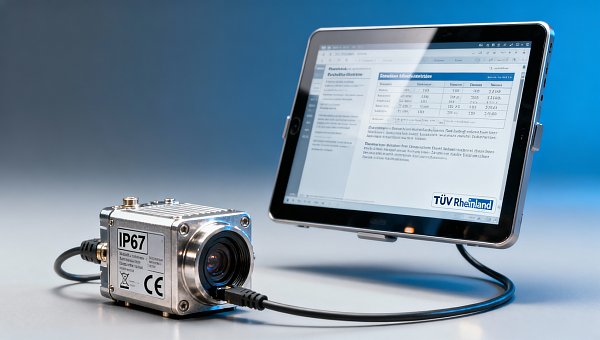
- Do not just mention “support multilingual websites”, but attach a screenshot of a deployed German technical document and note “Section 4.2 has passed TÜV Rheinland terminology consistency verification”;
- Avoid “Feel free to contact us”, and instead use “If you are evaluating the implementation path for the EN 61000-4-3 testing standard, I can share 3 design adjustment points from an actual case of a German company passing certification (not a generic template)”.
The reason this kind of hook works is that it transforms abstract capabilities into information nodes that the other party can immediately cross-verify. In a B2B foreign trade marketing website built by EasyBiz for a precision mold factory in Dongguan, a real-time updated CE/UL certification status dashboard was embedded. The dashboard data was directly used as a LinkedIn connection-building hook, increasing the success rate of connection requests with technical director-level contacts by 37%.
The pace of secondary follow-up must match the stages of the buyer’s internal process
Most teams mistakenly treat “give up after 7 days with no reply” as an iron rule, while ignoring the actual rhythm of procurement decision-making. According to EasyBiz’s tracking of 217 European industrial clients, typical B2B technical procurement has three non-compressible internal stages:
This rhythm design makes secondary follow-up no longer a form of urging, but a support tool for the other party’s internal advancement. After adopting this model, a Ningbo auto parts supplier shortened the average cycle from connection building to the first video meeting by 41%.
Two structural changes worth paying attention to
First, the value focus of LinkedIn customer development methods is shifting from “obtaining contacts” to “accumulating reusable trust assets”. Data from EasyBiz’s AI advertising marketing system shows that in 2024, enterprises using the combined hook of “industry white paper + customized diagnostic report” increased the secondary sharing rate of their content assets on LinkedIn by 2.8 times, and 73% of those who reshared were in non-direct procurement roles (such as quality directors and production managers), forming cross-functional trust endorsement.
Second, the depth of collaboration between independent websites and LinkedIn determines the upper limit of development results. After overseas buyers complete technical parameter comparisons on a multilingual official website, if LinkedIn connection-building messaging can accurately reference their browsing behavior (for example, “We noticed that you viewed the IP67 protection rating description for the X series”), the response rate increases significantly. What this relies on is the same logic revealed by research on the business-finance integration strategy of full life cycle management for university fixed assets: only connected data flows can support a closed loop of credibility.
The next step is to focus on verifying whether the granularity of technical information on your own official website is sufficient to support the precision of LinkedIn hooks—this is more fundamental than optimizing InMail templates. The “technical document quoteability detection” module built into EasyBiz’s cloud intelligent website building system can automatically identify which parameter sections on the official website are being clicked frequently by overseas buyers and generate corresponding LinkedIn messaging suggestions.
Related Articles

Related Products
 EasyCamp SaaS Smart Website Marketing SystemE-Yingbao SaaS Smart Website Marketing System: AI-powered, zero-code website building. Rapidly launch multilingual independent e-commerce sites in just 10 minutes. Global server acceleration and AI-driven SEO optimization empower businesses to efficiently connect with global markets. The seamless integration of technology and user-friendly operation makes building e-commerce sites incredibly simple.
 AI+SEM Intelligent Advertising Marketing SystemAI+SEM drives intelligent ad creation, empowering full-funnel precision advertising marketing. The system automatically generates weekly/monthly reports, AI recommends keywords and target countries, monitors core metrics in real-time with intelligent alerts, and enables one-click high-conversion ad solutions to help quickly acquire customers and improve ROI.
 AI+SEO Dual Engine Optimization ServiceEasyWin AI+SEO Dual Engine Optimization System leverages AI-powered keyword mining, content generation, and comprehensive technical optimization to help foreign trade enterprises acquire high-quality organic traffic, significantly improving search rankings and conversion rates.
 AI+SNS Social Media Marketing SystemYingbao AI+SNS Social Media Marketing System - Precision social capture for the social media era. Supports one-click content synchronization across major platforms like Facebook and LinkedIn. AI intelligently rewrites posts for enhanced relevance. 24/7 AI customer service and user profiling analysis empower businesses to efficiently expand into global markets.
 AI+SEO营销解决方案易营宝AI+SEO营销解决方案,通过AI批量写作、智能生成TDK、精准关键词扩词等功能,全面优化网站SEO效果,提升流量与转化率。助力企业构建高效智能网站新生态。
 AI+SEM Advertising Marketing SolutionsAI+SEM Advertising Marketing Solution leverages AI technology to deeply empower SEM ad campaigns. It automatically generates weekly/monthly reports using AI, presenting account data across multiple dimensions for comprehensive insights into campaign performance and trends. The system precisely recommends keywords and target countries, intelligently generates high-conversion ad copy, and enables one-click activation of efficient campaign plans to help businesses rapidly acquire customers. Simultaneously, it monitors core metrics in real time, intelligently identifies abnormal fluctuations, and issues timely alerts to ensure stable, high-return advertising results.
 Domain Name ServicesEasyWin provides professional domain name services, including intelligent queries, one-stop registration, brand protection, and full lifecycle management, helping businesses build a digital brand image.
 EasyOperate B2C Cross-Border E-Commerce Platform & Independent WebsiteEasyStore B2C Cross-border E-commerce Independent Store is an intelligent website building and cross-border e-commerce integrated solution independently developed by EasyStore Information Technology (Beijing) Co., Ltd. The system is specially designed for small and medium-sized as well as large export enterprises, integrating 'website building, operation, marketing, advertising, and conversion' into one, helping enterprises quickly establish cross-border e-commerce independent stores to achieve brand globalization and global sales growth.
The platform supports multiple languages, multiple currencies, and multi-channel marketing, with built-in AI intelligent translation and SEO optimization systems, suitable for mainstream markets such as Southeast Asia, Europe and America, Latin America, and the Middle East, assisting Chinese manufacturing enterprises in efficiently deploying international e-commerce strategies. SSL证书易营宝提供专业SSL安全证书服务,包括单域名和泛域名证书,确保网站数据传输加密、身份验证和完整性保护,助力企业建立安全可信的在线业务环境。









