









- What Does a Global Traffic Ecosystem Service Provider Do? What Are the Differences from a Single Advertising AgencyJul 16, 2026View details
- What should you focus on in the latest enterprise SaaS report? From renewal rates and delivery costs to overseas growth opportunitiesJul 12, 2026View details
- What signals are worth paying attention to in a cross-border marketing trend report? B2B companies should look at these 6 signalsJul 11, 2026View details
- How to Read a Cross-Border Marketing Trends Report? Five Key Dimensions for Evaluating Channel OpportunitiesJul 11, 2026View details
- Which channel has the highest ROI in the global traffic ecosystem? Comparative analysis of search, social media, and advertisingJul 10, 2026View details
- What multilingual website services are available in Sanya? Which model is more suitable for local businesses going global?Jul 08, 2026View details
How to Localize Content for Less-Common-Language Websites
Minor-language website content localization is not just translation,it must also align with local user habits,search rules and conversion scenarios,so that traffic and inquiries can be improved。For operators,the real challenges are:how to revise pages,how to select keywords,how to review materials,and how to evaluate results after launch,rather than simply replacing Chinese content with another language。
Why minor-language website content localization affects inquiry quality
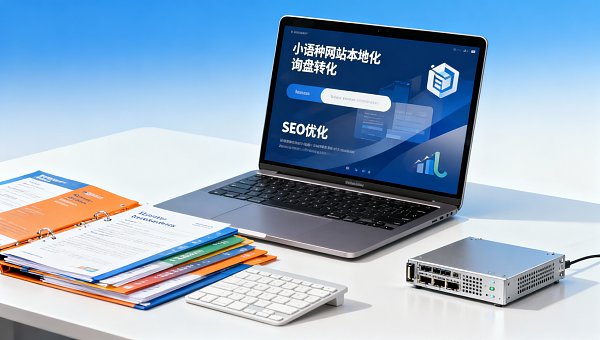
When many companies expanding overseas carry out minor-language website content localization,they first focus on whether the grammar is accurate,but ignore the search habits of local users。For example,for the same type of industrial equipment,users in different countries may search using industry nicknames,application terms or parameter terms,so directly translated pages can hardly cover real demand。
The value of website + marketing service integration lies in placing website building,content,search optimization,social media reach and advertising within the same growth logic。Since its establishment in 2013,Yiyingbao Information Technology(Beijing)Co., Ltd. has taken artificial intelligence and big data as its core,helping operators break localization tasks into executable and traceable processes。
- Language level:avoid stiff word order,terminology confusion and distorted brand expression caused by direct machine translation。
- Search level:reconstruct page information around local search terms,long-tail keywords and product application terms。
- Conversion level:adjust form fields,contact methods,quotation descriptions and trust endorsements based on inquiry habits。
How operators should break down localization work
Minor-language website content localization is recommended to start with “page asset inventory”,rather than directly translating the entire site。Operators can first distinguish the homepage,product pages,solution pages,case pages and inquiry pages,and determine which pages serve as traffic entry points and which pages are responsible for conversion。
The table below can be used as an execution checklist to evaluate the localization priorities of different pages and reduce the probability of rework。
The core purpose of the table is not to make every page longer,but to give every page a clear responsibility。Good minor-language website content localization is often reflected in whether users can quickly judge “whether this meets my procurement needs”。
What is the difference between direct translation,human translation and marketing localization
When budgets are limited,companies often equate minor-language website content localization with translation procurement。However,from the perspective of customer acquisition,direct translation can only solve readability,human translation improves accuracy,and only marketing localization truly affects rankings,clicks and inquiries。
Therefore,when submitting requirements,operators should also provide the target country,core products,competitor websites,target customer types and expected inquiry forms。The clearer the information,the easier it is for minor-language website content localization to become an implementable plan。
Which industry scenarios require deeper localization
Industrial companies expanding overseas,cross-border service providers,equipment manufacturers and B2B bulk trading platforms usually rely more on deep localization。Because these websites not only display products,but also need to prove supply scale,delivery capabilities,service coverage and long-term cooperation stability。
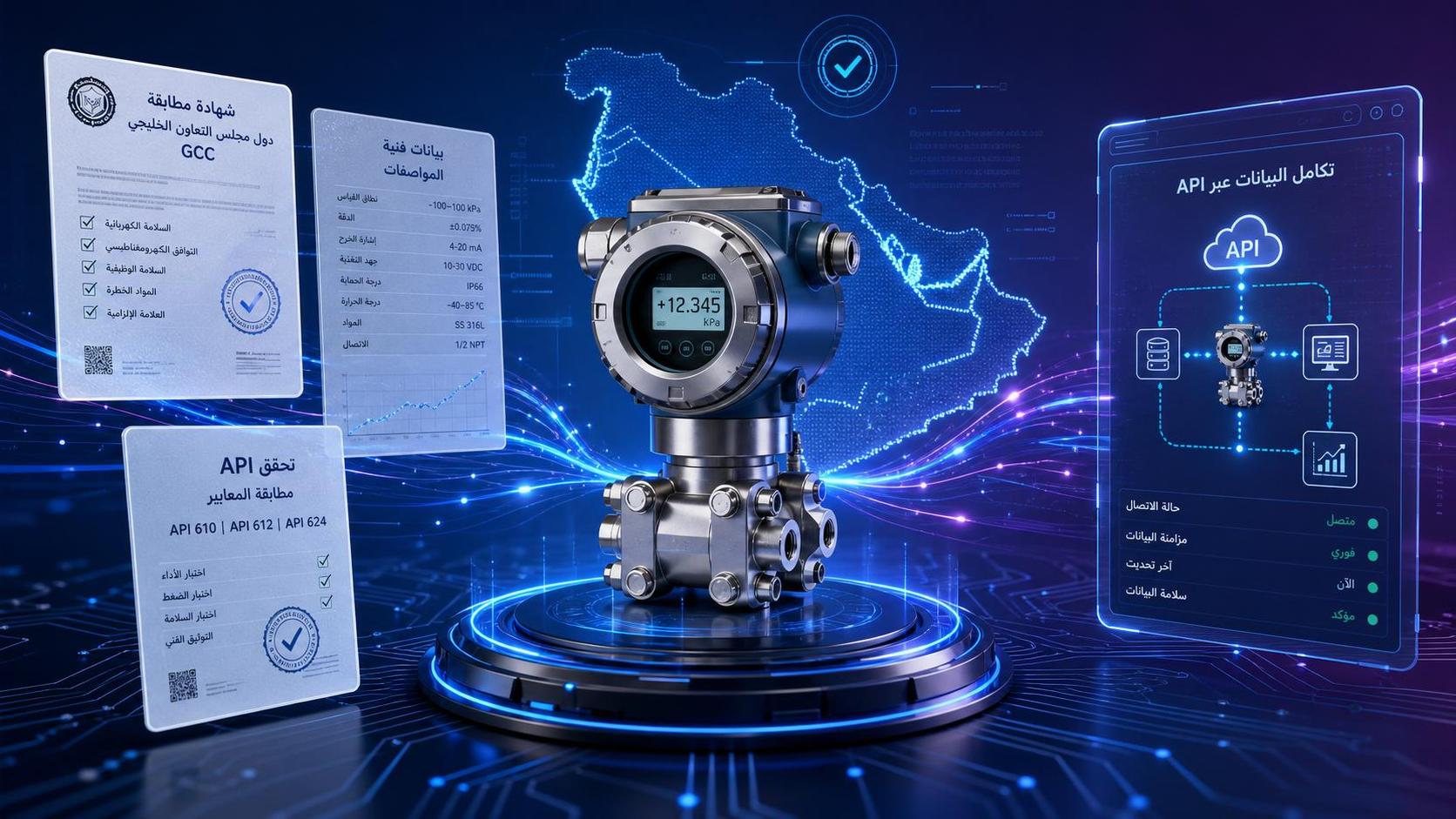
For example,in projects such as heavy-duty vehicles,logistics,the website needs to build a digital portal to showcase supply scale and product diversity,and strengthen B2B transaction trust through overseas business coverage,honored customer logos,visualized data dashboards and professional consultation forms。
Deep localization usually includes these actions
- Adjust product categories according to different countries,allowing users to search by application,industry or procurement scenario,rather than only by internal model number。
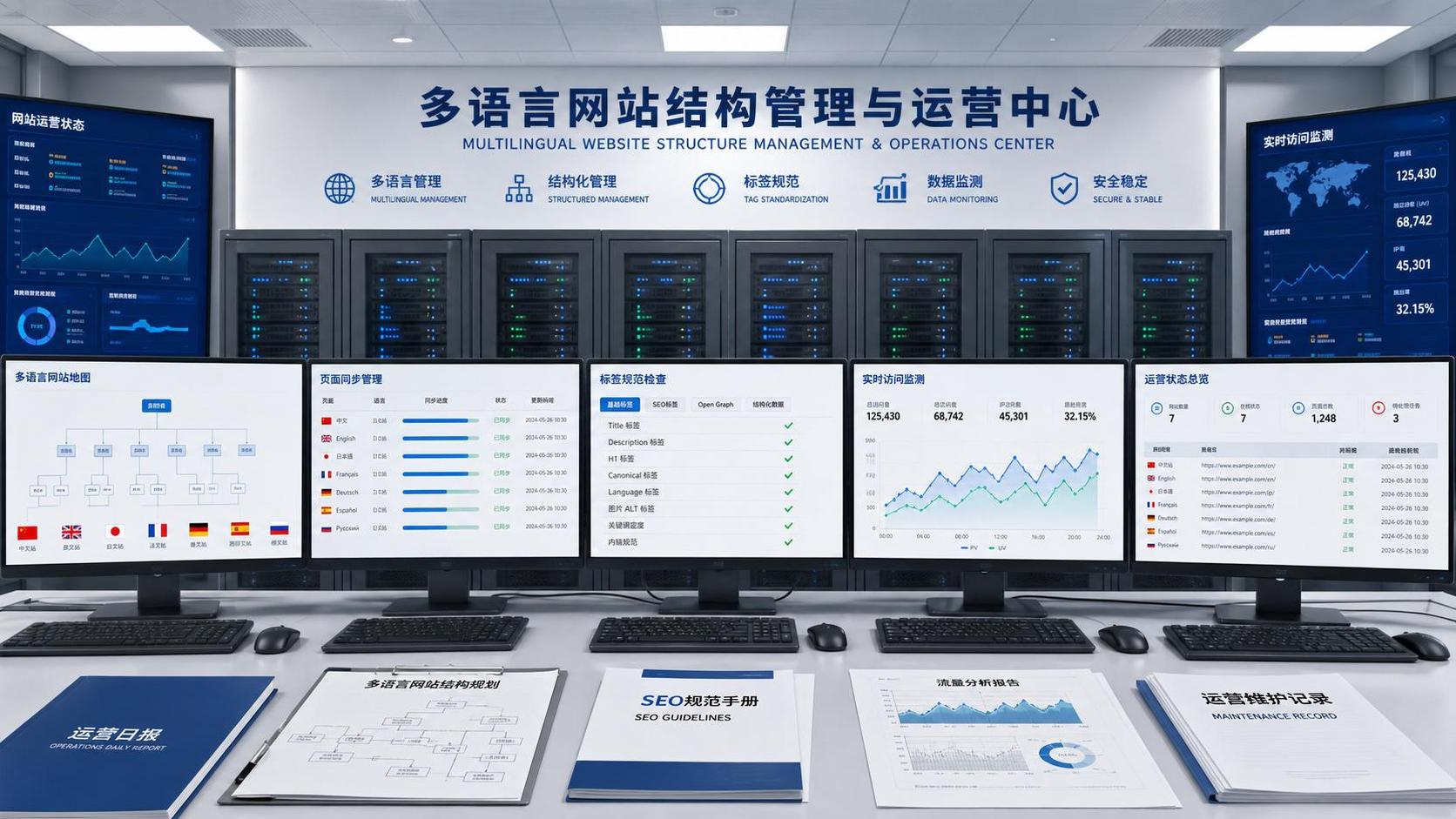
- Configure localized titles,descriptions,image alt text and FAQs for key pages to enhance search understanding。
- Add descriptions of delivery regions,service processes,payment communication and after-sales response on pages to reduce concerns before inquiries。
How to arrange the implementation process for minor-language website content localization
When delivery requirements are tight,a phased launch strategy is recommended。Complete the core markets and core pages first,then expand to blogs,case studies and resource centers。This can control costs while allowing data to flow back as early as possible to guide subsequent optimization。
Yiyingbao’s information technology capabilities can combine content production with data analysis,build a closed loop around intelligent website building,SEO optimization,social media marketing and advertising,and help operators reduce communication costs across multiple suppliers。
The process table can help operators determine whether a service provider only delivers text or can deliver a growth path。If minor-language website content localization lacks post-launch data review,it is difficult to continuously improve traffic and inquiry quality。
FAQs:what should be confirmed before execution
Does minor-language website content localization need to complete the entire site at once?
Not necessarily。If the budget is limited,you can first choose the homepage,key product pages,solution pages and inquiry pages。After the core pages run smoothly,expand industry articles,case pages and resource download pages based on search data。
How to judge whether keywords are suitable for the local market?
Do not only look at the corresponding translation of Chinese terms,but combine local search results,competitor pages,industry terminology and user procurement expressions。For B2B business,parameter terms,application terms and supplier terms often have higher conversion value than generic terms。
How long does it take to see results after localized content goes online?
It usually needs to be judged in combination with the website foundation,market competition and advertising strategy。If advertising landing page optimization is carried out simultaneously,click and inquiry feedback will be faster;organic traffic requires continuous observation of indexing,rankings and page interaction data。
Why choose us:turn content localization into growth actions
Yiyingbao Information Technology(Beijing)Co., Ltd. has been deeply engaged in global digital marketing for many years,with service capabilities covering intelligent website building,SEO optimization,social media marketing and advertising。For users and operators,we pay more attention to executability:how to revise pages,how to build a keyword database,how to set up forms,and how to review data。
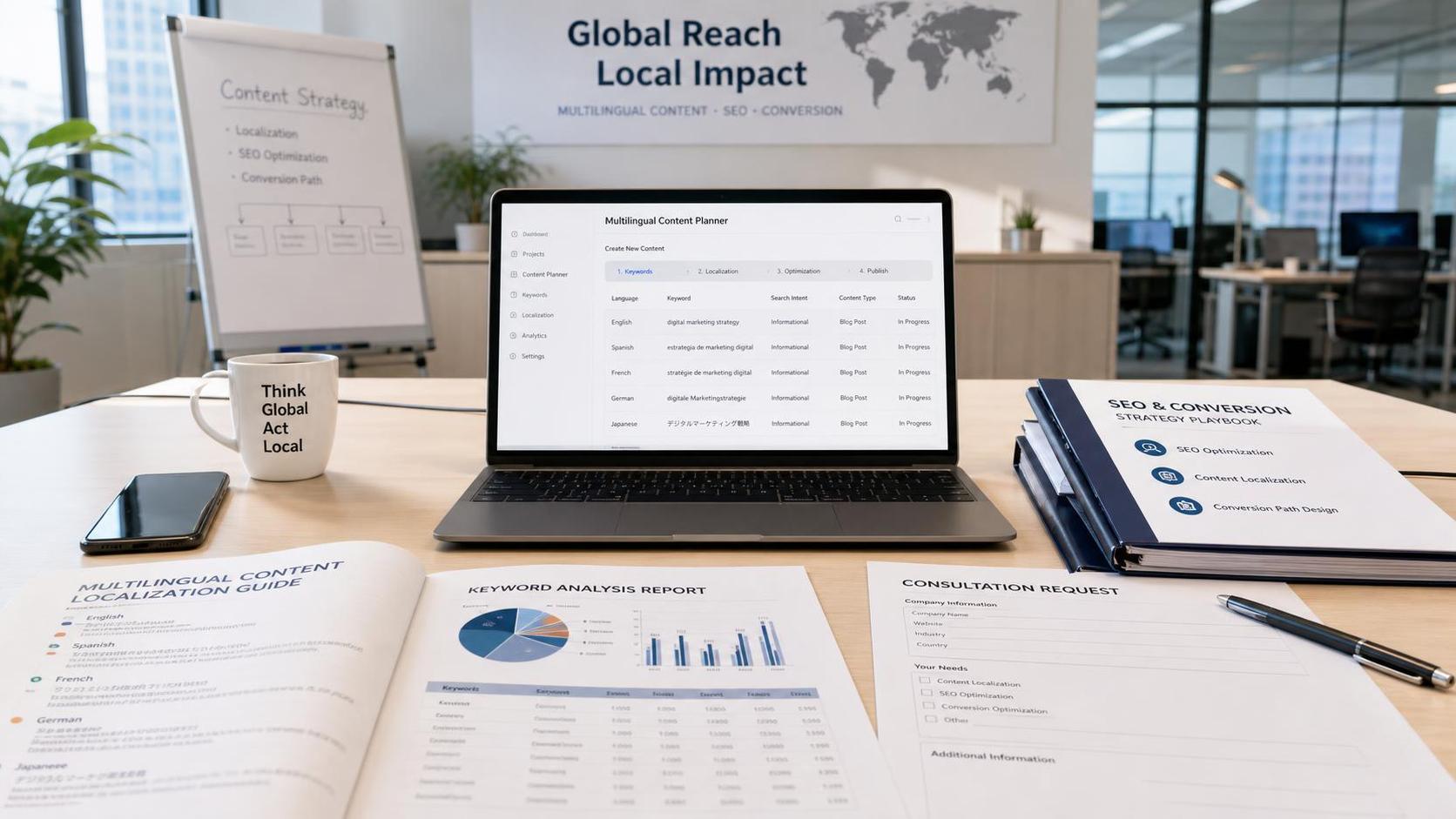
- Consultation is available for target market selection,keyword planning,page structure organization and localized content rewriting。
- Communication is available for multilingual site delivery cycles,phased budget plans,advertising landing page customization and inquiry path optimization。
- Product selection expressions,certification requirement presentation,case material usage and quotation communication methods can be confirmed based on industry materials。
If you are advancing minor-language website content localization,it is recommended to first organize the existing website URL,target countries,core products and recent inquiry questions。Based on this,we can evaluate content gaps and priorities,helping the website upgrade from “understandable” to “searchable,trustworthy,and inquiry-generating”。
Related Articles
Related Products
 EasyCamp SaaS Smart Website Marketing SystemE-Yingbao SaaS Smart Website Marketing System: AI-powered, zero-code website building. Rapidly launch multilingual independent e-commerce sites in just 10 minutes. Global server acceleration and AI-driven SEO optimization empower businesses to efficiently connect with global markets. The seamless integration of technology and user-friendly operation makes building e-commerce sites incredibly simple.
 AI+SEM Intelligent Advertising Marketing SystemAI+SEM drives intelligent ad creation, empowering full-funnel precision advertising marketing. The system automatically generates weekly/monthly reports, AI recommends keywords and target countries, monitors core metrics in real-time with intelligent alerts, and enables one-click high-conversion ad solutions to help quickly acquire customers and improve ROI.
 AI+SEO Dual Engine Optimization ServiceEasyWin AI+SEO Dual Engine Optimization System leverages AI-powered keyword mining, content generation, and comprehensive technical optimization to help foreign trade enterprises acquire high-quality organic traffic, significantly improving search rankings and conversion rates.
 AI+SNS Social Media Marketing SystemYingbao AI+SNS Social Media Marketing System - Precision social capture for the social media era. Supports one-click content synchronization across major platforms like Facebook and LinkedIn. AI intelligently rewrites posts for enhanced relevance. 24/7 AI customer service and user profiling analysis empower businesses to efficiently expand into global markets.
 AI+SEO营销解决方案易营宝AI+SEO营销解决方案,通过AI批量写作、智能生成TDK、精准关键词扩词等功能,全面优化网站SEO效果,提升流量与转化率。助力企业构建高效智能网站新生态。
 AI+SEM Advertising Marketing SolutionsAI+SEM Advertising Marketing Solution leverages AI technology to deeply empower SEM ad campaigns. It automatically generates weekly/monthly reports using AI, presenting account data across multiple dimensions for comprehensive insights into campaign performance and trends. The system precisely recommends keywords and target countries, intelligently generates high-conversion ad copy, and enables one-click activation of efficient campaign plans to help businesses rapidly acquire customers. Simultaneously, it monitors core metrics in real time, intelligently identifies abnormal fluctuations, and issues timely alerts to ensure stable, high-return advertising results.
 Domain Name ServicesEasyWin provides professional domain name services, including intelligent queries, one-stop registration, brand protection, and full lifecycle management, helping businesses build a digital brand image.
 EasyOperate B2C Cross-Border E-Commerce Platform & Independent WebsiteEasyStore B2C Cross-border E-commerce Independent Store is an intelligent website building and cross-border e-commerce integrated solution independently developed by EasyStore Information Technology (Beijing) Co., Ltd. The system is specially designed for small and medium-sized as well as large export enterprises, integrating 'website building, operation, marketing, advertising, and conversion' into one, helping enterprises quickly establish cross-border e-commerce independent stores to achieve brand globalization and global sales growth.
The platform supports multiple languages, multiple currencies, and multi-channel marketing, with built-in AI intelligent translation and SEO optimization systems, suitable for mainstream markets such as Southeast Asia, Europe and America, Latin America, and the Middle East, assisting Chinese manufacturing enterprises in efficiently deploying international e-commerce strategies. SSL证书易营宝提供专业SSL安全证书服务,包括单域名和泛域名证书,确保网站数据传输加密、身份验证和完整性保护,助力企业建立安全可信的在线业务环境。









