









- Which channel has the highest ROI in the global traffic ecosystem? Comparative analysis of search, social media, and advertisingJul 10, 2026View details
- What multilingual website services are available in Sanya? Which model is more suitable for local businesses going global?Jul 08, 2026View details
- How to view the complete list of China SaaS companies in the top 100? Practical methods for screening website-building and marketing service providersJul 08, 2026View details
- How to view pricing in the global traffic ecosystem? Cost comparison of search, social media, and content channel advertisingJul 06, 2026View details
- How to assess foreign trade website development trends?Looking at 2026 changes from multilingual,AI content to conversion pathsJul 04, 2026View details
- What are the new trends in multilingual marketing data analytics tools in 2026? Focus on attribution、automation and complianceJul 04, 2026View details
Default content title displayed here
In the Japanese website development industry, the first problem to solve is not translation, but the path to trust.
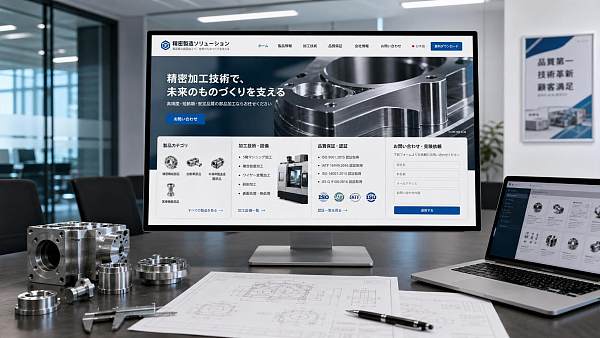
A common misconception in the Japanese website development industry is that companies simply translate their entire Chinese website into Japanese and expect inquiries to come naturally. This approach often falls short of expectations because the Japanese market values information order, completeness of evidence, and attention to communication details when evaluating a website.
Even though they are both manufacturing company websites, the page structure will differ depending on whether they are used for brand display, sample inquiry, or long-term cooperation. The depth of the sections, the presentation of case studies, and the form fields will all directly affect the time spent on the site and the quality of inquiries.
Therefore, the Japanese website development industry is more like a rearrangement tailored to a specific market. It's both a website building issue and a marketing issue, requiring a holistic view of content, localization, search engine optimization, and conversion strategies.
In these types of projects, platforms with intelligent website building, SEO optimization, and multilingual operation capabilities are easier to implement. Platforms like YiYingBao, which have long served overseas markets with their integrated website building and marketing system, offer value not only in building websites but also in pre-designing a structure that is indexable, understandable, and convertible.
In actual use, first determine which customer acquisition scenario the business is in.
The reason why Japanese websites for the manufacturing industry cannot use a uniform template is that the information needs of different business segments vary greatly. A website focusing on readily available standard parts emphasizes model retrieval and clear parameters; a website for custom manufacturing relies more on process capabilities, delivery experience, and supporting documentation.
A more common approach is to first determine which type of access the official website primarily receives. Traffic from search engines usually prompts users to check if the page answers a specific question; traffic from trade shows, business cards, or social media redirects often leads to information about the company's qualifications, case studies, and contact channels more quickly.
If a website wants to provide brand endorsement, attract product keyword traffic, and collect high-quality inquiries, it can't just focus on having all the necessary sections; it needs to prioritize them correctly. This is often where the real difference lies in the manufacturing industry.
When primarily using product search, the categories should be short and the entry points should be precise.
When a website primarily receives search traffic based on model number, usage, or material, the homepage and product pages should not be too general. Visitors will typically first confirm whether the product matches their search criteria before deciding whether to learn more about the company.
For manufacturing projects building Japanese websites, it's recommended to focus on product categories, specifications, application scenarios, frequently asked questions, and technical information. Overly deep navigation levels can make even clear needs seem confusing and misleading.
When focusing on customized collaborations, demonstrating capabilities is more important than listing products.
If the business leans more towards non-standard parts, OEM, process collaboration, or long-term supply, simply displaying product images is often insufficient to build trust. The page needs to clearly answer three questions: what can be done, what has been done, and how to cooperate and advance the business.
At this stage, Japanese-language websites focused on the manufacturing industry are better suited to adding sections on processing procedures, equipment capabilities, quality control, delivery systems, and case studies. The content doesn't need to be exaggerated, but it must be specific, making the page read like a real business communication, not a brochure.
The layout of the sections depends on what the visitor verifies first.
For Japanese websites used by manufacturers, it's recommended to structure the website around a verification process, rather than simply copying the Chinese website. Many Chinese websites like to start by discussing the company's size and then its vision and philosophy, but in the Japanese market, visitors are more likely to look at product details, quality standards, and contact information first.
A more prudent approach is to have the homepage handle navigation and initial trust building, product pages handle search traffic, case study pages alleviate concerns, the About Us and Qualifications pages supplement credibility, and the Inquiry page minimize communication friction.
Before launching a website, it's important to understand that more sections are not necessarily better. In the Japanese website development and manufacturing industry, if the sections are too scattered, visitors will lose their ability to make informed decisions due to the overwhelming amount of information and unclear conclusions, ultimately impacting conversion rates.
Content expression needs to be localized, which is not just about translating terminology accurately.
When using Japanese on a manufacturing website, accuracy is paramount, followed by restraint. Excessive promotion, absolute statements, and excessive use of adjectives often undermine credibility. Instead of using phrases like "industry-leading" or "globally top-tier," it's more effective to clearly state the scope of processing, certification criteria, and service procedures.
In practical applications, the Japanese market is more receptive to verifiable information, such as material standards, size ranges, testing items, delivery timeframes, and past application areas. This information is not only easy to read but also helps search engines understand the page's topic.
For Japanese websites in the manufacturing industry, it's crucial to pay attention to content granularity. The homepage should provide an overview, product pages should clearly state parameters and applicable scope, and case study pages should explain the background of the problem, the solution, and the delivery result. Different pages should serve different purposes to prevent conflict between SEO and conversion strategies.
- Use stable naming conventions on product pages to avoid using multiple names for the same product.
- The case study page should highlight the implementation conditions, rather than just showing completed photos.
- The qualification page explains the scope and duration of certification, reducing vague endorsements.
How you design an inquiry form determines whether it leaves you with a lead or an obstacle.
Many Japanese website development projects in the manufacturing industry have very complete pages, but ultimately get stuck on form design. Too many fields discourage visitors from filling them out; too few fields make it difficult to determine user needs after submission, ultimately increasing the cost of back-and-forth communication.
A more appropriate approach is to set up forms according to the complexity of the business. For standard product inquiries, the product name, quantity, purpose, and contact information can be retained; for customized requests, necessary fields such as material, dimensions, uploaded drawings, and target delivery date should be added.
The key here isn't to collect as much information as possible, but to obtain the information necessary for subsequent communication in advance. In the Japanese website development and manufacturing industry, ignoring this point can result in a large number of inquiries, but very little actual follow-up value.
In the details of the form, the most easily overlooked aspect is the sense of security in communication.
These types of pages typically focus more on privacy statements, response times, instructions on uploading attachments, and the number of required fields. Leaving only a vague "Contact Us" message leaves visitors unsure whether they will receive a valid response after submitting their information.
A more prudent approach is to add a brief description near the form, such as whether drawings can be submitted, the typical response time, and supported communication methods. For manufacturing websites, these details directly impact inquiry completion rates.
The area where misjudgments are easily made is often not the page's aesthetics, but rather its compatibility with business requirements.
A common misconception is that Japanese website development is synonymous with visual localization. While a clean and tidy page is indeed important, the real determinants of success are whether the page layout, content, and conversion paths align with the habits of the target market.
Another problem is focusing solely on the homepage and neglecting internal pages. In the manufacturing industry, traffic often goes directly to product or technology pages. If these pages lack sufficient information, even the best homepage won't be able to handle the search demand.
Another situation is the disconnect between website building and promotion. If Japanese SEO, keyword strategy, and data tracking aren't consistently implemented after the website goes live, even with a perfectly translated page, it's difficult to consistently attract target traffic. The significance of integrating website and marketing lies in ensuring that the content structure from the website building phase directly serves subsequent indexing and ad placement.
This is why more and more companies are choosing a service model that combines intelligent website building, SEO, and overseas marketing. Platforms like EasyPro, which have long focused on multilingual markets, typically handle page structure, keyword entry points, form conversions, and subsequent promotion within a unified framework, reducing rework.
A more prudent approach when implementing a project is to first determine the judgment criteria and then create the page.
If you're planning to develop a Japanese-language website for the manufacturing industry, you can first address four questions: What type of traffic will the website primarily attract? What type of inquiries do you most want to obtain? What trust evidence must be presented? Who will handle communication after the form is submitted? Once these four points are clearly defined, the subsequent sections and content will remain focused.
Next, compare the task allocation across different pages to confirm whether the product page is suitable for search engine indexing, whether the case study page is specific enough, and whether the contact page lowers the communication barrier. By doing this, the Japanese website development industry is not just launching a Japanese website, but building a more complete customer acquisition chain.
Truly effective localization isn't about adding more pages, but about ensuring each page answers the right questions. Aligning scenarios, content, and conversion actions, and then combining this with data optimization, lays a solid foundation for high-quality inquiries and strong long-term search performance.
Related Articles
 GCC Digital Trade Partner Certification, Precondition for Independent Site Dual Verification and Listing
 SEAEC unified API gateway enabled, ASEAN six-country independent site payments and tax interface entered into hard constraints
 How to plan multilingual B2C cross-border e-commerce store development? Key points for products, payment, and localized user experience


Related Products
 EasyCamp SaaS Smart Website Marketing SystemE-Yingbao SaaS Smart Website Marketing System: AI-powered, zero-code website building. Rapidly launch multilingual independent e-commerce sites in just 10 minutes. Global server acceleration and AI-driven SEO optimization empower businesses to efficiently connect with global markets. The seamless integration of technology and user-friendly operation makes building e-commerce sites incredibly simple.
 AI+SEM Intelligent Advertising Marketing SystemAI+SEM drives intelligent ad creation, empowering full-funnel precision advertising marketing. The system automatically generates weekly/monthly reports, AI recommends keywords and target countries, monitors core metrics in real-time with intelligent alerts, and enables one-click high-conversion ad solutions to help quickly acquire customers and improve ROI.
 AI+SEO Dual Engine Optimization ServiceEasyWin AI+SEO Dual Engine Optimization System leverages AI-powered keyword mining, content generation, and comprehensive technical optimization to help foreign trade enterprises acquire high-quality organic traffic, significantly improving search rankings and conversion rates.
 AI+SNS Social Media Marketing SystemYingbao AI+SNS Social Media Marketing System - Precision social capture for the social media era. Supports one-click content synchronization across major platforms like Facebook and LinkedIn. AI intelligently rewrites posts for enhanced relevance. 24/7 AI customer service and user profiling analysis empower businesses to efficiently expand into global markets.
 AI+SEO营销解决方案易营宝AI+SEO营销解决方案,通过AI批量写作、智能生成TDK、精准关键词扩词等功能,全面优化网站SEO效果,提升流量与转化率。助力企业构建高效智能网站新生态。
 AI+SEM Advertising Marketing SolutionsAI+SEM Advertising Marketing Solution leverages AI technology to deeply empower SEM ad campaigns. It automatically generates weekly/monthly reports using AI, presenting account data across multiple dimensions for comprehensive insights into campaign performance and trends. The system precisely recommends keywords and target countries, intelligently generates high-conversion ad copy, and enables one-click activation of efficient campaign plans to help businesses rapidly acquire customers. Simultaneously, it monitors core metrics in real time, intelligently identifies abnormal fluctuations, and issues timely alerts to ensure stable, high-return advertising results.
 Domain Name ServicesEasyWin provides professional domain name services, including intelligent queries, one-stop registration, brand protection, and full lifecycle management, helping businesses build a digital brand image.
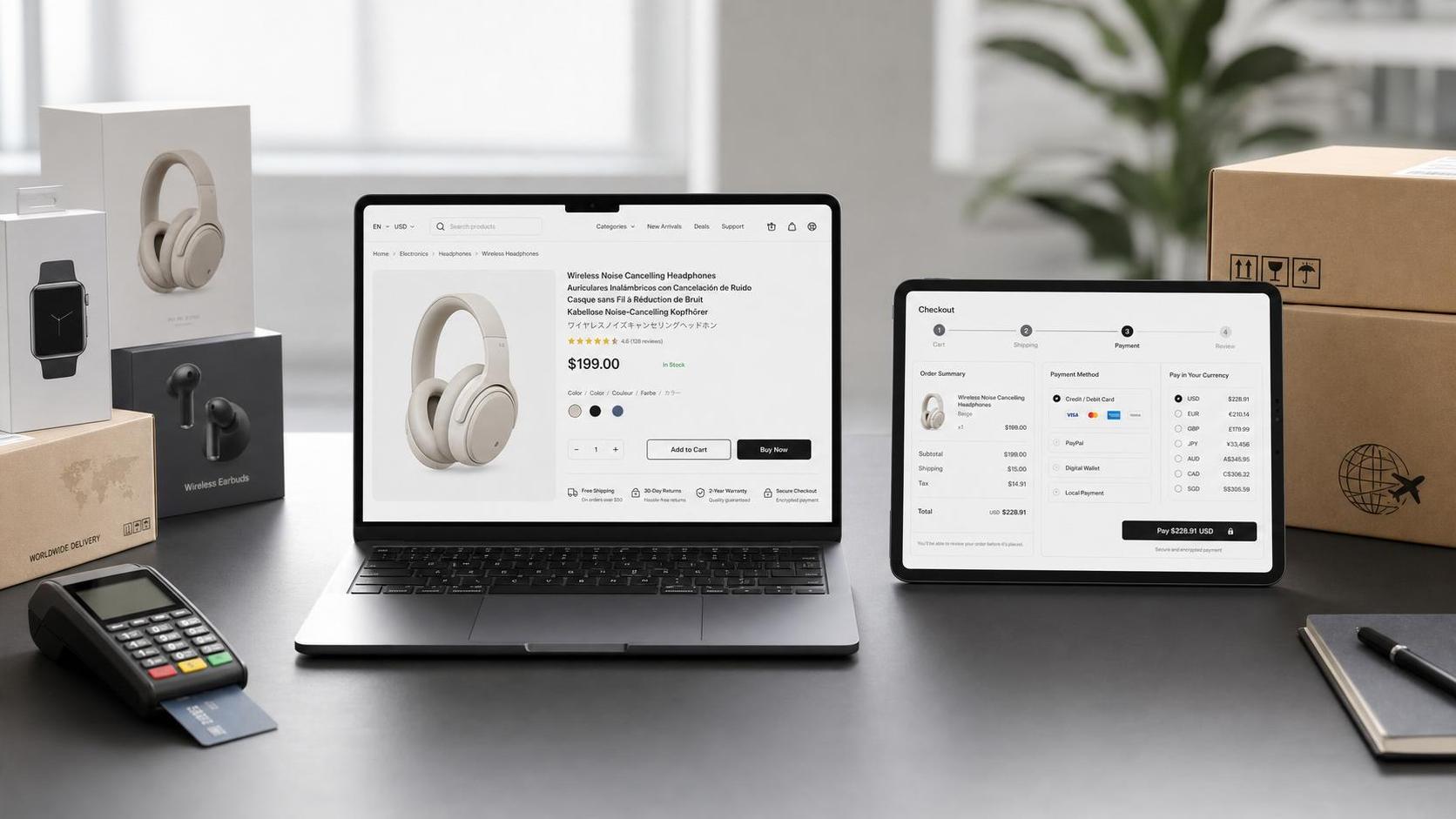
 EasyOperate B2C Cross-Border E-Commerce Platform & Independent WebsiteEasyStore B2C Cross-border E-commerce Independent Store is an intelligent website building and cross-border e-commerce integrated solution independently developed by EasyStore Information Technology (Beijing) Co., Ltd. The system is specially designed for small and medium-sized as well as large export enterprises, integrating 'website building, operation, marketing, advertising, and conversion' into one, helping enterprises quickly establish cross-border e-commerce independent stores to achieve brand globalization and global sales growth.
The platform supports multiple languages, multiple currencies, and multi-channel marketing, with built-in AI intelligent translation and SEO optimization systems, suitable for mainstream markets such as Southeast Asia, Europe and America, Latin America, and the Middle East, assisting Chinese manufacturing enterprises in efficiently deploying international e-commerce strategies. SSL证书易营宝提供专业SSL安全证书服务,包括单域名和泛域名证书,确保网站数据传输加密、身份验证和完整性保护,助力企业建立安全可信的在线业务环境。









