









- How to assess foreign trade website development trends?Looking at 2026 changes from multilingual,AI content to conversion pathsJul 04, 2026View details
- What are the new trends in multilingual marketing data analytics tools in 2026? Focus on attribution、automation and complianceJul 04, 2026View details
- Is Brand Globalization Marketing Consulting Worth Buying? At What Stage Should Companies Bring It InJul 01, 2026View details
- Cross-Border Marketing Trend Research: Why More and More Companies Are Starting to Deploy AI Search and GEO OptimizationJun 30, 2026View details
- Cross-Border Marketing Trend Research: How Independent Sites, AI Content, and Short-Video Customer Acquisition Are ChangingJun 30, 2026View details
- How Can a Brand Updates Page Be Made More SEO-Friendly? Analysis of Update Frequency, Content Structure, and Internal Linking StrategyJun 28, 2026View details
How should localized content planning for overseas markets be implemented?Start with language adaptation or user research
Set priorities first,so overseas market localized content planning will not go off track
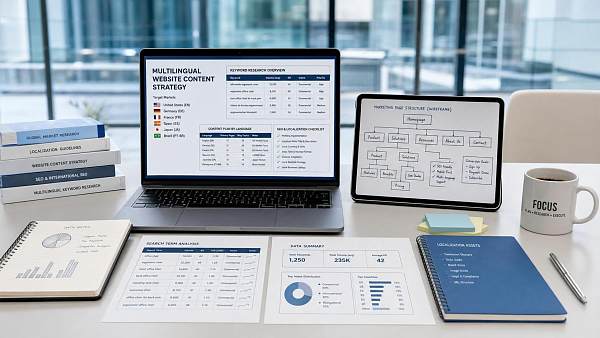
Overseas market localized content planning may seem to be a matter of translation and topic selection,but what it actually affects is website structure,traffic acquisition,and conversion paths。Whether language adaptation is done first or user research is done first often determines whether the content can enter a real market context。
In the scenario of integrated website and marketing services,this sequence is especially critical。Because multilingual official websites,advertising landing pages,SEO content,social media materials,and store pages are not simply copied from the same set of logic。Search terms,trust points,and decision-making rhythms in different regions are inherently clearly different。
A more common way to judge is to first look at the stage of business entry,and then decide the starting point for overseas market localized content planning。If the market direction is still unclear,research should take priority;if the product has already been validated in nearby regions,language adaptation can come first,but it still cannot be separated from real user feedback。
Why the judgment focus differs across different stages of going global
Many projects move slowly not because the content team executes poorly,but because all overseas markets are treated as the same type of demand。North America places more emphasis on efficient expression,some European regions place more emphasis on compliance explanations,Southeast Asia pays more attention to channel reach and price information,while in the Middle East,language,trust,and contact paths are often equally important。
This is also why overseas market localized content planning cannot remain only at the language level。Vocabulary can be translated,but purchase reasons,inquiry methods,page evidence chains,and content rhythm must be adjusted based on actual scenarios。
Taking integrated services as an example,website development,SEO optimization,advertising placement,and social media operations need to share the same set of market judgments。If only superficial translation is completed in the early stage,subsequent ad clicks,organic search,and on-site conversion will often become disconnected from each other,and traffic costs will also be amplified。
When testing a new market,it is usually safer to conduct user research first
When a business enters an unfamiliar region for the first time,overseas market localized content planning is more suitable to start with user research。Because what is most lacking at this point is not a language version,but the basis for market judgment:how users search,what they care about most,and what kinds of expressions raise concerns。
In practical applications,research does not necessarily mean a long-cycle large project。Rapid validation can first be carried out around search terms,competitor pages,ad copy,frequently asked questions,and on-site behavior,confirming the content framework first,and then deciding the depth of language adaptation。
In such scenarios,three things should be confirmed first
- Whether the search demand in the target market is stable,so as to avoid building a website around low-frequency terms。
- Whether the page needs to emphasize price,cases,certifications,or delivery capabilities。
- Whether users are more accustomed to converting through form inquiries,instant chat,or social media private messages。
If these questions are not clarified first,even if the language adaptation is done very completely,it may simply make the wrong content more completely translated。
When replicating and expanding into similar markets,language adaptation can move one step ahead
Another common situation is that the business has already obtained stable inquiries in one region and is preparing to expand into similar markets。At this time,overseas market localized content planning can start with language adaptation first,and then use small-scale research for correction。The reason is that the core product logic and page structure have usually already been validated。
However,language adaptation here should not be understood as sentence-by-sentence translation。A more appropriate approach is to simultaneously adjust title keywords,navigation naming,case presentation,delivery descriptions,and calls to action。Especially for SEO pages,keyword mapping must align with local search habits,otherwise multilingual sites will be difficult to index effectively。
For platforms like 易营宝 that have long served multi-regional markets,their value lies in handling website development,SEO,advertising,and GEO optimization within the same chain。The benefit of doing this is not having more content,but allowing the same market judgment to be applied across different channels,reducing repeated trial and error。
Website,advertising,and SEO content should not follow exactly the same implementation sequence
A common misjudgment in overseas market localized content planning is to advance all content carriers at the same pace。In reality,official website content focuses on building trust,advertising content focuses on immediate response,and SEO content focuses on matching search intent。The preliminary information required by the three is not completely the same。
This difference determines that overseas market localized content planning is not a single-point action,but a layered advancement based on channel characteristics。
What is easy to overlook before implementation is not translation quality,but adaptation conditions
Many projects appear to have completed localization,but after launch,indexing is slow,bounce rates are high,and inquiries are few。The problem is often not whether the wording is fluent,but that several key conditions have not been confirmed simultaneously。
- Brand terms,category terms,and problem terms are not distinguished,resulting in a deviation in the direction of SEO content。
- The site language switch has been completed,but the URL structure,title tags,and internal links have not kept up。
- The advertising copy emphasizes low prices,while the official website focuses on high-end customization,creating inconsistent perceptions before and after。
- The domestic content structure is copied,while overseas users’ stronger emphasis on cases,certifications,delivery,and after-sales service is ignored。
- Neighboring countries are treated as the same market,resulting in search terms and content tone that do not match。
In practical applications,these issues affect conversion more than simple language errors,because they directly undermine search visibility and page trust。
A more effective approach is to establish a phased content adaptation path
To truly implement overseas market localized content planning,it can be advanced by stages,rather than rolling out all languages,all pages,and all channels at once。This is more conducive to controlling the budget and also makes it easier to find effective samples。
A more practical execution sequence
- First lock in 1 to 2 key markets,and confirm the main search terms and core pages。
- Give priority to building a site structure that can receive traffic,rather than expanding the quantity of content first。
- Use advertising or social media to test selling points,and then feed the results back into the official website and SEO content planning。
- Continuously revise copy and page hierarchy based on inquiry terms,bounce rate,and dwell time。
- After one region has been validated,replicate it into similar markets for language expansion。
This path is suitable for current mainstream overseas business expansion。Especially when multilingual official websites,independent store sites,Google SEO,and advertising placement are linked together,a unified data feedback mechanism will significantly improve content decision-making efficiency。
There is no standard answer to which step should come first,but there is a clear way to judge
Returning to the original question,overseas market localized content planning is not an either-or choice between language adaptation and user research,but depends on which foundation the current business lacks more。If market understanding is lacking,research should come first;if content reception is lacking,structured adaptation should be done first。
What truly deserves attention is not to understand localization as a simple translation task。It is more like a content engineering effort centered on the coordination of website,traffic,and conversion,requiring continuous iteration based on regional differences,channel characteristics,and page objectives。
During implementation,the target markets,core pages,keyword types,and conversion actions can be sorted out first,and then it can be evaluated which content must be researched first and which modules can be adapted and launched first。By doing this step thoroughly,subsequent investment in website development,SEO,advertising,and social media will be more likely to form positive accumulation。
Related Articles
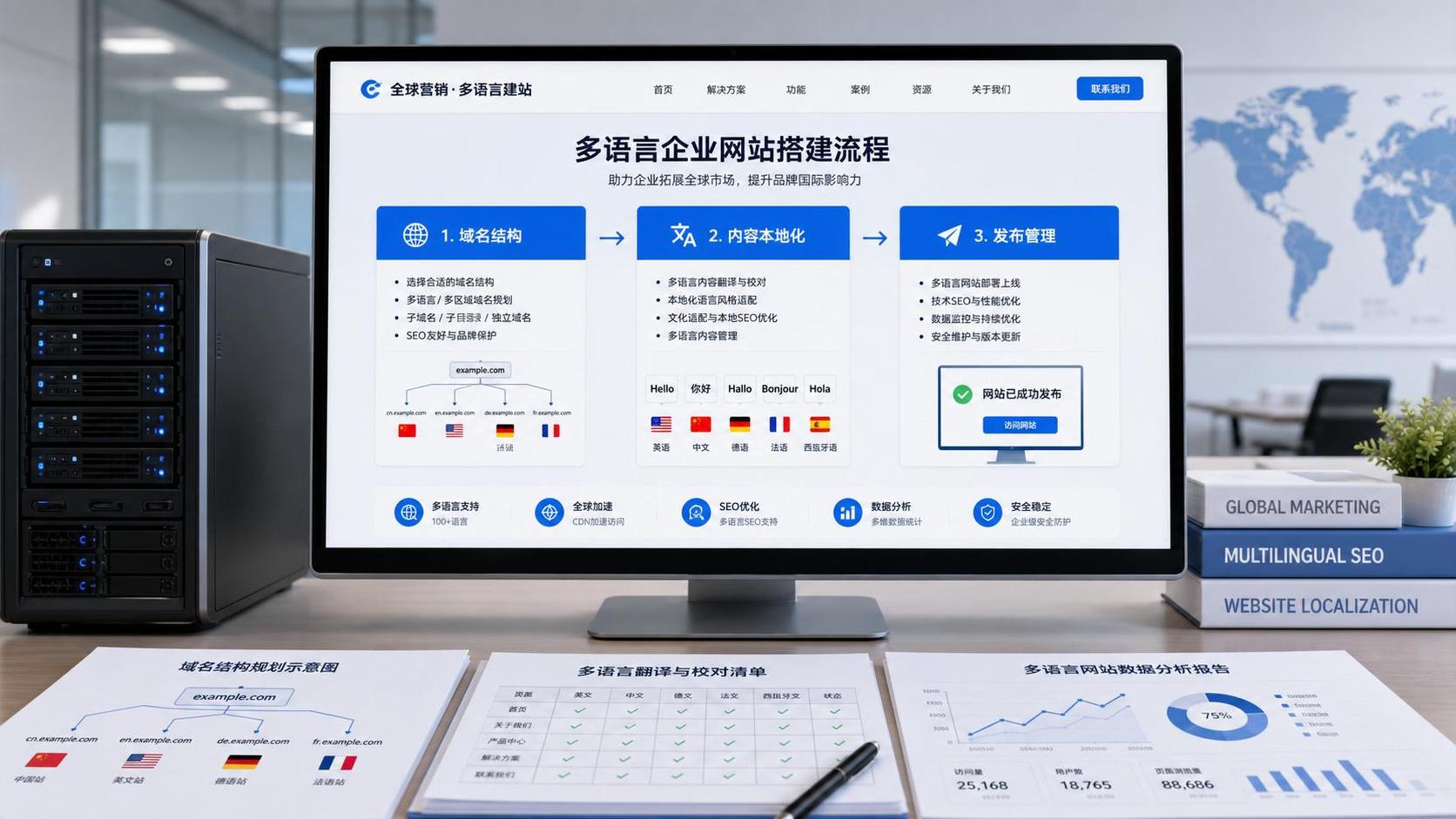
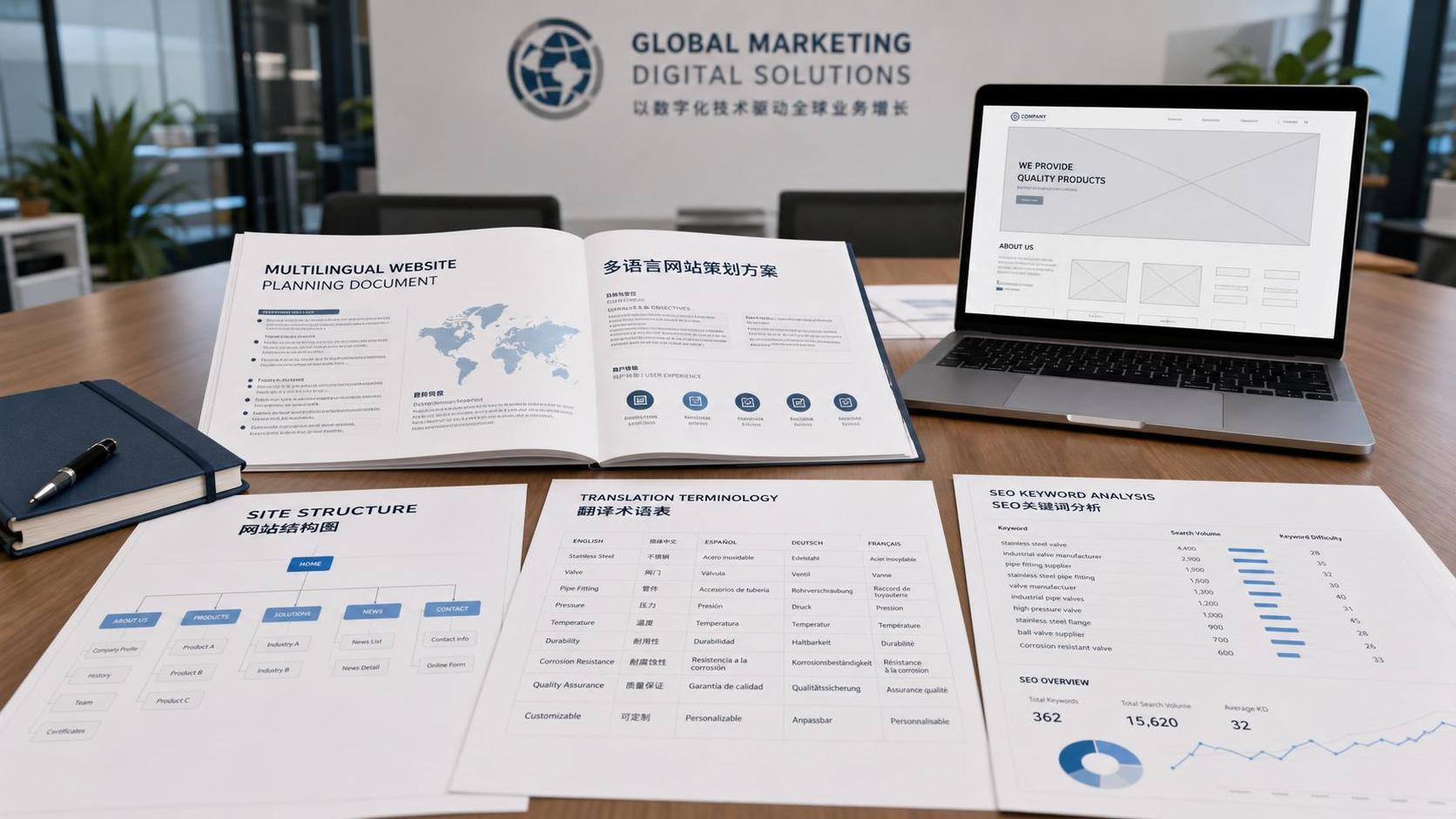
 What are the processes for building a multilingual website?Key steps from domain structure to translation and publishing
 Is AI website translation reliable for building an independent website? Accuracy, SEO, and conversion risks explained all at once
 What should you pay attention to in Qingyuan multilingual website design? Don’t overlook structure、translation and SEO

Related Products
 EasyCamp SaaS Smart Website Marketing SystemE-Yingbao SaaS Smart Website Marketing System: AI-powered, zero-code website building. Rapidly launch multilingual independent e-commerce sites in just 10 minutes. Global server acceleration and AI-driven SEO optimization empower businesses to efficiently connect with global markets. The seamless integration of technology and user-friendly operation makes building e-commerce sites incredibly simple.
 AI+SEM Intelligent Advertising Marketing SystemAI+SEM drives intelligent ad creation, empowering full-funnel precision advertising marketing. The system automatically generates weekly/monthly reports, AI recommends keywords and target countries, monitors core metrics in real-time with intelligent alerts, and enables one-click high-conversion ad solutions to help quickly acquire customers and improve ROI.
 AI+SEO Dual Engine Optimization ServiceEasyWin AI+SEO Dual Engine Optimization System leverages AI-powered keyword mining, content generation, and comprehensive technical optimization to help foreign trade enterprises acquire high-quality organic traffic, significantly improving search rankings and conversion rates.
 AI+SNS Social Media Marketing SystemYingbao AI+SNS Social Media Marketing System - Precision social capture for the social media era. Supports one-click content synchronization across major platforms like Facebook and LinkedIn. AI intelligently rewrites posts for enhanced relevance. 24/7 AI customer service and user profiling analysis empower businesses to efficiently expand into global markets.
 AI+SEO营销解决方案易营宝AI+SEO营销解决方案,通过AI批量写作、智能生成TDK、精准关键词扩词等功能,全面优化网站SEO效果,提升流量与转化率。助力企业构建高效智能网站新生态。
 AI+SEM Advertising Marketing SolutionsAI+SEM Advertising Marketing Solution leverages AI technology to deeply empower SEM ad campaigns. It automatically generates weekly/monthly reports using AI, presenting account data across multiple dimensions for comprehensive insights into campaign performance and trends. The system precisely recommends keywords and target countries, intelligently generates high-conversion ad copy, and enables one-click activation of efficient campaign plans to help businesses rapidly acquire customers. Simultaneously, it monitors core metrics in real time, intelligently identifies abnormal fluctuations, and issues timely alerts to ensure stable, high-return advertising results.
 Domain Name ServicesEasyWin provides professional domain name services, including intelligent queries, one-stop registration, brand protection, and full lifecycle management, helping businesses build a digital brand image.
 EasyOperate B2C Cross-Border E-Commerce Platform & Independent WebsiteEasyStore B2C Cross-border E-commerce Independent Store is an intelligent website building and cross-border e-commerce integrated solution independently developed by EasyStore Information Technology (Beijing) Co., Ltd. The system is specially designed for small and medium-sized as well as large export enterprises, integrating 'website building, operation, marketing, advertising, and conversion' into one, helping enterprises quickly establish cross-border e-commerce independent stores to achieve brand globalization and global sales growth.
The platform supports multiple languages, multiple currencies, and multi-channel marketing, with built-in AI intelligent translation and SEO optimization systems, suitable for mainstream markets such as Southeast Asia, Europe and America, Latin America, and the Middle East, assisting Chinese manufacturing enterprises in efficiently deploying international e-commerce strategies. SSL证书易营宝提供专业SSL安全证书服务,包括单域名和泛域名证书,确保网站数据传输加密、身份验证和完整性保护,助力企业建立安全可信的在线业务环境。









