









- How to assess foreign trade website development trends?Looking at 2026 changes from multilingual,AI content to conversion pathsJul 04, 2026View details
- What are the new trends in multilingual marketing data analytics tools in 2026? Focus on attribution、automation and complianceJul 04, 2026View details
- Is Brand Globalization Marketing Consulting Worth Buying? At What Stage Should Companies Bring It InJul 01, 2026View details
- Cross-Border Marketing Trend Research: Why More and More Companies Are Starting to Deploy AI Search and GEO OptimizationJun 30, 2026View details
- Cross-Border Marketing Trend Research: How Independent Sites, AI Content, and Short-Video Customer Acquisition Are ChangingJun 30, 2026View details
- How Can a Brand Updates Page Be Made More SEO-Friendly? Analysis of Update Frequency, Content Structure, and Internal Linking StrategyJun 28, 2026View details
Is AI website translation reliable for building an independent website? Accuracy, SEO, and conversion risks explained all at once
For an AI website translation for an independent website, first understand whether it “can be used” and whether it is “suitable”
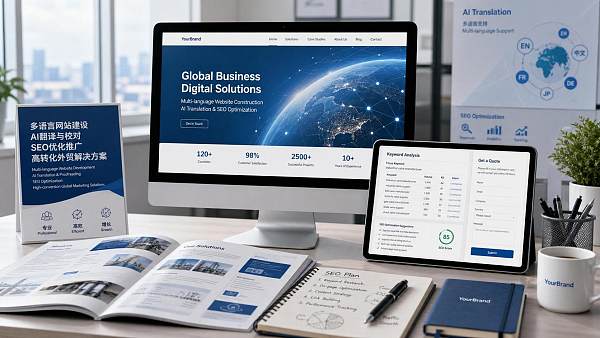
AI website translation has indeed been very popular over the past two years。 When many companies build independent websites, their first reaction is to use AI to roll out multilingual versions first, saving time and reducing initial investment。
But the real question is not whether it can be translated, but whether, after translation, the independent website can be understood, indexed, trusted, and converted。 These four things determine whether AI website translation is ultimately reliable。
From actual projects, AI website translation is suitable as an efficiency tool, but not suitable to be used directly as the final deliverable。 Especially for independent websites targeting overseas customers, language is only the surface; behind it are local expression, search habits, business context, and conversion paths。
If the entire Chinese website is simply machine-translated and launched, it may seem convenient in the short term, but later it often requires more cost in SEO, inquiry quality, and brand trust。 This is also the core reason why many companies see unsatisfactory traffic and conversions after completing multilingual websites。
Is the accuracy of AI website translation enough to support the launch of an independent website
Let’s start with the conclusion。 AI website translation is already usable in terms of accuracy on general information pages; on marketing pages, product pages, and industry pages, manual proofreading and localization are still required。
The reason is simple。 An independent website is not an internal document。 It faces potential customers, and when customers judge a company, they often look at only a few details: whether the headline reads smoothly, whether the selling points are accurate, whether professional terms are misused, and whether the contact methods and commitments are clear。
Common problems with AI website translation are usually concentrated in the following categories:
- Industry terms are translated correctly at the literal level, but not correctly for the scenario。
- Product specifications and use cases are not expressed rigorously enough。
- Marketing copy is stiff, like a directly translated manual。
- Countries, regions, measurement units, and delivery methods are not localized。
- Buttons, forms, and inquiry prompts lack conversion orientation。
This also means that AI website translation can solve the problem of “having content first”, but cannot solve the problem of “whether the content is suitable for closing deals”。 For an independent website, the latter is clearly more critical。
A safer approach is to position AI website translation at the front end for efficiency improvement, and then combine it with manual review, terminology databases, and localization rules for the target market to form a version that can go live。 In this way, speed and quality will not conflict with each other。
For independent website SEO, does AI website translation add value or reduce value
Many people worry whether AI website translation will affect Google indexing。 Strictly speaking, search engines do not simply reject AI-generated content; they care more about whether the content is valuable, natural, and satisfies search intent。
The problem is that many independent websites understand AI website translation as “one-click copying of multilingual content”。 This approach is most likely to create three types of SEO risks。
- Keyword mismatch。 After Chinese keywords are directly translated, they may not be the real search terms used in the target market。
- Page duplication。 Multilingual pages have consistent structures, but lack differentiated information, resulting in low value。
- Missing tags。 hreflang, titles, descriptions, URL, and internal links are not properly handled。
Once these problems accumulate, even if an independent website has launched multilingual versions, it may still suffer from slow indexing, weak rankings, and imprecise traffic。 It looks like there are many pages, but in reality, no effective SEO assets have been formed。
A more obvious signal is that some websites have clearly implemented AI website translation, yet search traffic still fails to grow。 The root cause is not the translation tool itself, but the failure to integrate translation, keyword research, page structure, and local search intent together。
Therefore, whether AI website translation adds value or reduces value for independent website SEO does not depend on “AI”, but on whether there is supporting SEO execution capability。 If it is only text translation, it is difficult to bring stable rankings; if it is done together with keyword layout, technical website building, and multilingual indexing strategies, the value will be clearly different。
Conversion risks are often more hidden than translation errors
When building an independent website, many teams first focus on traffic。 But what truly determines the return on investment is still conversion。 The biggest hidden risk of AI website translation is often not that one sentence is translated incorrectly, but that the whole page “looks fine, yet customers do not take action”。
In actual business, this kind of conversion loss is very common。 For example, product advantages are written too generally, delivery cycles are unclear, qualification certificates lack local expression, and inquiry form fields are set inappropriately; all of these can cause customers to exit at the final step。
If AI website translation is not combined with the reading habits of the target market, independent websites are also prone to these problems:
- The order of selling points does not match the local purchasing decision-making logic。
- Cases, certificates, and after-sales commitments are placed in unreasonable positions。
- The tone of call-to-action buttons is too rigid and lacks a trust-building transition。
- The density of page information is unbalanced, making it difficult for customers to find key answers。
To put it directly, AI website translation can make an independent website “displayable”, but it may not necessarily make it “capable of closing deals”。 For B2B inquiry websites, cross-border e-commerce stores, and brand official websites, this difference is significant。
Under what circumstances is AI website translation suitable for independent websites
This does not mean that AI website translation cannot be used。 On the contrary, it is valuable in many scenarios, provided that it is used in the right position and in the right process。
Generally speaking, the following situations are more suitable for using AI website translation for independent websites:
- A multilingual version needs to be launched quickly to validate market response first。
- Product information is highly standardized, and terminology is relatively stable。
- There is a clear manual review process and terminology database support。
- The website itself has an SEO structure and multilingual technical foundation。
- High-traffic and high-conversion pages will continue to be optimized later。
In other words, AI website translation is more suitable as an “efficiency amplifier”, rather than a “substitute for results”。 If an independent website wants to acquire customers steadily over the long term, it ultimately still needs to return to three things: content quality, search visibility, and conversion design。
When selecting a solution, it is recommended to focus on these four capabilities
If you are evaluating an AI website translation solution, it is not recommended to look only at translation speed and unit price。 More importantly, you should see whether it can truly serve the growth of an independent website。
Taking a website + marketing service integrated platform such as 易营宝 as an example, its value is not only in connecting AI website translation, but in linking AI intelligent website building, multilingual website construction, SEO optimization, advertising placement, and content iteration into a complete closed loop。
This kind of independent website solution is more suitable for companies that truly have overseas growth goals。 Because what it solves is how to be found, understood, and receive inquiries after launch, not just how to translate the pages。
How to judge in the end: Is it reliable to use AI website translation for an independent website
It can be summarized in one sentence: AI website translation itself is reliable, but using it alone for an independent website is not reliable enough。
If the goal is only to quickly generate multilingual pages, AI website translation is already efficient enough; if the goal is to make an independent website balance brand expression, SEO rankings, and customer conversion, localization, technical optimization, and marketing operations must be added。
A more realistic decision-making approach is to first clarify the business focus。 If you want to save time, you can first use AI website translation to get started; if you want long-term growth, you need to choose a solution that can simultaneously support website building, SEO, and conversion optimization。
In the final analysis, an independent website is not a translation project, but a growth project。 Put AI website translation in the right position, and it will become an efficiency advantage; treat it as the complete answer, and risks will often emerge intensively in the later stages。
Before preparing to launch a multilingual independent website, it is worth checking content accuracy, SEO structure, and conversion paths item by item first。 After clearly understanding these three checkpoints, then decide whether to adopt AI website translation; the judgment will be more stable and closer to the real input-output outcome。
Related Articles
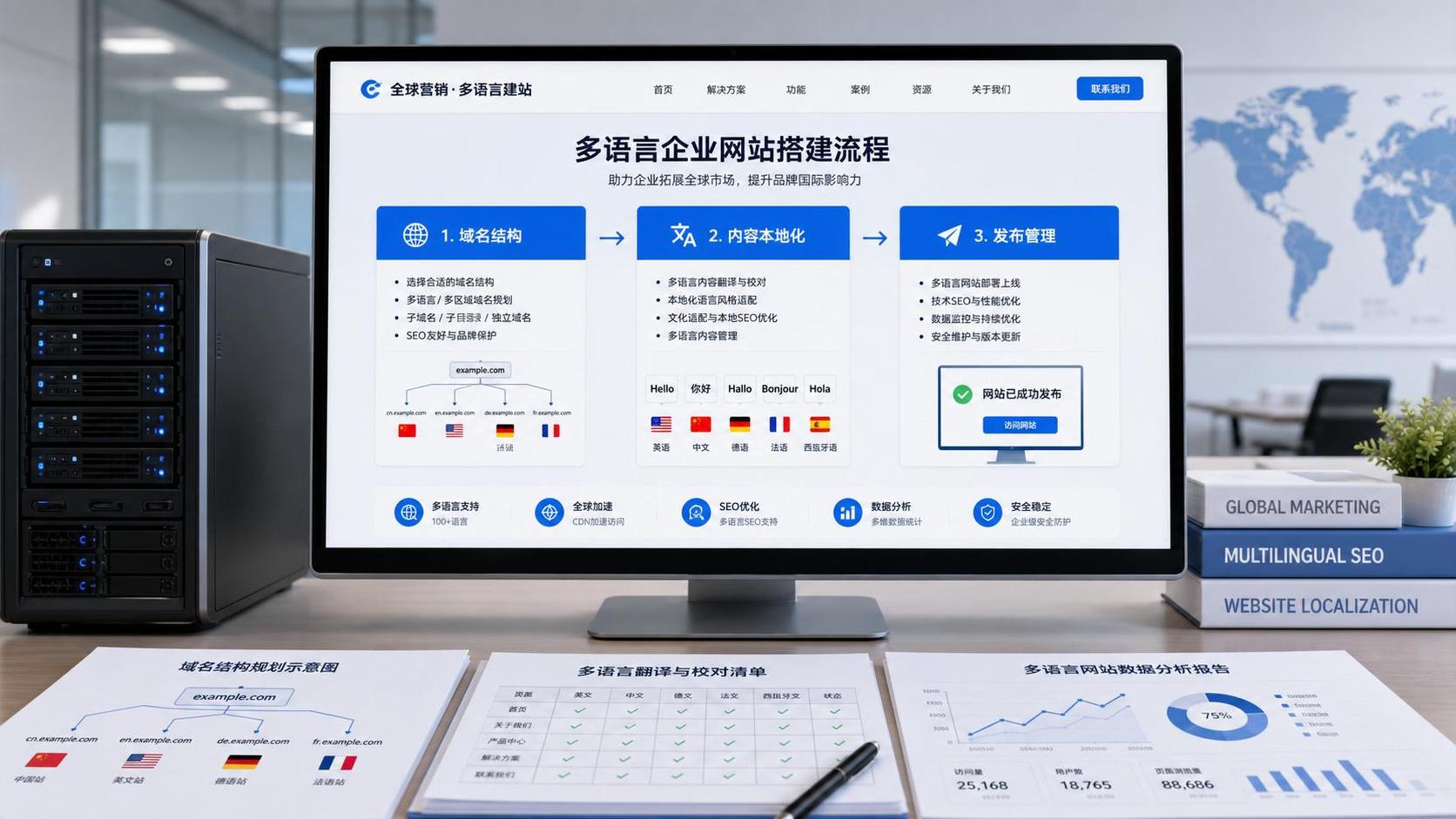
 What are the processes for building a multilingual website?Key steps from domain structure to translation and publishing
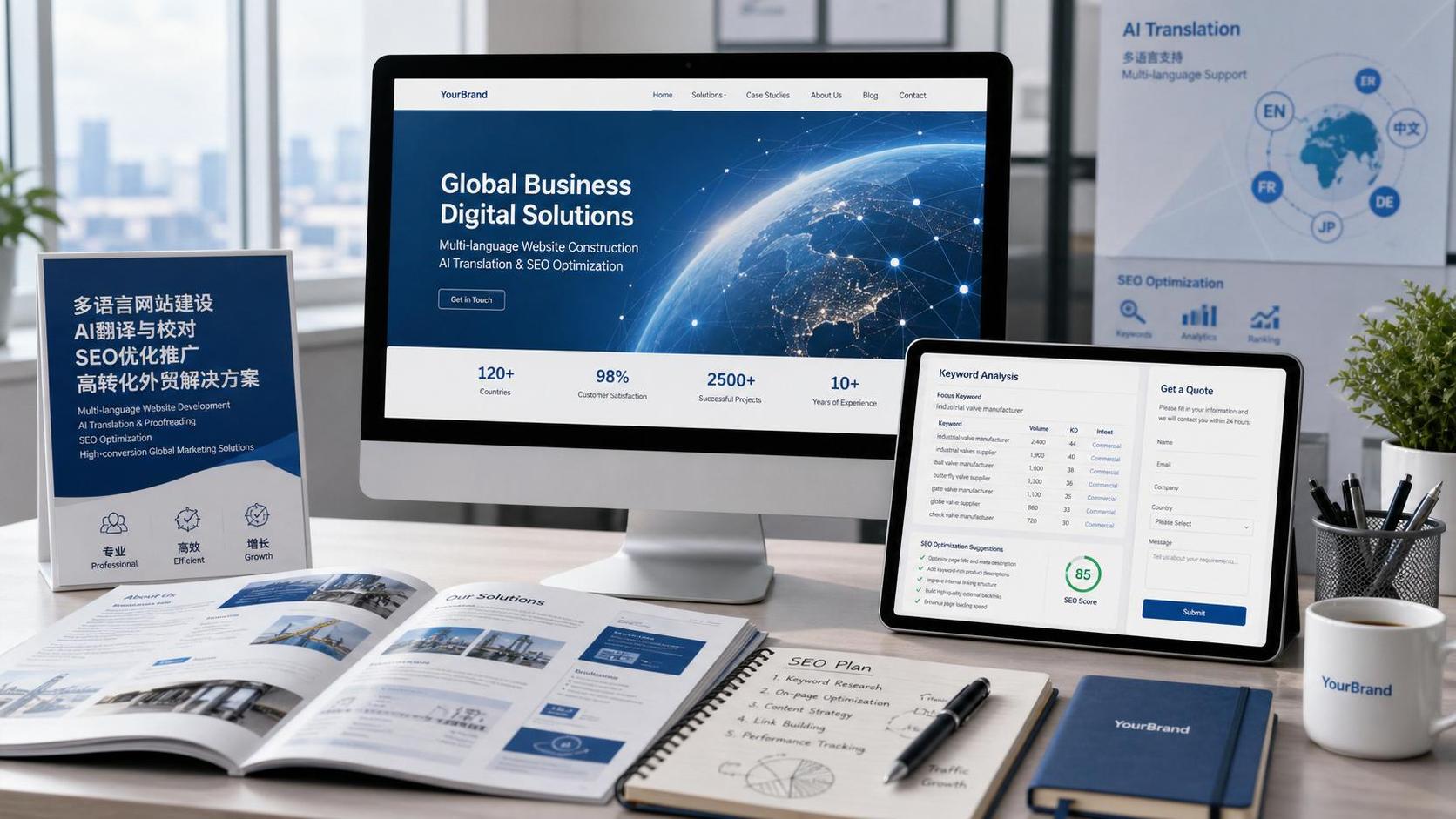
 Is AI website translation reliable for building an independent website? Accuracy, SEO, and conversion risks explained all at once
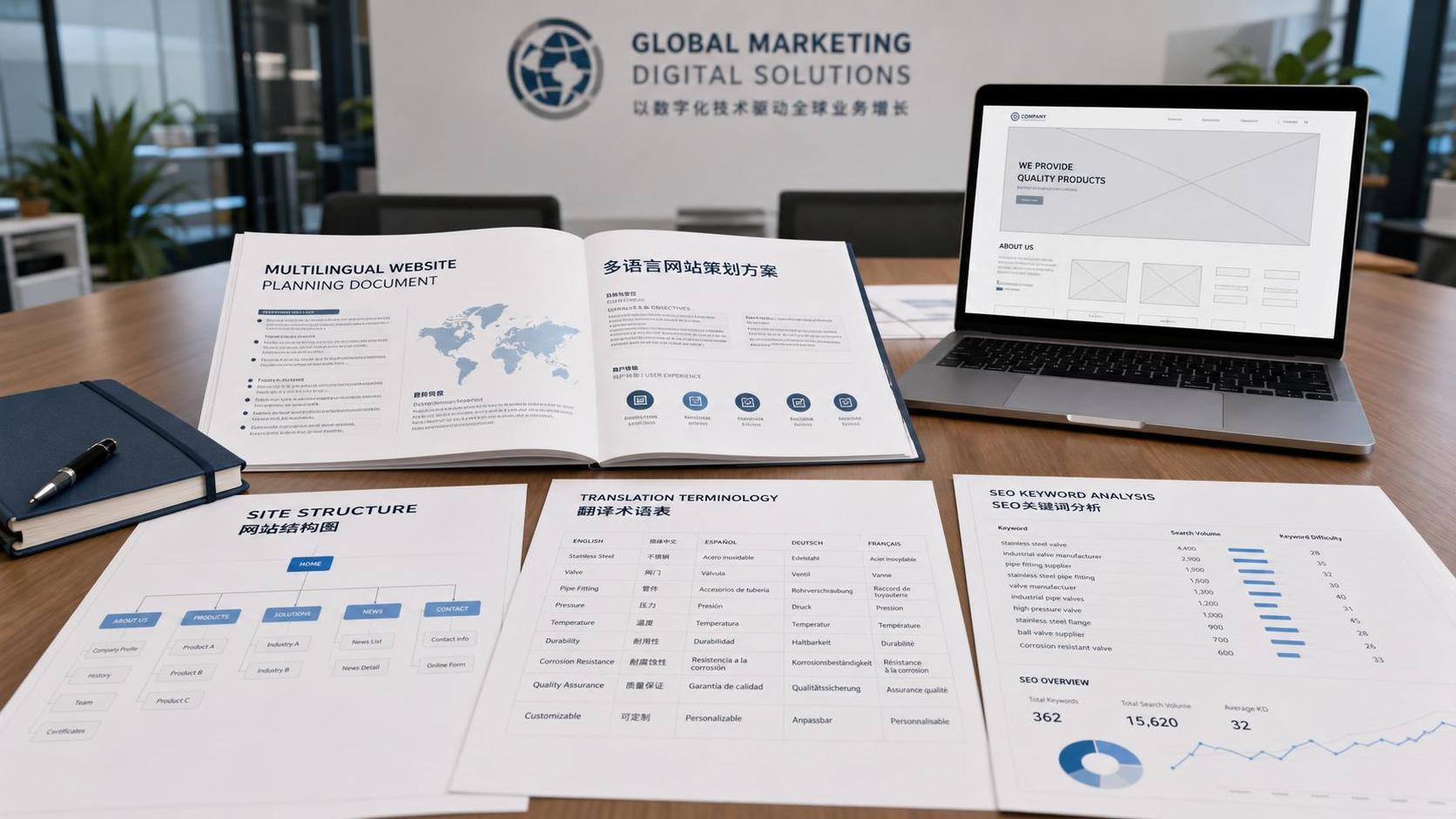
 What should you pay attention to in Qingyuan multilingual website design? Don’t overlook structure、translation and SEO
Related Products
 EasyCamp SaaS Smart Website Marketing SystemE-Yingbao SaaS Smart Website Marketing System: AI-powered, zero-code website building. Rapidly launch multilingual independent e-commerce sites in just 10 minutes. Global server acceleration and AI-driven SEO optimization empower businesses to efficiently connect with global markets. The seamless integration of technology and user-friendly operation makes building e-commerce sites incredibly simple.
 AI+SEM Intelligent Advertising Marketing SystemAI+SEM drives intelligent ad creation, empowering full-funnel precision advertising marketing. The system automatically generates weekly/monthly reports, AI recommends keywords and target countries, monitors core metrics in real-time with intelligent alerts, and enables one-click high-conversion ad solutions to help quickly acquire customers and improve ROI.
 AI+SEO Dual Engine Optimization ServiceEasyWin AI+SEO Dual Engine Optimization System leverages AI-powered keyword mining, content generation, and comprehensive technical optimization to help foreign trade enterprises acquire high-quality organic traffic, significantly improving search rankings and conversion rates.
 AI+SNS Social Media Marketing SystemYingbao AI+SNS Social Media Marketing System - Precision social capture for the social media era. Supports one-click content synchronization across major platforms like Facebook and LinkedIn. AI intelligently rewrites posts for enhanced relevance. 24/7 AI customer service and user profiling analysis empower businesses to efficiently expand into global markets.
 AI+SEO营销解决方案易营宝AI+SEO营销解决方案,通过AI批量写作、智能生成TDK、精准关键词扩词等功能,全面优化网站SEO效果,提升流量与转化率。助力企业构建高效智能网站新生态。
 AI+SEM Advertising Marketing SolutionsAI+SEM Advertising Marketing Solution leverages AI technology to deeply empower SEM ad campaigns. It automatically generates weekly/monthly reports using AI, presenting account data across multiple dimensions for comprehensive insights into campaign performance and trends. The system precisely recommends keywords and target countries, intelligently generates high-conversion ad copy, and enables one-click activation of efficient campaign plans to help businesses rapidly acquire customers. Simultaneously, it monitors core metrics in real time, intelligently identifies abnormal fluctuations, and issues timely alerts to ensure stable, high-return advertising results.
 Domain Name ServicesEasyWin provides professional domain name services, including intelligent queries, one-stop registration, brand protection, and full lifecycle management, helping businesses build a digital brand image.
 EasyOperate B2C Cross-Border E-Commerce Platform & Independent WebsiteEasyStore B2C Cross-border E-commerce Independent Store is an intelligent website building and cross-border e-commerce integrated solution independently developed by EasyStore Information Technology (Beijing) Co., Ltd. The system is specially designed for small and medium-sized as well as large export enterprises, integrating 'website building, operation, marketing, advertising, and conversion' into one, helping enterprises quickly establish cross-border e-commerce independent stores to achieve brand globalization and global sales growth.
The platform supports multiple languages, multiple currencies, and multi-channel marketing, with built-in AI intelligent translation and SEO optimization systems, suitable for mainstream markets such as Southeast Asia, Europe and America, Latin America, and the Middle East, assisting Chinese manufacturing enterprises in efficiently deploying international e-commerce strategies. SSL证书易营宝提供专业SSL安全证书服务,包括单域名和泛域名证书,确保网站数据传输加密、身份验证和完整性保护,助力企业建立安全可信的在线业务环境。









