









- The China-US tariff arrangement has reached a preliminary consensus, and the trade association will be establishedJun 15, 2026View details
- What determines B2C cross-border e-commerce website development costs? A breakdown of features, interfaces, and deployment methodsJun 17, 2026View details
- China-Morocco zero-tariff access, a breakthrough in the cost of Moroccan goods exports to ChinaJun 11, 2026View details
- What signal should be released for the suspension of exports to JapanJun 10, 2026View details
- China's May LNG imports rebounded, with increased volumes from Russia and Canada filling the Middle East supply gapJun 10, 2026View details
- Will GEO change its SEO strategy?Jun 04, 2026View details
Saudi Arabia adds local website homepage localization exposure
Starting June 15, 2026, the UAE will introduce more explicit homepage disclosure requirements for Arabic-language websites serving local consumers and B2B buyers. For cross-border e-commerce, foreign trade enterprises, industrial product suppliers, channel service providers, and market participants involved in government procurement, this change is worth attention, because it is not only related to website presentation compliance, but also directly connected to local search visibility and government procurement whitelist eligibility.

The new rule points to homepage verifiable information disclosure
Confirmed information shows that the UAE Ministry of Economy and the Telecommunications and Digital Government Regulatory Authority (TRA) have jointly updated the Digital Business Platform Compliance Guidelines, and the relevant requirements will be enforced starting June 15, 2026.
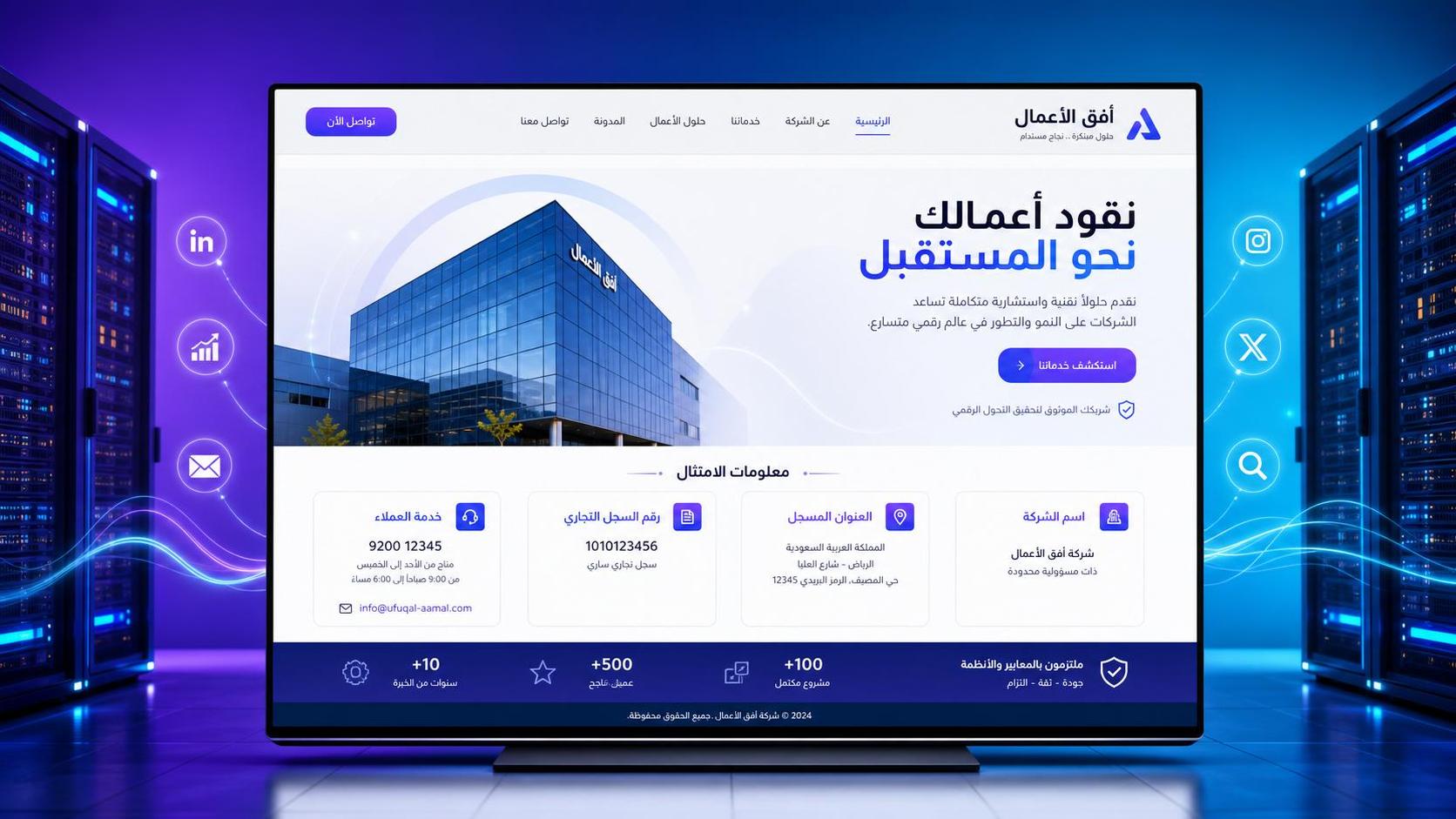
According to the update, all Arabic-language website homepages targeting UAE consumers or B2B buyers must clearly display the verified local registered entity name, address, trade license number, and customer service contact details.
The confirmed consequences include: non-compliant websites will be restricted to first-page display in local search engine results pages (SERPs), and will also be affected in terms of government procurement whitelist eligibility.
Impact first appears in traffic acquisition and pre-transaction stages
Trading companies targeting UAE customer acquisition
From an analytical perspective, the most direct impact on such companies comes from whether the website homepage meets the disclosure requirements. For companies relying on Arabic official websites to receive inquiries, develop distribution partnerships, or conduct procurement communication, the impact will first be reflected in search visibility and early customer trust assessment.
What is even more noteworthy now is that the relevant requirements are aimed at Arabic-language website homepages “for UAE consumers or B2B buyers,” which means that many companies that originally regarded their official websites merely as brand showcase windows must also re-examine whether the homepage information demonstrates sufficient local entity identification.
Procurement-oriented parties that screen suppliers online
From an industry perspective, the impact on buyers is mainly concentrated in the early screening and compliance verification stages. If the homepage needs to prominently display verified local registered entity name, address, trade license number, and customer service contact details, then buyers will rely more on this public information when making an initial judgment about supplier authenticity, ease of communication, and whether the contracting entity is clearly identified.
This does not mean that procurement decision criteria have been completely changed, but at least in the first round of screening, the importance of information disclosure completeness will increase.
Service providers offering website development, operation, and localization services
Observing from the perspective of service providers, the pressure mainly comes from the execution level. Whether the Arabic homepage clearly displays the required information involves page structure, information accuracy, data updates, and customer communication, among other details. For service providers that offer website development, content localization, search optimization, or site maintenance, the follow-up work will increasingly focus on compliance implementation rather than traffic operations alone.
Supply-chain participants involved in government procurement opportunities
The confirmed information mentions that non-compliant websites will affect government procurement whitelist eligibility. From an analytical standpoint, this means that some supply-chain participants, even if they do not depend on public search traffic, must still attach importance to homepage disclosure compliance, because its impact has already extended to government procurement-related qualification scenarios.
What practical issues should enterprises focus on now
First verify whether homepage display information is complete
What enterprises should pay first attention to is not the broad concept of “digital compliance,” but whether the Arabic website homepage already clearly displays the local registered entity name, address, trade license number, and customer service contact details. In particular, for enterprises with multilingual websites, multiple legal entities, or business entry points in multiple regions, it is even more necessary to verify whether the corresponding disclosure subject on the Arabic homepage is clear.
Distinguish between “having a local entity” and “homepage already compliant”
From an analytical perspective, having a local registered entity does not automatically mean that the website presentation has already met the standard. The key difference between policy signal and actual business localization lies in whether the information has been verified, whether it appears on the homepage, and whether it meets the requirement of “prominent display.” For enterprises, this will affect the coordination rhythm among legal, market, IT, and local operations teams.
Take visibility and procurement eligibility into account together
What is more worth attention at present is that the confirmed consequences are not limited to the regulatory level, but also touch on search result exposure and government procurement-related qualification. For companies that rely on online lead generation, this means that traffic entry points may be affected; for companies involved in public project opportunities, it means that the way qualifications are presented may directly relate to subsequent business opportunities.
Continue tracking subsequent official statements and enforcement boundaries
From an observational standpoint, enterprises still need to continue monitoring whether subsequent official statements become further refined, such as the understanding of “prominent display,” the applicable boundaries for different types of websites, and the verification channels at the execution level. At this stage, it is more appropriate to first complete homepage review and data preparation according to the already clarified requirements, rather than wait until business is affected before making adjustments.
This is more like a tightening signal for platform display rules
The following content is observational and analytical. Based on the currently available information, this change is not only a matter of improving website footer information, but also of moving local entity identifiability to the homepage and linking it with search visibility and government procurement eligibility. Such an arrangement indicates that website localization requirements are shifting from “language adaptation” to “subject verifiability.”
This news is more suitably understood as a compliance and market signal that requires continuous tracking, rather than a one-time isolated page formatting adjustment. In particular, for enterprises targeting the consumer market in the UAE, industrial product distribution, or procurement-related business, the official website homepage is becoming part of pre-transaction compliance.
Short term: compliance review; long term: continuous tracking
Overall, the direct significance of this dynamic is that the local entity information disclosure on the Arabic homepage of UAE websites has already formed a clear linkage with search exposure and government procurement opportunities. For enterprises and service providers, in the short term it is more appropriate to regard this as an actionable and verifiable page compliance requirement.
From a longer observation cycle, this also releases a signal that website localization is being incorporated into a stricter commercial compliance framework. But at the current stage, the industry should still treat the confirmed requirements as the boundary and continue observing subsequent rule refinements and practical enforcement changes.
Basis of this article and direction for subsequent verification
This article was generated based on the news title, event timing, and event summary provided by the user. The core basis includes: the June 15, 2026 time point, as well as the summary information about the UAE Ministry of Economy and the Telecommunications and Digital Government Regulatory Authority (TRA) jointly updating the Digital Business Platform Compliance Guidelines.
Such information usually still needs to be continuously verified against official announcements, regulatory agency releases, company announcements, industry association information, authoritative media reports, and relevant regulatory documents. Since no specific official source link was provided in the input information, the implementation details, applicable boundaries, and subsequent statements still need to be continuously monitored and confirmed.
Related Articles
Related Products
 EasyCamp SaaS Smart Website Marketing SystemE-Yingbao SaaS Smart Website Marketing System: AI-powered, zero-code website building. Rapidly launch multilingual independent e-commerce sites in just 10 minutes. Global server acceleration and AI-driven SEO optimization empower businesses to efficiently connect with global markets. The seamless integration of technology and user-friendly operation makes building e-commerce sites incredibly simple.
 AI+SEM Intelligent Advertising Marketing SystemAI+SEM drives intelligent ad creation, empowering full-funnel precision advertising marketing. The system automatically generates weekly/monthly reports, AI recommends keywords and target countries, monitors core metrics in real-time with intelligent alerts, and enables one-click high-conversion ad solutions to help quickly acquire customers and improve ROI.
 AI+SEO Dual Engine Optimization ServiceEasyWin AI+SEO Dual Engine Optimization System leverages AI-powered keyword mining, content generation, and comprehensive technical optimization to help foreign trade enterprises acquire high-quality organic traffic, significantly improving search rankings and conversion rates.
 AI+SNS Social Media Marketing SystemYingbao AI+SNS Social Media Marketing System - Precision social capture for the social media era. Supports one-click content synchronization across major platforms like Facebook and LinkedIn. AI intelligently rewrites posts for enhanced relevance. 24/7 AI customer service and user profiling analysis empower businesses to efficiently expand into global markets.
 AI+SEO营销解决方案易营宝AI+SEO营销解决方案,通过AI批量写作、智能生成TDK、精准关键词扩词等功能,全面优化网站SEO效果,提升流量与转化率。助力企业构建高效智能网站新生态。
 AI+SEM Advertising Marketing SolutionsAI+SEM Advertising Marketing Solution leverages AI technology to deeply empower SEM ad campaigns. It automatically generates weekly/monthly reports using AI, presenting account data across multiple dimensions for comprehensive insights into campaign performance and trends. The system precisely recommends keywords and target countries, intelligently generates high-conversion ad copy, and enables one-click activation of efficient campaign plans to help businesses rapidly acquire customers. Simultaneously, it monitors core metrics in real time, intelligently identifies abnormal fluctuations, and issues timely alerts to ensure stable, high-return advertising results.
 Domain Name ServicesEasyWin provides professional domain name services, including intelligent queries, one-stop registration, brand protection, and full lifecycle management, helping businesses build a digital brand image.
 EasyOperate B2C Cross-Border E-Commerce Platform & Independent WebsiteEasyStore B2C Cross-border E-commerce Independent Store is an intelligent website building and cross-border e-commerce integrated solution independently developed by EasyStore Information Technology (Beijing) Co., Ltd. The system is specially designed for small and medium-sized as well as large export enterprises, integrating 'website building, operation, marketing, advertising, and conversion' into one, helping enterprises quickly establish cross-border e-commerce independent stores to achieve brand globalization and global sales growth.
The platform supports multiple languages, multiple currencies, and multi-channel marketing, with built-in AI intelligent translation and SEO optimization systems, suitable for mainstream markets such as Southeast Asia, Europe and America, Latin America, and the Middle East, assisting Chinese manufacturing enterprises in efficiently deploying international e-commerce strategies. SSL证书易营宝提供专业SSL安全证书服务,包括单域名和泛域名证书,确保网站数据传输加密、身份验证和完整性保护,助力企业建立安全可信的在线业务环境。









