









- What Does a Global Traffic Ecosystem Service Provider Do? What Are the Differences from a Single Advertising AgencyJul 16, 2026View details
- What should you focus on in the latest enterprise SaaS report? From renewal rates and delivery costs to overseas growth opportunitiesJul 12, 2026View details
- What signals are worth paying attention to in a cross-border marketing trend report? B2B companies should look at these 6 signalsJul 11, 2026View details
- How to Read a Cross-Border Marketing Trends Report? Five Key Dimensions for Evaluating Channel OpportunitiesJul 11, 2026View details
- Which channel has the highest ROI in the global traffic ecosystem? Comparative analysis of search, social media, and advertisingJul 10, 2026View details
- What multilingual website services are available in Sanya? Which model is more suitable for local businesses going global?Jul 08, 2026View details
Arabic Website RTL Layout Tips: Avoid 3 Common Mistakes
Why Arabic Website RTL Layout Techniques Must Go Beyond Simply Right-Aligning Text
Arabic website RTL layout techniques may seem like front-end details, but they directly affect navigation paths, time spent on the site, and form conversion rates. When launching a multilingual website, many teams only change the page to right alignment. As a result, the page structure, interaction habits, and content flow are not truly mirrored.
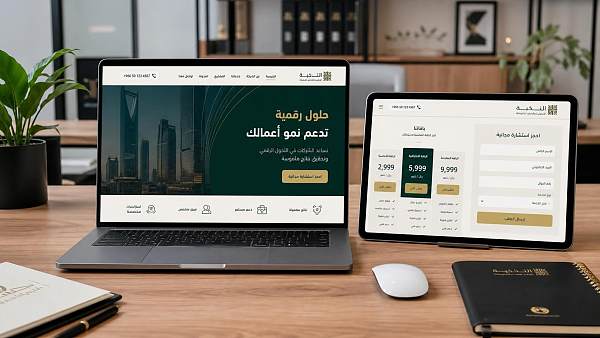
From a technical evaluation perspective, RTL is not a decorative adjustment. It involves a complete set of standards covering HTML attributes, component logic, style inheritance, content layout, and testing procedures. When Arabic website RTL layout techniques are not properly implemented, the common consequences are not simply that the page feels slightly awkward. Users may be unable to find buttons, price information may be misaligned, and navigation may point in the wrong direction, ultimately breaking the conversion journey at the detail level.
These issues are particularly evident in website development and marketing for the Middle East market. Users there are more sensitive to localized experiences, and once the reading direction becomes confusing, the brand's professionalism immediately declines. Therefore, when evaluating an Arabic website, the focus should not be merely on whether RTL is present, but on whether Arabic website RTL layout techniques are truly implemented across the structural, component, and content levels.
Type 1 Error: Changing Only the Visual Direction Without Updating Document and Component Logic
This is the most common type of error. Development teams often start by changing the CSS, right-aligning text, and moving modules to the right. The page may look like an Arabic page, but the underlying document direction has not been updated accordingly. This approach may enable a quick launch, but it creates many long-term problems.
Effective Arabic website RTL layout techniques should begin at the root node. The page needs to clearly define its language and direction attributes. For example, an Arabic page should include the corresponding language marker and set the correct writing direction. Otherwise, browsers, input methods, assistive tools, and search engines may misunderstand the content structure.
Typical Issues Usually Appear in These Areas
- The navigation order is not reversed, and Home, Products, and Contact Information are still arranged according to LTR logic.
- Breadcrumb arrows point in the wrong direction, interrupting the user's reading path.
- Carousels, step indicators, and paginators still progress from left to right.
- The positions of popup close buttons, back buttons, and submit buttons do not match local conventions.
A more obvious sign is that many websites mirror all icons as a whole. In fact, this is not always correct. Arabic website RTL layout techniques are not about “flipping everything,” but about determining which elements belong to the reading direction and which represent universal semantics. For example, back arrows usually need to be adjusted, while brand Logos, play buttons, and internationally recognized icons may not need to be mirrored.
In actual projects, it is recommended to first check whether the design system and component library support RTL natively. If the underlying components do not support it, subsequent maintenance costs will continue to increase. This is especially true for marketing landing pages, product detail pages, and inquiry forms. As the number of components increases, minor misalignments can quickly accumulate into major user experience issues.
Type 2 Error: Improper Handling of Mixed Content, Resulting in Disconnected Reading and Data-Entry Experiences
The real difficulty of Arabic website RTL layout techniques lies not in pure Arabic text, but in mixed content. Most corporate websites contain brand names, model numbers, email addresses, URLs, SKUs, telephone numbers, prices, and English abbreviations at the same time. If these elements are not handled properly, the page can look extremely disorganized.
A common situation is that when numbers or English are inserted into an Arabic sentence, the punctuation order becomes disorganized, fields are reversed, and the cursor may even jump abnormally. When filling out a form, users clearly feel that the input experience is disconnected. These issues are often not translation problems, but rather the result of improperly handled bidirectional text rules.
Mixed-Content Scenarios That Require Particular Attention
- Product specifications: Model numbers, dimensions, material codes, and Arabic descriptions displayed together.
- Quotation and currency sections: Whether numbers, currency symbols, and discount labels remain in a clear order.
- Form sections: Whether email addresses, mobile phone numbers, and company URLs can be entered consistently.
- Buttons and labels: Whether mixed Chinese-English phrases become truncated or directionally confusing.
Therefore, Arabic website RTL layout techniques cannot rely solely on uniformly setting `direction: rtl;`. Numbers, links, code, currencies, and proper nouns should be handled through local direction controls, text isolation strategies, and component-level rules. The value of this approach is that it prevents multiple reading logics from appearing in the same sentence.
Input fields also require separate evaluation. Some fields, such as names and addresses, are suitable for RTL, while others, such as email addresses, URLs, and verification codes, are more suitable for LTR. If all fields are uniformly set to RTL, user input error rates will increase significantly. This is one of the most easily overlooked aspects of Arabic website RTL layout techniques, yet it has one of the greatest impacts on inquiry conversion.
Type 3 Error: An Overly Narrow Testing Scope and No Real-World Business Validation Before Launch
Many projects only check whether the homepage “looks normal” during acceptance testing. This is far from sufficient. If Arabic website RTL layout techniques are validated only on static pages, issues will still emerge in large numbers during marketing campaigns and SEO landing-page activities.
The reason is simple. A corporate website includes more than just a homepage. It also includes article pages, product listing pages, product detail pages, inquiry form pages, search result pages, advertising landing pages, 404 pages, and back-end content-entry interfaces. If any part of the process has not been fully adapted to RTL, the user experience will become disconnected.
At Least These Four Types of Testing Should Be Conducted Before Launch
- Page structure testing: Whether navigation, sidebars, buttons, lists, cards, and popups comply with RTL logic.
- Mixed-content testing: Whether numbers, prices, times, units, English abbreviations, and links remain stable.
- Interaction flow testing: Whether search, filtering, form submission, material downloads, and online consultation work smoothly.
- Multi-device testing: Whether desktop, tablet, and mobile experiences remain consistent across different browsers.
Recent changes show that traffic sources in the Middle East market are becoming increasingly fragmented. Users may enter an internal page directly from organic search, advertising, social media content, or even an AI search summary. This also means that Arabic website RTL layout techniques must not only ensure that the homepage is properly adapted, but also that every landing page can independently complete information delivery and conversion actions.
For companies that need to conduct Google SEO and advertising campaigns over the long term, this step is even more important. If incomplete RTL adaptation causes the landing page bounce rate to rise, it will affect not only conversions but also the efficiency of subsequent optimization. Technically, this is a layout issue; from a business perspective, it is actually a customer acquisition cost issue.
How Should Arabic Website RTL Layout Techniques Be Implemented During Technical Evaluation?
If Arabic website RTL layout techniques are to be incorporated into a formal evaluation, it is recommended to assess them across four dimensions: “underlying capabilities, component capabilities, content capabilities, and business capabilities,” rather than focusing only on the visual effect of the front end.
For companies expanding overseas, Arabic website RTL layout techniques should ideally be incorporated into the solution design during the early stage of website development. Retrofitting the site after all content has been added usually costs more. This is especially true for multilingual corporate websites, B2B inquiry websites, cross-border e-commerce stores, and advertising-specific landing pages. The earlier standards are established, the more stable subsequent expansion will be.
For an integrated service platform such as 易营宝, which covers AI-powered website development, multilingual website development, Google SEO optimization, advertising, and overseas social media operations, the value lies in coordinating website development, promotion, and localization adaptation within the same process. With this approach, Arabic website RTL layout techniques are no longer an isolated front-end task, but can be systematically optimized together with indexing, advertising, and conversion.
Conclusion: Avoid the Three Types of Errors Before Discussing Growth in the Middle East Market
In practical terms, the biggest challenge of Arabic website RTL layout techniques is not technical difficulty, but overly crude judgment. Changing only the visual direction, ignoring mixed content, and failing to conduct comprehensive testing are often the root causes of poor performance after a corporate website enters the Middle East market.
A more reliable approach is to treat Arabic website RTL layout techniques as part of the website development standards: establish structural specifications at the early stage, validate components during the middle stage, and continuously make adjustments later based on SEO, advertising, and conversion data. Only in this way can a website better balance readability, usability, and business outcomes.
If your company is evaluating an Arabic website solution, you can first use the three types of errors discussed in this article for a technical review: Are the document and component logic correct? Is mixed content stable? Have real business pages undergone comprehensive validation? Only by solidly completing these three steps can customer acquisition and growth in the Middle East market have a more reliable foundation.
Related Articles

Related Products
 EasyCamp SaaS Smart Website Marketing SystemE-Yingbao SaaS Smart Website Marketing System: AI-powered, zero-code website building. Rapidly launch multilingual independent e-commerce sites in just 10 minutes. Global server acceleration and AI-driven SEO optimization empower businesses to efficiently connect with global markets. The seamless integration of technology and user-friendly operation makes building e-commerce sites incredibly simple.
 AI+SEM Intelligent Advertising Marketing SystemAI+SEM drives intelligent ad creation, empowering full-funnel precision advertising marketing. The system automatically generates weekly/monthly reports, AI recommends keywords and target countries, monitors core metrics in real-time with intelligent alerts, and enables one-click high-conversion ad solutions to help quickly acquire customers and improve ROI.
 AI+SEO Dual Engine Optimization ServiceEasyWin AI+SEO Dual Engine Optimization System leverages AI-powered keyword mining, content generation, and comprehensive technical optimization to help foreign trade enterprises acquire high-quality organic traffic, significantly improving search rankings and conversion rates.
 AI+SNS Social Media Marketing SystemYingbao AI+SNS Social Media Marketing System - Precision social capture for the social media era. Supports one-click content synchronization across major platforms like Facebook and LinkedIn. AI intelligently rewrites posts for enhanced relevance. 24/7 AI customer service and user profiling analysis empower businesses to efficiently expand into global markets.
 AI+SEO营销解决方案易营宝AI+SEO营销解决方案,通过AI批量写作、智能生成TDK、精准关键词扩词等功能,全面优化网站SEO效果,提升流量与转化率。助力企业构建高效智能网站新生态。
 AI+SEM Advertising Marketing SolutionsAI+SEM Advertising Marketing Solution leverages AI technology to deeply empower SEM ad campaigns. It automatically generates weekly/monthly reports using AI, presenting account data across multiple dimensions for comprehensive insights into campaign performance and trends. The system precisely recommends keywords and target countries, intelligently generates high-conversion ad copy, and enables one-click activation of efficient campaign plans to help businesses rapidly acquire customers. Simultaneously, it monitors core metrics in real time, intelligently identifies abnormal fluctuations, and issues timely alerts to ensure stable, high-return advertising results.
 Domain Name ServicesEasyWin provides professional domain name services, including intelligent queries, one-stop registration, brand protection, and full lifecycle management, helping businesses build a digital brand image.
 EasyOperate B2C Cross-Border E-Commerce Platform & Independent WebsiteEasyStore B2C Cross-border E-commerce Independent Store is an intelligent website building and cross-border e-commerce integrated solution independently developed by EasyStore Information Technology (Beijing) Co., Ltd. The system is specially designed for small and medium-sized as well as large export enterprises, integrating 'website building, operation, marketing, advertising, and conversion' into one, helping enterprises quickly establish cross-border e-commerce independent stores to achieve brand globalization and global sales growth.
The platform supports multiple languages, multiple currencies, and multi-channel marketing, with built-in AI intelligent translation and SEO optimization systems, suitable for mainstream markets such as Southeast Asia, Europe and America, Latin America, and the Middle East, assisting Chinese manufacturing enterprises in efficiently deploying international e-commerce strategies. SSL证书易营宝提供专业SSL安全证书服务,包括单域名和泛域名证书,确保网站数据传输加密、身份验证和完整性保护,助力企业建立安全可信的在线业务环境。









