









- What Does a Global Traffic Ecosystem Service Provider Do? What Are the Differences from a Single Advertising AgencyJul 16, 2026View details
- What should you focus on in the latest enterprise SaaS report? From renewal rates and delivery costs to overseas growth opportunitiesJul 12, 2026View details
- What signals are worth paying attention to in a cross-border marketing trend report? B2B companies should look at these 6 signalsJul 11, 2026View details
- How to Read a Cross-Border Marketing Trends Report? Five Key Dimensions for Evaluating Channel OpportunitiesJul 11, 2026View details
- Which channel has the highest ROI in the global traffic ecosystem? Comparative analysis of search, social media, and advertisingJul 10, 2026View details
- What multilingual website services are available in Sanya? Which model is more suitable for local businesses going global?Jul 08, 2026View details
What Pages Are Needed for a Multilingual B2C Cross-Border E-Commerce Store
What Pages Are Needed for a Multilingual B2C Cross-Border E-commerce Store?
Building a multilingual B2C cross-border e-commerce store involves more than translating product pages. You also need to systematically plan the homepage, category pages, product detail pages, payment and logistics pages, and after-sales pages to balance SEO indexing, conversion experience, and the trust of global users.
Many projects focus on “how many languages are supported” at the beginning, only to discover after launch that the pages are in place but traffic has not grown and conversions remain unstable. The problem is usually not the translation itself, but that the page system has not been fully developed. For a multilingual B2C cross-border e-commerce store, the key questions are: which pages must be localized, which content cannot be published directly after machine translation, and which pages affect both indexing and purchasing decisions.
If you are a project manager or engineering lead, you can use the following checklist directly to review requirements, define the scope, and conduct pre-launch checks.
Before Expanding into Multiple Languages, Organize Your Page Structure
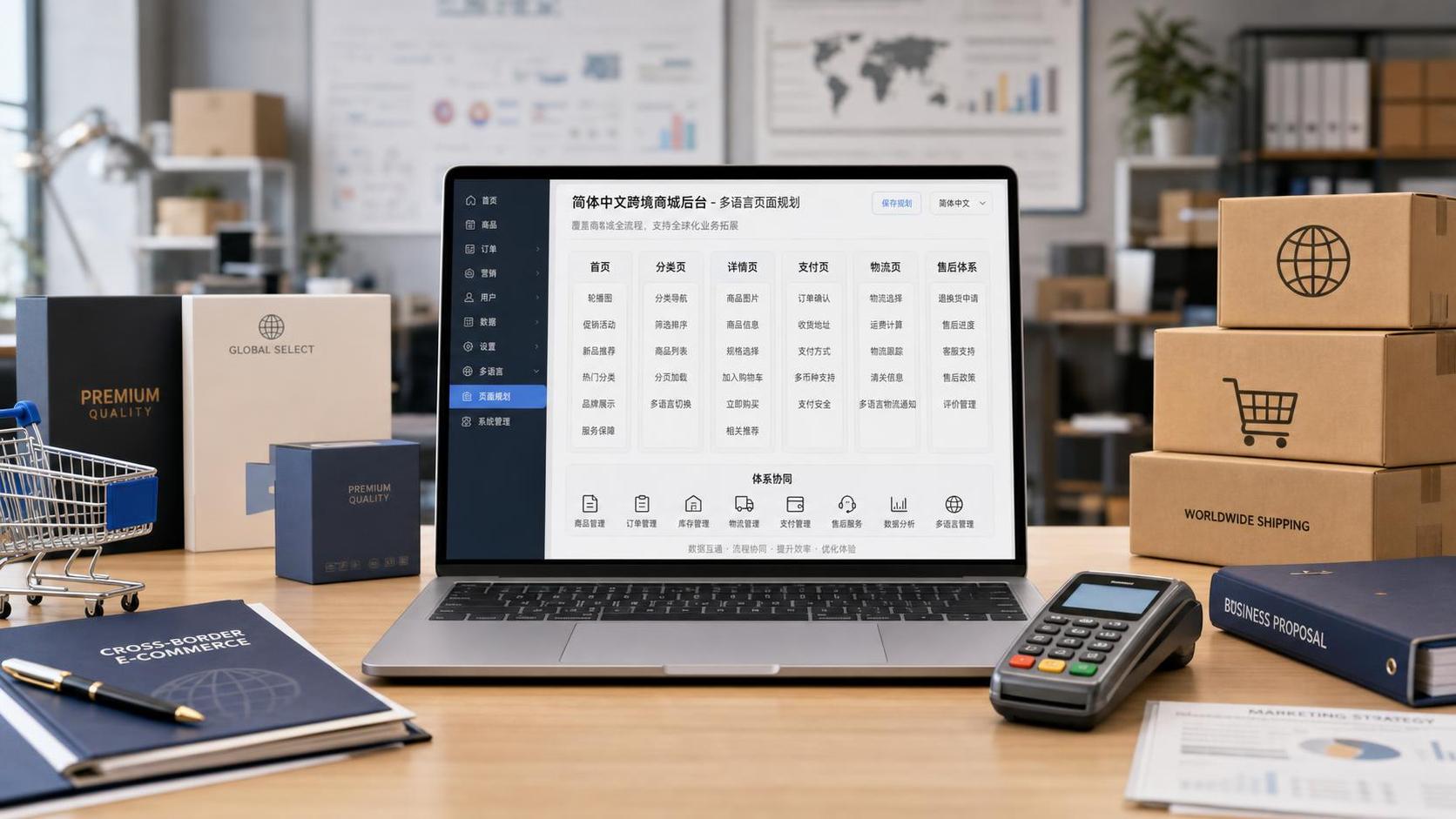
A multilingual e-commerce store that can operate effectively should have at least three levels of pages: acquisition pages, conversion pages, and trust-building pages. Missing any one of these levels will reduce overall performance.
- Acquisition pages: homepage, campaign pages, category pages, brand pages, and blog or guide pages.
- Conversion pages: product detail pages, shopping cart, checkout, and payment pages.
- Trust-building pages: shipping information, return and exchange policy, privacy policy, contact page, and FAQ page.
Many teams only develop the first two levels, assuming that policy and after-sales pages are not essential. In reality, the opposite is often true. When users in Europe and North America place orders on unfamiliar websites, they often look first for delivery times, return rules, tax information, and customer service access. If these pages are not available in the local language or their content is too brief, conversions may decline no matter how much is spent on advertising.
The Homepage Is Not Just a Translated Storefront but the Market Entry Page
The homepage must be multilingual, and changing the text alone is not enough. A common mistake is for websites in all languages to share the same hero visuals, promotional copy, and navigation structure. Although this may seem convenient, it can easily make visitors from different markets feel that “this site was not made for me.”
At a minimum, the homepage should be checked for the following: whether the currency matches the target market, whether the featured product categories meet local demand, whether delivery commitments are genuinely achievable, and whether the promotion schedule matches local shopping occasions. For example, North American users are familiar with major sales events, bundles, and limited-time discounts; the Japanese and South Korean markets place greater emphasis on detailed descriptions, materials, and reputation; in some parts of the Middle East, payment and delivery compatibility should also be confirmed in advance.
If resources are limited, the homepage should at least localize “language + currency + core selling points + delivery commitments” together. Do not leave an English delivery notice on a French-language page. Details like this can seriously undermine trust.
Category and Search Pages Are Often Underestimated SEO Entry Points
When building a multilingual B2C cross-border e-commerce store, category pages are often more worth investing in than product detail pages. The reason is straightforward: category pages are better suited to capturing category keywords, scenario-based keywords, and demand-related keywords, and are more suitable for large-scale indexing.
Three aspects require particular attention. First, are the category names terms that local users actually search for, rather than internal labels or mechanical translations? Second, are the filtering dimensions localized? For example, size, color, material, and application scenario should not simply retain the conventions of a Chinese-language backend. Third, are the URL rules for pagination, filtering, and sorting controllable? Otherwise, duplicate indexing and wasted crawling can easily occur.
From an engineering perspective, it is best to agree in advance on which filtered pages may be indexed and which are intended only for user experience and should not be open to indexing. If this is not clarified early on, SEO and development teams may repeatedly disagree later.
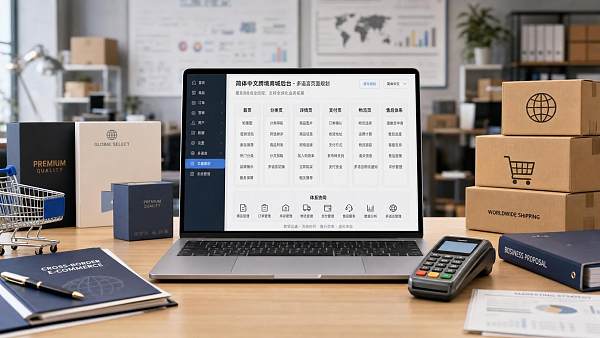
Product Detail Pages Must Be Reworked, Not Simply Copied from the Chinese Version
Product detail pages are where many teams “seem to have completed the work but have not actually done it thoroughly.” Content that truly affects conversion includes more than titles and descriptions. It also covers specifications, usage scenarios, the boundaries of product commitments, review content, and Q&A information.
A practical way to review these pages is to follow the user’s decision-making path:
- Can users understand within 3 seconds what the product is and who it is suitable for?
- Are the units of measurement localized, such as whether dimensions, capacity, and weight are expressed according to the target market’s conventions?
- Are key details such as taxes, shipping costs, and delivery times provided next to the price?
- Are variant names clear enough to prevent colors and models from remaining difficult to distinguish after translation?
- Have text in images, size charts, and installation instructions also been processed accordingly?
There is another highly practical issue: multilingual product detail pages should not be published automatically based entirely on machine translation. AI can improve efficiency when there are many SKUs, but high-traffic products, high-value products, and promoted flagship products should undergo at least a manual review. This is especially important for materials, functions, compatible models, and after-sales restrictions. A single translation error can lead to refunds or negative reviews.
The Shopping Cart, Checkout, and Payment Pages Determine Whether the Final Step Is Completed
The point where multilingual e-commerce stores most often lose orders is not the product detail page but the checkout process. The front end may appear to consist of only a few forms, but every field affects the completion rate.
The shopping cart page should clearly display the product amount, discounts, estimated shipping costs, and tax information【To be verified; configuration should be based on the actual tax strategy of the website】. The checkout page should support address formats commonly used in the target market instead of forcibly applying domestic field logic. On the payment page, check whether local payment habits are covered, such as credit cards and PayPal, as well as local payment methods preferred in some regions. These methods do not necessarily need to be integrated for every market, but they should at least be evaluated in advance. Do not wait until advertising volume increases to discover that the payment methods are incompatible.
One more frequently overlooked point: error messages must also be localized. On many websites, form validation messages, payment failure notices, and inventory exception messages are still written in English or technical language. Once users cannot understand them, they are likely to leave immediately.
Do Not Leave Shipping, Returns, and Privacy Policies to Be Added After Launch
If your target markets cover multiple regions such as North America, Europe, and Southeast Asia, policy pages must be included in the project scope from the early stages. The reason is simple: these pages affect not only trust but also compliance communication and customer service workload.
At a minimum, the following pages should be provided: shipping policy, return and exchange policy, privacy policy, terms of service, contact us, and FAQ. Whether customs duty information, warranty information, or subscription cancellation information is also needed depends on the product category and market. Do not fabricate content here, and do not copy competitors. Policy terms must be confirmed based on the company’s actual fulfillment capabilities, warehousing and logistics model, payment methods, and target-market requirements. Legal or compliance advisers should review them when necessary.
Define Rules for Language Switching, Regional Pages, and Currency Logic in Advance
Multilingual does not mean multi-country websites, but the two are often confused. The most common project debate is whether to build the website by language or by country.
Simply put, if products, prices, logistics, and policies differ substantially between countries, the country or regional dimension should usually be considered. If the main differences concern reading habits and search terms, the language dimension may be sufficient. Regardless of which approach is selected, the URL structure, hreflang configuration, canonical rules, and automatic redirection strategy should be determined in advance. Otherwise, problems such as disorganized indexing, language mismatches, and search results leading to the wrong website can easily occur.
In practice, it is not advisable to implement overly aggressive IP-based automatic redirection from the outset. Users may be redirected before they have even viewed the page clearly, and search engines may not respond favorably either. Keeping clear language and region switching options is generally more reliable.
Do Not Overlook Content Pages: They Capture Long-Tail Traffic and Build Trust
If you only build e-commerce transaction pages, your SEO potential will be relatively limited. Many multilingual B2C cross-border e-commerce projects eventually add content pages, including buying guides, usage tutorials, size guides, seasonal features, material comparisons, gift recommendations, and troubleshooting pages.
These pages provide two benefits: first, they capture search demand from users who are not yet ready to place an order directly; second, they provide internal-link support for product detail pages and category pages. Especially for new websites, content pages are often more likely to gain organic indexing before product pages.
However, do not create content simply for the sake of publishing content. Project managers should focus on one point: the content topic must lead back to the product, category, or purchasing decision. It should not become an accumulation of information unrelated to conversion.
Before Launch, Conduct a Final Review Using These Questions
- After entering through the homepage, can users move smoothly to the category, product detail, shopping cart, and payment pages without encountering language confusion?
- Does each language version have independently indexable pages rather than merely switching text on the front end while keeping the URL unchanged?
- Have the titles, descriptions, breadcrumbs, and structured content of high-value pages been localized accordingly?
- Are shipping, return and exchange information, and contact details visible in the footer, on product detail pages, or throughout the checkout process?
- Are payment methods, tax information, and delivery commitments consistent with actual fulfillment capabilities?
- Have the customer service, advertising, SEO, and technical teams reached agreement on the target-market keyword library and page mapping?
The most common problem is not “not knowing which pages to create,” but creating the pages without connecting them through the business process. A stable multilingual e-commerce store depends not on the number of pages, but on whether the role of each page and the relationships between pages are clear.
If your team is planning a multilingual B2C cross-border e-commerce project, a more practical approach is to first identify the target markets, core SKUs, fulfillment capabilities, and promotion channels, and then work backward to define the page scope. This helps prevent repeated development rework, avoids having SEO gaps filled only after launch, and makes it easier for operations teams to support subsequent advertising and content growth. For projects that need to balance website development, indexing, advertising, and conversion, this type of integrated planning is often closer to achieving results than simply carrying out “multilingual translation.”
Related Articles

Related Products
 EasyCamp SaaS Smart Website Marketing SystemE-Yingbao SaaS Smart Website Marketing System: AI-powered, zero-code website building. Rapidly launch multilingual independent e-commerce sites in just 10 minutes. Global server acceleration and AI-driven SEO optimization empower businesses to efficiently connect with global markets. The seamless integration of technology and user-friendly operation makes building e-commerce sites incredibly simple.
 AI+SEM Intelligent Advertising Marketing SystemAI+SEM drives intelligent ad creation, empowering full-funnel precision advertising marketing. The system automatically generates weekly/monthly reports, AI recommends keywords and target countries, monitors core metrics in real-time with intelligent alerts, and enables one-click high-conversion ad solutions to help quickly acquire customers and improve ROI.
 AI+SEO Dual Engine Optimization ServiceEasyWin AI+SEO Dual Engine Optimization System leverages AI-powered keyword mining, content generation, and comprehensive technical optimization to help foreign trade enterprises acquire high-quality organic traffic, significantly improving search rankings and conversion rates.
 AI+SNS Social Media Marketing SystemYingbao AI+SNS Social Media Marketing System - Precision social capture for the social media era. Supports one-click content synchronization across major platforms like Facebook and LinkedIn. AI intelligently rewrites posts for enhanced relevance. 24/7 AI customer service and user profiling analysis empower businesses to efficiently expand into global markets.
 AI+SEO营销解决方案易营宝AI+SEO营销解决方案,通过AI批量写作、智能生成TDK、精准关键词扩词等功能,全面优化网站SEO效果,提升流量与转化率。助力企业构建高效智能网站新生态。
 AI+SEM Advertising Marketing SolutionsAI+SEM Advertising Marketing Solution leverages AI technology to deeply empower SEM ad campaigns. It automatically generates weekly/monthly reports using AI, presenting account data across multiple dimensions for comprehensive insights into campaign performance and trends. The system precisely recommends keywords and target countries, intelligently generates high-conversion ad copy, and enables one-click activation of efficient campaign plans to help businesses rapidly acquire customers. Simultaneously, it monitors core metrics in real time, intelligently identifies abnormal fluctuations, and issues timely alerts to ensure stable, high-return advertising results.
 Domain Name ServicesEasyWin provides professional domain name services, including intelligent queries, one-stop registration, brand protection, and full lifecycle management, helping businesses build a digital brand image.
 EasyOperate B2C Cross-Border E-Commerce Platform & Independent WebsiteEasyStore B2C Cross-border E-commerce Independent Store is an intelligent website building and cross-border e-commerce integrated solution independently developed by EasyStore Information Technology (Beijing) Co., Ltd. The system is specially designed for small and medium-sized as well as large export enterprises, integrating 'website building, operation, marketing, advertising, and conversion' into one, helping enterprises quickly establish cross-border e-commerce independent stores to achieve brand globalization and global sales growth.
The platform supports multiple languages, multiple currencies, and multi-channel marketing, with built-in AI intelligent translation and SEO optimization systems, suitable for mainstream markets such as Southeast Asia, Europe and America, Latin America, and the Middle East, assisting Chinese manufacturing enterprises in efficiently deploying international e-commerce strategies. SSL证书易营宝提供专业SSL安全证书服务,包括单域名和泛域名证书,确保网站数据传输加密、身份验证和完整性保护,助力企业建立安全可信的在线业务环境。









