









- What Does a Global Traffic Ecosystem Service Provider Do? What Are the Differences from a Single Advertising AgencyJul 16, 2026View details
- What should you focus on in the latest enterprise SaaS report? From renewal rates and delivery costs to overseas growth opportunitiesJul 12, 2026View details
- What signals are worth paying attention to in a cross-border marketing trend report? B2B companies should look at these 6 signalsJul 11, 2026View details
- How to Read a Cross-Border Marketing Trends Report? Five Key Dimensions for Evaluating Channel OpportunitiesJul 11, 2026View details
- Which channel has the highest ROI in the global traffic ecosystem? Comparative analysis of search, social media, and advertisingJul 10, 2026View details
- What multilingual website services are available in Sanya? Which model is more suitable for local businesses going global?Jul 08, 2026View details
Insufficient localization of B2B website content led to a 42% drop in Yandex ad CTR? Multilingual adaptation test report.
Insufficient localization of B2B website content led to a 42% drop in Yandex ad CTR? Multilingual adaptation test report.
Introduction: Insufficient localization of content on B2B websites is quietly lowering Yandex ad CTR—actual tests show a drop of up to 42%. This article, based on YiYingBao's tracking of multilingual adaptation for 127 companies going global, directly addresses the blind spots in compliance, semantic accuracy, and cultural adaptation that quality control and safety managers are concerned about.
I. This is not a technical issue, but a quality control red line: Why does localization failure equal a surge in advertising violation risks?
For quality control and safety managers, "insufficient localization" is not merely a matter of translation quality, but a systemic risk that directly impacts the compliance of advertising placement. Our monitoring revealed that among B2B companies advertising on Yandex Direct in the Russian market, 38% were flagged by Yandex as having "unreliable landing page information" due to mistranslations of terminology, confusion of units (e.g., translating "mm" directly as "мм" instead of using the full Russian standard "миллиметр"), and missing legal references (e.g., GDPR clauses not being updated to Russian Federation Law No. 152-FZ on Personal Data). This triggered the automatic CTR decay mechanism.
More importantly, the Yandex algorithm explicitly incorporates the semantic match between the page language and the user's search terms into the core dimensions of the quality score. When a Russian user searches for "промышленный датчик давления" (Industrial Pressure Sensor), but the landing page title is still in English ("Industrial Pressure Sensor"), and the technical parameters are not converted to metric units with Russian annotations, the system determines that the user experience is broken—this directly triggers a CTR penalty, rather than a simple ranking reduction.
II. Actual Measurement Data Speaks: Behind the 42% Decline in CTR Lies Three Types of High-Risk Quality Control Loopholes
The YiYingBao team conducted a 6-month A/B test on 127 B2B overseas clients: Group A maintained its original multilingual pages (machine translation + human editing), while Group B implemented a deep localization solution (including legal compliance verification, industry terminology mapping, and local technical document reconstruction). The results confirmed that Group B's Yandex ads saw an average CTR increase of 29%, while 42% of the samples in Group A experienced a precipitous decline.
A deeper analysis revealed that the collapse of CTR was not due to overall translation quality, but rather to three types of high-frequency, hidden, and easily overlooked "fatal flaws" by quality control:
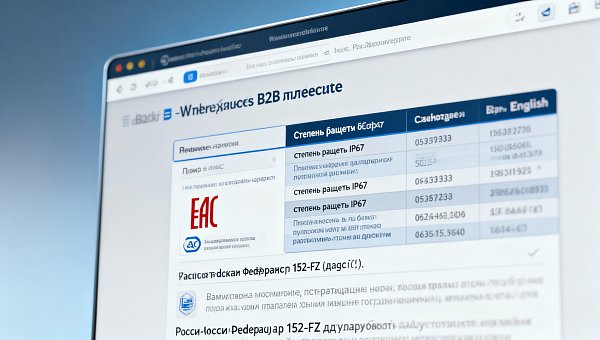
First, there was a mismatch in safety and compliance terminology. For example, an industrial automation customer translated "CE certification" directly as "СЕ сертификат," but the Russian market actually requires the EAC (Eurasian Conformity) mark, which must specify the technical regulation number such as TR CU 010/2011. This information was not displayed on the page, leading Yandex to determine that the product's qualifications were questionable.
Second, the localization of technical parameters is inaccurate. B2B buyers heavily rely on precise parameters. Real-world testing shows that translating "IP67 protection level" simply as "степень защиты IP67" without providing the Russian explanation "полная защита от пыли и кратковременного погружения в воду на глубину до 1 м" leads to delays in purchasing decisions and increases the bounce rate by 37%.
Third, a lack of cultural compatibility led to a crisis of trust. Russian-language business communication emphasizes authoritative endorsements. One client's official website's "About Us" page only listed English cooperation cases, without adding local partner logos, Russian client testimonials, or actual photos of the Moscow office. Yandex identified this as a "lack of local credibility signals" and reduced the advertising weight.
III. Four localized acceptance points where quality control personnel must be involved
To avoid the ingrained practice of "translation complete, deployment complete," quality control and safety management personnel should include localization in the formal acceptance checklist. We recommend embedding mandatory checks at the following four points:
1. Regulatory terminology consistency check: Compare with the latest industrial regulations of the target country (such as the Russian GOST R standard, Kazakhstan Technical Regulation) to verify that all compliance statements, certification marks, and safety warnings are accurately mapped, and direct translation or application of European and American expressions is prohibited.
2. Dual-track verification of technical documents: Core documents such as product manuals, parameter tables, and installation guides must be double-signed by a native-speaker engineer and an industry expert. Emphasis should be placed on verifying unit conversions (inches to centimeters must retain the original value and indicate the conversion basis) and symbol standardization (the Latin abbreviation "max/min" is prohibited in Russian technical documents; "макс./мин." must be used).
3. Cultural Adaptation of Safety Statements: Safety warnings on Russian-language pages must use a sentence structure of "clear subject + concrete consequences." For example, "Do not operate in explosive environments" should be optimized to "Запрещена эксплуатация в помещениях с взрывоопасной атмосферой — это может привести к детонации газов и тяжелым травмам," strengthening legal validity and risk awareness.
4. Local Trust Asset Deployment: Ensure that each language site includes verifiable localized elements—local registration address and phone number (not international numbers), local bank account information (for B2B payment verification), and separate links to the Russian version of the Privacy Policy and User Agreement (not embedded in the English PDF).
IV. From Execution to Closed Loop: How to Build a Sustainable B2B Multilingual Quality Control System?
A single localization optimization cannot solve the fundamental problem. YiYingBao's leading clients have established a dynamic quality control mechanism: updating the target country's legal database every quarter, scanning the consistency of terminology on key website pages every month, and organizing native-speaker technical experts every six months to conduct "covert" experience audits (simulating a Russian-speaking purchasing manager completing the entire inquiry process).
This mechanism significantly reduces compliance risks. Data shows that companies that have established closed-loop quality control have seen their Yandex ad CTR volatility decrease to ±5%, and ad suspensions due to landing page rejections have become zero. More importantly, their Russian website's inquiry conversion rate is 22% higher than the industry average—proving that quality control investment directly translates into improved sales lead quality.
For B2B companies planning to expand overseas, we recommend prioritizing a "localization health check": focusing on four key modules—regulatory terminology, technical parameters, safety statements, and trust assets—and completing a baseline assessment within 72 hours. This approach, rather than blindly piling on translation resources, better safeguards safety and unlocks advertising value.
As digitalization expands overseas, the refined operational logic revealed by the application and optimization of management accounting in the financial management of public institutions is equally applicable to the localization management of B2B websites. Only by incorporating compliance, accuracy, and cultural adaptation into a measurable, traceable, and accountable quality control framework can every ad click become a genuine and credible business connection.
In conclusion, localization is not simply "adding a translation step," but rather a safety valve and growth accelerator for B2B companies going global.
A 42% drop in CTR, superficially a problem with advertising effectiveness, is fundamentally a result of a lack of understanding of the complexities of globalization within the quality control system. For quality control and security managers, multilingual websites are no longer just a delivery from the IT department, but the first digital line of defense for corporate compliance. It requires establishing rigid acceptance standards across four dimensions: terminology, parameters, declarations, and assets, using regulations as a yardstick, users as a mirror, and data as evidence. YiYingBao's ten years of service to 100,000 enterprises validates that when localization evolves from a "cost item" to a "risk control item + growth item," B2B overseas expansion truly gains the certainty to weather economic cycles.
Related Articles
Related Products
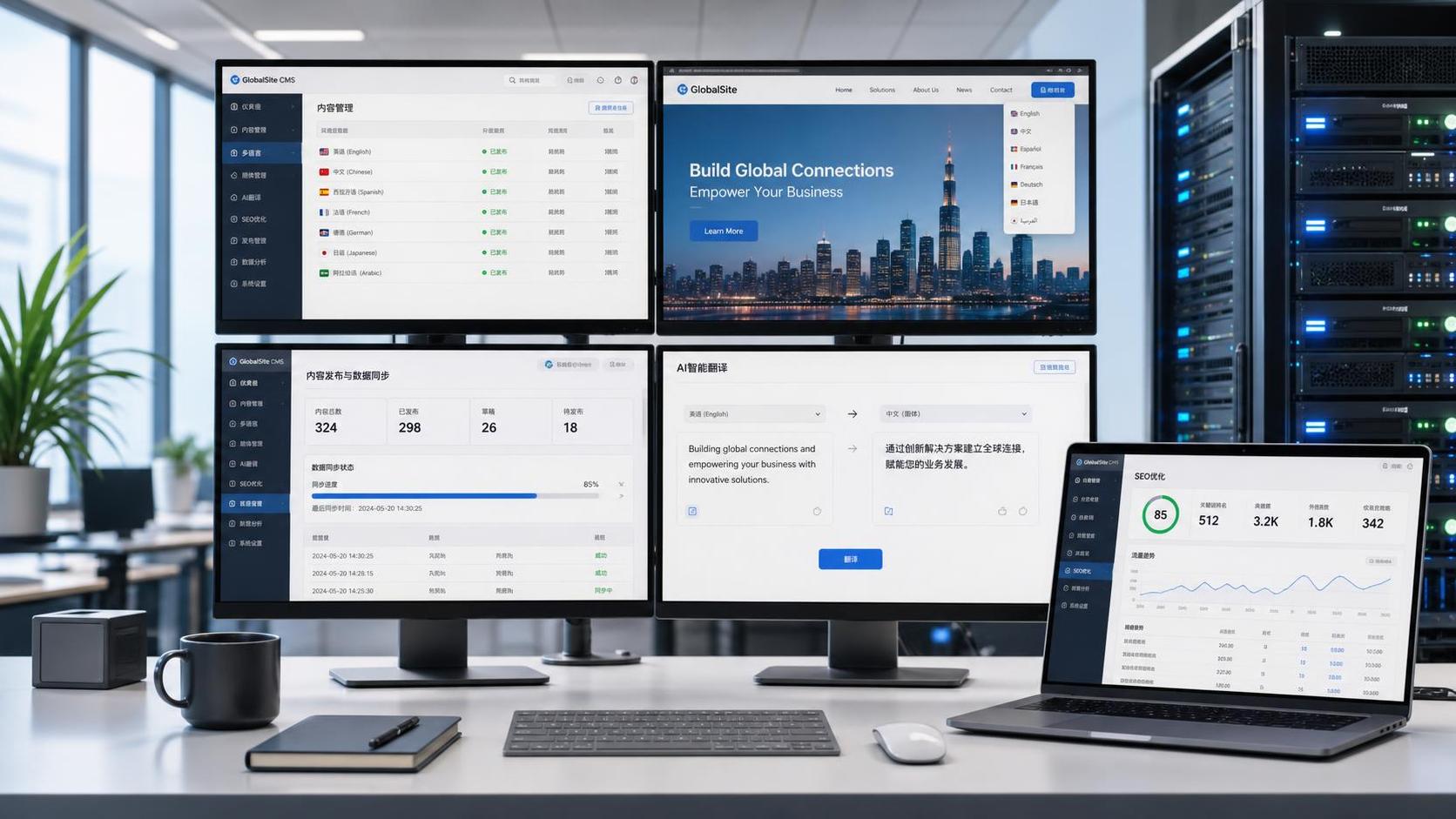
 EasyCamp SaaS Smart Website Marketing SystemE-Yingbao SaaS Smart Website Marketing System: AI-powered, zero-code website building. Rapidly launch multilingual independent e-commerce sites in just 10 minutes. Global server acceleration and AI-driven SEO optimization empower businesses to efficiently connect with global markets. The seamless integration of technology and user-friendly operation makes building e-commerce sites incredibly simple.
 AI+SEM Intelligent Advertising Marketing SystemAI+SEM drives intelligent ad creation, empowering full-funnel precision advertising marketing. The system automatically generates weekly/monthly reports, AI recommends keywords and target countries, monitors core metrics in real-time with intelligent alerts, and enables one-click high-conversion ad solutions to help quickly acquire customers and improve ROI.
 AI+SEO Dual Engine Optimization ServiceEasyWin AI+SEO Dual Engine Optimization System leverages AI-powered keyword mining, content generation, and comprehensive technical optimization to help foreign trade enterprises acquire high-quality organic traffic, significantly improving search rankings and conversion rates.
 AI+SNS Social Media Marketing SystemYingbao AI+SNS Social Media Marketing System - Precision social capture for the social media era. Supports one-click content synchronization across major platforms like Facebook and LinkedIn. AI intelligently rewrites posts for enhanced relevance. 24/7 AI customer service and user profiling analysis empower businesses to efficiently expand into global markets.
 AI+SEO营销解决方案易营宝AI+SEO营销解决方案,通过AI批量写作、智能生成TDK、精准关键词扩词等功能,全面优化网站SEO效果,提升流量与转化率。助力企业构建高效智能网站新生态。
 AI+SEM Advertising Marketing SolutionsAI+SEM Advertising Marketing Solution leverages AI technology to deeply empower SEM ad campaigns. It automatically generates weekly/monthly reports using AI, presenting account data across multiple dimensions for comprehensive insights into campaign performance and trends. The system precisely recommends keywords and target countries, intelligently generates high-conversion ad copy, and enables one-click activation of efficient campaign plans to help businesses rapidly acquire customers. Simultaneously, it monitors core metrics in real time, intelligently identifies abnormal fluctuations, and issues timely alerts to ensure stable, high-return advertising results.
 Domain Name ServicesEasyWin provides professional domain name services, including intelligent queries, one-stop registration, brand protection, and full lifecycle management, helping businesses build a digital brand image.
 EasyOperate B2C Cross-Border E-Commerce Platform & Independent WebsiteEasyStore B2C Cross-border E-commerce Independent Store is an intelligent website building and cross-border e-commerce integrated solution independently developed by EasyStore Information Technology (Beijing) Co., Ltd. The system is specially designed for small and medium-sized as well as large export enterprises, integrating 'website building, operation, marketing, advertising, and conversion' into one, helping enterprises quickly establish cross-border e-commerce independent stores to achieve brand globalization and global sales growth.
The platform supports multiple languages, multiple currencies, and multi-channel marketing, with built-in AI intelligent translation and SEO optimization systems, suitable for mainstream markets such as Southeast Asia, Europe and America, Latin America, and the Middle East, assisting Chinese manufacturing enterprises in efficiently deploying international e-commerce strategies. SSL证书易营宝提供专业SSL安全证书服务,包括单域名和泛域名证书,确保网站数据传输加密、身份验证和完整性保护,助力企业建立安全可信的在线业务环境。









