









- The China-US tariff arrangement has reached a preliminary consensus, and the trade association will be establishedJun 15, 2026View details
- China-Morocco zero-tariff access, a breakthrough in the cost of Moroccan goods exports to ChinaJun 11, 2026View details
- What signal should be released for the suspension of exports to JapanJun 10, 2026View details
- China's May LNG imports rebounded, with increased volumes from Russia and Canada filling the Middle East supply gapJun 10, 2026View details
- Will GEO change its SEO strategy?Jun 04, 2026View details
- What types of businesses are end-to-end solutions suitable for?Jun 03, 2026View details
How to create an overseas promotion plan for the manufacturing industry? Website, advertising, and social media integrated pathway analysis
Why Can’t the Manufacturing Industry’s Overseas Marketing Strategy Rely on Just One Channel
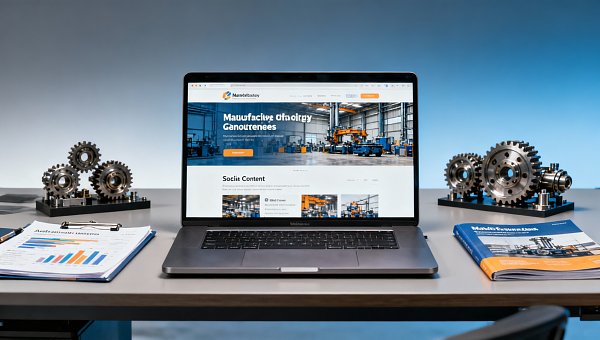
How should a manufacturing industry overseas marketing strategy be done? First, let’s look at a real-world change. Overseas purchasing decisions are getting slower and slower, but there are more and more touchpoints.
Customers won’t place an order just by seeing an ad once, nor will they place an order after just one email from business development. More often than not, they will first search the official website, then look at case studies, then browse social media, and only then submit an inquiry.
This also means that if a certain industry’s overseas marketing strategy still only focuses on platforms, only runs ads, or only does content, the results will be very hard to sustain.
The truly effective path is usually to use the official website to build trust, use advertising to get traffic, use social media to amplify the brand, and then use a data system to track conversions.
For manufacturing, products are complex, the decision chain is long, and the procurement threshold is high, so this combined approach is especially important. Because before placing an order, customers care more about strength, delivery, certification, case studies, and long-term cooperation capabilities.
Start with the foundation: the official website is the core asset of the manufacturing industry’s overseas marketing strategy
When many companies think about overseas promotion, they first think of running ads. In fact, the sequence is often reversed. Without a website that can convert, no amount of traffic will be retained.
A manufacturing website is not an electronic brochure; it is a customer acquisition system for overseas markets. It should solve at least three problems: customers can understand it, search engines can index it, and sales can follow up.
Website construction should focus on these four things
- Clearly communicate product value, rather than just listing parameters.
- Create multilingual pages based on market layout to avoid an overly mechanical feel.
- Highlight factory strength, certificates, delivery capability, and case studies.
- Forms, instant communication, and inquiry reminders must be complete and usable.
In actual business, website speed also directly affects inquiries. Slow page loading, chaotic structure, and poor mobile adaptation all can cause potential customers to leave early.
Therefore, the first step in a manufacturing industry overseas marketing strategy is not to spend money on traffic first, but to first turn the official website into a place that is displayable, indexable, and convertible.
From the perspective of 易营宝’s service approach, website construction should be designed together with later SEO, advertising, and social media operations, rather than being done separately. This is more conducive to long-term growth.
Next, amplifying reach: advertising is the accelerator of the manufacturing industry’s overseas marketing strategy
Only after the website foundation is in place does advertising make sense. Because what advertising solves is “being seen faster”, not “automatically generating orders”.
For manufacturing advertising, the focus is usually not broad exposure, but precise reach to people with purchasing intent. In particular, Google Ads is more suitable for capturing high-intent searches.
When running ads, do not just look at clicks; look at lead quality
A reliable overseas marketing strategy for an industry will break ad objectives into several layers: brand keyword defense, product keyword traffic capture, application scenario keyword expansion, and remarketing follow-up.
- Brand keyword ads intercept customers who already know you.
- Product keyword ads directly capture high-intent search traffic.
- Scenario keyword ads cover users with earlier-stage needs.
- Remarketing ads repeatedly reach people who have visited the page.
From campaign experience, the most common problems in manufacturing are not insufficient budgets, but mismatched landing pages, weak lead filtering, and delayed follow-up, which eventually lead to a large number of ineffective inquiries.
If the system can synchronize buyer profiles, behavior paths, and form sources, optimization efficiency will improve significantly. Solutions like B2B foreign trade solutions are integrated because they connect website building, advertising, and conversion tracking.
Continuously influencing customers: social media is the trust amplifier in the manufacturing industry’s overseas marketing strategy
Many companies feel that social media is not suitable for manufacturing. In fact, it is not that it is unsuitable, but that the content format is wrong.
What overseas customers value on social media is not flashy copy, but authenticity. Factory environment, production processes, quality control, exhibition updates, and customer case studies are often more persuasive than simple promotions.
Manufacturing social media operations can be done like this
- Publish factory and team content to enhance authenticity.
- Break down product application scenarios to help customers understand usage.
- Produce case study content to reduce initial cooperation concerns.
- Combine short videos to showcase the production line and testing process.
A more obvious signal is that social media is no longer just a brand showcase window; it also affects search results, ad remarketing effectiveness, and customers’ judgment of a company’s professionalism.
Therefore, a manufacturing industry overseas marketing strategy cannot treat social media as an accessory. It is more like a “trust buffer zone,” allowing customers to build familiarity before formal inquiry.
How the official website, advertising, and social media work together is the key to a certain industry’s overseas marketing strategy
If the official website, advertising, and social media are separated, the data is easy to break at different stages, and the budget is easy to waste. The truly efficient approach is to let the three channels revolve around the same goal.
A mature manufacturing industry overseas marketing strategy usually first uses advertising to validate the market, then uses SEO and content to accumulate long-term traffic, while simultaneously leveraging social media to continuously strengthen brand awareness.
The advantage of this approach is very direct. In the short term, there are inquiries; in the medium term, there is stable traffic; in the long term, there are brand assets, and it will not be affected by fluctuations in a single platform.
Three misconceptions to avoid during implementation
Misconception 1: Only looking at traffic, not the conversion path
High traffic does not mean many orders. Without layered pages, without inquiry filtering, and without a sales follow-up mechanism, lead quality is hard to keep stable.
Misconception 2: Multilingual only means translation, not localization
Different markets care about different things. European customers value compliance, Middle Eastern customers value responsiveness, and Southeast Asian customers care more about delivery times and cost performance. If the content is not localized, the conversion rate will suffer.
Misconception 3: Separating promotion from the data system
If you cannot see where customers came from, which pages they viewed, and at which step they dropped off, it is difficult to keep optimizing. This is also the root cause of unstable results in many overseas marketing strategies in certain industries.
A more stable implementation path: from trial run to scale-up
If you want to improve success rates, it is recommended to proceed in stages rather than trying to cover everything at once.
- First complete the overseas official website and basic content setup.
- Then launch ad tests for core product keywords.
- Simultaneously deploy multilingual SEO and case study content.
- Use social media to continuously publish factory and application content.
- Based on inquiry quality, determine the direction for budget scaling.
From service cases, an integrated platform is more suitable for long-term manufacturing operations. For example, when page speed reaches a Google PageSpeed score above 90, and the average ad click-through rate is 40% higher than the industry benchmark, then combined with multilingual content and intelligent follow-up, overall efficiency will be even higher.
If you still want to balance inquiry growth and order conversion, you can check whether you have website building, advertising, SEO, customer service, and data analysis closed-loop capabilities. A B2B foreign trade solutions with these capabilities is more likely to turn promotion into a replicable growth system.
In the end, there is no such thing as a one-click universal solution for a manufacturing industry overseas marketing strategy. What truly works is a solid website, traffic generated by advertising, trust built through social media, and continuous optimization through data tracking.
When the three channels begin to work together, a company’s global expansion is no longer just “give it a try,” but a long-term project that can gradually accumulate customer assets, brand momentum, and stable inquiries.
Related Articles
 Guangjiao Expo Phase III customs release and procurement rules signal
 What functions are needed for cross-border store development? Products, payment, and logistics configuration list
 How should machinery foreign trade marketing be done? SEO, advertising, and trade show leads: how do they work together for conversion
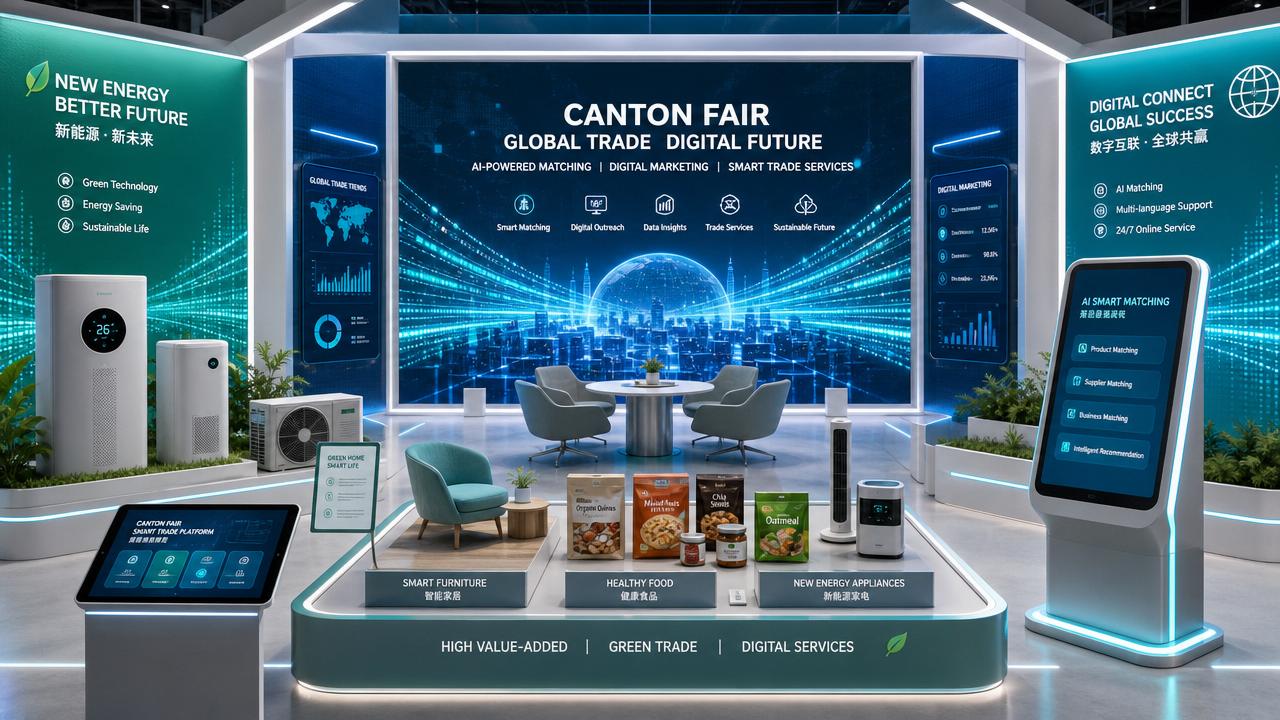


Related Products
 EasyCamp SaaS Smart Website Marketing SystemE-Yingbao SaaS Smart Website Marketing System: AI-powered, zero-code website building. Rapidly launch multilingual independent e-commerce sites in just 10 minutes. Global server acceleration and AI-driven SEO optimization empower businesses to efficiently connect with global markets. The seamless integration of technology and user-friendly operation makes building e-commerce sites incredibly simple.
 AI+SEM Intelligent Advertising Marketing SystemAI+SEM drives intelligent ad creation, empowering full-funnel precision advertising marketing. The system automatically generates weekly/monthly reports, AI recommends keywords and target countries, monitors core metrics in real-time with intelligent alerts, and enables one-click high-conversion ad solutions to help quickly acquire customers and improve ROI.
 AI+SEO Dual Engine Optimization ServiceEasyWin AI+SEO Dual Engine Optimization System leverages AI-powered keyword mining, content generation, and comprehensive technical optimization to help foreign trade enterprises acquire high-quality organic traffic, significantly improving search rankings and conversion rates.
 AI+SNS Social Media Marketing SystemYingbao AI+SNS Social Media Marketing System - Precision social capture for the social media era. Supports one-click content synchronization across major platforms like Facebook and LinkedIn. AI intelligently rewrites posts for enhanced relevance. 24/7 AI customer service and user profiling analysis empower businesses to efficiently expand into global markets.
 AI+SEO营销解决方案易营宝AI+SEO营销解决方案,通过AI批量写作、智能生成TDK、精准关键词扩词等功能,全面优化网站SEO效果,提升流量与转化率。助力企业构建高效智能网站新生态。
 AI+SEM Advertising Marketing SolutionsAI+SEM Advertising Marketing Solution leverages AI technology to deeply empower SEM ad campaigns. It automatically generates weekly/monthly reports using AI, presenting account data across multiple dimensions for comprehensive insights into campaign performance and trends. The system precisely recommends keywords and target countries, intelligently generates high-conversion ad copy, and enables one-click activation of efficient campaign plans to help businesses rapidly acquire customers. Simultaneously, it monitors core metrics in real time, intelligently identifies abnormal fluctuations, and issues timely alerts to ensure stable, high-return advertising results.
 Domain Name ServicesEasyWin provides professional domain name services, including intelligent queries, one-stop registration, brand protection, and full lifecycle management, helping businesses build a digital brand image.
 EasyOperate B2C Cross-Border E-Commerce Platform & Independent WebsiteEasyStore B2C Cross-border E-commerce Independent Store is an intelligent website building and cross-border e-commerce integrated solution independently developed by EasyStore Information Technology (Beijing) Co., Ltd. The system is specially designed for small and medium-sized as well as large export enterprises, integrating 'website building, operation, marketing, advertising, and conversion' into one, helping enterprises quickly establish cross-border e-commerce independent stores to achieve brand globalization and global sales growth.
The platform supports multiple languages, multiple currencies, and multi-channel marketing, with built-in AI intelligent translation and SEO optimization systems, suitable for mainstream markets such as Southeast Asia, Europe and America, Latin America, and the Middle East, assisting Chinese manufacturing enterprises in efficiently deploying international e-commerce strategies. SSL证书易营宝提供专业SSL安全证书服务,包括单域名和泛域名证书,确保网站数据传输加密、身份验证和完整性保护,助力企业建立安全可信的在线业务环境。









