









- How to assess foreign trade website development trends?Looking at 2026 changes from multilingual,AI content to conversion pathsJul 04, 2026View details
- What are the new trends in multilingual marketing data analytics tools in 2026? Focus on attribution、automation and complianceJul 04, 2026View details
- Is Brand Globalization Marketing Consulting Worth Buying? At What Stage Should Companies Bring It InJul 01, 2026View details
- Cross-Border Marketing Trend Research: Why More and More Companies Are Starting to Deploy AI Search and GEO OptimizationJun 30, 2026View details
- Cross-Border Marketing Trend Research: How Independent Sites, AI Content, and Short-Video Customer Acquisition Are ChangingJun 30, 2026View details
- How Can a Brand Updates Page Be Made More SEO-Friendly? Analysis of Update Frequency, Content Structure, and Internal Linking StrategyJun 28, 2026View details
How to Do Keyword Layout for Product Pages on Foreign Trade Websites?Practical Methods from Core Keywords to Long-Tail Keywords
When product pages fail to rank,the bottleneck is often keyword layout first
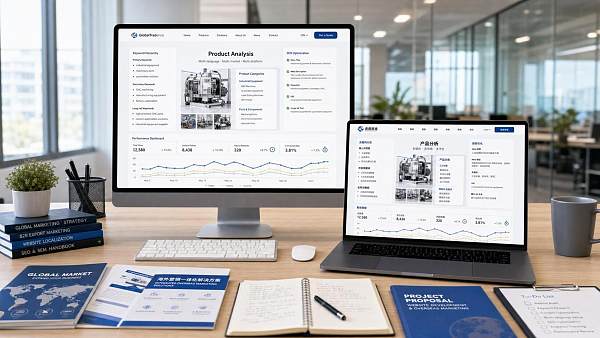
Keyword layout for product pages on foreign trade websites is not just about putting terms into the title。What truly affects indexing,ranking,and inquiries is whether the page corresponds to the search scenario,whether it helps search engines understand the product,and whether it also allows visitors to quickly judge whether cooperation is possible。
In actual application,even for product pages,the layout priorities of different business types are not the same。For inquiry-based websites,more emphasis is placed on product capabilities,application industries,and customization conditions;for cross-border marketplaces,more attention is paid to models,price ranges,specification filtering,and coverage of transaction-oriented terms。
This is also why many sites have many pages,but still fail to gain stable traffic。If the terms are selected inaccurately,no matter how many pages there are,they are only content accumulation。When Ecommbao provides long-term services for multilingual website building,SEO optimization,and overseas promotion projects,it usually looks at the business chain first,and then decides how to break down the keyword layout for product pages。
Clarify the page scenario first,then decide how to place core terms
Product pages may look similar in structure,but search intent varies greatly。Some people search for general category terms,some search for specific models,and others search for “use + product” or “region + supply capability”。When doing keyword layout for product pages on foreign trade websites,segmenting scenarios first is more important than stacking keywords first。
A more common judgment method is to divide product pages into three types:main promoted product pages,segmented model pages,and application demand pages。Main promoted product pages carry core terms,segmented model pages carry parameter terms,and application demand pages carry long-tail terms。With this layout,pages are less likely to compete with each other for rankings。
- Main promoted product pages:suitable for laying out industry core terms,broad product terms,and supply capability terms。
- Segmented model pages:suitable for laying out specification terms,material terms,standard terms,and model terms。
- Application demand pages:suitable for laying out usage terms,industry terms,and scenario problem terms。
If all terms are stuffed into one product page from the beginning,two problems usually occur:the title loses focus,and the body content becomes repetitive。As a result,search engines cannot determine the main topic of the page,and visitors cannot see clear product matching points。
What kind of product page is suitable for core terms
Core terms are usually category terms with relatively high search volume and stronger competition,such as product names,general category terms,and mainstream procurement terms。When doing keyword layout for product pages on foreign trade websites,core terms should not be distributed evenly,but should be concentrated on the pages with the most authority and the most complete information。
If the product line is relatively broad and there is only one page for a major category,core terms can be placed on the main product page;if the product line is very deep,with multiple materials,processes,or specifications under the same category,the upper-level page needs to carry broad terms,and the lower-level pages carry segmented terms,otherwise internal competition will be very obvious。
Three positions for judging a core-term page
- Title position:prioritize the main product name,then supplement key attributes,and do not stack multiple synonyms。
- Opening paragraph position:naturally explain the product’s applicable scope,selling points,and application directions。
- Subheading position:use specifications,uses,advantages,and delivery capabilities to carry expanded terms。
One point that is easy to misjudge here is looking only at search volume while ignoring conversion value。Some broad terms have high traffic but weak procurement intent;some terms have limited volume but are very close to inquiries。If a product page is responsible for customer acquisition,core terms must balance ranking opportunities with inquiry quality。
Long-tail terms are not supplementary content,but scenario entrances
When many sites do keyword layout for product pages on foreign trade websites,they understand long-tail terms as additional terms。In fact,long-tail terms are more like entrances to specific scenarios。Especially in B2B business,real searches are often not a single product name,but combinations such as “product + use”,“product + standard”,“product + region”,and “product + customization requirements”。
The value of these terms lies in clear search intent。As long as the page content corresponds to them,although the traffic may not necessarily be large,it is more likely to bring high-quality visits。In multilingual SEO projects,a common practice of Ecommbao is to use the AI+SEO system to cluster search terms first,and then decide the destination of long-tail terms according to the page’s carrying capacity。
Under different business models,the layout priorities of product pages are not the same
For an inquiry-based independent website,the product page is more like a sales entrance。The keyword layout strategy for product pages on foreign trade websites should clearly explain “what can be done,who it is suitable for,and to what extent delivery can be made”。At this time,keywords should revolve around capabilities,applications,and differentiation,rather than circling around price terms。
If it is a cross-border marketplace type page,the search path is shorter and decisions are faster。When laying out keywords on product pages,models,specifications,inventory attributes,and purchase conditions should be strengthened。The coverage of terms can be more detailed,but the page structure must be more standardized,otherwise no matter how many expanded terms there are,it will still be difficult to form stable indexing。
There is also a common scenario where an overseas brand website balances content marketing and conversion。At this time,product pages cannot operate alone,and need to coordinate with blogs,case studies,and landing pages。Core terms remain on product pages,explanatory long-tail terms are distributed to content pages,and then flow back to product pages through internal links,which is often more efficient。
How page placement is done determines whether keywords can truly take effect
Selecting the right terms is only the first step;what truly determines the result is placement。When doing keyword layout for product pages on foreign trade websites,the title,description,opening paragraph,parameter section,image captions,FAQs,and related recommendations all have different responsibilities。Putting terms in the wrong positions often causes the topic to become scattered。
A more reliable method for page placement
- The title carries one core term,with one highly relevant modifier attached。
- The opening paragraph explains product positioning,without repeatedly stacking title synonyms。
- The parameter section covers specification-type long-tail terms,and data fields should be as complete as possible。
- The application section carries use-type long-tail terms,and clearly states matching conditions。
- FAQs carry question-type search terms and reduce ineffective bounce。
- Related recommendations are used to establish term-cluster relationships and avoid isolated pages。
If the site supports multiple languages and multiple markets,differences in expressions across regions should also be considered。Search habits in North America,Europe,the Middle East,or Southeast Asia are not exactly the same。The value of an integrated solution like Ecommbao,which covers both website building and marketing,lies in the fact that page structure,keyword strategy,and market advertising can be adjusted collaboratively,instead of operating separately。
What is most easily overlooked during implementation is not the terms,but the relationships between pages
One common misjudgment is treating similar product pages as completely independent pages。As a result,each page competes for the same term;there may be many indexed pages,but rankings cannot rise。The solution is not to continue adding pages,but to reorganize the corresponding relationship between terms and pages,forming a clear hierarchy。
Another overlooked point is creating only product content without supporting information。Many long-tail terms actually require auxiliary content such as certifications,delivery time,MOQ,customization capability,and packaging methods to carry them。When search engines judge relevance,they also look at whether this supplementary information is complete。
If the current site is still in the rebuilding stage,it is recommended to first sort out the existing product categories,then group keywords,and then decide which terms should be placed on product pages and which terms should be separated into topic pages or content pages。By doing this,whether the next step is SEO growth,advertising landing pages,or AI search visibility optimization, the structure will be more stable。
How to move forward next will be more effective than continuing to stack terms
For keyword layout on product pages of foreign trade websites,the core is not to write a page of content that “looks very complete”,but to ensure that each page has a clear topic,corresponding search intent,and a clear conversion path。Core terms determine the page entrance,long-tail terms determine traffic quality,and page relationships determine overall growth efficiency。
A more practical approach is to first select key products,build a layered keyword database table,and then check whether the title,parameter section,application section,and internal links match。For existing pages,priority should be given to handling term-page mismatch,duplicate content,and vague scenario descriptions。Once these basic actions are done well,the indexing,ranking,and inquiry quality of product pages will usually improve faster。
Related Articles
 Which items should be checked for improving 易营宝 SEO score? Analysis of core metrics affecting on-site optimization results
 How Can the Keyword Indexing Volume of a Japanese Website Reach the Industry Benchmark?5 Key Factors Affecting Indexing
 How to Do Keyword Layout for Product Pages on Foreign Trade Websites?Practical Methods from Core Keywords to Long-Tail Keywords
Related Products
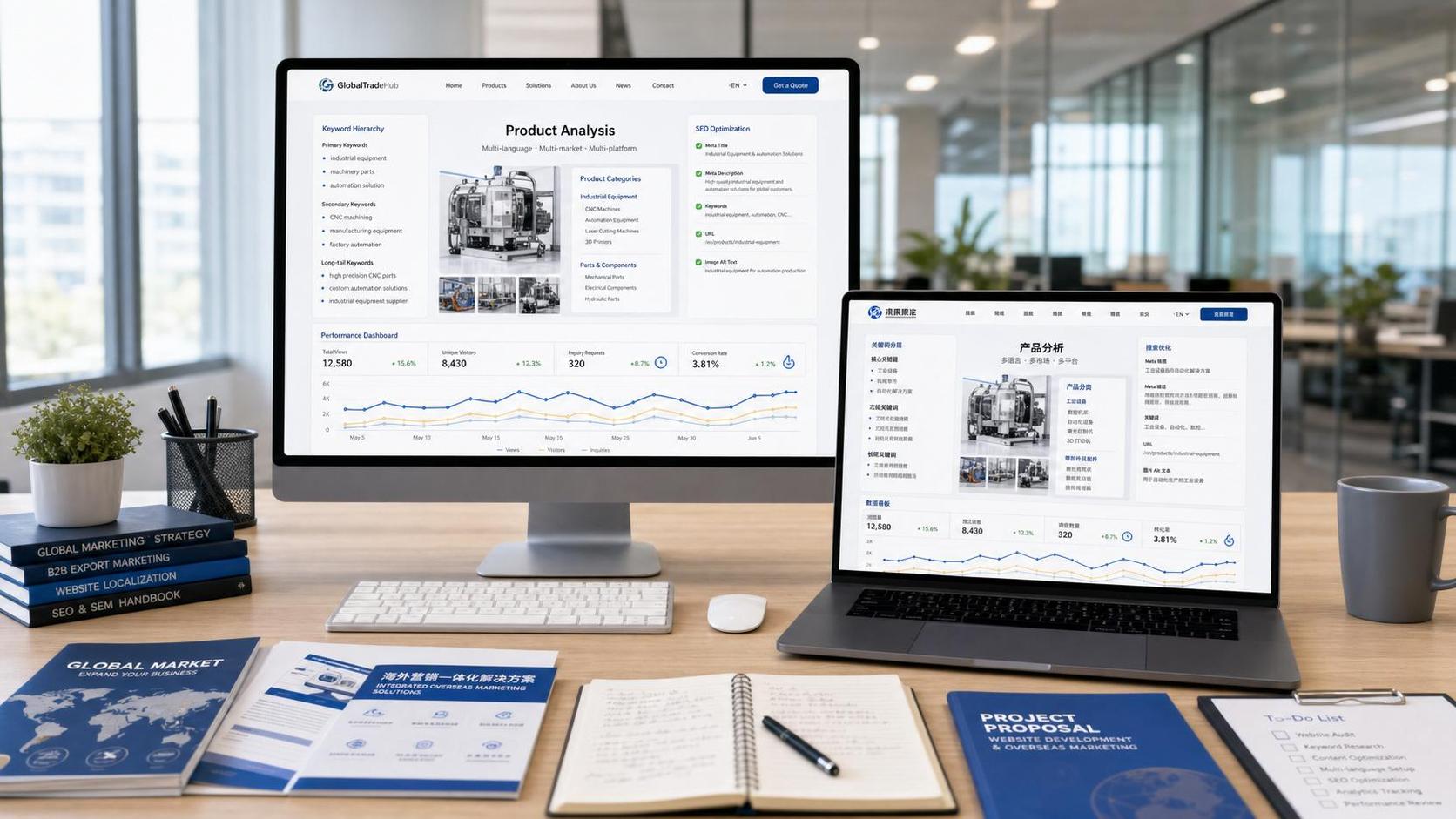
 EasyCamp SaaS Smart Website Marketing SystemE-Yingbao SaaS Smart Website Marketing System: AI-powered, zero-code website building. Rapidly launch multilingual independent e-commerce sites in just 10 minutes. Global server acceleration and AI-driven SEO optimization empower businesses to efficiently connect with global markets. The seamless integration of technology and user-friendly operation makes building e-commerce sites incredibly simple.
 AI+SEM Intelligent Advertising Marketing SystemAI+SEM drives intelligent ad creation, empowering full-funnel precision advertising marketing. The system automatically generates weekly/monthly reports, AI recommends keywords and target countries, monitors core metrics in real-time with intelligent alerts, and enables one-click high-conversion ad solutions to help quickly acquire customers and improve ROI.
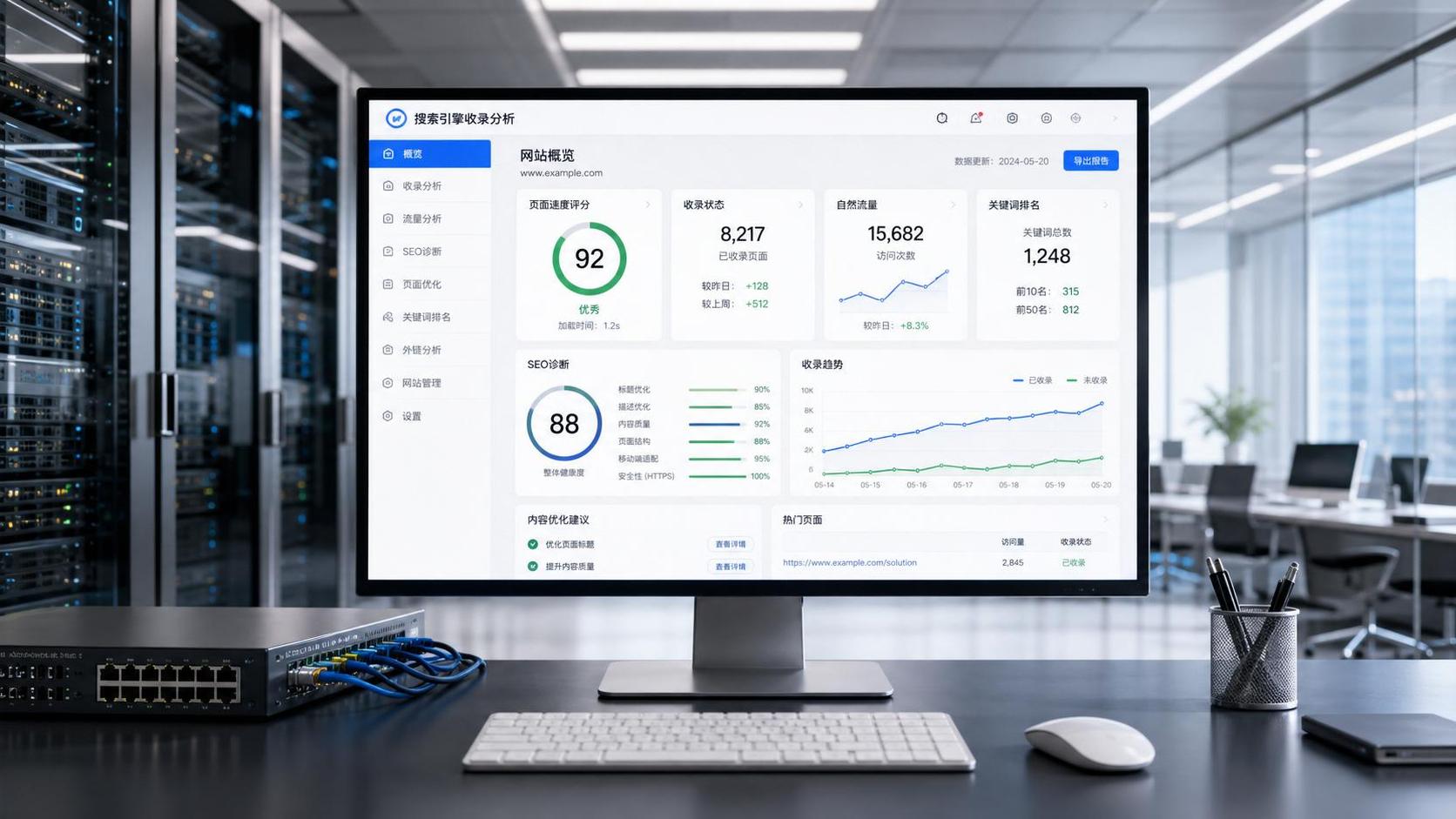
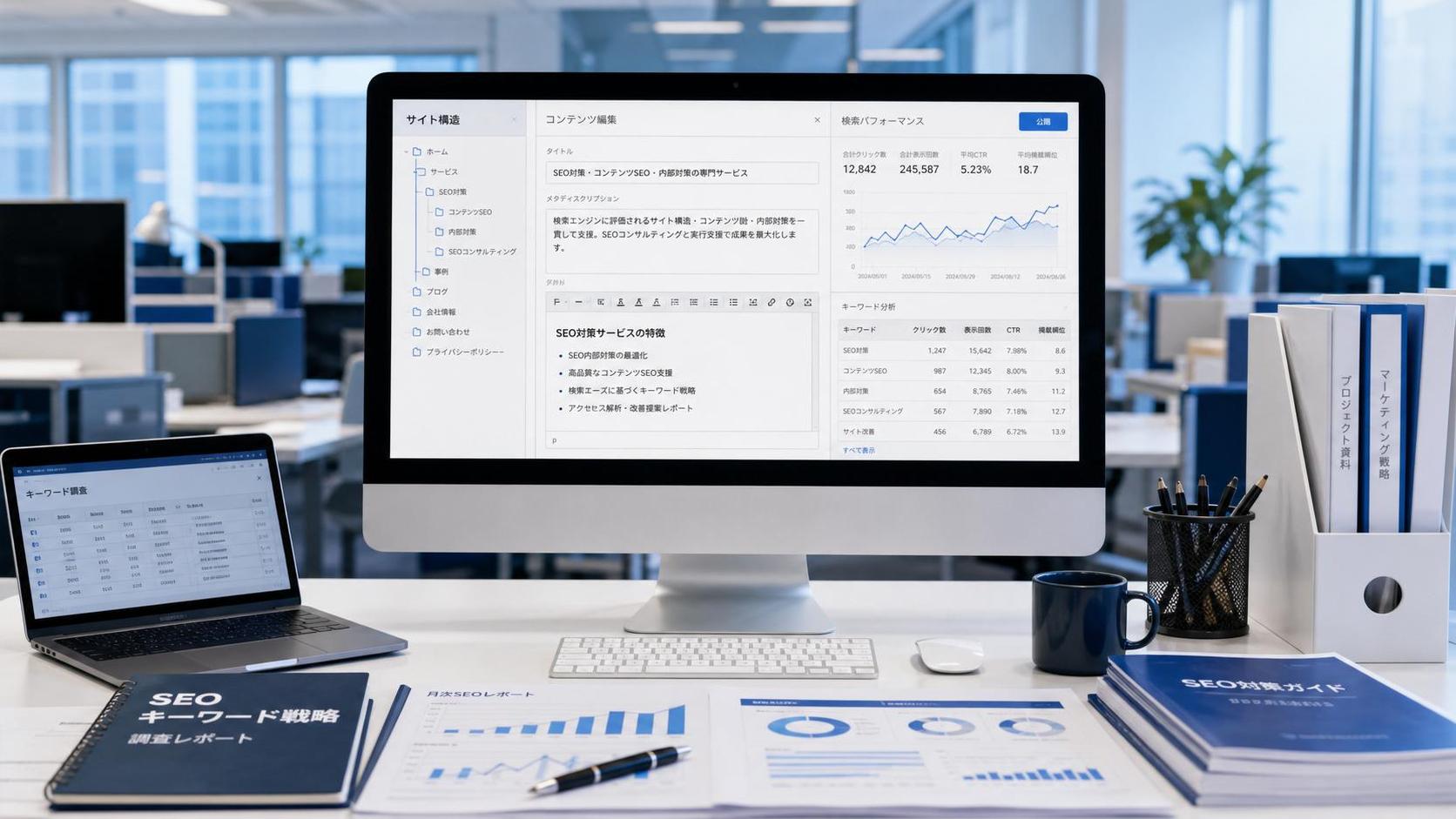
 AI+SEO Dual Engine Optimization ServiceEasyWin AI+SEO Dual Engine Optimization System leverages AI-powered keyword mining, content generation, and comprehensive technical optimization to help foreign trade enterprises acquire high-quality organic traffic, significantly improving search rankings and conversion rates.
 AI+SNS Social Media Marketing SystemYingbao AI+SNS Social Media Marketing System - Precision social capture for the social media era. Supports one-click content synchronization across major platforms like Facebook and LinkedIn. AI intelligently rewrites posts for enhanced relevance. 24/7 AI customer service and user profiling analysis empower businesses to efficiently expand into global markets.
 AI+SEO营销解决方案易营宝AI+SEO营销解决方案,通过AI批量写作、智能生成TDK、精准关键词扩词等功能,全面优化网站SEO效果,提升流量与转化率。助力企业构建高效智能网站新生态。
 AI+SEM Advertising Marketing SolutionsAI+SEM Advertising Marketing Solution leverages AI technology to deeply empower SEM ad campaigns. It automatically generates weekly/monthly reports using AI, presenting account data across multiple dimensions for comprehensive insights into campaign performance and trends. The system precisely recommends keywords and target countries, intelligently generates high-conversion ad copy, and enables one-click activation of efficient campaign plans to help businesses rapidly acquire customers. Simultaneously, it monitors core metrics in real time, intelligently identifies abnormal fluctuations, and issues timely alerts to ensure stable, high-return advertising results.
 Domain Name ServicesEasyWin provides professional domain name services, including intelligent queries, one-stop registration, brand protection, and full lifecycle management, helping businesses build a digital brand image.
 EasyOperate B2C Cross-Border E-Commerce Platform & Independent WebsiteEasyStore B2C Cross-border E-commerce Independent Store is an intelligent website building and cross-border e-commerce integrated solution independently developed by EasyStore Information Technology (Beijing) Co., Ltd. The system is specially designed for small and medium-sized as well as large export enterprises, integrating 'website building, operation, marketing, advertising, and conversion' into one, helping enterprises quickly establish cross-border e-commerce independent stores to achieve brand globalization and global sales growth.
The platform supports multiple languages, multiple currencies, and multi-channel marketing, with built-in AI intelligent translation and SEO optimization systems, suitable for mainstream markets such as Southeast Asia, Europe and America, Latin America, and the Middle East, assisting Chinese manufacturing enterprises in efficiently deploying international e-commerce strategies. SSL证书易营宝提供专业SSL安全证书服务,包括单域名和泛域名证书,确保网站数据传输加密、身份验证和完整性保护,助力企业建立安全可信的在线业务环境。









