









- How to assess foreign trade website development trends?Looking at 2026 changes from multilingual,AI content to conversion pathsJul 04, 2026View details
- What are the new trends in multilingual marketing data analytics tools in 2026? Focus on attribution、automation and complianceJul 04, 2026View details
- Is Brand Globalization Marketing Consulting Worth Buying? At What Stage Should Companies Bring It InJul 01, 2026View details
- Cross-Border Marketing Trend Research: Why More and More Companies Are Starting to Deploy AI Search and GEO OptimizationJun 30, 2026View details
- Cross-Border Marketing Trend Research: How Independent Sites, AI Content, and Short-Video Customer Acquisition Are ChangingJun 30, 2026View details
- How Can a Brand Updates Page Be Made More SEO-Friendly? Analysis of Update Frequency, Content Structure, and Internal Linking StrategyJun 28, 2026View details
How Can the Keyword Indexing Volume of a Japanese Website Reach the Industry Benchmark?5 Key Factors Affecting Indexing
First Determine Which Business Scenario the Indexing Issue Comes From
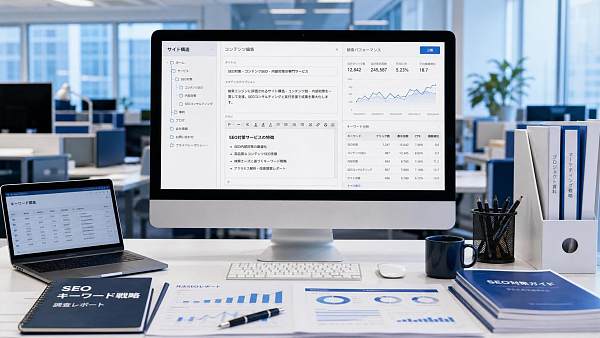
How to bring the keyword indexing volume of a Japanese website up to industry benchmarks,on the surface,seems to be an SEO issue,but in practice it often involves website structure,content organization,page quality and submission rhythm。For websites used for overseas customer acquisition,indexing volume is not an isolated metric,it directly affects organic traffic coverage,and also determines whether later advertising and social media traffic acquisition can form synergy。
In practical applications,the indexing bottlenecks of different Japanese websites are not the same。A common issue for multilingual official websites is structural disorder,cross-border malls are more prone to accumulated duplicate pages,while B2B inquiry websites are often stuck at insufficient content depth。To judge how the keyword indexing volume of a Japanese website can reach industry benchmarks,you must first distinguish the website type,and then see whether the technology and content match。
For integrated website and marketing service projects,this point is even more obvious。A website is not only for launch and display,it also needs to support Google SEO,advertising landing pages and subsequent conversions,therefore indexing assessment cannot only look at the number of pages,but must look at the proportion of pages that are crawlable,identifiable and rankable。
If the Technical Structure Is Not Solid,No Matter How Much Content There Is,It Is Hard to Reach the Benchmark
Many websites update content frequently after launch,but how to bring the keyword indexing volume of a Japanese website up to industry benchmarks still shows no improvement,and the problem often lies in the underlying structure。Search engines first crawl the structure,and then look at the content。If crawl entry points are not smooth,all subsequent optimization will be weakened。
A more common scenario is inconsistent multilingual directory settings。For example,the Japanese version is placed in a subdirectory,but some pages jump to parameter links,or the navigation still calls Chinese template links。This will break crawl paths,and indexing will naturally be low。
At the Technical Level,First Look at These Points
- Whether the URL hierarchy is clear,and whether the Japanese directory is independent and stable。
- Whether internal navigation,breadcrumbs and pagination links can all lead to Japanese pages。
- Whether robots,canonical and noindex mistakenly affect core pages。
- Whether the sitemap separately submits Japanese content,rather than mixing in low-quality parameter pages。
- Whether mobile loading and rendering are stable,avoiding JS content from being unable to be fully recognized。
If overseas websites are built in batches using an intelligent website building system,technical consistency will directly determine the upper limit of indexing。For platforms like 易营宝 that place website building,SEO and marketing in the same system,the advantage is that crawl logic and content publishing rules can be planned together in the early stage,avoiding repeated rework later。
Pages Being in Japanese Does Not Mean Localization Adaptation Has Been Completed
How to bring the keyword indexing volume of a Japanese website up to industry benchmarks,the second key step is language localization。Although many pages have been translated into Japanese,search engines still identify them as low-value content,because vocabulary usage,title expression and search intent are not close to the habits of Japanese users。
This situation is very common in manufacturing official websites and cross-border malls。The former tends to translate Chinese materials directly,making terminology unnatural;the latter likes to copy English category names,causing semantic disconnection between titles,descriptions and body text。The page looks complete,but the actual indexing efficiency is very low。
Different Websites Have Different Localization Requirements
What needs to be confirmed before implementation is that a page is not finished once it is translated into Japanese,but information hierarchy must be organized around Japanese search terms。Titles,first paragraphs,subheadings,image descriptions and internal anchor text should all be developed around real search expressions,so that how the keyword indexing volume of a Japanese website can reach industry benchmarks has a foundation。
Page Quality Determines Whether It Can Remain Stable After Being Indexed
Many teams understand indexing as being crawled after submission,but what actually has a greater impact is whether the page can be continuously retained after being crawled。If page quality is low,duplication is high and information is shallow,indexing will fluctuate,and keyword coverage will also be difficult to expand。
If it is a B2B foreign trade website,the common problem is that product pages only have parameters and no application descriptions;if it is a multilingual official website,the common problem is that news page titles are different,but the body text is highly repetitive。How to bring the keyword indexing volume of a Japanese website up to industry benchmarks,in essence,requires improving the real value of indexable pages。
Page Quality Can Be Judged This Way
- Whether it solves a single topic,instead of forcefully stuffing multiple keywords into one page。
- Whether there is enough information to support search intent,such as specifications,scenarios,comparisons and FAQs。
- Whether there are large numbers of template pages where only the title is changed but the main content is not。
- Whether there are clear internal links connecting product pages,category pages and content pages。
For websites operated over the long term,a more reliable approach is to build content in layers。Core pages carry high-value keywords,explanatory pages carry segmented keywords,and case or knowledge pages carry question-based keywords。This is not only beneficial for indexing,but also makes it easier for later advertising and organic traffic to share page assets。
Submission Frequency and Indexing Rhythm Cannot Simply Copy Sites in Other Languages
How to bring the keyword indexing volume of a Japanese website up to industry benchmarks,the fourth step is often overlooked,which is the submission strategy。Many websites use the same rhythm for all languages,resulting in slower updates to the Japanese directory,delayed sitemap updates,or one-time submission of too many immature pages,which instead lowers the overall signal。
A more reasonable method is to submit in batches according to content maturity。First push pages with complete structure,proper internal links and clear titles,and then gradually expand long-tail pages。In this way,search engines can more easily establish website quality judgments,and subsequent indexing will not be affected by large batches of low-quality pages。
Execution Actions Suitable for Most Projects
- Check every week whether the Japanese sitemap only contains indexable pages。
- For new categories,submit core pages first,then supplement detail pages and extended pages。
- When indexing is abnormal,check crawl logs first,then adjust the content plan。
- For pages that are repeatedly crawled but not indexed,prioritize improving structure and content,rather than rushing to submit repeatedly。
If the website also undertakes advertising landing page tasks,it is especially important to avoid keeping short-cycle campaign pages in the indexing system for a long time。They are suitable for conversion,but not necessarily suitable for long-term indexing,and mixing them together will interfere with overall judgment。
Areas Prone to Misjudgment Often Affect Results More Than Technical Failures
Many projects keep asking how to bring the keyword indexing volume of a Japanese website up to industry benchmarks,but they focus on the wrong place。The most typical misjudgment is only staring at the total indexing volume,without looking at the effective indexing rate。An increase in the number of pages does not mean it can bring keyword coverage。
Another misjudgment is directly applying the experience of Chinese or English websites to Japanese websites。Search expressions,page organization habits and phrase combination methods are different across languages,especially in title length,category naming and long-tail keyword layout,Japanese websites require more refined handling。
There is also another situation that is easily overlooked:website building,SEO and advertising are executed separately,with frequent page revisions but no unified standards。This will cause URL changes,content replacement and interruption of indexing signals。The value of integrated website and marketing services lies in enabling website construction,SEO optimization and traffic operations to use the same set of data judgment standards。
The Truly Executable Next Step Is to First Build an Indexing Benchmark Breakdown Table
If you want to systematically answer how to bring the keyword indexing volume of a Japanese website up to industry benchmarks,the more effective approach is not to continue blindly publishing content,but to first break the problem into five items:whether the structure is crawlable,whether the language is localized,whether the page has value,whether submission has rhythm,and whether the data can be reviewed。
You can first sort out the page pool by website type,then filter out core indexable pages,low-quality duplicate pages and pages to be optimized。After that,check the Japanese directory,title system,internal linking logic and sitemap submission records,and finally decide whether to add content,adjust the structure,or clean up invalid pages。
For projects covering multiple overseas regions,it is more suitable to use a platform with intelligent website building,SEO and data collaboration capabilities for unified management。This can not only shorten the troubleshooting path,but also make it easier to turn how the keyword indexing volume of a Japanese website can reach industry benchmarks from a one-time optimization into a sustainable growth action。
Related Articles
 Which items should be checked for improving 易营宝 SEO score? Analysis of core metrics affecting on-site optimization results
 How Can the Keyword Indexing Volume of a Japanese Website Reach the Industry Benchmark?5 Key Factors Affecting Indexing
 How to Do Keyword Layout for Product Pages on Foreign Trade Websites?Practical Methods from Core Keywords to Long-Tail Keywords
Related Products
 EasyCamp SaaS Smart Website Marketing SystemE-Yingbao SaaS Smart Website Marketing System: AI-powered, zero-code website building. Rapidly launch multilingual independent e-commerce sites in just 10 minutes. Global server acceleration and AI-driven SEO optimization empower businesses to efficiently connect with global markets. The seamless integration of technology and user-friendly operation makes building e-commerce sites incredibly simple.
 AI+SEM Intelligent Advertising Marketing SystemAI+SEM drives intelligent ad creation, empowering full-funnel precision advertising marketing. The system automatically generates weekly/monthly reports, AI recommends keywords and target countries, monitors core metrics in real-time with intelligent alerts, and enables one-click high-conversion ad solutions to help quickly acquire customers and improve ROI.
 AI+SEO Dual Engine Optimization ServiceEasyWin AI+SEO Dual Engine Optimization System leverages AI-powered keyword mining, content generation, and comprehensive technical optimization to help foreign trade enterprises acquire high-quality organic traffic, significantly improving search rankings and conversion rates.
 AI+SNS Social Media Marketing SystemYingbao AI+SNS Social Media Marketing System - Precision social capture for the social media era. Supports one-click content synchronization across major platforms like Facebook and LinkedIn. AI intelligently rewrites posts for enhanced relevance. 24/7 AI customer service and user profiling analysis empower businesses to efficiently expand into global markets.
 AI+SEO营销解决方案易营宝AI+SEO营销解决方案,通过AI批量写作、智能生成TDK、精准关键词扩词等功能,全面优化网站SEO效果,提升流量与转化率。助力企业构建高效智能网站新生态。
 AI+SEM Advertising Marketing SolutionsAI+SEM Advertising Marketing Solution leverages AI technology to deeply empower SEM ad campaigns. It automatically generates weekly/monthly reports using AI, presenting account data across multiple dimensions for comprehensive insights into campaign performance and trends. The system precisely recommends keywords and target countries, intelligently generates high-conversion ad copy, and enables one-click activation of efficient campaign plans to help businesses rapidly acquire customers. Simultaneously, it monitors core metrics in real time, intelligently identifies abnormal fluctuations, and issues timely alerts to ensure stable, high-return advertising results.
 Domain Name ServicesEasyWin provides professional domain name services, including intelligent queries, one-stop registration, brand protection, and full lifecycle management, helping businesses build a digital brand image.
 EasyOperate B2C Cross-Border E-Commerce Platform & Independent WebsiteEasyStore B2C Cross-border E-commerce Independent Store is an intelligent website building and cross-border e-commerce integrated solution independently developed by EasyStore Information Technology (Beijing) Co., Ltd. The system is specially designed for small and medium-sized as well as large export enterprises, integrating 'website building, operation, marketing, advertising, and conversion' into one, helping enterprises quickly establish cross-border e-commerce independent stores to achieve brand globalization and global sales growth.
The platform supports multiple languages, multiple currencies, and multi-channel marketing, with built-in AI intelligent translation and SEO optimization systems, suitable for mainstream markets such as Southeast Asia, Europe and America, Latin America, and the Middle East, assisting Chinese manufacturing enterprises in efficiently deploying international e-commerce strategies. SSL证书易营宝提供专业SSL安全证书服务,包括单域名和泛域名证书,确保网站数据传输加密、身份验证和完整性保护,助力企业建立安全可信的在线业务环境。









