









- What Does a Global Traffic Ecosystem Service Provider Do? What Are the Differences from a Single Advertising AgencyJul 16, 2026View details
- What should you focus on in the latest enterprise SaaS report? From renewal rates and delivery costs to overseas growth opportunitiesJul 12, 2026View details
- What signals are worth paying attention to in a cross-border marketing trend report? B2B companies should look at these 6 signalsJul 11, 2026View details
- How to Read a Cross-Border Marketing Trends Report? Five Key Dimensions for Evaluating Channel OpportunitiesJul 11, 2026View details
- Which channel has the highest ROI in the global traffic ecosystem? Comparative analysis of search, social media, and advertisingJul 10, 2026View details
- What multilingual website services are available in Sanya? Which model is more suitable for local businesses going global?Jul 08, 2026View details
Keyword placement tips for export product pages:Naturally integrate ‘stainless steel flange’ into the 5 golden positions of H2/H3/table headings/Alt text
Why must keyword placement for foreign trade product pages be implemented in a checklist-based manner?
Google's algorithm continues to strengthen its semantic understanding and user intent matching capabilities. Simply piling up "stainless steel flange" no longer triggers ranking improvements; instead, it's easily judged as a low-quality signal. In real purchasing behavior, overseas buyers often initiate searches using compound long-tail keywords such as "ANSI B16.5 stainless steel flange supplier" and "304 vs 316 stainless flange price." Therefore, keyword placement is not about text filling, but rather about structured information anchoring around the user's decision-making path.
Yiyingbao Information Technology (Beijing) Co., Ltd., serving over 100,000 B2B companies, has found that pages with satisfactory natural keyword coverage on their product pages experience an average increase of 47% in natural traffic and an inquiry conversion rate 2.3 times higher than the industry average. The core of this success lies in precisely embedding target keywords into users' visual focus and using algorithms to identify high-weight areas.
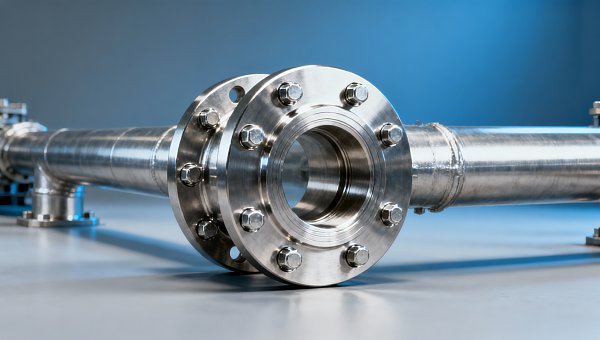
List of 5 prime keyword placement locations on foreign trade product pages
- Embed core keywords in the H2 main title, such as "Stainless Steel Flange Specifications & Technical Data", to avoid awkward placement at the beginning and ensure semantic completeness and conformity with the search habits of buyers;
- Set “stainless steel flange” as the first H3 subheading, make it a separate paragraph and follow the logic of H2. For example, set H3 under the material parameters module: “Stainless Steel Flange Material Grades (304/316/321)”.
- It appears naturally in the header (
<th>) of the specification comparison table, such as "Flange Type | Stainless Steel Flange Size (inch) | Pressure Class | Standard"; - Add a descriptive phrase to the Alt text of the product main image, in the format "Stainless steel flange ANSI B16.5 Class 150 RF 4-inch 304 material installed on pipeline", including the four elements of standard, grade, size, and material;
- Insert it into the first question in the FAQ module, such as "Which stainless steel flange grades comply with ASTM A182?", and use synonyms such as "austenitic stainless flange" and "corrosion-resistant flange" for natural extension.
Keyword fusion strategies in different scenarios
When dealing with EPC (Engineering, Procurement, and Construction) clients, it is necessary to strengthen the expression of standards and compliance. In the H3 heading, this can be combined to form "Stainless Steel Flange Compliance: ASME B16.5, EN 1092-1 & JIS B2220", and the certification mark column should be marked in the table row to enhance professional credibility.
For price-sensitive distributors, cost-related keywords should be embedded in the Alt text and H3 tags. For example, the H3 tag could be set to "Stainless Steel Flange Bulk Order Pricing (MOQ 10pcs)", and the image Alt text could be written as "Stainless steel flange pallet packing for export – 50pcs per wooden crate". This approach will allow long-tail keywords such as "stainless steel flange price" and "flange wholesale" to gain organic exposure.
Three high-risk blind spots that are often overlooked
First, repeatedly using the same variant in H2/H3 (such as consecutive occurrences of "stainless flange", "stainless steel flange", "SS flange") is likely to trigger keyword stuffing warnings. A consistent subject + modifier structure should be used, such as "Stainless Steel Flange for Chemical Industry".
Second, the table title lacks semantic enhancement. Simply writing "Dimensions" is far less indexable than "Stainless Steel Flange Dimensions (in mm and inch)". Google Tables parser prioritizes crawling complete noun phrases within <th> heading.
Third, ignore localized spelling differences. When targeting the UK market, "stainless steel flange" needs to be adapted to the British spelling context, such as adding "BS EN 1092-1 compliant stainless steel flange" to H3 to enhance regional relevance.
3-step optimization action that can be performed immediately
- Open the source code of the current product page, locate all H2/H3 tags, replace vague expressions (such as "Product Details") with "stainless steel flange", and keep verbs or scene words as suffixes;
- Check the Alt attribute of each product image, delete invalid text such as "image123", and rewrite it according to the five elements of "material + standard + size + purpose", with each line not exceeding 125 characters;
- Export the HTML of the page table, and refactor the content of the first row
<th>to a complete phrase containing the core words, ensuring that each table header independently carries one procurement decision information point.
Conclusion: Let keywords become natural signposts on the user journey.
The essence of keyword layout on foreign trade product pages is to align the search engine's crawling logic with the information acquisition path of buyers. When "stainless steel flange" no longer exists in isolation, but is an organic component of technical parameters, compliance basis, delivery form, and cost structure, the page truly possesses the underlying ability to be recognized, recommended, and trusted.
Yiyingbao Information Technology, drawing on ten years of B2B digital marketing experience, has solidified its methodology into the SEO pre-check module of its intelligent website building system. Enterprises can simultaneously refer to the comprehensive budget management approach for manufacturing companies driven by strategy , establishing a long-term optimization mechanism from a marketing input-output perspective. Initiate page diagnostics immediately, ensuring that every keyword placement becomes a definite fulcrum for increasing inquiries.
Related Articles
Related Products
 EasyCamp SaaS Smart Website Marketing SystemE-Yingbao SaaS Smart Website Marketing System: AI-powered, zero-code website building. Rapidly launch multilingual independent e-commerce sites in just 10 minutes. Global server acceleration and AI-driven SEO optimization empower businesses to efficiently connect with global markets. The seamless integration of technology and user-friendly operation makes building e-commerce sites incredibly simple.
 AI+SEM Intelligent Advertising Marketing SystemAI+SEM drives intelligent ad creation, empowering full-funnel precision advertising marketing. The system automatically generates weekly/monthly reports, AI recommends keywords and target countries, monitors core metrics in real-time with intelligent alerts, and enables one-click high-conversion ad solutions to help quickly acquire customers and improve ROI.
 AI+SEO Dual Engine Optimization ServiceEasyWin AI+SEO Dual Engine Optimization System leverages AI-powered keyword mining, content generation, and comprehensive technical optimization to help foreign trade enterprises acquire high-quality organic traffic, significantly improving search rankings and conversion rates.
 AI+SNS Social Media Marketing SystemYingbao AI+SNS Social Media Marketing System - Precision social capture for the social media era. Supports one-click content synchronization across major platforms like Facebook and LinkedIn. AI intelligently rewrites posts for enhanced relevance. 24/7 AI customer service and user profiling analysis empower businesses to efficiently expand into global markets.
 AI+SEO营销解决方案易营宝AI+SEO营销解决方案,通过AI批量写作、智能生成TDK、精准关键词扩词等功能,全面优化网站SEO效果,提升流量与转化率。助力企业构建高效智能网站新生态。
 AI+SEM Advertising Marketing SolutionsAI+SEM Advertising Marketing Solution leverages AI technology to deeply empower SEM ad campaigns. It automatically generates weekly/monthly reports using AI, presenting account data across multiple dimensions for comprehensive insights into campaign performance and trends. The system precisely recommends keywords and target countries, intelligently generates high-conversion ad copy, and enables one-click activation of efficient campaign plans to help businesses rapidly acquire customers. Simultaneously, it monitors core metrics in real time, intelligently identifies abnormal fluctuations, and issues timely alerts to ensure stable, high-return advertising results.
 Domain Name ServicesEasyWin provides professional domain name services, including intelligent queries, one-stop registration, brand protection, and full lifecycle management, helping businesses build a digital brand image.
 EasyOperate B2C Cross-Border E-Commerce Platform & Independent WebsiteEasyStore B2C Cross-border E-commerce Independent Store is an intelligent website building and cross-border e-commerce integrated solution independently developed by EasyStore Information Technology (Beijing) Co., Ltd. The system is specially designed for small and medium-sized as well as large export enterprises, integrating 'website building, operation, marketing, advertising, and conversion' into one, helping enterprises quickly establish cross-border e-commerce independent stores to achieve brand globalization and global sales growth.
The platform supports multiple languages, multiple currencies, and multi-channel marketing, with built-in AI intelligent translation and SEO optimization systems, suitable for mainstream markets such as Southeast Asia, Europe and America, Latin America, and the Middle East, assisting Chinese manufacturing enterprises in efficiently deploying international e-commerce strategies. SSL证书易营宝提供专业SSL安全证书服务,包括单域名和泛域名证书,确保网站数据传输加密、身份验证和完整性保护,助力企业建立安全可信的在线业务环境。









