









- What Does a Global Traffic Ecosystem Service Provider Do? What Are the Differences from a Single Advertising AgencyJul 16, 2026View details
- What should you focus on in the latest enterprise SaaS report? From renewal rates and delivery costs to overseas growth opportunitiesJul 12, 2026View details
- What signals are worth paying attention to in a cross-border marketing trend report? B2B companies should look at these 6 signalsJul 11, 2026View details
- How to Read a Cross-Border Marketing Trends Report? Five Key Dimensions for Evaluating Channel OpportunitiesJul 11, 2026View details
- Which channel has the highest ROI in the global traffic ecosystem? Comparative analysis of search, social media, and advertisingJul 10, 2026View details
- What multilingual website services are available in Sanya? Which model is more suitable for local businesses going global?Jul 08, 2026View details
Common Reasons for Poor Google SEO Optimization Results: Troubleshooting Indexing, Content, and Technical Issues
Why has a website's rankings and inquiries still not improved after a long period of Google SEO optimization? In many cases, the problem is not caused by a single factor, but by a combination of indexing issues, insufficient content quality, and technical defects. This article will start with the core diagnostic checkpoints to help operators quickly identify and optimize the issues.
If you are a website operator, SEO specialist, or marketer, what you need most is not to hear the basic concepts again, but to quickly determine which layer the problem lies in: pages not being indexed, content not matching search intent, or the website's technical structure holding performance back.
When many companies do Google SEO optimization, they tend to treat “publishing content” and “doing keywords” as progress, but search growth is essentially a systems engineering project. Only when indexing, content, and technology all meet the standard at the same time do rankings and inquiries have a better chance of improving steadily.
First determine this: poor Google SEO optimization performance is usually stuck at these three core stages
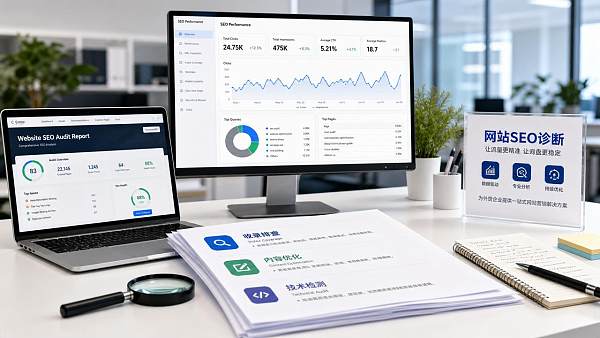
From the perspective of search intent, when users search for this type of question, their core purpose is not to understand the definition of SEO, but to quickly investigate why the website has long failed to gain organic traffic, or why it has traffic but no converted leads, and then find executable directions for correction.
For execution-level readers, the three biggest concerns are: whether the pages have been properly discovered and indexed by Google, whether the content deserves to rank, and whether website technology is affecting crawling, loading, and user experience. These three factors determine whether optimization can truly work.
In actual work, many websites are not “not doing SEO,” but rather doing a large number of superficial actions without establishing a diagnostic sequence. It is recommended to first check indexing, then content, then technology, and finally backlinks, branded keywords, and the competitive environment. This will be much more efficient.
If the website has only recently gone live, has frequent redesigns, or uses a site-building method that is unfavorable for crawling, then the problem is most likely first in the indexing and technical layers; if the pages are indexed but have not ranked for a long time, the focus is usually more on checking content quality and page relevance.
Why pages are still not indexed: first check crawl entry points and indexing signals
Many cases of poor Google SEO optimization performance are not due to weak ranking ability, but because the pages have never entered the index at all. When pages are not indexed, even the best keyword layout and polished copy are unlikely to gain search visibility in the short term.
First, check the page indexing report in Google Search Console to confirm whether the status is “Crawled - currently not indexed,” “Discovered - currently not indexed,” or blocked by factors such as robots, noindex, canonical tags, or redirects. Different statuses require different handling methods.
If a large number of pages are in the “Discovered - currently not indexed” state, it usually means the internal site structure is weak, the page value is insufficient, or the crawl budget allocation is unreasonable. Common situations include too many filtered pages, too many duplicate URLs, shallow internal links, and a high proportion of low-quality pages.
You should also check whether the XML sitemap has been submitted correctly and whether important pages can be accessed smoothly through navigation, category pages, and anchor text in the main content. For Google, even if orphan pages exist, they may not necessarily be prioritized for crawling and understanding.
Another high-frequency issue is incorrect canonical tag settings. Some corporate website templates uniformly point canonical to the homepage or category pages, causing product pages and article pages, even if accessible, to be regarded by Google as not needing independent indexing.
If it is a multilingual website, you also need to simultaneously check whether hreflang, language directories, and regional versions are configured clearly. Once language versions become confusing on a cross-border business website, search engines can easily misjudge page relationships, resulting in scattered indexing or even internal competition.
Pages are indexed but not ranking, mostly because the content does not truly match search intent
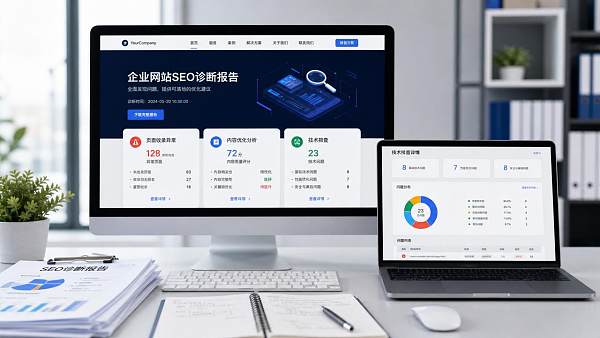
Many companies think that as long as they put keywords into the title, description, and body text, Google SEO optimization will produce results. But today, search ranking pays more attention to whether a page truly solves the user's problem, rather than simply how many times a keyword appears.
Take “Google SEO optimization” as an example. People searching for this term may want to know optimization methods, reasons for poor results, service selection criteria, or specific diagnostic processes. If a page only stays at the level of conceptual introduction, it will naturally struggle to compete in rankings.
To determine whether content matches intent, you can first search the target keyword and see what types of results mainly appear on the first page. If most results are tutorials, troubleshooting guides, and practical checklists, but your page is written as a company introduction or service promotion, it will be difficult to obtain an ideal position.
Insufficient content quality is also reflected in several aspects: repetitive information, vague viewpoints, insufficient cases, chaotic structure, no steps, and no conclusion. Google is more willing to give higher visibility to pages that help users make judgments and solve problems.
For practitioners, the most valuable content is usually “how to check, how to fix, and what results to look at after fixing.” Therefore, articles, topic pages, and service pages should all provide clear diagnostic paths as much as possible, rather than vaguely saying that “if you keep optimizing, it will work.”
In addition, keyword layout should not focus only on one main keyword. Building question-based, scenario-based, and result-based long-tail content around the main keyword, such as “what to do if a website is not indexed” and “how to troubleshoot when SEO has no traffic,” makes it easier to cover real search demand.
If a website contains a large number of pages with similar content, where only the region name, product name, or a few paragraphs are changed, this will also weaken the overall quality signal. Especially in B2B and multilingual websites, template-based duplication is a common hidden risk affecting Google's trust.
Why technical issues slow down results: a problem does not count only when it is visible
Many technical issues do not directly make a website inaccessible, but they continuously weaken Google SEO optimization performance. Slow page loading, poor mobile experience, messy structure, and blocked JS rendering may all cause crawling, understanding, and ranking performance to fall below the level they should reach.
First look at the most basic accessibility. Do important pages return a 200 status code? Are there large numbers of 302 temporary redirects, 404 broken links, or excessively long redirect chains? All of these affect search engine crawling efficiency and also damage the user visit experience.
Then look at page speed, especially on mobile. Oversized images, too many scripts, and bloated third-party plugins often make above-the-fold loading too slow. For marketing websites, speed issues not only affect rankings, but also directly reduce dwell time and conversion rates.
If the website relies on a large amount of JavaScript to generate core content, you need to confirm whether Google can successfully render the main text, titles, navigation, and product information. Otherwise, what the search engine crawls may only be an “empty shell page,” which naturally makes it difficult to accurately participate in ranking.
Website structure is equally important. Clear category hierarchy, breadcrumb navigation, related recommendations, and upstream and downstream content links are not only for user browsing convenience, but also tell Google which pages are more important and what the topical relationships between pages are.
For corporate websites and foreign trade sites, you should also check whether form pages and inquiry pages are mistakenly blocked, and whether there are issues such as duplicate titles, duplicate descriptions, and missing H1 tags. These may seem like details, but they continuously accumulate negative signals across large-scale pages.
How to establish an efficient diagnostic sequence: do not start by changing titles and piling up content
When Google SEO optimization performance is unsatisfactory, the biggest taboo is changing whatever comes to mind. Without a diagnostic sequence, teams often invest a lot of time yet still fail to find the root cause, and may even further confuse the original signals through frequent revisions.
A more efficient approach is to proceed according to a “four-step method.” The first step is to check indexing: are the core pages indexed, and which directories are abnormal? The second step is to check rankings: which keywords are declining, and which pages have no impressions? The third step is to check content: does it satisfy intent? The fourth step is to check technology: are there any systemic obstacles?
If the homepage ranks for branded keywords, but product pages, solution pages, and article pages have almost no organic traffic, it usually indicates that the website has basic trust, but the value and structure of mid- and lower-level pages are insufficient, so the content system and internal linking need to be strengthened.
If article pages have traffic but no inquiries or conversions, you should also check in reverse whether the landing page connection is reasonable. What SEO brings is not the final result itself, but high-intent visits. Whether traffic can be turned into business opportunities still depends on page handoff and conversion design.
It is recommended to create a diagnostic sheet that includes at least the page URL, whether it is indexed, the target keyword, current ranking, content type, technical issues, optimization actions, and review date. Only in this way can SEO move from “feels like we are doing it” to “iterating based on evidence.”
Truly effective Google SEO optimization is not isolated patchwork, but systematic coordination
In the long run, poor SEO performance is often not because one title was written badly, but because the website foundation, content strategy, and technical implementation have not formed a closed loop. Only when a website has the ability to be crawled, understood, and converted can growth gradually amplify.
Especially for foreign trade enterprises, manufacturing factories, and cross-border brands, an independent website not only needs to be indexed by Google, but also needs to support the continuous expansion of multilingual, multi-region, and multi-product scenarios. The earlier a standardized architecture is established, the lower the subsequent optimization cost and the more stable the results.
For a platform like EasyYingbao that provides integrated services for intelligent website building, SEO optimization, and overseas marketing, the value lies not only in making superficial content updates, but in coordinating the overall process from website structure, indexing mechanisms, and content systems to conversion handoff, reducing repeated trial and error at the execution level.
In summary, when you find that Google SEO optimization has shown no improvement for a long time, do not rush to doubt the industry's opportunities, and do not focus only on keyword density. First check whether the pages have been indexed, then whether the content matches intent, and finally systematically examine the technical foundation. Usually, this will help you find the real root cause more quickly.
For practitioners, the most effective optimization is not “doing a little more,” but “getting the sequence right first.” By sorting out the three layers of indexing, content, and technology one by one, website rankings, organic traffic, and inquiry growth are much more likely to enter a positive cycle.
Related Articles


Related Products
 EasyCamp SaaS Smart Website Marketing SystemE-Yingbao SaaS Smart Website Marketing System: AI-powered, zero-code website building. Rapidly launch multilingual independent e-commerce sites in just 10 minutes. Global server acceleration and AI-driven SEO optimization empower businesses to efficiently connect with global markets. The seamless integration of technology and user-friendly operation makes building e-commerce sites incredibly simple.
 AI+SEM Intelligent Advertising Marketing SystemAI+SEM drives intelligent ad creation, empowering full-funnel precision advertising marketing. The system automatically generates weekly/monthly reports, AI recommends keywords and target countries, monitors core metrics in real-time with intelligent alerts, and enables one-click high-conversion ad solutions to help quickly acquire customers and improve ROI.
 AI+SEO Dual Engine Optimization ServiceEasyWin AI+SEO Dual Engine Optimization System leverages AI-powered keyword mining, content generation, and comprehensive technical optimization to help foreign trade enterprises acquire high-quality organic traffic, significantly improving search rankings and conversion rates.
 AI+SNS Social Media Marketing SystemYingbao AI+SNS Social Media Marketing System - Precision social capture for the social media era. Supports one-click content synchronization across major platforms like Facebook and LinkedIn. AI intelligently rewrites posts for enhanced relevance. 24/7 AI customer service and user profiling analysis empower businesses to efficiently expand into global markets.
 AI+SEO营销解决方案易营宝AI+SEO营销解决方案,通过AI批量写作、智能生成TDK、精准关键词扩词等功能,全面优化网站SEO效果,提升流量与转化率。助力企业构建高效智能网站新生态。
 AI+SEM Advertising Marketing SolutionsAI+SEM Advertising Marketing Solution leverages AI technology to deeply empower SEM ad campaigns. It automatically generates weekly/monthly reports using AI, presenting account data across multiple dimensions for comprehensive insights into campaign performance and trends. The system precisely recommends keywords and target countries, intelligently generates high-conversion ad copy, and enables one-click activation of efficient campaign plans to help businesses rapidly acquire customers. Simultaneously, it monitors core metrics in real time, intelligently identifies abnormal fluctuations, and issues timely alerts to ensure stable, high-return advertising results.
 Domain Name ServicesEasyWin provides professional domain name services, including intelligent queries, one-stop registration, brand protection, and full lifecycle management, helping businesses build a digital brand image.
 EasyOperate B2C Cross-Border E-Commerce Platform & Independent WebsiteEasyStore B2C Cross-border E-commerce Independent Store is an intelligent website building and cross-border e-commerce integrated solution independently developed by EasyStore Information Technology (Beijing) Co., Ltd. The system is specially designed for small and medium-sized as well as large export enterprises, integrating 'website building, operation, marketing, advertising, and conversion' into one, helping enterprises quickly establish cross-border e-commerce independent stores to achieve brand globalization and global sales growth.
The platform supports multiple languages, multiple currencies, and multi-channel marketing, with built-in AI intelligent translation and SEO optimization systems, suitable for mainstream markets such as Southeast Asia, Europe and America, Latin America, and the Middle East, assisting Chinese manufacturing enterprises in efficiently deploying international e-commerce strategies. SSL证书易营宝提供专业SSL安全证书服务,包括单域名和泛域名证书,确保网站数据传输加密、身份验证和完整性保护,助力企业建立安全可信的在线业务环境。









