









- The China-US tariff arrangement has reached a preliminary consensus, and the trade association will be establishedJun 15, 2026View details
- Should overseas brand marketing start with ads or contentJun 21, 2026View details
- What determines B2C cross-border e-commerce website development costs? A breakdown of features, interfaces, and deployment methodsJun 17, 2026View details
- China-Morocco zero-tariff access, a breakthrough in the cost of Moroccan goods exports to ChinaJun 11, 2026View details
- What signal should be released for the suspension of exports to JapanJun 10, 2026View details
- China's May LNG imports rebounded, with increased volumes from Russia and Canada filling the Middle East supply gapJun 10, 2026View details
What key components are included in Google SEO services
When it comes to Google SEO services, many people first think of keyword rankings. Truly effective optimization is far more than writing a few words or publishing a few articles. It is more like a long-term project centered on website visibility, content relevance, and lead conversion rate, especially in the website and marketing services integration scenario, where SEO often determines whether an independent site can continue to obtain stable traffic and also determines whether subsequent advertising, social media, and content investment can work together.
First, understand the core boundaries of Google SEO services
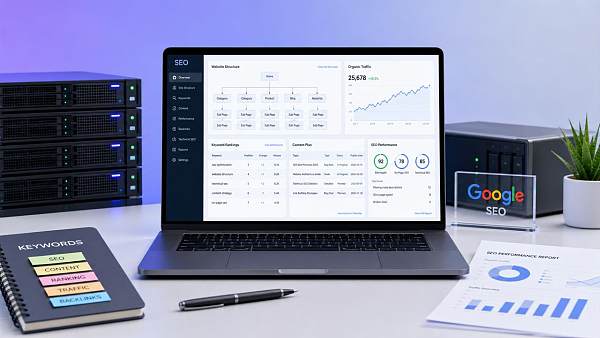
Simply put, Google SEO services are systematic optimization built around search engine rules, user search intent, and website experience.
It focuses not only on indexing, crawling, and ranking, but also on whether the content answers real questions and whether visits can ultimately lead to inquiries, registrations, or conversions.
For foreign trade websites, multilingual sites, cross-border stores, and brand independent sites, Google SEO services are not a standalone activity, but the result of the joint action of site structure, content operations, technical details, and data analysis.
This is also why more and more companies no longer treat SEO as an outsourced "article publishing project" alone, but instead include it in the overall growth system for unified planning.
Why full-funnel SEO capabilities matter more today
The search environment has changed. Google now places greater emphasis on page experience, content credibility, structural clarity, and topic depth; a pile of keywords alone is unlikely to deliver stable results.
At the same time, many companies' overseas businesses rely not only on organic traffic, but also on advertising, social media operations, and short-form video reach. If the website structure itself is messy, slow to load, or fragmented in content, it is hard for any channel-driven traffic to be retained.
Viewed through YiYingbao's service logic, AI intelligent website building, multilingual site development, Google SEO optimization, advertising marketing, and GEO generative engine optimization are not isolated modules, but a closed loop built around the goal of being "promotable, indexable, and convertible."
Therefore, judging whether Google SEO services are professional cannot rely only on ranking promises; it is more important to see whether they can work in sync with the website foundation, content system, and customer acquisition path.
What key links are usually included in Google SEO services
In actual business, delivery models vary by service provider, but mature Google SEO services usually cover the following aspects.
Technical optimization is the foundation, not an add-on
The technical layer determines whether Google can understand the website smoothly.
- Whether crawling and indexing settings are reasonable, including robots, sitemap, canonical tags, and redirects.
- Whether page load speed, mobile adaptation, SSL certificates, and Core Web Vitals meet standards.
- Whether multilingual and multi-region pages are configured correctly to avoid duplicate content and regional confusion.
- Whether the URL structure, hierarchy depth, and internal link paths are clear enough for search engines to understand topical relationships.
If the technical foundation is not handled well, no matter how much content is added later, indexing and rankings are often unstable.
Keyword research must serve business objectives
Keyword research in Google SEO services is not just about listing terms; it is about filtering out search demand that truly has value.
For example, brand terms, product terms, solution terms, question terms, and geo terms all correspond to different conversion stages. B2B lead generation sites focus more on high-intent long-tail keywords, while cross-border retail sites pay more attention to category terms and purchase-decision terms.
The significance of keyword layout lies in enabling each type of page on the website to address a clear search intent, rather than having multiple pages compete for the same topic.
The content system determines long-term growth potential
Content is not created just to fill up the website, but to build topical authority and conversion trust.
High-quality Google SEO services will plan the relationship among the homepage, product pages, category pages, solution pages, case pages, and knowledge content, so that different pages take on different tasks.
Some content is responsible for attracting traffic, some for explaining capability, and some for driving inquiries. A truly effective structure treats content as the site's in-house sales path.
Site structure affects indexing and also affects conversion
Many websites do not lack traffic, yet receive few inquiries; the problem often lies in the structure.
Whether menu categories match industry cognition, whether product details have clear selling points, whether landing pages make form submission convenient, and whether internal links guide continued browsing — all of these are content that Google SEO services need to evaluate in sync.
In the website + marketing services integration model, SEO is not simply about bringing people into the site; it is about directing visits toward clearer business actions.
Link building now values quality and relevance more
Backlinks remain important, but the logic has changed. Today, more emphasis is placed on whether the source is trustworthy, whether the topic is relevant, and whether the linking scenario is natural.
Industry media, niche directories, partner websites, case references, and high-quality content distribution are usually more valuable than a large number of low-quality links.
If backlinks are understood as the degree to which a website is "referenced" within an industry, it becomes easier to judge which building methods are more sustainable.
Data analysis determines whether optimization is moving in the right direction
Google SEO services are not about waiting for results after launch; they require continuous review.
In other words, professional Google SEO services do more than report ranking changes; they also explain the business meaning behind the data.
Different business scenarios require different priorities
Even when doing Google SEO services, different types of websites have very different priorities.
- B2B foreign trade websites focus more on product terms, application scenario terms, regional terms, and the usability of inquiry forms.
- Brand independent sites place more emphasis on content depth, brand term coverage, review content, and search reputation.
- Cross-border stores place more emphasis on category page optimization, filtering logic, product structured information, and bulk page management.
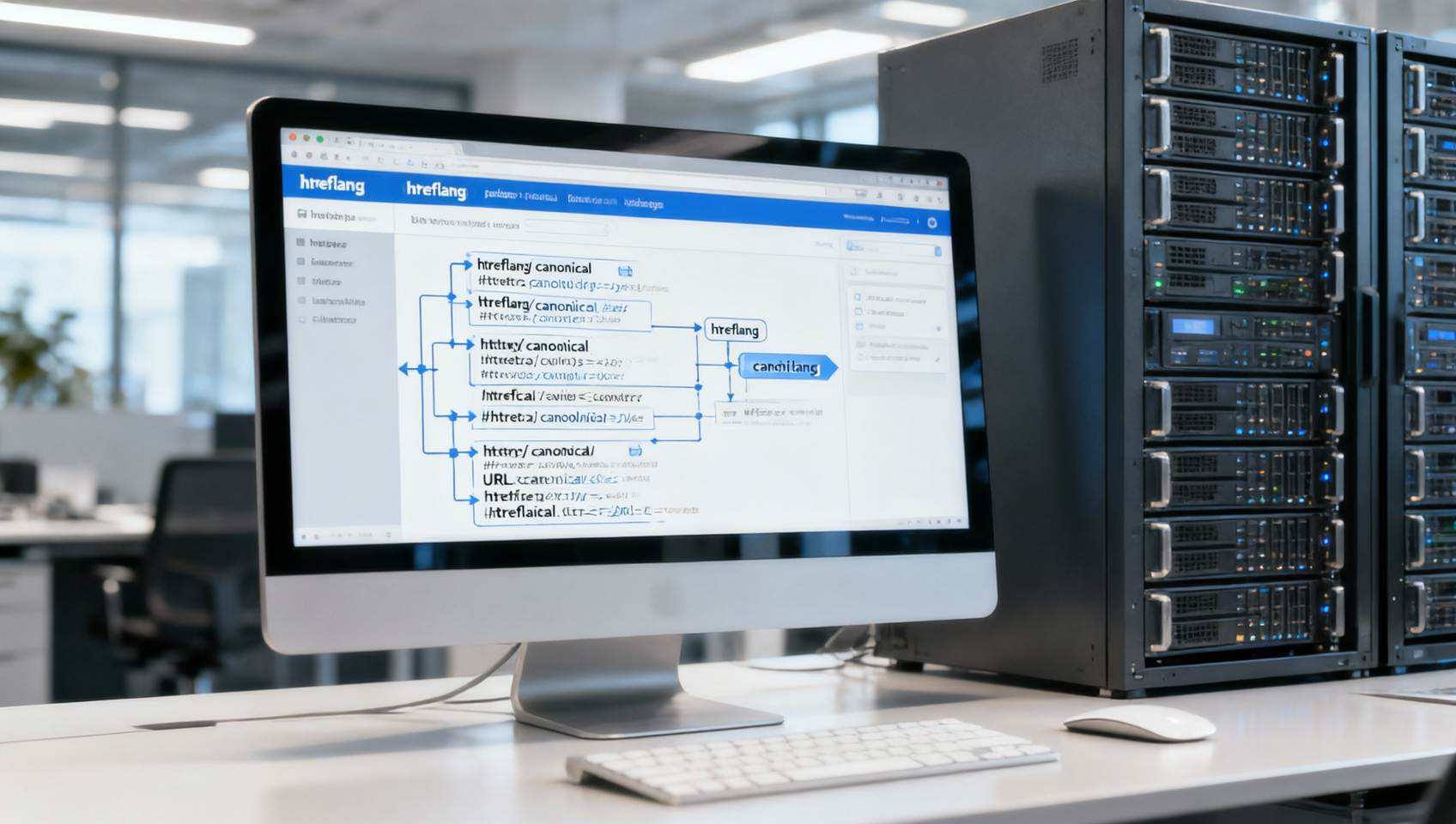
- Multilingual official websites must solve translation quality, regional versions, hreflang configuration, and localized expression.
Platforms like YiYingbao, which integrate website building, SEO, advertising, and social media, are better suited to handling such complex scenarios because they do not merely optimize a single page, but build the infrastructure for overseas customer acquisition from the system level.
When evaluating service quality, don't just look at ranking screenshots
There are large differences in how the market understands Google SEO services, so when evaluating them, it helps to look at a few more practical points.
First, whether a website diagnosis is performed before strategy is developed. If even the foundational issues of the site have not been sorted out, later plans are usually difficult to implement.
Second, whether the team has the ability to coordinate content and technology. If the technical team, content team, and advertising team are all disconnected from each other, SEO results are often hard to scale.
Third, whether delivery is centered on real business goals. Traffic growth is of course important, but what is even more worth paying attention to are high-intent pages, core target markets, and effective inquiry volume.
In extended reading, content like Exploring the digital transformation of corporate finance in a financial shared service model can also provide a perspective for judgment: truly valuable digital services are often not a single tool, but a coordinated design among process, system, and goals.
Understand Google SEO services as part of the growth system
The value of SEO lies not only in lower organic traffic costs, but also in its ability to accumulate long-term assets.
A website with a reasonable structure, clear content, and sustainable updates will continuously build topical authority in search, and can also provide more stable landing pages for advertising, social traffic, and brand communication.
From this perspective, Google SEO services are essentially a long-term operational capability building effort. Especially as AI, big data, and generative search gradually change traffic distribution, website foundation quality and content credibility become even more critical.
If you are evaluating related solutions, a more practical approach is to first sort out the website's current status, target markets, content resources, and conversion paths, and then see whether the service provider can truly connect website building, optimization, promotion, and data review. Understanding Google SEO services this way is often closer to real business results.
Related Articles


Related Products
 EasyCamp SaaS Smart Website Marketing SystemE-Yingbao SaaS Smart Website Marketing System: AI-powered, zero-code website building. Rapidly launch multilingual independent e-commerce sites in just 10 minutes. Global server acceleration and AI-driven SEO optimization empower businesses to efficiently connect with global markets. The seamless integration of technology and user-friendly operation makes building e-commerce sites incredibly simple.
 AI+SEM Intelligent Advertising Marketing SystemAI+SEM drives intelligent ad creation, empowering full-funnel precision advertising marketing. The system automatically generates weekly/monthly reports, AI recommends keywords and target countries, monitors core metrics in real-time with intelligent alerts, and enables one-click high-conversion ad solutions to help quickly acquire customers and improve ROI.
 AI+SEO Dual Engine Optimization ServiceEasyWin AI+SEO Dual Engine Optimization System leverages AI-powered keyword mining, content generation, and comprehensive technical optimization to help foreign trade enterprises acquire high-quality organic traffic, significantly improving search rankings and conversion rates.
 AI+SNS Social Media Marketing SystemYingbao AI+SNS Social Media Marketing System - Precision social capture for the social media era. Supports one-click content synchronization across major platforms like Facebook and LinkedIn. AI intelligently rewrites posts for enhanced relevance. 24/7 AI customer service and user profiling analysis empower businesses to efficiently expand into global markets.
 AI+SEO营销解决方案易营宝AI+SEO营销解决方案,通过AI批量写作、智能生成TDK、精准关键词扩词等功能,全面优化网站SEO效果,提升流量与转化率。助力企业构建高效智能网站新生态。
 AI+SEM Advertising Marketing SolutionsAI+SEM Advertising Marketing Solution leverages AI technology to deeply empower SEM ad campaigns. It automatically generates weekly/monthly reports using AI, presenting account data across multiple dimensions for comprehensive insights into campaign performance and trends. The system precisely recommends keywords and target countries, intelligently generates high-conversion ad copy, and enables one-click activation of efficient campaign plans to help businesses rapidly acquire customers. Simultaneously, it monitors core metrics in real time, intelligently identifies abnormal fluctuations, and issues timely alerts to ensure stable, high-return advertising results.
 Domain Name ServicesEasyWin provides professional domain name services, including intelligent queries, one-stop registration, brand protection, and full lifecycle management, helping businesses build a digital brand image.
 EasyOperate B2C Cross-Border E-Commerce Platform & Independent WebsiteEasyStore B2C Cross-border E-commerce Independent Store is an intelligent website building and cross-border e-commerce integrated solution independently developed by EasyStore Information Technology (Beijing) Co., Ltd. The system is specially designed for small and medium-sized as well as large export enterprises, integrating 'website building, operation, marketing, advertising, and conversion' into one, helping enterprises quickly establish cross-border e-commerce independent stores to achieve brand globalization and global sales growth.
The platform supports multiple languages, multiple currencies, and multi-channel marketing, with built-in AI intelligent translation and SEO optimization systems, suitable for mainstream markets such as Southeast Asia, Europe and America, Latin America, and the Middle East, assisting Chinese manufacturing enterprises in efficiently deploying international e-commerce strategies. SSL证书易营宝提供专业SSL安全证书服务,包括单域名和泛域名证书,确保网站数据传输加密、身份验证和完整性保护,助力企业建立安全可信的在线业务环境。









