









- How Can a Brand Updates Page Be Made More SEO-Friendly? Analysis of Update Frequency, Content Structure, and Internal Linking StrategyJun 28, 2026View details
- What stages does the cross-border services ecosystem include? How do website building, promotion, payment, and compliance work togetherJun 22, 2026View details
- How will email marketing costs change in 2026Jun 22, 2026View details
- The China-US tariff arrangement has reached a preliminary consensus, and the trade association will be establishedJun 15, 2026View details
- Should overseas brand marketing start with ads or contentJun 21, 2026View details
- What determines B2C cross-border e-commerce website development costs? A breakdown of features, interfaces, and deployment methodsJun 17, 2026View details
How to optimize Yandex Ads landing pages? 5 key points to improve conversion rates in Russian-speaking markets
To Improve Conversions in the Russian-Speaking Market, Don’t Rush to Redesign the Homepage First
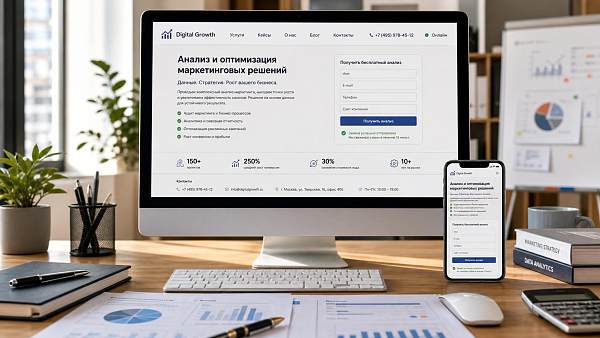
The core of Yandex ad landing page optimization is not about “making it look better,” but about “making Russian-speaking users more willing to continue.” For the same stream of ad traffic, users’ time on page, trust, and submission actions after entering the page often determine whether ad spend can truly be recovered.
In the Russian-speaking market, users usually judge a page more directly. Whether the information is clear, whether the contact details are real, whether the page loads reliably, and whether the form is easy to use often affect results more than lengthy brand narratives. If Yandex ad landing page optimization stays only at the translation level, the conversion rate is usually difficult to improve.
For integrated website and marketing service projects, a landing page is not a standalone page, but part of the website structure, ad delivery, data feedback, and subsequent remarketing. A service system like 易营宝, which covers intelligent website building, advertising systems, and multilingual operations at the same time, has the advantage of evaluating page experience and ad performance within the same chain instead of handling them separately.
Why Different Business Scenarios Require Different Approaches in Actual Implementation
Many pages perform poorly not because the template is bad, but because the scenario has been misjudged. Although traffic in the Russian-speaking region may all come from Yandex, the visit motivations of different businesses are not the same. Some users are comparing prices, some are checking delivery capabilities, and others are simply verifying whether the company is trustworthy first.
A more common situation is that B2B inquiry pages, cross-border retail pages, and local service pages all use the same structure. As a result, the ad keywords do not match the page promises, users cannot find the key answers after entering, and a lot of Yandex ad landing page optimization work is done without improving the real conversion bottlenecks.
Therefore, Yandex ad landing page optimization is not about applying one unified template. It starts with judging traffic intent, then deciding the page sequence, content density, and conversion action.
Key Point 1: Russian Expression Should Be Localized, Not Literally Translated Page by Page
Users in the Russian-speaking market are very sensitive to stiff translations. If the headline looks like machine translation, or the product description still follows Chinese logic, it usually directly affects trust. The first step in Yandex ad landing page optimization should be correcting language expression, rather than changing colors or layouts first.
In practical application, the headline of an ad page should preferably correspond to search intent. Traffic searching for terms such as “price,” “cooperation terms,” and “delivery” does not want to see the same content after entering the page. Directing all traffic to the same brand introduction often lowers conversions.
- Headlines should respond directly to needs without being indirect.
- Avoid Chinese-style long sentences and split information into clear points.
- Button text should be specific, such as request a quote, get a catalog, or schedule a consultation.
- Units, dates, and contact formats should conform to habits in Russian-speaking regions.
If the page comes from a multilingual website building system, it is best to proofread the Russian version separately instead of relying on automatic synchronization. For platforms running overseas advertising, language accuracy itself is a conversion asset.
Key Point 2: Build Trust First, Then Encourage Submission Actions
In the Russian-speaking market, page trust often takes effect before discount strength. Especially for a new brand encountered for the first time, users will first judge whether the company is real, stable, and worth leaving their information with. A well-optimized Yandex ad landing page helps users quickly find “trust evidence.”
Such evidence does not have to be complex, but it must appear early. Company introductions, service areas, case screenshots, delivery processes, certification information, real phone numbers, and email addresses are usually more effective than large visual images. For foreign trade independent websites, this is also a key point in aligning website building with marketing.
A common misjudgment is to understand “trust” as adding more text. In reality, users are more willing to see structured information. For example, adding a cooperation process below a product page, or placing basic company information beside the inquiry area, often improves submission rates more effectively than a long brand story.
Key Point 3: Form Design Should Match the Conversion Stage and Avoid Asking Too Much at the Start
Many Yandex ad landing page optimization failures come from the form. The ad has finally brought the user in, but then asks them to fill in overly long information, or requires registration, verification, and page jumps first. As a result, the lead is lost at the final step.
A more reasonable approach is to control form length according to the conversion stage. For first-touch traffic, you can collect only the name, contact information, and a brief description of needs. For pages targeting high-intent keywords, fields such as budget, purchase quantity, and region can be added. The page should not assume that every visitor is ready to complete a full submission.
When Optimizing Forms, These Items Are Usually Checked First
- Whether the fields exceed what is needed at the current decision-making stage.
- Whether phone, email, and instant communication options are supported in parallel.
- Whether the response time is explained near the submit button.
- Whether error messages are clear, avoiding submission failures without feedback.
If the backend is connected to an intelligent website building and advertising system, tracking points, lead classification, and source tags should preferably be synchronized. In this way, Yandex ad landing page optimization is not only a page modification, but can also feed into subsequent ad iteration.
Key Point 4: Conversion Performance Varies Greatly Across Devices and Loading Environments
Access environments in Russian-speaking regions are not uniform. Some users click ads on mobile devices, some compare multiple pages from desktop, and others browse under unstable network conditions. If Yandex ad landing page optimization is evaluated only in design drafts, it is easy to overlook the real loading experience.
The most common issue on mobile pages is not too little content, but an overly heavy first screen. Large images, videos, pop-ups, and external scripts are stacked together, and the user leaves before the button even appears. This is especially true for ad traffic, where patience is already limited and the cost of waiting is very high.
At this point, what should be evaluated is not a single speed score, but the time until the first screen is visible, the time until the button is clickable, and the time until the form is submittable. Truly effective Yandex ad landing page optimization often prioritizes compressing critical resources, reducing unnecessary animations, and making core conversion elements appear as early as possible.
Key Point 5: Ad Keywords, Page Content, and Follow-Up Should Be Connected in One Line
Some pages themselves are not bad, but conversion is still affected when ad promises are disconnected from page content. A user clicks “get a quote,” but first sees the company’s development history after opening the page; they click “local delivery,” but cannot find delivery conditions on the page. This kind of mismatch directly weakens the effect of Yandex ad landing page optimization.
A more stable approach is to build different landing logic by ad group. Brand keywords, product keywords, competitor keywords, and high-intent inquiry keywords should not have identical page focuses. The front-end page, lead form, customer service response, and remarketing tags should also use the same decision logic.
This is also why more and more companies no longer handle website building, ad delivery, SEO, and content separately. The value of an integrated platform like 易营宝 lies not only in building pages, but in keeping advertising, websites, data, and subsequent optimization continuously connected, reducing situations where “many page changes were made, but conversion results remain unclear.”
Several Decision Points Easily Overlooked Before Implementation
When optimizing Yandex ad landing pages, what is most easily overlooked is not major issues, but a few small breakpoints that seem inconspicuous. Individually, their impact may be limited, but together they can drag down overall conversions.
- Focusing only on page visuals without checking Russian search intent.
- Looking only at click-through rate while ignoring form completion rate and valid lead rate.
- Using the same information structure for B2B inquiry pages and B2C sales pages.
- Ignoring mobile button placement, resulting in no clear action on the first screen.
- Changing the page while data tracking, feedback, and A/B testing fail to keep up.
If you are already promoting in Russian-speaking regions, a safer way to proceed is to first sort out current traffic sources and page intent, then check language, local trust, form length, loading speed, and ad match one by one. Once these 5 key points are connected, Yandex ad landing page optimization usually shifts from “page adjustment” to “conversion improvement.”
Related Articles
 How to optimize Yandex Ads landing pages? 5 key points to improve conversion rates in Russian-speaking markets
 For landing page optimization in ad campaigns, what should you change first? Checklist order for headlines, forms, and trust elements
 Which Industries Are Suitable for Overseas Advertising in the UAE? Analysis of Budget, Channels, and Conversion Paths


Related Products
 EasyCamp SaaS Smart Website Marketing SystemE-Yingbao SaaS Smart Website Marketing System: AI-powered, zero-code website building. Rapidly launch multilingual independent e-commerce sites in just 10 minutes. Global server acceleration and AI-driven SEO optimization empower businesses to efficiently connect with global markets. The seamless integration of technology and user-friendly operation makes building e-commerce sites incredibly simple.
 AI+SEM Intelligent Advertising Marketing SystemAI+SEM drives intelligent ad creation, empowering full-funnel precision advertising marketing. The system automatically generates weekly/monthly reports, AI recommends keywords and target countries, monitors core metrics in real-time with intelligent alerts, and enables one-click high-conversion ad solutions to help quickly acquire customers and improve ROI.
 AI+SEO Dual Engine Optimization ServiceEasyWin AI+SEO Dual Engine Optimization System leverages AI-powered keyword mining, content generation, and comprehensive technical optimization to help foreign trade enterprises acquire high-quality organic traffic, significantly improving search rankings and conversion rates.
 AI+SNS Social Media Marketing SystemYingbao AI+SNS Social Media Marketing System - Precision social capture for the social media era. Supports one-click content synchronization across major platforms like Facebook and LinkedIn. AI intelligently rewrites posts for enhanced relevance. 24/7 AI customer service and user profiling analysis empower businesses to efficiently expand into global markets.
 AI+SEO营销解决方案易营宝AI+SEO营销解决方案,通过AI批量写作、智能生成TDK、精准关键词扩词等功能,全面优化网站SEO效果,提升流量与转化率。助力企业构建高效智能网站新生态。
 AI+SEM Advertising Marketing SolutionsAI+SEM Advertising Marketing Solution leverages AI technology to deeply empower SEM ad campaigns. It automatically generates weekly/monthly reports using AI, presenting account data across multiple dimensions for comprehensive insights into campaign performance and trends. The system precisely recommends keywords and target countries, intelligently generates high-conversion ad copy, and enables one-click activation of efficient campaign plans to help businesses rapidly acquire customers. Simultaneously, it monitors core metrics in real time, intelligently identifies abnormal fluctuations, and issues timely alerts to ensure stable, high-return advertising results.
 Domain Name ServicesEasyWin provides professional domain name services, including intelligent queries, one-stop registration, brand protection, and full lifecycle management, helping businesses build a digital brand image.
 EasyOperate B2C Cross-Border E-Commerce Platform & Independent WebsiteEasyStore B2C Cross-border E-commerce Independent Store is an intelligent website building and cross-border e-commerce integrated solution independently developed by EasyStore Information Technology (Beijing) Co., Ltd. The system is specially designed for small and medium-sized as well as large export enterprises, integrating 'website building, operation, marketing, advertising, and conversion' into one, helping enterprises quickly establish cross-border e-commerce independent stores to achieve brand globalization and global sales growth.
The platform supports multiple languages, multiple currencies, and multi-channel marketing, with built-in AI intelligent translation and SEO optimization systems, suitable for mainstream markets such as Southeast Asia, Europe and America, Latin America, and the Middle East, assisting Chinese manufacturing enterprises in efficiently deploying international e-commerce strategies. SSL证书易营宝提供专业SSL安全证书服务,包括单域名和泛域名证书,确保网站数据传输加密、身份验证和完整性保护,助力企业建立安全可信的在线业务环境。









