









- What Does a Global Traffic Ecosystem Service Provider Do? What Are the Differences from a Single Advertising AgencyJul 16, 2026View details
- What should you focus on in the latest enterprise SaaS report? From renewal rates and delivery costs to overseas growth opportunitiesJul 12, 2026View details
- What signals are worth paying attention to in a cross-border marketing trend report? B2B companies should look at these 6 signalsJul 11, 2026View details
- How to Read a Cross-Border Marketing Trends Report? Five Key Dimensions for Evaluating Channel OpportunitiesJul 11, 2026View details
- Which channel has the highest ROI in the global traffic ecosystem? Comparative analysis of search, social media, and advertisingJul 10, 2026View details
- What multilingual website services are available in Sanya? Which model is more suitable for local businesses going global?Jul 08, 2026View details
- How to view the complete list of China SaaS companies in the top 100? Practical methods for screening website-building and marketing service providersJul 08, 2026View details
- How to view pricing in the global traffic ecosystem? Cost comparison of search, social media, and content channel advertisingJul 06, 2026View details
What Is Included in a One-Stop Marketing Platform Service
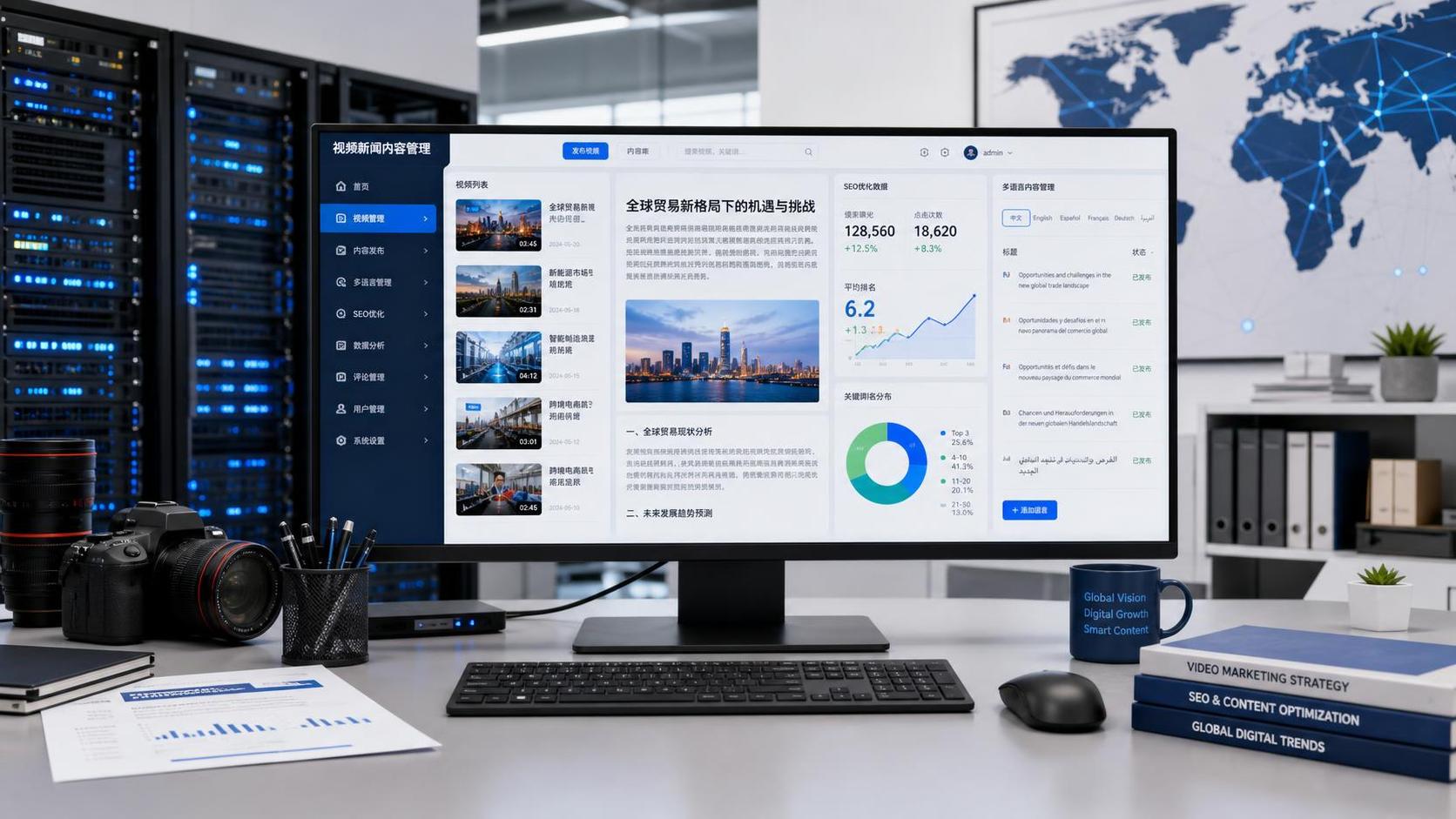
What does a one-stop marketing platform service include? For most businesses, what they really want to ask is not “what features does the platform have,” but rather “can these services help me acquire customers more efficiently, reduce collaboration costs, and improve search engine rankings and website traffic”. From the perspective of actual business outcomes, the core value of a one-stop marketing platform lies in connecting website building, SEO, content management, social media operations, advertising, data analysis, and lead conversion into a closed loop, instead of forcing companies to switch repeatedly between multiple service providers and systems. For business decision-makers, technical evaluators, and operations teams that need to assess platform capabilities, the standard should focus on whether it can create sustainable growth capabilities, rather than whether the feature list merely “looks extensive”.
Yiyingbao Information Technology (Beijing) Co., Ltd. has been deeply engaged in the integrated website + marketing service field, driven by artificial intelligence and big data at its core, integrating intelligent website building, search engine optimization services, social media marketing, and advertising to help businesses move from brand display to measurable customer acquisition growth. Especially for manufacturers, equipment industries, foreign trade companies, and brands expanding through multiple channels, this type of one-stop solution is often easier to implement than purchasing isolated services separately, and it is also more conducive to subsequent maintenance and iteration.
What services should a one-stop marketing platform that businesses truly need actually cover
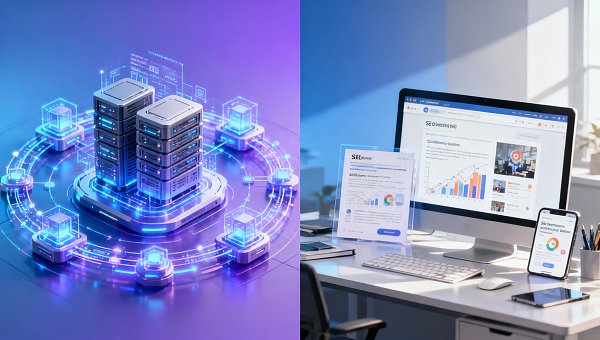
From the perspective of search intent, what users care about is not abstract concepts, but “what service content is included in a one-stop marketing platform, and what problems does each part solve”. A mature platform usually includes at least the following core modules:
1. Intelligent website building and official website development
The official website remains the core of a company’s digital presence. A good website building service is not just about creating pages, but also about considering brand presentation, product guidance, mobile adaptation, page loading speed, form conversion, content scalability, and the SEO foundation for later stages. For heavy industry, equipment manufacturing, and B2B enterprises, the website also carries the tasks of building customer trust, showcasing cases, and converting inquiries.
2. Search engine optimization services
SEO is one of the most valued long-term traffic sources for many businesses. It usually includes keyword strategy, on-site structure optimization, page content layout, technical SEO, backlinks and brand exposure, improved search engine indexing, ranking monitoring, and continuous adjustments. Truly effective search engine ranking improvement is not about stuffing keywords, but about continuously building high-quality pages and content assets around user search intent.
3. Content planning and content operations
Whether it is the official website, news center, industry articles, product pages, or case pages, content directly affects search visibility and conversion efficiency. One point that companies often overlook is: content is not meant to simply “fill pages,” but to answer customer questions, strengthen a professional image, and shorten the decision-making cycle.
4. Social media marketing and overseas/domestic channel operations
A one-stop marketing platform often also covers content publishing and user outreach across channels such as WeChat Official Accounts, video platforms, LinkedIn, Facebook, and Instagram. This type of service is especially suitable for companies aiming to increase brand exposure, educate the market, and expand channels.
5. Advertising and lead generation
SEO takes time to show results, while advertising can test the market more quickly, validate keywords, and acquire leads. The advantage of an integrated platform lies in the fact that ad landing pages, conversion tracking, data feedback, and remarketing can be directly connected with the official website and content system.
6. Data analysis and marketing decision support
A truly valuable platform must be able to clearly show where traffic comes from, which pages convert well, at which step users drop off, and which keywords bring business opportunities. Otherwise, it is difficult for companies to continuously optimize budgets and resource allocation.
7. Lead management and after-sales coordination
Many companies do a great deal of front-end marketing, but the circulation, assignment, follow-up, and review of leads are not truly handled effectively. If a one-stop platform can connect with CRM, customer service systems, or sales follow-up processes, it becomes easier to form a marketing closed loop.
Why more and more companies are no longer purchasing website building, SEO, and advertising services separately
In the past, a common approach for companies was: hire Company A for website building, Company B for SEO, Company C for advertising, and then have internal staff maintain the content. On the surface, this seems flexible, but in practice there are often many problems:
First, strategies are not unified. The website structure is not suitable for SEO, SEO content cannot support ad conversions, and in the end every part is doing something, but the overall effect is mediocre.
Second, communication costs are high. Information is not synchronized among technology, design, operations, and sales teams, so changing one page requires repeated coordination, and response speed is slow.
Third, data is fragmented. Traffic, content, conversions, and customer sources are scattered across different platforms, making it impossible for companies to accurately evaluate return on investment.
Fourth, maintenance costs keep increasing. Website version updates, server security, form issues, indexing fluctuations, and content iteration all require continuous handling, and fragmented procurement often makes it harder to ensure long-term stability.
Therefore, more and more companies are beginning to choose an “integrated website + marketing services” solution. Its significance is not just convenience, but the ability to start from business goals and unify the design of brand presentation, search exposure, traffic growth, and lead conversion.
When evaluating a one-stop marketing platform, what capabilities should companies focus on most
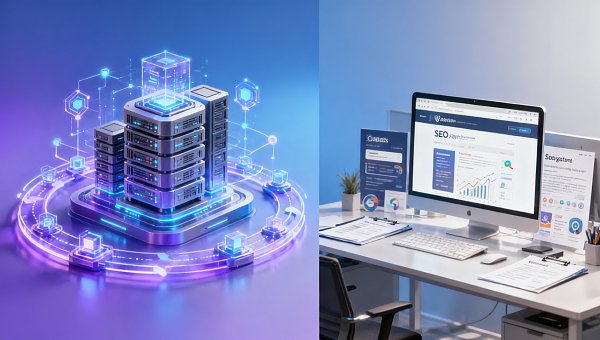
If you are a business decision-maker, technical evaluator, or agency, when screening service providers, it is recommended to focus on the following dimensions rather than looking only at pricing and the number of features.
Whether it has complete underlying technical capabilities
Whether the platform can support responsive websites, page speed optimization, structured content management, SEO-friendly URLs, conversion component configuration, data tracking, and continuous upgrades is the foundation that determines subsequent results.
Whether it truly understands industry scenarios
The marketing priorities of different industries are completely different. For example, heavy industry, engineering machinery, and industrial equipment industries place more emphasis on brand endorsement, application scenario display, clear parameter logic, case strength, and high-quality inquiry entry points. For industry pages such as heavy machinery equipment, heavy industry, if they use modular streamlined layouts, single-column structures, core data indicators, customer testimonial modules, and high-contrast inquiry entry points, they usually convert more easily than websites that are simply “good-looking”.
Whether it can connect traffic with conversions
Many service providers emphasize impressions and clicks, but what companies care more about are the number of inquiries, lead capture rate, proportion of valid customers, and the likelihood of final deal closure. A one-stop marketing platform must have integrated capabilities from keywords to landing pages, from content to forms, and from advertising to lead attribution.
Whether it has a mechanism for ongoing operations and iteration
Marketing is not a one-time delivery. Search engine rules change, competitors adjust, and user needs also evolve. High-quality service providers usually offer monthly data reviews, keyword adjustments, content updates, page optimization, and advertising strategy corrections.
Whether it balances globalization and localization
For companies looking to expand into overseas markets, service providers must not only understand platform technology, but also multilingual websites, overseas SEO, localized content, cross-platform social media communication, and international advertising strategies. Yiyingbao’s advantage in this area lies in its dual-engine approach of “technological innovation + localized services”, building a digital system more suitable for global growth for businesses.
What practical value can a one-stop marketing platform bring to businesses
From a business results perspective, the value of a one-stop marketing platform is mainly reflected in four aspects.
1. Enhance brand professionalism and customer trust
When users first learn about a company, they often first look at the official website, cases, qualifications, product introductions, and industry content. A website with a clear structure, unified visuals, and complete information will significantly improve customers’ judgment of the company’s strength.
2. Gain more stable organic traffic
Compared with short-term advertising, SEO and content operations can continuously accumulate search assets. As long as the keyword strategy is correct, the website foundation is solid, and content is updated continuously, website traffic growth is usually more stable and has a stronger compounding effect.
3. Improve lead conversion efficiency
Marketing does not end after bringing people to the website; it is about making it easier for users to leave their needs. A one-stop platform usually systematically optimizes form design, button placement, page paths, inquiry entry points, and persuasive content.
4. Reduce management and collaboration costs
Companies no longer need to spend a lot of time coordinating multiple outsourced teams, and it also becomes easier to form a unified strategy, unified data standards, and a unified execution rhythm.
Especially in the manufacturing and industrial sectors, a website should not only be an “electronic business card”, but should become a digital base. For example, for equipment pages with a black-and-yellow main color scheme, if they are combined with large industry-scene banners, waterfall-style real application scenario displays, service commitment lists, and fully responsive motion effects, they can not only strengthen brand recognition, but also transform abstract parameters more intuitively into construction solutions and procurement value.
Which companies are more suitable for choosing a one-stop marketing platform
Not all companies must do everything in one step, but the following types of companies are usually more suitable:
Traditional enterprises in the stage of digital upgrading
These companies often have outdated official websites, insufficient traffic, and a single customer acquisition method, and need to upgrade website building and marketing simultaneously.
B2B enterprises hoping to balance branding and customer acquisition
Especially in industries such as industrial equipment, manufacturing, engineering, and foreign trade, where the customer decision chain is long, there is a greater need for systematic content, SEO, and trust building.
Companies operating across multiple channels but lacking unified management
If they are already doing search, social media, and advertising, but the performance of each channel is scattered, a one-stop platform helps integrate resources.
Companies needing long-term maintenance and continuous optimization
For after-sales maintenance personnel or technical teams, the platform’s stability, maintainability, and follow-up support capabilities are equally important. If the marketing system is difficult to update, content publishing is troublesome, and technical dependency is too high, long-term operating costs will become higher and higher.
How to judge whether a service provider offers a “true one-stop” solution rather than a “bundle of features”
Many platforms on the market claim to be one-stop, but companies need to distinguish whether the other party provides integrated closed-loop capabilities, or is simply packaging and selling several services together.
You can start judging from these questions:
First, can they provide an overall strategy centered on business goals, rather than separately explaining what website building, SEO, and advertising each do.
Second, can they explain the relationship among keyword layout, page structure, content planning, and conversion paths.
Third, can they provide a clear data indicator system, such as indexing, rankings, traffic, conversions, customer acquisition cost, and lead quality.
Fourth, can they support subsequent iteration, training, maintenance, and issue response.
Fifth, do they understand what your industry customers are actually searching for, comparing, and worrying about.
If the service provider can explain these questions clearly and implement them in page structures, execution processes, and growth metrics, then it is closer to a truly meaningful one-stop marketing platform. Conversely, if it only has many features and lots of jargon, but cannot explain how it improves business results, then it needs to be evaluated cautiously.
Summary: the key to a one-stop marketing platform is not having many services, but whether it can form a growth closed loop
Back to the original question: what does a one-stop marketing platform service include? The answer is not merely intelligent website building, search engine optimization services, social media marketing, and advertising modules themselves, but more importantly whether these capabilities can be integrated into an executable, measurable, and continuously optimizable growth system.
For information researchers, the focus should be on whether the platform truly covers the entire marketing chain; for technical evaluators, it is necessary to look at system architecture, SEO foundations, and maintainability; for business decision-makers, more attention should be paid to return on investment, customer acquisition efficiency, and long-term growth value. A platform truly worth choosing is not one that makes features complicated, but one that makes results clear.
If a company is in the stage of official website upgrading, search engine ranking improvement, website traffic growth planning, or global marketing expansion, then an integrated solution supported by technology, data, and localized operational capabilities can often help the company avoid detours, improve collaboration efficiency, and truly convert digital marketing into business growth.
Related Articles
Related Products
 EasyCamp SaaS Smart Website Marketing SystemE-Yingbao SaaS Smart Website Marketing System: AI-powered, zero-code website building. Rapidly launch multilingual independent e-commerce sites in just 10 minutes. Global server acceleration and AI-driven SEO optimization empower businesses to efficiently connect with global markets. The seamless integration of technology and user-friendly operation makes building e-commerce sites incredibly simple.
 AI+SEM Intelligent Advertising Marketing SystemAI+SEM drives intelligent ad creation, empowering full-funnel precision advertising marketing. The system automatically generates weekly/monthly reports, AI recommends keywords and target countries, monitors core metrics in real-time with intelligent alerts, and enables one-click high-conversion ad solutions to help quickly acquire customers and improve ROI.
 AI+SEO Dual Engine Optimization ServiceEasyWin AI+SEO Dual Engine Optimization System leverages AI-powered keyword mining, content generation, and comprehensive technical optimization to help foreign trade enterprises acquire high-quality organic traffic, significantly improving search rankings and conversion rates.
 AI+SNS Social Media Marketing SystemYingbao AI+SNS Social Media Marketing System - Precision social capture for the social media era. Supports one-click content synchronization across major platforms like Facebook and LinkedIn. AI intelligently rewrites posts for enhanced relevance. 24/7 AI customer service and user profiling analysis empower businesses to efficiently expand into global markets.
 AI+SEO营销解决方案易营宝AI+SEO营销解决方案,通过AI批量写作、智能生成TDK、精准关键词扩词等功能,全面优化网站SEO效果,提升流量与转化率。助力企业构建高效智能网站新生态。
 AI+SEM Advertising Marketing SolutionsAI+SEM Advertising Marketing Solution leverages AI technology to deeply empower SEM ad campaigns. It automatically generates weekly/monthly reports using AI, presenting account data across multiple dimensions for comprehensive insights into campaign performance and trends. The system precisely recommends keywords and target countries, intelligently generates high-conversion ad copy, and enables one-click activation of efficient campaign plans to help businesses rapidly acquire customers. Simultaneously, it monitors core metrics in real time, intelligently identifies abnormal fluctuations, and issues timely alerts to ensure stable, high-return advertising results.
 Domain Name ServicesEasyWin provides professional domain name services, including intelligent queries, one-stop registration, brand protection, and full lifecycle management, helping businesses build a digital brand image.
 EasyOperate B2C Cross-Border E-Commerce Platform & Independent WebsiteEasyStore B2C Cross-border E-commerce Independent Store is an intelligent website building and cross-border e-commerce integrated solution independently developed by EasyStore Information Technology (Beijing) Co., Ltd. The system is specially designed for small and medium-sized as well as large export enterprises, integrating 'website building, operation, marketing, advertising, and conversion' into one, helping enterprises quickly establish cross-border e-commerce independent stores to achieve brand globalization and global sales growth.
The platform supports multiple languages, multiple currencies, and multi-channel marketing, with built-in AI intelligent translation and SEO optimization systems, suitable for mainstream markets such as Southeast Asia, Europe and America, Latin America, and the Middle East, assisting Chinese manufacturing enterprises in efficiently deploying international e-commerce strategies. SSL证书易营宝提供专业SSL安全证书服务,包括单域名和泛域名证书,确保网站数据传输加密、身份验证和完整性保护,助力企业建立安全可信的在线业务环境。









