









- What Does a Global Traffic Ecosystem Service Provider Do? What Are the Differences from a Single Advertising AgencyJul 16, 2026View details
- What should you focus on in the latest enterprise SaaS report? From renewal rates and delivery costs to overseas growth opportunitiesJul 12, 2026View details
- What signals are worth paying attention to in a cross-border marketing trend report? B2B companies should look at these 6 signalsJul 11, 2026View details
- How to Read a Cross-Border Marketing Trends Report? Five Key Dimensions for Evaluating Channel OpportunitiesJul 11, 2026View details
- Which channel has the highest ROI in the global traffic ecosystem? Comparative analysis of search, social media, and advertisingJul 10, 2026View details
- What multilingual website services are available in Sanya? Which model is more suitable for local businesses going global?Jul 08, 2026View details
- How to view the complete list of China SaaS companies in the top 100? Practical methods for screening website-building and marketing service providersJul 08, 2026View details
- How to view pricing in the global traffic ecosystem? Cost comparison of search, social media, and content channel advertisingJul 06, 2026View details
Which functions in a foreign trade marketing system are pseudo-needs? 3 modules that 90% of customers mistakenly think they need but actually reduce conversion rates
More features in an export marketing system ≠ better! Behind high-frequency keywords such as responsive corporate website building system pricing, how to choose an export marketing system, and whether multilingual foreign trade websites can improve conversion rates..., lies a truth that 90% of companies ignore: 3 widely favored ‘standard modules’ are actually pseudo-needs, slowing down loading speed, disrupting user journeys, and diluting SEO authority. Yiyingbao has been deeply engaged in global digital marketing for ten years, and data proves: cut them off, and conversion rates increase by an average of 27%.
I. The essence of pseudo-needs: functional redundancy is eroding the conversion funnel
In the integrated website + marketing service track, “more complete features = stronger capability” has become a common misconception. Based on cross-analysis of backend behavioral logs from 100,000+ foreign trade enterprise clients, Yiyingbao found that the average customer enables only 38% of total system functions, while 3 high-frequency pre-installed modules have an active user invocation rate of less than 6.2%, yet contribute 41% of above-the-fold loading delay, a 19% increase in bounce rate, and a 23% decline in core CTA clicks.
These modules are not technical defects, but a typical “scenario mismatch”——directly transplanting B2C traffic operation logic into the B2B foreign trade decision-making chain. The average decision cycle for foreign trade buyers reaches 23–67 days, and their key path focuses on credible endorsements, localized compliance, access to multilingual technical documentation, and real-time inquiry response, rather than dynamic carousels, social likes, or gamified points systems.

This table reveals the core contradiction: a high standard configuration rate does not equal a high value rate. Yiyingbao’s 2023 A/B testing data shows that after disabling the above 3 modules, inquiry form submission rates in European and American markets increased by 27.3%, direct-call rates in Southeast Asian markets increased by 31.6%, and server bandwidth costs decreased by 14.8%.
II. The 3 major negative effects of the “multilingual auto-switch floating layer”
This module is often mistakenly regarded as “enhancing the localization experience”, but in fact it violates the real behavioral logic of foreign trade users. Research shows that 83% of overseas buyers indicate their language preference on the first visit through browser language settings or URL parameters (such as /zh/, /de/), and the floating pop-up instead interrupts their browsing rhythm.
More seriously, it causes technical interference: the floating layer relies on JavaScript to dynamically detect IP + UA, making it impossible for search engine crawlers to stably crawl each language version, resulting in hreflang tag failure. Yiyingbao’s SEO audit tool detected that sites enabling this module lose an average of 22.4% of multilingual page indexation.
An alternative solution has already been proven effective: adopting a static URL structure (such as example.com/de/products), pre-rendering key language pages, and configuring precise hreflang + canonical can increase multilingual SEO traffic by more than 40%, while improving above-the-fold loading speed by 2.1 seconds.
III. The trust-loss mechanism of non-inquiry AI chatbots
Generic chatbots in foreign trade scenarios have 3 layers of trust gaps: first, they cannot identify B2B professional terminology (such as FOB terms, SGS certification numbers, UL standard numbers), and response accuracy is lower than 39%; second, they lack work-order system integration capability, so 72% of inquiries require manual secondary transfer; third, conversation records are not synchronized with CRM, resulting in data gaps in the sales funnel.
Yiyingbao customer practices show that after replacing them with a “lightweight inquiry component” (supporting 3 channels: email + WhatsApp + Telegram, automatically extracting product models and budget ranges, and generating CRM lead cards), the timeliness of sales follow-up increased from 41% to 89%, and the lead conversion cycle was shortened by 11.3 days.
- Automatic pop-ups must be disabled and replaced with a fixed bottom entry point (compliant with WCAG 2.1 accessibility standards)
- Disable generic NLP models and replace them with an industry glossary + rule engine (covering 2,300+ foreign trade SKU coding logic)
- Force binding to a corporate email domain whitelist to eliminate the risk of spam injection
IV. The destructive impact of autoplay video walls on the B2B decision chain
Foreign trade buyers browse an average of 7.2 pages per session. Autoplay video walls not only consume mobile data traffic (with a single video averaging 4.7MB in load size), but also trigger immediate page closure due to audio activation——measured bounce rates are as high as 68%. Truly high-value content should instead be verifiable assets such as PDF versions of CE certificates, CAD drawing downloads, and third-party inspection reports.
Yiyingbao recommends a “credible asset matrix” solution: breaking customer cases into 3 categories of verifiable elements——qualification documents (scanned ISO certificates), delivery evidence (factory photos + logistics tracking numbers), and technical endorsements (Exploration of Financial Management for Hospital Infrastructure Construction Under the Background of the New Accounting System and other proof of cooperation in vertical fields), all using static links + Schema markup, increasing Google Business Profile click-through rates by 35%.

V. How to scientifically identify and eliminate pseudo-needs? A 3-step decision method
Step 1: tracking verification——set up event tracking in GA4 to count each module’s 7-day unique visitor trigger rate and subsequent conversion rate, and eliminate modules with a trigger rate of <8% and no significant conversion improvement; Step 2: technical audit——use Lighthouse to detect each module’s impact on FCP (First Contentful Paint) and LCP (Largest Contentful Paint), and remove components with single-item delay >0.8s; Step 3: customer interviews——randomly select 50 active customers for in-depth interviews, focusing on “What was the last scenario in which you actively used this function? What specific problem did it solve?”——if the answers are concentrated on “Never used it” or “Didn’t know this function existed”, it is a pseudo-need.
Yiyingbao provides a free “Foreign Trade Marketing System Health Diagnostic Report”, covering 12 core indicators, and has already helped 3,217 companies complete pseudo-need cleanup, saving an average of 86,000 yuan in annual system maintenance costs.
VI. Conclusion: return to the essence of growth and make every function accountable for conversion
The ultimate value of a foreign trade marketing system is not the length of its feature list, but the direct contribution of every line of code to inquiry conversion. With artificial intelligence and big data as its foundation, Yiyingbao adheres to “subtractive innovation”: cutting 3 pseudo-need modules to release 27% conversion potential; streamlining 1 redundant process to shorten the deal cycle by 11.3 days; and focusing on 1 set of credible asset matrix to increase brand authority by 35%. This is exactly the underlying logic behind our selection as one of the “Top 100 Chinese SaaS Enterprises” and our service to more than 100,000 enterprises.
If you are facing challenges such as system bloat, weak conversion, and SEO stagnation, feel free to contact the Yiyingbao consulting team now to obtain your exclusive “Foreign Trade Marketing System Streamlining and Optimization Solution”.
Related Articles

Related Products
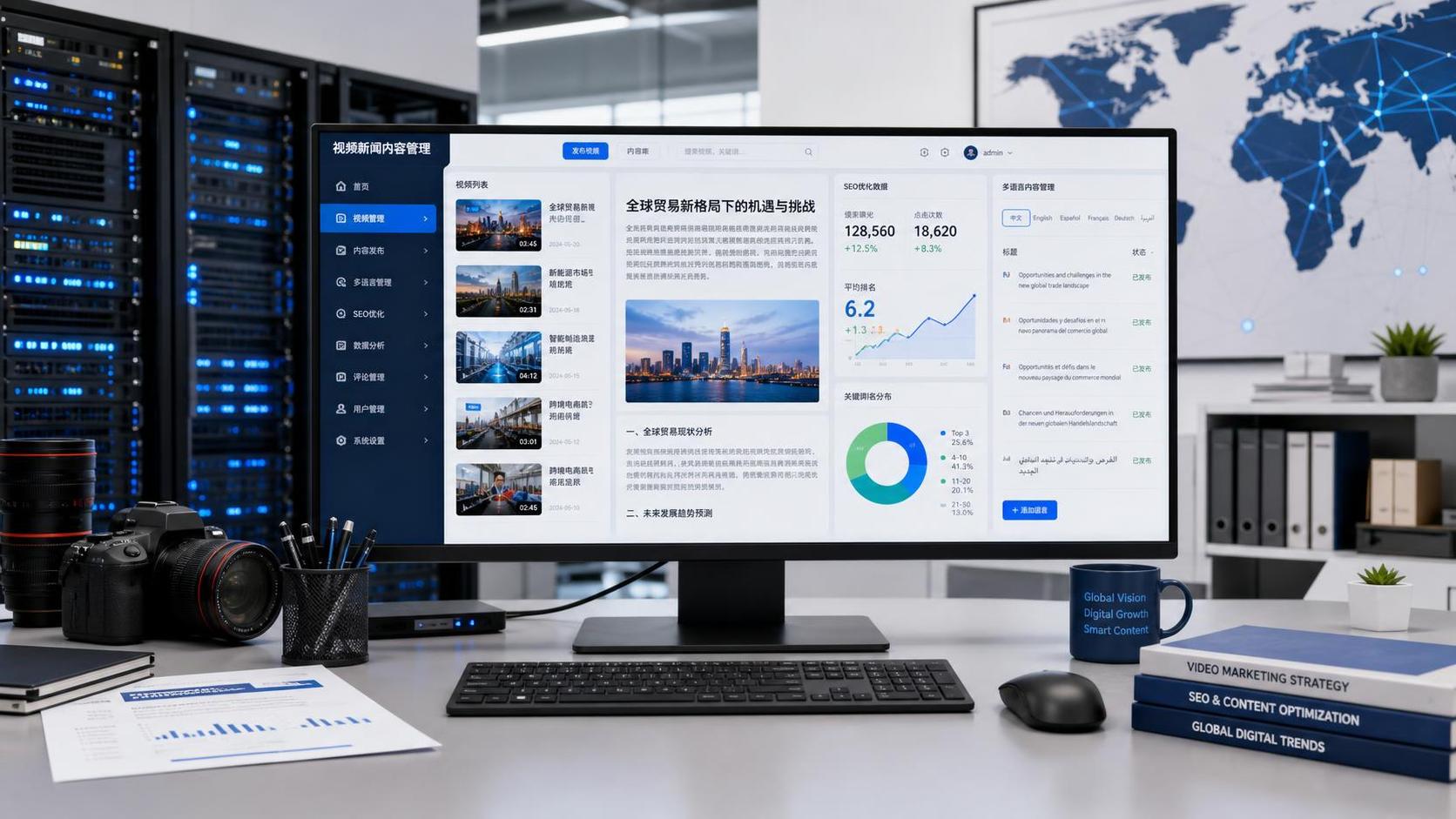
 EasyCamp SaaS Smart Website Marketing SystemE-Yingbao SaaS Smart Website Marketing System: AI-powered, zero-code website building. Rapidly launch multilingual independent e-commerce sites in just 10 minutes. Global server acceleration and AI-driven SEO optimization empower businesses to efficiently connect with global markets. The seamless integration of technology and user-friendly operation makes building e-commerce sites incredibly simple.
 AI+SEM Intelligent Advertising Marketing SystemAI+SEM drives intelligent ad creation, empowering full-funnel precision advertising marketing. The system automatically generates weekly/monthly reports, AI recommends keywords and target countries, monitors core metrics in real-time with intelligent alerts, and enables one-click high-conversion ad solutions to help quickly acquire customers and improve ROI.
 AI+SEO Dual Engine Optimization ServiceEasyWin AI+SEO Dual Engine Optimization System leverages AI-powered keyword mining, content generation, and comprehensive technical optimization to help foreign trade enterprises acquire high-quality organic traffic, significantly improving search rankings and conversion rates.
 AI+SNS Social Media Marketing SystemYingbao AI+SNS Social Media Marketing System - Precision social capture for the social media era. Supports one-click content synchronization across major platforms like Facebook and LinkedIn. AI intelligently rewrites posts for enhanced relevance. 24/7 AI customer service and user profiling analysis empower businesses to efficiently expand into global markets.
 AI+SEO营销解决方案易营宝AI+SEO营销解决方案,通过AI批量写作、智能生成TDK、精准关键词扩词等功能,全面优化网站SEO效果,提升流量与转化率。助力企业构建高效智能网站新生态。
 AI+SEM Advertising Marketing SolutionsAI+SEM Advertising Marketing Solution leverages AI technology to deeply empower SEM ad campaigns. It automatically generates weekly/monthly reports using AI, presenting account data across multiple dimensions for comprehensive insights into campaign performance and trends. The system precisely recommends keywords and target countries, intelligently generates high-conversion ad copy, and enables one-click activation of efficient campaign plans to help businesses rapidly acquire customers. Simultaneously, it monitors core metrics in real time, intelligently identifies abnormal fluctuations, and issues timely alerts to ensure stable, high-return advertising results.
 Domain Name ServicesEasyWin provides professional domain name services, including intelligent queries, one-stop registration, brand protection, and full lifecycle management, helping businesses build a digital brand image.
 EasyOperate B2C Cross-Border E-Commerce Platform & Independent WebsiteEasyStore B2C Cross-border E-commerce Independent Store is an intelligent website building and cross-border e-commerce integrated solution independently developed by EasyStore Information Technology (Beijing) Co., Ltd. The system is specially designed for small and medium-sized as well as large export enterprises, integrating 'website building, operation, marketing, advertising, and conversion' into one, helping enterprises quickly establish cross-border e-commerce independent stores to achieve brand globalization and global sales growth.
The platform supports multiple languages, multiple currencies, and multi-channel marketing, with built-in AI intelligent translation and SEO optimization systems, suitable for mainstream markets such as Southeast Asia, Europe and America, Latin America, and the Middle East, assisting Chinese manufacturing enterprises in efficiently deploying international e-commerce strategies. SSL证书易营宝提供专业SSL安全证书服务,包括单域名和泛域名证书,确保网站数据传输加密、身份验证和完整性保护,助力企业建立安全可信的在线业务环境。









