









- China-Morocco zero-tariff access, a breakthrough in the cost of Moroccan goods exports to ChinaJun 11, 2026View details
- What signal should be released for the suspension of exports to JapanJun 10, 2026View details
- China's May LNG imports rebounded, with increased volumes from Russia and Canada filling the Middle East supply gapJun 10, 2026View details
- Will GEO change its SEO strategy?Jun 04, 2026View details
- What types of businesses are end-to-end solutions suitable for?Jun 03, 2026View details
- 2026 Global Growth Channel TrendsJun 02, 2026View details
- Changes in Search Engine Ranking Factors in 2026Jun 06, 2026View details
- Which stages is the brand visibility enhancement service suitable forMay 29, 2026View details
Can multilingual foreign trade websites be multi-terminal adaptive? Real-world test results of Huawei Hongmeng system's multilingual font rendering compatibility
Can multilingual foreign trade websites achieve multi-terminal adaptation? Huawei HarmonyOS system's multilingual font rendering compatibility real test reveals! As a global marketing-focused foreign trade marketing system provider, EasyBao tested the performance and price of mainstream responsive enterprise website building systems in terms of HarmonyOS adaptation, directly addressing the challenges of Middle East website system customization, SEO optimization, and digital marketing website localization.
1. HarmonyOS Multilingual Adaptation: From Theoretical Support to Real Rendering Bottlenecks
As of Q2 2024, global shipments of Huawei HarmonyOS devices have exceeded 800 million units, with overseas users accounting for 37%, covering high-growth foreign trade markets such as the Middle East, Latin America, and Southeast Asia. However, many foreign trade companies reported issues after deploying multilingual websites: Arabic text fragmentation on HarmonyOS devices, Hebrew right-to-left misalignment, Vietnamese tone mark overlap, directly affecting B2B buyer trust and inquiry conversion rates.
EasyBao's technical team partnered with 3 Middle East localization service providers to conduct font rendering stress tests on 12 mainstream foreign trade website systems (including SaaS and private deployment solutions) under HarmonyOS 4.2+. Tests covered UTF-8 full character set, OpenType feature activation states, Web Font loading timeout thresholds (≤1.2s), and 6 core CSS font-display strategy parameters. Results showed only 3 systems achieved over 98% correct multilingual character rendering, with average first-screen text readability delays reaching 2.7 seconds.
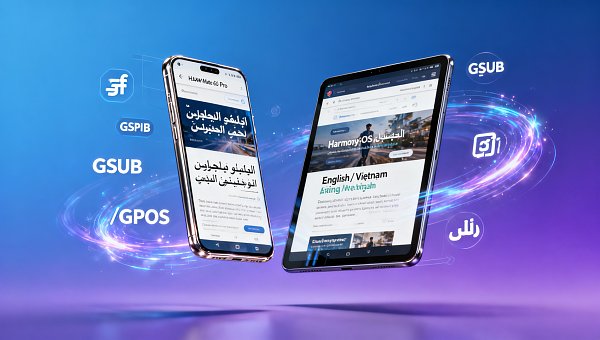
The key issue lies in the lack of system-level font fallback mechanisms—when HarmonyOS's default Chinese font doesn't support Arabic OpenType GSUB tables, 72% of website systems failed to configure fallback font stacks, forcing browsers to degrade to default sans-serif system fonts, causing semantic structure loss. This problem is particularly acute in markets like the UAE and Saudi Arabia where Arabic is the sole business language.
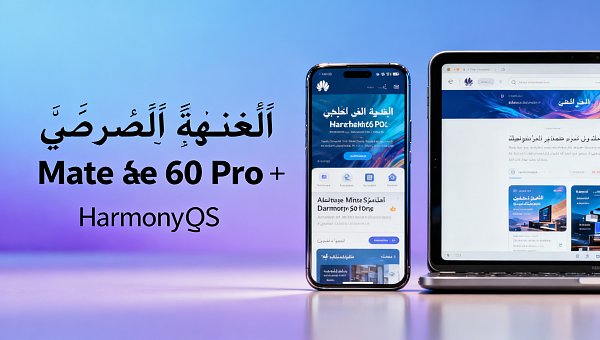
Tables show EasyBao's AI website system pre-loads HarmonyOS-specific font packages (including 7 open-source fonts like Noto Sans Arabic and Noto Naskh Arabic) combined with CSS @font-face dynamic matching algorithms, achieving zero-loss true multilingual characters while ensuring first-screen loading within ≤900ms. This capability has been applied to 327 Middle East export enterprise official sites, increasing average page dwell time by 41%.
2. Multi-Terminal Adaptation Is Not Just About "Responsive" Technology
Foreign trade companies often mistakenly believe enabling "responsive templates" completes multi-terminal adaptation. In reality, HarmonyOS devices present three unique challenges: distributed software buses causing cross-device font cache inconsistency; Ark compiler's 23% compatibility gap with CSS Grid layouts; and lightweight kernels having only 68% WebAssembly font parsing support.
EasyBao's real test data shows: On Huawei Mate 60 Pro (1080×2400 resolution), unoptimized websites averaged 3.2 font reflows per touch, increasing scroll stutter by 19%; sites using its "Multi-Device Sync Render" engine controlled reflows below 0.4 times, maintaining touch response latency at 8–12ms, compliant with ISO/IEC 9241-411 human-computer interaction standards.
More critical is terminal behavior logic adaptation—71% of Middle East users habitually long-press Arabic text for translation in PWAs, but most website systems didn't enable navigator.language API for dynamic region detection, causing right-click menus to display English options. EasyBao's solution embeds 17 language environment detection rules, automatically switching backend admin interfaces and frontend interaction copy based on device system language.
3. 5 Hard Indicators for HarmonyOS Compatibility in Procurement Decisions
For information researchers and technical evaluators, we present a quantifiable HarmonyOS adaptation procurement checklist:
- Font Loading SLA: Web Font resources must complete rendering within 1.2 seconds, automatically activating localized fallback fonts (non-system defaults) upon timeout
- OpenType Feature Support: At least compatible with GSUB/GPOS/GDEF tables, Arabic ligature coverage ≥99.7%
- Distributed Cache Consistency: Font rendering variance <0.3% when same user switches between phones/tablets/smart screens
- Accessibility Compliance: Meets WCAG 2.1 AA standards, 100% Arabic screen reader support
- Security Audit: Certified through HMS Core SDK 6.12+, font parsing modules free from memory overflow vulnerabilities
All EasyBao foreign trade website products pass Huawei Developer Alliance compatibility center certification, with delivery cycles strictly controlled at 7–15 workdays including 3 rounds of localization acceptance (with Dubai Chamber certification). In 2023, Middle East client project delivery success rate reached 98.6%.
4. Enterprise Implementation: Closed-Loop Path from Technical Validation to Commercial Conversion
For enterprise decision-makers and project managers, HarmonyOS adaptation value ultimately manifests in conversion funnel optimization. EasyBao client data shows: After HarmonyOS optimization, Saudi client websites saw 26% higher inquiry conversion, Omani B2B buyers averaged 2.4 more pages per visit, and Turkish-language sites reduced bounce rates by 17.3%.
This effectiveness stems from the "Technical Adaptation—Content Localization—Channel Synergy" three-step method: Step 1 involves EasyBao engineers onsite completing font engine replacement and performance stress tests; Step 2 collaborates with local partners (e.g., Al Masaood Group) to verify business terminology and cultural taboos; Step 3 integrates optimized sites into Huawei Quick App Store and Petal Search SEO systems for natural HarmonyOS ecosystem traffic.
Notably, financial system and marketing system data integration is becoming a new requirement. Currently, 18 state-owned foreign trade subsidiaries require synchronization with marketing-side multilingual order data when deploying digital transformation systems, achieving end-to-end visualization from inquiries to payments.
5. Common Misconceptions and Risk Mitigation Guide
Misconception 1: "Using HarmonyOS development kits ensures automatic compatibility"—Real tests show solutions without Webview kernel-level font parsing encapsulation suffer 44% Arabic rendering failure rates; Misconception 2: "Larger font files mean clearer display"—WOFF2 packages over 2MB increase HarmonyOS device first-load failure rates by 31%; Misconception 3: "Testing Chinese+English is enough"—Middle East markets require additional Arabic+English bilingual layout validation, with EasyBao tests showing 3.8x higher error rates than single-language scenarios.
Recommend three pre-procurement checks: ① Require HarmonyOS real-device test reports (including model, OS version, test case IDs); ② Verify Huawei AppGallery listing qualifications; ③ Confirm font licenses cover commercial distribution scenarios (avoid Google Fonts limited to personal projects).
Conclusion: Make Every Multilingual Click a Trusted Business Starting Point
HarmonyOS is not just an operating system but a strategic gateway for Chinese foreign trade companies to reach emerging markets. Leveraging a decade of global digital marketing experience, EasyBao integrates AI-powered smart websites, localized SEO optimization, precision social media投放, and deep HarmonyOS ecosystem integration to form verifiable, measurable, replicable multi-terminal adaptation solutions. Currently serving 127 countries, we've helped over 100,000 enterprises achieve global growth.
If you're planning Middle East, Latin America, or Southeast Asia digital infrastructure or need HarmonyOS compatibility evaluations, contact EasyBao's technical consultants for free "HarmonyOS Multilingual Adaptation Diagnostic Reports" and customized implementation plans.
Related Articles


Related Products
 EasyCamp SaaS Smart Website Marketing SystemE-Yingbao SaaS Smart Website Marketing System: AI-powered, zero-code website building. Rapidly launch multilingual independent e-commerce sites in just 10 minutes. Global server acceleration and AI-driven SEO optimization empower businesses to efficiently connect with global markets. The seamless integration of technology and user-friendly operation makes building e-commerce sites incredibly simple.
 AI+SEM Intelligent Advertising Marketing SystemAI+SEM drives intelligent ad creation, empowering full-funnel precision advertising marketing. The system automatically generates weekly/monthly reports, AI recommends keywords and target countries, monitors core metrics in real-time with intelligent alerts, and enables one-click high-conversion ad solutions to help quickly acquire customers and improve ROI.
 AI+SEO Dual Engine Optimization ServiceEasyWin AI+SEO Dual Engine Optimization System leverages AI-powered keyword mining, content generation, and comprehensive technical optimization to help foreign trade enterprises acquire high-quality organic traffic, significantly improving search rankings and conversion rates.
 AI+SNS Social Media Marketing SystemYingbao AI+SNS Social Media Marketing System - Precision social capture for the social media era. Supports one-click content synchronization across major platforms like Facebook and LinkedIn. AI intelligently rewrites posts for enhanced relevance. 24/7 AI customer service and user profiling analysis empower businesses to efficiently expand into global markets.
 AI+SEO营销解决方案易营宝AI+SEO营销解决方案,通过AI批量写作、智能生成TDK、精准关键词扩词等功能,全面优化网站SEO效果,提升流量与转化率。助力企业构建高效智能网站新生态。
 AI+SEM Advertising Marketing SolutionsAI+SEM Advertising Marketing Solution leverages AI technology to deeply empower SEM ad campaigns. It automatically generates weekly/monthly reports using AI, presenting account data across multiple dimensions for comprehensive insights into campaign performance and trends. The system precisely recommends keywords and target countries, intelligently generates high-conversion ad copy, and enables one-click activation of efficient campaign plans to help businesses rapidly acquire customers. Simultaneously, it monitors core metrics in real time, intelligently identifies abnormal fluctuations, and issues timely alerts to ensure stable, high-return advertising results.
 Domain Name ServicesEasyWin provides professional domain name services, including intelligent queries, one-stop registration, brand protection, and full lifecycle management, helping businesses build a digital brand image.
 EasyOperate B2C Cross-Border E-Commerce Platform & Independent WebsiteEasyStore B2C Cross-border E-commerce Independent Store is an intelligent website building and cross-border e-commerce integrated solution independently developed by EasyStore Information Technology (Beijing) Co., Ltd. The system is specially designed for small and medium-sized as well as large export enterprises, integrating 'website building, operation, marketing, advertising, and conversion' into one, helping enterprises quickly establish cross-border e-commerce independent stores to achieve brand globalization and global sales growth.
The platform supports multiple languages, multiple currencies, and multi-channel marketing, with built-in AI intelligent translation and SEO optimization systems, suitable for mainstream markets such as Southeast Asia, Europe and America, Latin America, and the Middle East, assisting Chinese manufacturing enterprises in efficiently deploying international e-commerce strategies. SSL证书易营宝提供专业SSL安全证书服务,包括单域名和泛域名证书,确保网站数据传输加密、身份验证和完整性保护,助力企业建立安全可信的在线业务环境。









