









- What Does a Global Traffic Ecosystem Service Provider Do? What Are the Differences from a Single Advertising AgencyJul 16, 2026View details
- What should you focus on in the latest enterprise SaaS report? From renewal rates and delivery costs to overseas growth opportunitiesJul 12, 2026View details
- What signals are worth paying attention to in a cross-border marketing trend report? B2B companies should look at these 6 signalsJul 11, 2026View details
- How to Read a Cross-Border Marketing Trends Report? Five Key Dimensions for Evaluating Channel OpportunitiesJul 11, 2026View details
- Which channel has the highest ROI in the global traffic ecosystem? Comparative analysis of search, social media, and advertisingJul 10, 2026View details
- What multilingual website services are available in Sanya? Which model is more suitable for local businesses going global?Jul 08, 2026View details
- How to view the complete list of China SaaS companies in the top 100? Practical methods for screening website-building and marketing service providersJul 08, 2026View details
- How to view pricing in the global traffic ecosystem? Cost comparison of search, social media, and content channel advertisingJul 06, 2026View details
Why Has Search Engine Optimization Service Shown No Results After Six Months
Many companies still see no significant growth even after purchasing search engine optimization services for half a year. The problem often lies not in how much they invest, but in whether search engine ranking factors, SEO content optimization, and website traffic analytics tools are truly working together in coordination.
Why rankings and inquiries are still not improving after six months of search engine optimization services

In integrated website + marketing service projects, the most common misunderstanding among companies is treating SEO as “publishing articles + waiting for rankings.” In actual execution, search engine optimization services should cover at least 5 aspects: technical foundation, content system, page structure, conversion path, and data review. If any one of these is weak, even a 6-month cycle may only accumulate superficial workload.
For information researchers, the hardest part is distinguishing between “doing a lot” and “doing it right”; for technical evaluators, common problems include crawlability, indexation, loading speed, and mobile adaptation not being improved in sync; for business decision-makers, it is easy to judge the success or failure of a project too early based on rankings for a single keyword.
Usually, a relatively complete SEO effectiveness cycle can be divided into 3 stages: diagnosis and corrections in the first 2–4 weeks, building content and page assets in 1–3 months, and observing indexation, ranking distribution, and conversion behavior in 3–6 months. If no sustainable content output and technical repair closed loop is formed within the first 60 days, subsequent growth will clearly lack momentum.
Beijing Yiyingbao Information Technology Co., Ltd. has long served global business scenarios. Its core advantage is not just executing isolated SEO tasks, but integrating intelligent website building, content optimization, social media marketing, advertising, and data analytics into one system. For companies that need to balance branding, lead acquisition, and delivery efficiency, this collaborative solution is more likely than single outsourcing to produce structural improvement within 6 months.
When there is no improvement after half a year, the bottleneck usually lies in these 4 key issues
- The keyword strategy is too narrow, focusing only on a few highly difficult keywords without covering problem-based keywords, scenario keywords, regional keywords, and transaction-intent keywords.
- The website foundation is unstable, commonly reflected in slow page loading, overly deep category hierarchy, messy tags, and too many duplicate pages.
- Content is updated regularly but lacks topic clusters, and there is insufficient internal linking logic between articles, making it impossible to build topical authority.
- Only traffic is monitored, while lead quality is ignored, making it difficult for project managers and decision-makers to judge the real ROI.
If a company is currently in a stage with large traffic fluctuations, such as foreign trade expansion, e-commerce promotions, or media distribution, the website’s traffic-carrying capacity will also affect SEO performance. In this case, evaluating site infrastructure together with marketing activities is closer to the root of the problem than reviewing copy alone.
Don’t rush to否定 SEO first; check which search engine ranking factors should be reviewed first

Many companies become increasingly anxious in months 4–6, often because they have not established a checklist for review. For technical evaluators, quality control personnel, and project managers, SEO is not an abstract concept, but a set of verifiable execution results: whether the site can be crawled, whether it can be indexed, whether pages have clear topics, whether content covers real needs, and whether the conversion path is smooth.
If a website publishes 10 new pieces of content every month, but more than 80% of the pages bring no effective exposure, that indicates the problem is not quantity, but topic layout, content depth, or page relevance. If the homepage carries too many business entry points and category pages lack clear service descriptions, search engines will have a weaker understanding, and user dwell time will also decline.
The following table is suitable for internal review of whether search engine optimization services are truly being implemented properly. It is not a theoretical checklist, but execution dimensions that both purchasers and project managers can directly use to question suppliers.
From a procurement perspective, SEO projects most fear “reporting only results, not process.” If the service provider cannot provide weekly or monthly records of crawling, indexation, page adjustments, content deployment, and lead attribution, then seeing no improvement after half a year is often not accidental, but a lack of an execution closed loop.
The 3 technical signals most likely to be overlooked
First, the site’s traffic-carrying capacity does not match access fluctuations
During major e-commerce promotions, media content distribution phases, or global business expansion, traffic fluctuations may amplify in a short period of time. If page responses are unstable and too many images and scripts are loading, both search engine crawl efficiency and user access experience will be affected. In such scenarios, the website traffic package can be combined for traffic cost locking and monitoring alerts to avoid a disconnect between marketing growth and foundational resources.
Second, the website building system is disconnected from SEO execution
If the website building system does not support flexible configuration of categories, titles, descriptions, structured paths, and multi-region pages, the room for later SEO optimization will be significantly compressed. Yiyingbao’s cloud intelligent website building and marketing system are deployed collaboratively, making them more suitable for companies that require multi-site, multi-language, and multi-role collaboration.
Third, the data is connected, but no one is really using it
Many companies have installed website traffic analytics tools, but only look at visits instead of channel quality, bounce paths, inquiry sources, and key page contributions. If traffic consumption, page performance, and lead quality cannot be brought into the same BI view, then after half a year it will naturally be difficult to locate the problem.
SEO content optimization, paid advertising, and self-media distribution: how should companies combine them
In the integrated website + marketing service industry, truly effective growth is usually not about “doing only SEO” or “doing only advertising,” but about combining them according to the business cycle. For example, in the cold-start stage of a new product, it is more appropriate to first use advertising to validate search terms and landing pages; after entering a stable stage, SEO content optimization can then be used to accumulate long-term organic traffic and reduce customer acquisition costs.
For businesses that simultaneously serve distributors, agents, and end consumers, the content structure should be divided into at least 3 categories: brand trust content, technical explanatory content, and procurement decision-making content. If all 3 types of content are piled into the news section, search engines will have difficulty identifying topic hierarchy, and users will also be unable to find the corresponding entry points.
The table below is more suitable for business decision-makers to judge channel combinations, especially for projects with limited budgets, tight delivery cycles, and the hope of seeing lead improvement within 3–6 months.
The core conclusion of the table is very clear: SEO does not replace advertising, nor does it replace social media. Instead, it is a medium- to long-term asset that captures users’ active search demand. Yiyingbao implements intelligent website building, SEO optimization, social media marketing, and advertising in a coordinated way, making it more suitable for companies that need unified management of content, traffic, and conversion metrics.
5 combination questions recommended to confirm first during procurement
- Can the service provider first segment keywords, instead of directly promising ranking results.
- Does the website building system support subsequent SEO expansion, including categories, tags, internal links, and multi-device adaptation.
- Can advertising keyword data be fed back into SEO topic selection to reduce the trial-and-error cycle.
- Is there an operating mechanism for weekly monitoring, monthly review, and quarterly adjustment.
- Can traffic consumption, inquiry quality, and sales follow-up data be connected together.
When companies choose a search engine optimization service provider, which deliverables and risk controls should they focus on
When there is no improvement after half a year, in many cases it is not that SEO itself is ineffective, but that the delivery boundaries were not clearly defined during the procurement stage. For quality control personnel, security managers, and project leaders, at least 4 items must be verified: deliverables list, collaboration mechanism, data permissions, and abnormal response. Without these, the project can easily remain at the level of verbal descriptions.
For example, does technical rectification include page structure optimization, redirect rule review, and mobile speed checks; does content delivery clearly specify the number of monthly articles, topic maps, and landing page construction; does data review include exposure, clicks, dwell time, consultations, and lead quality. Only what can be accepted and verified can truly be considered service value.
For cross-border or multi-region businesses, traffic costs and compliance issues should also be considered. If the site has needs for multiple accounts and multi-region deployment, a foundational resource solution that supports consolidated billing management, real-time balance monitoring, and anomaly detection will directly affect the stability and budget controllability of marketing activities.
A more reliable implementation process usually includes these 4 steps
- Step 1: Complete website diagnosis within 7–15 days, including checks at the crawling, structure, content, conversion, and log levels.
- Step 2: Complete prioritized rectification within 2–4 weeks, first addressing indexation, speed, category structure, and core landing pages.
- Step 3: Advance content and topic layout monthly for at least 3 consecutive months to form keyword clusters.
- Step 4: Review lead quality monthly, correct strategy quarterly, and coordinate with advertising and social media when necessary.
If the corporate website is in a stage of obvious traffic peaks, intensive content distribution, or global business expansion, the website traffic package can be connected to the existing system, combined with automated procurement workflows, BI data integration, and 7×24-hour anomaly detection to help technical teams identify more quickly the actual impact of traffic changes on SEO and conversions.
Common misconception: treating “ranking” as the only acceptance criterion
A more reasonable acceptance method should look at 3 types of metrics at the same time: whether search visibility is expanding, whether core pages are gaining stable clicks, and whether inquiry or consultation quality is improving. Especially in B2B scenarios, 1 high-quality lead is often more valuable than 100 invalid visits.
Common questions and action recommendations: when to continue optimization and when to adjust the plan
For companies that have been using search engine optimization services for half a year, it is not recommended to stop the project directly. Instead, they should first determine whether the situation is “the direction is right but accumulation is insufficient” or “the strategy was off from the very beginning.” If indexation is increasing, long-tail keyword exposure is rising, and dwell time on key pages is improving, but inquiries have not yet grown in sync, that usually means conversion content and page guidance still need to be strengthened.
If after 6 months there is still almost no new indexation, very little keyword coverage, chaotic page structure, and no way to attribute data, then the issue is not continuing to add more content, but rather the need to redo the site diagnosis and execution framework. For business decision-makers, this is more important than continuing to invest.
FAQ: the 4 most common judgment questions asked by companies
How long does SEO usually take to show normal results?
Generally speaking, the first 1–2 months are more suitable for observing technical fixes and indexation changes, around 3 months for keyword coverage, and 6 months for structural traffic and lead trends. If industry competition is intense and the website foundation is weak, the cycle is usually longer.
If there are no results after half a year, should the service provider be replaced immediately?
First check the delivery records. If the service provider can show monthly rectifications, content topics, data reviews, and issue closed loops, it means the project may still have room for optimization; if there are only vague reports and no process data, then it is more necessary to consider adjusting the cooperation model.
If the budget is limited, should the website be done first or promotion first?
If the website foundation is weak, it is recommended to first conduct site diagnosis and build key pages; if there is already a usable website but it lacks effective traffic, small-scale advertising can first be used to validate keywords and landing pages, and then feed back into SEO content optimization to reduce trial-and-error costs.
What kind of companies are more suitable for an integrated solution?
When a company is simultaneously facing website building, traffic, content, advertising, cross-border compliance, or multi-team collaboration, an integrated solution saves more management costs and is also more conducive to unifying metric standards. This approach is usually more stable, especially for companies with tight project milestones and long internal communication chains.
Why choose us
Since its establishment in 2013, Beijing Yiyingbao Information Technology Co., Ltd. has continuously built an integrated service system around artificial intelligence and big data capabilities, including intelligent website building, SEO optimization, social media marketing, and advertising, and has served more than 100,000 companies in advancing global growth. For companies facing the problem of “no improvement after doing SEO for half a year,” we focus more on problem diagnosis and systematic repair rather than simply adding more content volume.
If you are currently in the project evaluation or supplier comparison stage, discussions can focus on the following: existing website diagnosis, keyword segmentation strategy, delivery schedule, content and advertising combinations, cross-regional site deployment, traffic cost control, anomaly monitoring mechanisms, and customized quotation plans. Only by clarifying these issues can you truly judge whether search engine optimization services are worth continued investment.
Related Articles
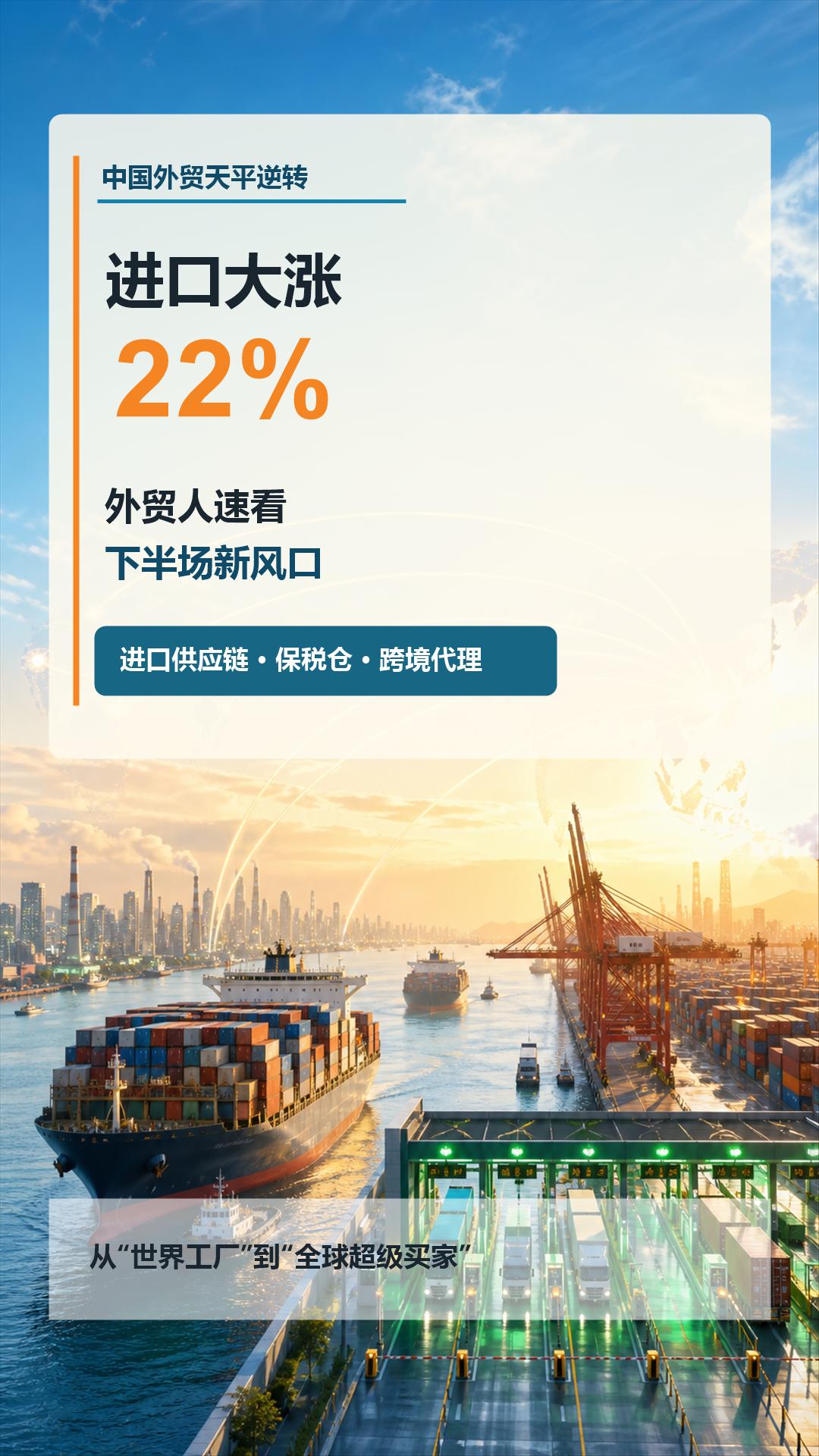
 China's foreign trade sees a turnaround: imports surge by 22%! Foreign trade professionals should quickly take note of the new trends in the second half of the year
 What Does a Global Traffic Ecosystem Service Provider Do? What Are the Differences from a Single Advertising Agency
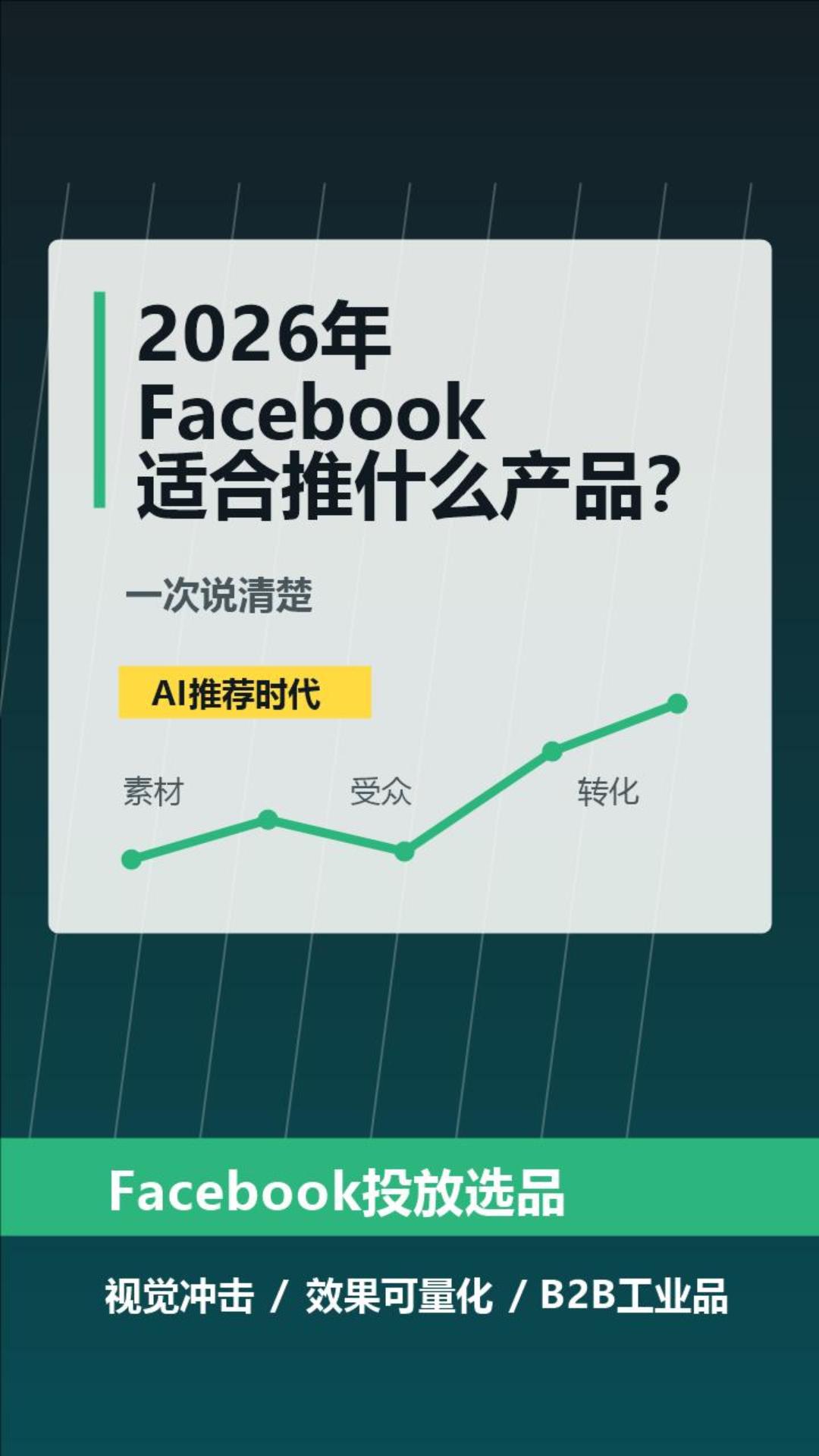
 What Products Are Suitable for Facebook in 2026? Explained Clearly at Once
Related Products
 EasyCamp SaaS Smart Website Marketing SystemE-Yingbao SaaS Smart Website Marketing System: AI-powered, zero-code website building. Rapidly launch multilingual independent e-commerce sites in just 10 minutes. Global server acceleration and AI-driven SEO optimization empower businesses to efficiently connect with global markets. The seamless integration of technology and user-friendly operation makes building e-commerce sites incredibly simple.
 AI+SEM Intelligent Advertising Marketing SystemAI+SEM drives intelligent ad creation, empowering full-funnel precision advertising marketing. The system automatically generates weekly/monthly reports, AI recommends keywords and target countries, monitors core metrics in real-time with intelligent alerts, and enables one-click high-conversion ad solutions to help quickly acquire customers and improve ROI.
 AI+SEO Dual Engine Optimization ServiceEasyWin AI+SEO Dual Engine Optimization System leverages AI-powered keyword mining, content generation, and comprehensive technical optimization to help foreign trade enterprises acquire high-quality organic traffic, significantly improving search rankings and conversion rates.
 AI+SNS Social Media Marketing SystemYingbao AI+SNS Social Media Marketing System - Precision social capture for the social media era. Supports one-click content synchronization across major platforms like Facebook and LinkedIn. AI intelligently rewrites posts for enhanced relevance. 24/7 AI customer service and user profiling analysis empower businesses to efficiently expand into global markets.
 AI+SEO营销解决方案易营宝AI+SEO营销解决方案,通过AI批量写作、智能生成TDK、精准关键词扩词等功能,全面优化网站SEO效果,提升流量与转化率。助力企业构建高效智能网站新生态。
 AI+SEM Advertising Marketing SolutionsAI+SEM Advertising Marketing Solution leverages AI technology to deeply empower SEM ad campaigns. It automatically generates weekly/monthly reports using AI, presenting account data across multiple dimensions for comprehensive insights into campaign performance and trends. The system precisely recommends keywords and target countries, intelligently generates high-conversion ad copy, and enables one-click activation of efficient campaign plans to help businesses rapidly acquire customers. Simultaneously, it monitors core metrics in real time, intelligently identifies abnormal fluctuations, and issues timely alerts to ensure stable, high-return advertising results.
 Domain Name ServicesEasyWin provides professional domain name services, including intelligent queries, one-stop registration, brand protection, and full lifecycle management, helping businesses build a digital brand image.
 EasyOperate B2C Cross-Border E-Commerce Platform & Independent WebsiteEasyStore B2C Cross-border E-commerce Independent Store is an intelligent website building and cross-border e-commerce integrated solution independently developed by EasyStore Information Technology (Beijing) Co., Ltd. The system is specially designed for small and medium-sized as well as large export enterprises, integrating 'website building, operation, marketing, advertising, and conversion' into one, helping enterprises quickly establish cross-border e-commerce independent stores to achieve brand globalization and global sales growth.
The platform supports multiple languages, multiple currencies, and multi-channel marketing, with built-in AI intelligent translation and SEO optimization systems, suitable for mainstream markets such as Southeast Asia, Europe and America, Latin America, and the Middle East, assisting Chinese manufacturing enterprises in efficiently deploying international e-commerce strategies. SSL证书易营宝提供专业SSL安全证书服务,包括单域名和泛域名证书,确保网站数据传输加密、身份验证和完整性保护,助力企业建立安全可信的在线业务环境。









