









- What multilingual website services are available in Sanya? Which model is more suitable for local businesses going global?Jul 08, 2026View details
- How to view the complete list of China SaaS companies in the top 100? Practical methods for screening website-building and marketing service providersJul 08, 2026View details
- How to view pricing in the global traffic ecosystem? Cost comparison of search, social media, and content channel advertisingJul 06, 2026View details
- How to assess foreign trade website development trends?Looking at 2026 changes from multilingual,AI content to conversion pathsJul 04, 2026View details
- What are the new trends in multilingual marketing data analytics tools in 2026? Focus on attribution、automation and complianceJul 04, 2026View details
- Is Brand Globalization Marketing Consulting Worth Buying? At What Stage Should Companies Bring It InJul 01, 2026View details
- Cross-Border Marketing Trend Research: Why More and More Companies Are Starting to Deploy AI Search and GEO OptimizationJun 30, 2026View details
- Cross-Border Marketing Trend Research: How Independent Sites, AI Content, and Short-Video Customer Acquisition Are ChangingJun 30, 2026View details
Where Search Engine Ranking Growth May Be Stuck
Foundational Assessment for Slow Search Engine Ranking Improvement
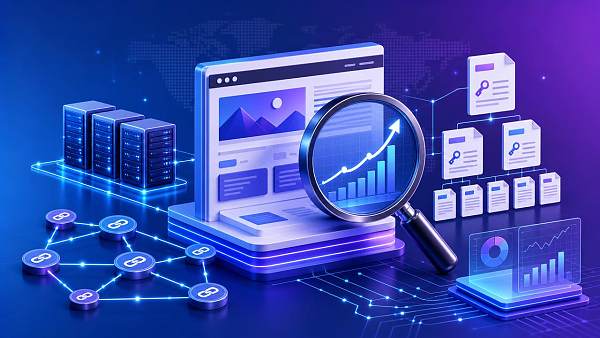
When search engine ranking improvement is slow to show results, it is often not due to a lack of effort, but because there are bottlenecks in strategy, technology, or content. This article combines practical scenarios to help you quickly identify the root cause of the problem and find the right optimization direction.
In an integrated website and marketing services scenario, search engine ranking improvement is not the result of isolated optimization, but the combined outcome of coordinated website building, content, data, backlinks, and conversion performance.
Many websites appear to be updated continuously, yet still show no obvious growth. The core reasons usually lie in low crawl efficiency, weak page value, misaligned keyword layout, and insufficient trust signals.
If you do not first identify where the bottleneck is, no matter how much you invest, it may only result in repeated low-efficiency actions. Therefore, diagnosing first and optimizing second is the correct order for advancing search engine ranking improvement.
Common Industry Bottlenecks and Signals to Watch
At present, the most common mistake companies make in search engine ranking improvement is not failing to act, but only doing superficial actions. For example, stuffing keywords, frequently changing titles, or publishing content in bulk—these methods rarely bring stable rankings.
Especially in an increasingly competitive market environment, search systems place greater emphasis on content quality, site experience, and overall credibility. Slow ranking improvement often shows several clear signals as follows.
- Pages are indexed, but remain in low positions for a long time.
- The website has traffic, but there are almost no valid inquiries.
- Core keywords fluctuate significantly, and rankings are unstable.
- After new pages are published, crawling is slow, and the indexing cycle is long.
- There are quite a few content updates, but topics are scattered and authority is not concentrated.
For integrated website + marketing service businesses, rankings are only the entry point. Truly effective search engine ranking improvement should simultaneously drive service brand exposure, lead generation, and conversion accumulation.
Core Factors Affecting Search Engine Ranking Improvement
First, an unstable website technical foundation
If a website loads slowly, performs poorly on mobile devices, has many dead links, or has a confusing structure, then even if search systems are willing to crawl it, they will still struggle to efficiently understand the page value, and search engine ranking improvement will naturally be hindered.
Many companies overlook the domain name and DNS resolution process, but in fact this directly affects access stability. Foundational capabilities such as domain services can cover search, registration, resolution, status monitoring, and renewal reminders, helping reduce indexing losses caused by configuration errors.
Second, the keyword strategy deviates from real demand
A common reason for slow search engine ranking improvement is choosing keywords that are too broad, too generic, or focused only on high-traffic terms. Such keywords are extremely competitive, but may not match the current authority of the website or the business’s ability to convert that traffic.
A more reliable approach is to build a keyword database around core terms, long-tail terms, scenario terms, and decision-stage terms, and then structure them hierarchically by section, page type, and conversion goal.
Third, content fails to build topical authority
A single article being well written does not mean the entire website will rise overall. Search engine ranking improvement places more importance on whether the site forms content clusters around key topics and whether it can continuously answer user questions.
If the content is scattered, lacking category relevance, internal link support, and an update rhythm, search systems will find it difficult to judge the website’s expertise on a specific topic.
Fourth, insufficient off-site signals and brand trust
Search engine ranking improvement depends not only on on-site quality, but also on external mentions, brand searches, industry citations, and content distribution. Without credible backlinks and brand signals, ranking growth potential is often limited.
The Practical Meaning of Ranking Improvement from a Business Results Perspective
Many teams focus only on ranking changes, while overlooking the business value behind those rankings. Truly effective search engine ranking improvement is not about getting a few keywords to rank higher, but about bringing target traffic into pages that can convert.
Easimon Information Technology (Beijing) Co., Ltd. has long been deeply engaged in global digital marketing services. Driven by artificial intelligence and big data, it enables the coordinated implementation of intelligent website building, SEO optimization, social media marketing, and advertising, making it more suitable for solving problems such as weak results from isolated optimization and fragmented growth chains.
Typical Bottleneck Scenarios and Troubleshooting Directions
At different stages of a website, the reasons for slow search engine ranking improvement are not the same. When making a judgment, you should not only look at keyword positions, but also combine website fundamentals, content scale, and business goals for a comprehensive analysis.
- New website stage: few indexed pages and slow crawling, with a focus on checking structure, sitemap, internal links, and resolution stability.
- Growth stage: traffic exists but no conversion, with a focus on checking intent matching and landing page conversion capability.
- Bottleneck stage: rankings do not improve for a long time, with a focus on checking content depth, topical clustering, and external signals.
- Fluctuation stage: rankings rise and fall unpredictably, with a focus on checking technical changes, duplicate pages, and algorithm adaptation.
If the website involves multiple regions and multiple product lines, domain management must also be standardized simultaneously. Properly registering the main domain, common suffixes, and spelling variants not only helps with brand protection, but also reduces the risk of traffic fragmentation in subsequent promotion efforts.
Actionable Optimization Recommendations and Precautions
If you want search engine ranking improvement to enter a positive cycle faster, you can move forward from the following directions and insist on monthly reviews, rather than frequently overturning an established strategy.
- First conduct a technical audit to fix crawl obstacles, duplicate pages, incorrect redirects, and mobile experience issues.
- Establish keyword priorities, and first work on terms that have ranking opportunities and can also support conversion.
- Build content clusters around core topics and avoid fragmented updates.
- Strengthen the internal linking structure so that important pages receive more authority transfer.
- Simultaneously build brand content and external mentions to enhance site credibility.
- Pay attention to the stability of foundational resources, and when necessary, use domain services to improve management efficiency.
It is also important not to interpret search engine ranking improvement as a short-term sprint. Truly sustainable growth comes from the long-term coordination of technology, content, brand, and the conversion chain.
Next-Step Advancement Approach
If current search engine ranking improvement is slow, it is recommended to first list the changes in indexing, traffic, keywords, and inquiries over the past three months, and then troubleshoot technical issues, content, and structure one by one for comparison.
For projects that hope to balance website building, SEO, and growth conversion at the same time, it is more suitable to adopt an integrated advancement approach, avoiding departmental fragmentation that prevents optimization actions from forming synergy.
Once the problem has been accurately identified, search engine ranking improvement will usually no longer remain in the stage of “waiting slowly”, but will instead turn into a growth process that is plannable, verifiable, and sustainable.
Related Articles
 What multilingual website services are available in Sanya? Which model is more suitable for local businesses going global?
 How to view the complete list of China SaaS companies in the top 100? Practical methods for screening website-building and marketing service providers
 There are so many used heavy-duty construction machines for foreign trade. How exactly should we acquire customers?

Related Products
 EasyCamp SaaS Smart Website Marketing SystemE-Yingbao SaaS Smart Website Marketing System: AI-powered, zero-code website building. Rapidly launch multilingual independent e-commerce sites in just 10 minutes. Global server acceleration and AI-driven SEO optimization empower businesses to efficiently connect with global markets. The seamless integration of technology and user-friendly operation makes building e-commerce sites incredibly simple.
 AI+SEM Intelligent Advertising Marketing SystemAI+SEM drives intelligent ad creation, empowering full-funnel precision advertising marketing. The system automatically generates weekly/monthly reports, AI recommends keywords and target countries, monitors core metrics in real-time with intelligent alerts, and enables one-click high-conversion ad solutions to help quickly acquire customers and improve ROI.
 AI+SEO Dual Engine Optimization ServiceEasyWin AI+SEO Dual Engine Optimization System leverages AI-powered keyword mining, content generation, and comprehensive technical optimization to help foreign trade enterprises acquire high-quality organic traffic, significantly improving search rankings and conversion rates.
 AI+SNS Social Media Marketing SystemYingbao AI+SNS Social Media Marketing System - Precision social capture for the social media era. Supports one-click content synchronization across major platforms like Facebook and LinkedIn. AI intelligently rewrites posts for enhanced relevance. 24/7 AI customer service and user profiling analysis empower businesses to efficiently expand into global markets.
 AI+SEO营销解决方案易营宝AI+SEO营销解决方案,通过AI批量写作、智能生成TDK、精准关键词扩词等功能,全面优化网站SEO效果,提升流量与转化率。助力企业构建高效智能网站新生态。
 AI+SEM Advertising Marketing SolutionsAI+SEM Advertising Marketing Solution leverages AI technology to deeply empower SEM ad campaigns. It automatically generates weekly/monthly reports using AI, presenting account data across multiple dimensions for comprehensive insights into campaign performance and trends. The system precisely recommends keywords and target countries, intelligently generates high-conversion ad copy, and enables one-click activation of efficient campaign plans to help businesses rapidly acquire customers. Simultaneously, it monitors core metrics in real time, intelligently identifies abnormal fluctuations, and issues timely alerts to ensure stable, high-return advertising results.
 Domain Name ServicesEasyWin provides professional domain name services, including intelligent queries, one-stop registration, brand protection, and full lifecycle management, helping businesses build a digital brand image.
 EasyOperate B2C Cross-Border E-Commerce Platform & Independent WebsiteEasyStore B2C Cross-border E-commerce Independent Store is an intelligent website building and cross-border e-commerce integrated solution independently developed by EasyStore Information Technology (Beijing) Co., Ltd. The system is specially designed for small and medium-sized as well as large export enterprises, integrating 'website building, operation, marketing, advertising, and conversion' into one, helping enterprises quickly establish cross-border e-commerce independent stores to achieve brand globalization and global sales growth.
The platform supports multiple languages, multiple currencies, and multi-channel marketing, with built-in AI intelligent translation and SEO optimization systems, suitable for mainstream markets such as Southeast Asia, Europe and America, Latin America, and the Middle East, assisting Chinese manufacturing enterprises in efficiently deploying international e-commerce strategies. SSL证书易营宝提供专业SSL安全证书服务,包括单域名和泛域名证书,确保网站数据传输加密、身份验证和完整性保护,助力企业建立安全可信的在线业务环境。









