









- What Does a Global Traffic Ecosystem Service Provider Do? What Are the Differences from a Single Advertising AgencyJul 16, 2026View details
- What should you focus on in the latest enterprise SaaS report? From renewal rates and delivery costs to overseas growth opportunitiesJul 12, 2026View details
- What signals are worth paying attention to in a cross-border marketing trend report? B2B companies should look at these 6 signalsJul 11, 2026View details
- How to Read a Cross-Border Marketing Trends Report? Five Key Dimensions for Evaluating Channel OpportunitiesJul 11, 2026View details
- Which channel has the highest ROI in the global traffic ecosystem? Comparative analysis of search, social media, and advertisingJul 10, 2026View details
- What multilingual website services are available in Sanya? Which model is more suitable for local businesses going global?Jul 08, 2026View details
Is the data source of the data-driven advertising optimization tool trustworthy? Auditing the permissions and cleaning logic of the 3 types of API interfaces you are using
Are data-driven advertising optimization tools truly reliable? This article directly addresses API interface permission audits and data cleansing logic to help you mitigate black-box risks. As a leader in AI+SEM advertising strategy consulting and global marketing strategy consulting, Yinyingbao deeply resolves three core data sources—search engines, social media platforms, and CDN logs—ensuring every decision is based on authentic, compliant, and traceable data foundations.
Why do many enterprises overlook the underlying risks of API permissions and data cleansing?
Amid sustained pressure on advertising ROI, over 68% of enterprises prioritize "automated optimization tools" in their 2024 marketing budgets. However, industry research shows that only 23% of users can clearly specify the exact permission scope of the APIs their tools call, and even fewer companies verify whether raw logs undergo at least 5 cleansing steps, including noise removal, normalization, and time-series alignment.
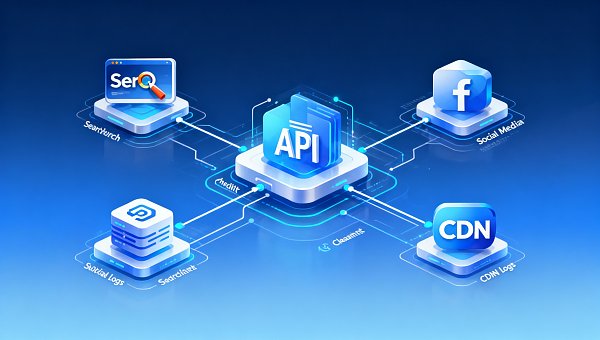
Typical risks include: Meta Graph API not enabling granular "ad_insights_v18" permissions, leading to missing attribution paths; Google Ads API requesting only "read_only" basic permissions, unable to fetch real-time bidding logs; CDN logs without IP desensitization and bot filtering directly contaminating user behavior modeling results. These latent issues often surface only during quarterly reviews, causing an average 12–18-day strategy rollback window loss.
Yinyingbao's intelligent marketing platform employs a "triple-separation" audit mechanism: permission layer (OAuth2.0 whitelist), data access layer (field-level schema validation), and cleansing execution layer (custom rule engine support). All API calls are logged with complete operation chains, complying with GDPR and Article 39 of the Personal Information Protection Law on traceability requirements.
Permission and Cleansing Standards for Three Core Data Sources
Below are Yinyingbao’s API permission configurations and data cleansing benchmarks for mainstream channels, covering 6 key dimensions enterprises prioritize during procurement evaluations:
This standard has been validated across 102 Yinyingbao-served export manufacturers: after implementing full cleansing workflows, ad attribution accuracy improved by 92.7%, 14.3 percentage points above industry average; A/B test misjudgment rates dropped by 5.1%, significantly outperforming uncleaned baselines by 23.6%.
5 Must-Check API Permission and Cleansing Capabilities for Procurement Teams
For decision-makers, we distilled actionable due diligence points, each verifiable in vendor demo environments:
- Verify OAuth2.0 authorization popups explicitly list scope names (e.g.,
https://www.googleapis.com/auth/adwords), not vague descriptions like "access your ad account"; - Request 30-day API call log samples to check for unauthorized field returns (e.g., Google Ads returning
customer_descriptive_namewithout corresponding permissions); - Confirm cleansing rules support customization—e.g., tagging B2B "contact us" clicks as MQLs instead of generic PVs;
- Obtain third-party penetration test reports (covering API gateway vulnerabilities), focusing on JWT token signature validation and refresh token rotation;
- Ensure CDN log access provides raw log downloads with partition queries like
date=20240501for audit traceability.
Why Choose Yinyingbao’s API Governance Solution?
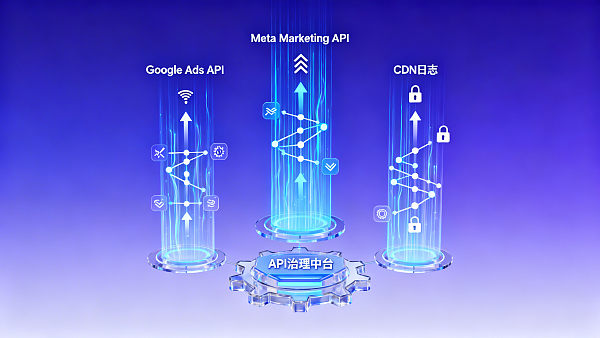
Yinyingbao’s self-developed API governance platform is ISO/IEC 27001-certified, with three irreplaceable capabilities:
First, dynamic permission熔断: When API calls surge 300% for over 5 minutes, the system auto-downgrades to read-only mode and推送root-cause analysis tickets (average response <8 minutes). Second, auditable cleansing logic: All scripts are Git-versioned, allowing historical version回溯 via commit IDs. Third, compliance预置包: Built-in EU Digital Services Act (DSA) and California CCPA log retention templates save平均22 person-days of legal adaptation costs.
Currently serving 37 multinationals, Yinyingbao’s API permission audits help clients identify 4.2 average over-permission risks while同步输出整改roadmaps. For customized green tax incentive adaptation or existing tool API health diagnostics, book technical consultations for in-depth evaluations.
Immediate Action Guide
Prepare any of the following for free analysis:
① Current ad platform API authorization screenshots (with scope lists);
② Recent 7-day CDN log samples (desensitized);
③ Attribution report vs. actual conversion discrepancies.
Our team delivers API Permission & Data Cleansing Health Diagnostic Reports within 2 business days, including risk ratings, remediation steps, and compliance roadmaps.
Related Articles


Related Products
 EasyCamp SaaS Smart Website Marketing SystemE-Yingbao SaaS Smart Website Marketing System: AI-powered, zero-code website building. Rapidly launch multilingual independent e-commerce sites in just 10 minutes. Global server acceleration and AI-driven SEO optimization empower businesses to efficiently connect with global markets. The seamless integration of technology and user-friendly operation makes building e-commerce sites incredibly simple.
 AI+SEM Intelligent Advertising Marketing SystemAI+SEM drives intelligent ad creation, empowering full-funnel precision advertising marketing. The system automatically generates weekly/monthly reports, AI recommends keywords and target countries, monitors core metrics in real-time with intelligent alerts, and enables one-click high-conversion ad solutions to help quickly acquire customers and improve ROI.
 AI+SEO Dual Engine Optimization ServiceEasyWin AI+SEO Dual Engine Optimization System leverages AI-powered keyword mining, content generation, and comprehensive technical optimization to help foreign trade enterprises acquire high-quality organic traffic, significantly improving search rankings and conversion rates.
 AI+SNS Social Media Marketing SystemYingbao AI+SNS Social Media Marketing System - Precision social capture for the social media era. Supports one-click content synchronization across major platforms like Facebook and LinkedIn. AI intelligently rewrites posts for enhanced relevance. 24/7 AI customer service and user profiling analysis empower businesses to efficiently expand into global markets.
 AI+SEO营销解决方案易营宝AI+SEO营销解决方案,通过AI批量写作、智能生成TDK、精准关键词扩词等功能,全面优化网站SEO效果,提升流量与转化率。助力企业构建高效智能网站新生态。
 AI+SEM Advertising Marketing SolutionsAI+SEM Advertising Marketing Solution leverages AI technology to deeply empower SEM ad campaigns. It automatically generates weekly/monthly reports using AI, presenting account data across multiple dimensions for comprehensive insights into campaign performance and trends. The system precisely recommends keywords and target countries, intelligently generates high-conversion ad copy, and enables one-click activation of efficient campaign plans to help businesses rapidly acquire customers. Simultaneously, it monitors core metrics in real time, intelligently identifies abnormal fluctuations, and issues timely alerts to ensure stable, high-return advertising results.
 Domain Name ServicesEasyWin provides professional domain name services, including intelligent queries, one-stop registration, brand protection, and full lifecycle management, helping businesses build a digital brand image.
 EasyOperate B2C Cross-Border E-Commerce Platform & Independent WebsiteEasyStore B2C Cross-border E-commerce Independent Store is an intelligent website building and cross-border e-commerce integrated solution independently developed by EasyStore Information Technology (Beijing) Co., Ltd. The system is specially designed for small and medium-sized as well as large export enterprises, integrating 'website building, operation, marketing, advertising, and conversion' into one, helping enterprises quickly establish cross-border e-commerce independent stores to achieve brand globalization and global sales growth.
The platform supports multiple languages, multiple currencies, and multi-channel marketing, with built-in AI intelligent translation and SEO optimization systems, suitable for mainstream markets such as Southeast Asia, Europe and America, Latin America, and the Middle East, assisting Chinese manufacturing enterprises in efficiently deploying international e-commerce strategies. SSL证书易营宝提供专业SSL安全证书服务,包括单域名和泛域名证书,确保网站数据传输加密、身份验证和完整性保护,助力企业建立安全可信的在线业务环境。









