









- How to assess foreign trade website development trends?Looking at 2026 changes from multilingual,AI content to conversion pathsJul 04, 2026View details
- What are the new trends in multilingual marketing data analytics tools in 2026? Focus on attribution、automation and complianceJul 04, 2026View details
- Is Brand Globalization Marketing Consulting Worth Buying? At What Stage Should Companies Bring It InJul 01, 2026View details
- Cross-Border Marketing Trend Research: Why More and More Companies Are Starting to Deploy AI Search and GEO OptimizationJun 30, 2026View details
- Cross-Border Marketing Trend Research: How Independent Sites, AI Content, and Short-Video Customer Acquisition Are ChangingJun 30, 2026View details
- How Can a Brand Updates Page Be Made More SEO-Friendly? Analysis of Update Frequency, Content Structure, and Internal Linking StrategyJun 28, 2026View details
- What stages does the cross-border services ecosystem include? How do website building, promotion, payment, and compliance work togetherJun 22, 2026View details
- How will email marketing costs change in 2026Jun 22, 2026View details
Read These 3 Risk Points Before Buying an SSL Certificate
Purchasing an SSL certificate is shifting from a “technical option” to a “foundation for growth”

Before purchasing an SSL certificate, looking at the risk points first is no longer a conservative approach, but a basic move for growth-oriented websites.
In integrated website and marketing service scenarios, certificates not only affect encrypted communication, but also directly impact search performance, conversion trust, and the quality of advertising landing pages.
If SSL certificate purchasing only focuses on price while ignoring business fit, compatibility, and ongoing maintenance, hidden risks often surface during the traffic growth stage.
For corporate websites, foreign trade standalone sites, campaign pages, and multilingual websites, SSL certificate purchasing is already deeply tied to brand credibility.
Especially as search engines continue to strengthen security experience requirements and browsers increase the intensity of risk warnings, choosing the wrong certificate type can magnify business losses.
The dual upgrade of security and marketing is changing the criteria for SSL certificate purchasing decisions
In the past, many websites regarded certificates as a configuration item to add before going live.
Now, website architectures are more complex, marketing campaigns rely more heavily on page stability, and the decision criteria for SSL certificate purchasing have clearly been upgraded.
On one hand, search engines pay more attention to access security, page integrity, and user session experience.
On the other hand, social media advertising, form collection, online consultation, and member registration all require websites to have a stable and trustworthy encryption environment.
This means that SSL certificate purchasing is no longer just an IT configuration issue, but a shared concern for website development, SEO optimization, and conversion operations.
Core factors driving the change
The first risk point: certificate type mismatch, seemingly usable on the surface, but actually dragging down the business
Many SSL certificate purchasing problems first arise from “buying the right certificate, but not the right type.”
Single-domain, wildcard, multi-domain, as well as DV, OV, and EV, differ in validation strength and applicable scenarios.
If it is only a content display website, a basic configuration is usually enough.
But when form submissions, customer data collection, brand presentation, and overseas access are involved, a certificate type mismatch will affect user judgment.
- Using a single-domain certificate for multiple sub-sites leads to high expansion costs later.
- Only looking at cheap DV certificates while ignoring the need to display corporate identity.
- Multilingual websites have many domains, but the SAN coverage scope was not planned in advance.
- Campaign pages go live frequently, but there is no matching flexible certificate solution.
In real integrated website and marketing service scenarios, site structures change along with promotion strategies.
Therefore, SSL certificate purchasing should be judged together with website planning, SEO paths, and follow-up campaign schedules, rather than as a single-point decision.
The second risk point: insufficient brand strength and compatibility, traffic comes in but cannot be handled steadily
When purchasing an SSL certificate, brand reputation and compatibility are often underestimated.
The encryption capabilities of certificates themselves may seem similar, but there are major differences in browser recognition, device support, system compatibility, and issuance services.
If the website serves overseas users, compatibility issues are especially apparent.
Once abnormal certificate chains, unrecognized legacy devices, or regional access warnings appear, page bounce rates will rise rapidly.
The damage these issues cause to SEO and ad conversion is often hidden.
Search engine crawl failures, reduced landing page trust, and interrupted form submissions may all stem from an unsuitable certificate brand or issuance system.
In complex business analysis, similar to the refined accounting logic emphasized by Research on the Application Optimization of Activity-Based Costing in Cost Accounting of Coal Mining Enterprises, certificate decisions should also consider long-term total cost rather than one-time procurement price.
Compatibility assessment can focus on these points
- Whether recognition rates are stable across mainstream browsers and mobile devices.
- Whether there are mature cases in overseas access environments.
- Whether the certificate chain is complete and whether errors are likely after deployment.
- Whether issuance, reissuance, revocation, and technical support respond in a timely manner.
The third risk point: post-deployment operations and maintenance are overlooked, and certificate failure is often more fatal than purchasing mistakes
Completing an SSL certificate purchase does not mean the risk has ended.
What truly affects business continuity is often coordinated maintenance after deployment, renewal, monitoring, and revisions.
Many websites ignore synchronized certificate management when replacing servers, switching CDNs, adding subdomains, or migrating during redesigns.
The result is certificate expiration, mixed content errors, redirect anomalies, and even a complete site trust interruption.
For websites that rely on organic traffic and advertising campaigns, this kind of loss is very direct.
At best, it affects page loading speed and lead submissions, and at worst, it causes indexing fluctuations, budget waste, and negative brand perception.
Therefore, SSL certificate purchasing must be designed together with the operations and maintenance mechanism, and should especially be included in website delivery checklists and marketing campaign launch processes.
How these 3 risk points affect website development, SEO, and the conversion chain
From the business chain perspective, mistakes in SSL certificate purchasing do not remain only at the technical level.
They continue to spread along the path of “access experience—search performance—user trust—conversion results”.
In the next stage, what deserves more attention is not “whether to buy,” but “how to configure and how to manage”
In the new growth environment, SSL certificate purchasing recommendations should focus on the following aspects.
- First review the domain structure, then decide on a single-domain, wildcard, or multi-domain solution.
- Match the certificate level with brand presentation and data collection scenarios.
- Give priority to certificate brands with stable compatibility and mature services.
- Include renewal reminders, automated deployment, and anomaly monitoring in the operations process.
- Before website redesigns, migrations, or campaign launches, add a dedicated HTTPS inspection.
If an enterprise is simultaneously advancing website development, SEO, and overseas marketing, it should place SSL certificate purchasing into the overall digital infrastructure planning.
With ten years of deep industry experience, Easy Marketing Bao Information Technology (Beijing) Co., Ltd. relies on artificial intelligence and big data capabilities to build a full-chain service system around intelligent website development, SEO optimization, social media marketing, and advertising placement, making it more suitable for coordinated management of certificates, security, and growth.
Truly reliable SSL certificate purchasing should be implemented through an actionable checklist
Finally, returning to the core issue, at least one concise review should be completed before purchasing an SSL certificate.
- Confirm the website’s current and next 12-month domain expansion plan.
- Clarify whether brand presentation, registration and login, and form collection are involved.
- Check terminal compatibility requirements and access environments in target regions.
- Evaluate issuance efficiency, after-sales support, and renewal management methods.
- Before going live, complete testing for certificate chains, redirects, and mixed content.
When SSL certificate purchasing is upgraded from one-time procurement to continuous management, website security, search performance, and marketing conversion can truly become stable.
If you are preparing to launch a new website or upgrade an existing one, you may first conduct a comprehensive review around these 3 risk points, and then proceed with certificate configuration and growth deployment.
Related Articles
 How can video news production be made more efficient?Breaking down the standard process from topic selection to editing
 How to assess foreign trade website development trends?Looking at 2026 changes from multilingual,AI content to conversion paths
 What are the new trends in multilingual marketing data analytics tools in 2026? Focus on attribution、automation and compliance


Related Products
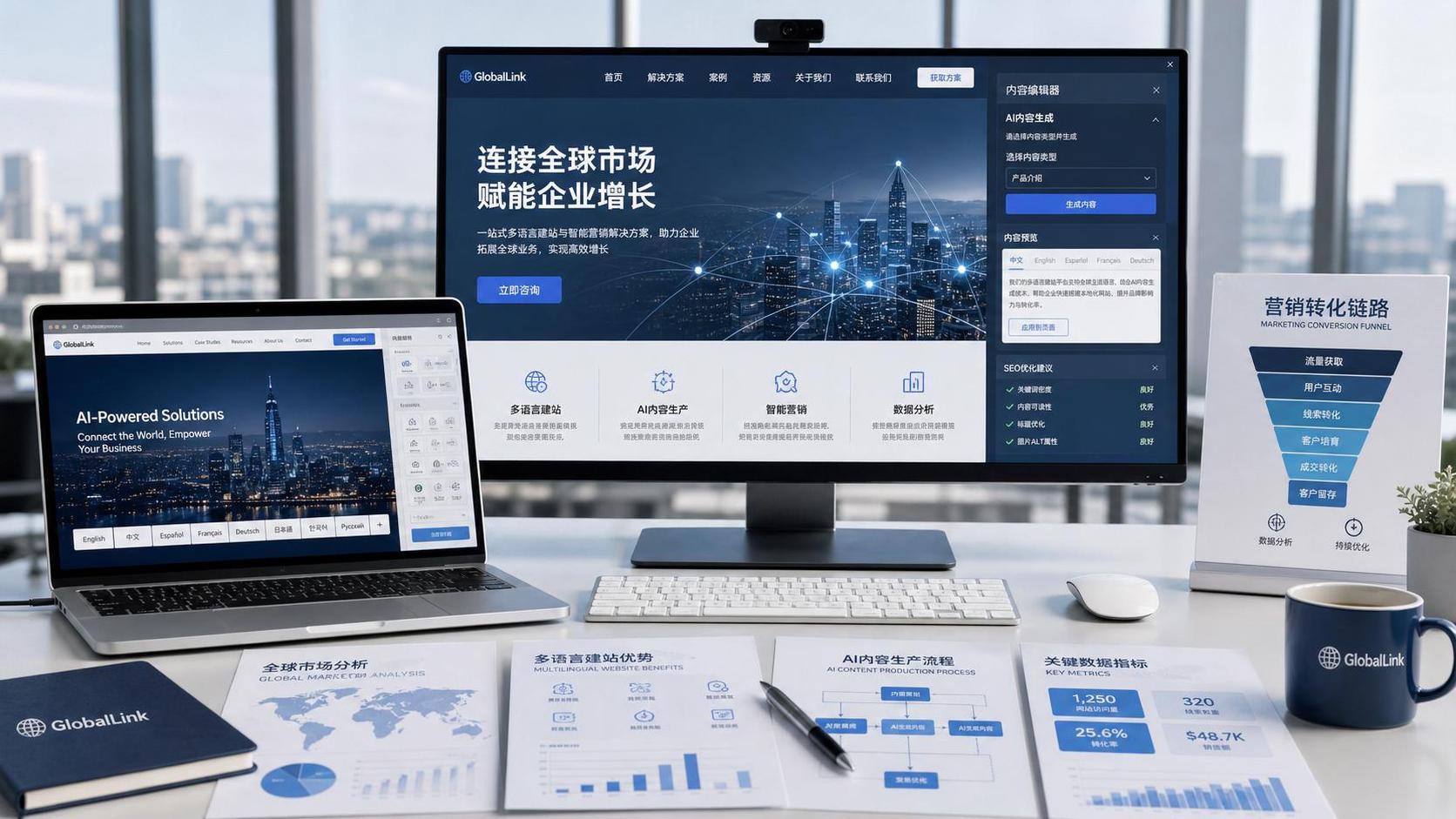
 EasyCamp SaaS Smart Website Marketing SystemE-Yingbao SaaS Smart Website Marketing System: AI-powered, zero-code website building. Rapidly launch multilingual independent e-commerce sites in just 10 minutes. Global server acceleration and AI-driven SEO optimization empower businesses to efficiently connect with global markets. The seamless integration of technology and user-friendly operation makes building e-commerce sites incredibly simple.
 AI+SEM Intelligent Advertising Marketing SystemAI+SEM drives intelligent ad creation, empowering full-funnel precision advertising marketing. The system automatically generates weekly/monthly reports, AI recommends keywords and target countries, monitors core metrics in real-time with intelligent alerts, and enables one-click high-conversion ad solutions to help quickly acquire customers and improve ROI.
 AI+SEO Dual Engine Optimization ServiceEasyWin AI+SEO Dual Engine Optimization System leverages AI-powered keyword mining, content generation, and comprehensive technical optimization to help foreign trade enterprises acquire high-quality organic traffic, significantly improving search rankings and conversion rates.
 AI+SNS Social Media Marketing SystemYingbao AI+SNS Social Media Marketing System - Precision social capture for the social media era. Supports one-click content synchronization across major platforms like Facebook and LinkedIn. AI intelligently rewrites posts for enhanced relevance. 24/7 AI customer service and user profiling analysis empower businesses to efficiently expand into global markets.
 AI+SEO营销解决方案易营宝AI+SEO营销解决方案,通过AI批量写作、智能生成TDK、精准关键词扩词等功能,全面优化网站SEO效果,提升流量与转化率。助力企业构建高效智能网站新生态。
 AI+SEM Advertising Marketing SolutionsAI+SEM Advertising Marketing Solution leverages AI technology to deeply empower SEM ad campaigns. It automatically generates weekly/monthly reports using AI, presenting account data across multiple dimensions for comprehensive insights into campaign performance and trends. The system precisely recommends keywords and target countries, intelligently generates high-conversion ad copy, and enables one-click activation of efficient campaign plans to help businesses rapidly acquire customers. Simultaneously, it monitors core metrics in real time, intelligently identifies abnormal fluctuations, and issues timely alerts to ensure stable, high-return advertising results.
 Domain Name ServicesEasyWin provides professional domain name services, including intelligent queries, one-stop registration, brand protection, and full lifecycle management, helping businesses build a digital brand image.
 EasyOperate B2C Cross-Border E-Commerce Platform & Independent WebsiteEasyStore B2C Cross-border E-commerce Independent Store is an intelligent website building and cross-border e-commerce integrated solution independently developed by EasyStore Information Technology (Beijing) Co., Ltd. The system is specially designed for small and medium-sized as well as large export enterprises, integrating 'website building, operation, marketing, advertising, and conversion' into one, helping enterprises quickly establish cross-border e-commerce independent stores to achieve brand globalization and global sales growth.
The platform supports multiple languages, multiple currencies, and multi-channel marketing, with built-in AI intelligent translation and SEO optimization systems, suitable for mainstream markets such as Southeast Asia, Europe and America, Latin America, and the Middle East, assisting Chinese manufacturing enterprises in efficiently deploying international e-commerce strategies. SSL证书易营宝提供专业SSL安全证书服务,包括单域名和泛域名证书,确保网站数据传输加密、身份验证和完整性保护,助力企业建立安全可信的在线业务环境。









