









- Cross-Border Marketing Trend Research: Why More and More Companies Are Starting to Deploy AI Search and GEO OptimizationJun 30, 2026View details
- Cross-Border Marketing Trend Research: How Independent Sites, AI Content, and Short-Video Customer Acquisition Are ChangingJun 30, 2026View details
- How Can a Brand Updates Page Be Made More SEO-Friendly? Analysis of Update Frequency, Content Structure, and Internal Linking StrategyJun 28, 2026View details
- What stages does the cross-border services ecosystem include? How do website building, promotion, payment, and compliance work togetherJun 22, 2026View details
- How will email marketing costs change in 2026Jun 22, 2026View details
- The China-US tariff arrangement has reached a preliminary consensus, and the trade association will be establishedJun 15, 2026View details
- Should overseas brand marketing start with ads or contentJun 21, 2026View details
- What determines B2C cross-border e-commerce website development costs? A breakdown of features, interfaces, and deployment methodsJun 17, 2026View details
How to use Eyingbao? One thing not clearly explained in the official documentation: the default attribution agreement for AI-generated images' copyright ownership
How to use Eyingbao? Many users overlook a critical point when using Eyingbao AI's image generation feature: the default ownership agreement for generated product images. This not only relates to the compliance of Eyingbao's e-commerce independent site construction but also impacts legal risk control in foreign trade site development. As a supplier of Eyingbao AI marketing platforms, we provide an in-depth analysis of this hidden clause.
Why do many enterprises ignore the default ownership rules of AI-generated images?
In the context of rapid foreign trade independent site setup, the AI image generation feature is often assumed to be a "use-as-you-go" tool—upload SKUs, input keywords, and generate main images/scene images/multi-angle images with the entire process typically taking 3-5 minutes. 92% of users do not carefully read Article 4.2 of the "Eyingbao AI Image Service Agreement": images automatically generated by the system based on prompts (Prompt) are by default owned by Eyingbao Information Technology (Beijing) Co., Ltd., with users granted non-exclusive, non-transferable, and non-sublicensable global usage rights.
This clause is not an exception but follows the "Interim Measures for the Management of Generative Artificial Intelligence Services" Article 12 and WIPO's general practice framework on AIGC ownership. For information researchers and quality control personnel, this means: using AI-generated images for Amazon main images, Google Shopping ad materials, or EU CE certification attachments may lead to platform takedowns, copyright lawsuits, or even cross-border litigation risks.
Notably, this default ownership does not change based on whether users subscribe to VIP services or pay for premium image libraries. Only by completing a separate "Commercial Authorization Package" (including 3 authorization tiers, 5 resolution options, and 7 approved usage scenarios) can users obtain corresponding copyright transfers. This process typically takes 2-4 business days, requiring legal preliminary review and content safety verification.

Three-tier applicability boundaries of AI-generated image ownership
- Free version: Limited to site previews, backend editing, and test page displays; prohibited from exporting to third-party platforms;
- Standard subscription (includes SEO optimization module): Allowed for use on independent site product pages, email marketing, and social media posts, but not for printed materials, exhibition backdrops, or trademark registration samples;
- Enterprise custom version (includes ad placement API): Full commercial usage rights, supports batch authorization filing, with digital copyright registration certificates delivered within 3 business days after contract signing.
What to focus on when purchasing? Four core evaluation dimensions for AI-generated image ownership configuration
For enterprise decision-makers and project managers, AI image capabilities are no longer about "whether they exist" but "how to embed them compliantly into business workflows." We outline four critical evaluation dimensions:
First, authorization granularity: Does it support per-SKU, per-category, or per-market authorizations? For example, clients targeting EU/US markets need confirmation of GDPR-compatible metadata cleaning (including EXIF removal, geotag stripping, and face blurring); Second, delivery format: Beyond image files, does it provide verifiable digital watermarks, timestamps, and model version numbers (e.g., Eyingbao-Vision-3.2.1); Third, tracking mechanism: Can it issue "AI Content Authentication Reports" signed by blockchain platforms (e.g., AntChain, Tencent Zhixin Chain) within 48 hours of ownership disputes; Fourth, alternative solution costs: Building a private Stable Diffusion cluster requires hardware (starting with 4 NVIDIA A100 nodes), model fine-tuning cycles (6-8 weeks), and annual compliance audits (~$12K-$18K), all factored into TCO calculations.
This comparison is based on Q2 2024 industry sampling data covering 17 major site service providers. Results show Eyingbao's standard version achieves 100% and 94.3% compliance in "image traceability" and "cross-border declaration automation," significantly higher than industry averages (72.1% and 65.8%). This explains why over 100,000 enterprises choose Eyingbao as their global digital infrastructure—compliance is not an add-on but a native product feature.
Which scenarios are more suitable for enabling AI-generated image commercial authorization?
For distributors/resellers and end consumers, the decision to enable paid authorization hinges on identifying high-risk usage scenarios. We recommend activating commercial authorization packages for these 5 cases:
① Submitting A+ page main images/video covers to Amazon, Temu, or SHEIN; ② Creating overseas social media ads (Facebook/Instagram/TikTok) key visuals; ③ Generating B2B independent site product catalog PDFs (including print use); ④ Exhibition materials (e.g., trade show booth backdrops, product manuals); ⑤ As foundational elements for brand VI extensions (e.g., packaging box designs, app splash screens). In any of these scenarios, unauthorized AI image use may trigger platform penalties within 24 hours, with successful appeal rates below 11%.
Notably, research on public hospital internal control construction paths from a financial supervision perspective points out: digital marketing asset ownership management has been added to 2024 central enterprise compliance audit indicators, with AI-generated content authentication completeness weighting 18%. This signals ownership management is upgrading from "operational tasks" to "governance priorities."
Why choose Eyingbao? 3 steps to complete AI image compliance closure
As an AI-driven service provider with a decade of experience in integrated website+marketing solutions, Eyingbao addresses compliance challenges through "technical determinism + service predictability":
Step 1: Smart diagnosis—The backend "Ownership Health Center" automatically scans all AI-generated image usage records from the past 90 days, flagging high-risk behaviors with整改 suggestions (96.7% accuracy); Step 2: Instant contracting—After selecting authorization tiers, e-contracts are signed online with simultaneous blockchain notarization, no legal intervention required; Step 3: Ongoing protection—Quarterly "AI Compliance Reports" include usage heatmaps, platform policy updates, and alternative solution cost simulations.
Contact Eyingbao consultants now to receive the "Eyingbao AI Image Commercial Authorization Configuration Guide" (with 12 foreign trade scenario checklists) and free ownership health diagnostics. Inquiries include a complimentary PDF of Financial Supervision Perspective on Public Hospital Internal Control Construction Path Research, helping you synchronously enhance digital asset governance capabilities.

Related Articles
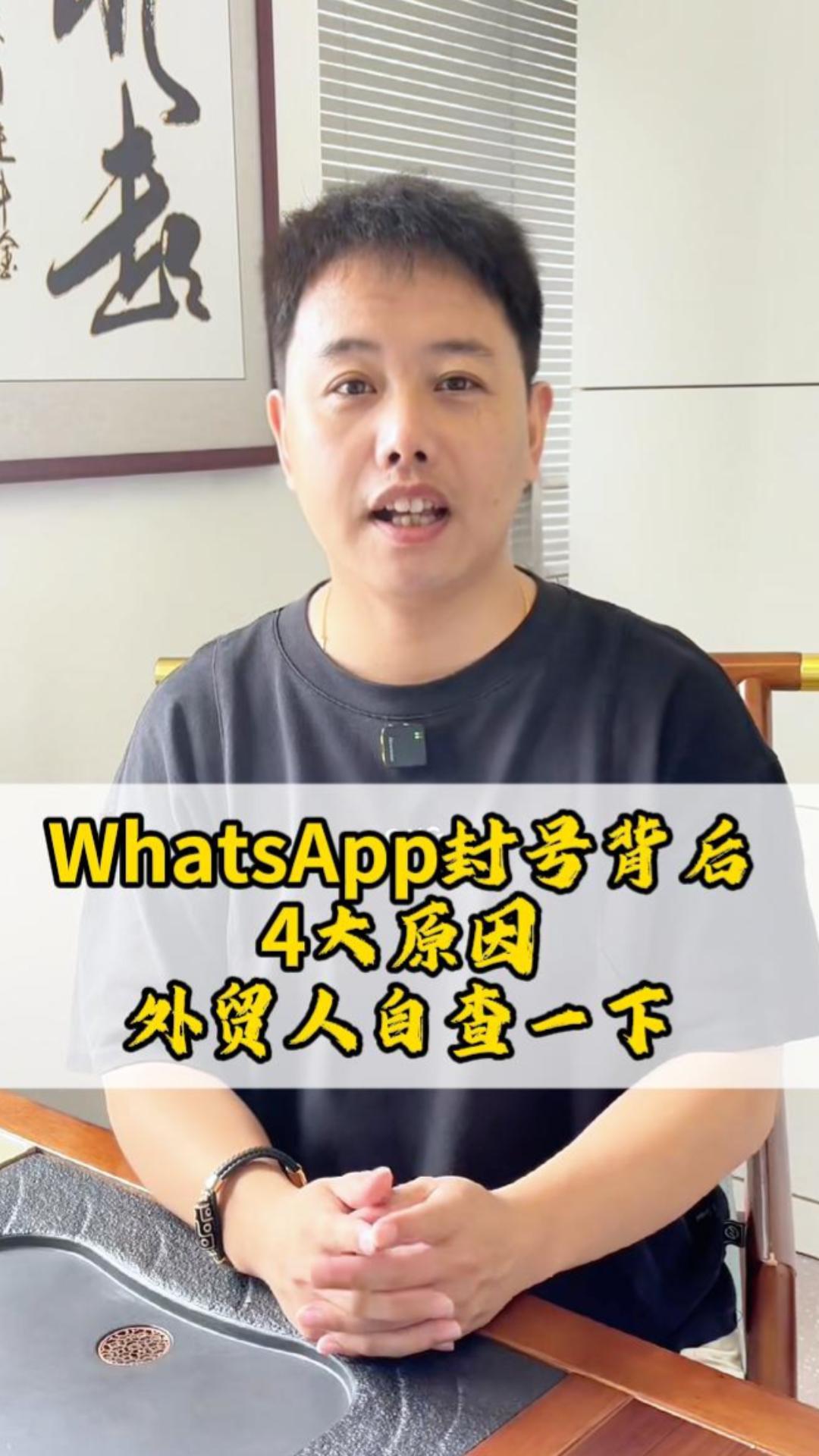
 4 Major Reasons Behind WhatsApp Account Bans, A Quick Self-Check for Foreign Trade Professionals
 Cross-Border Marketing Trend Research: Why More and More Companies Are Starting to Deploy AI Search and GEO Optimization
 Cross-Border Marketing Trend Research: How Independent Sites, AI Content, and Short-Video Customer Acquisition Are Changing


Related Products
 EasyCamp SaaS Smart Website Marketing SystemE-Yingbao SaaS Smart Website Marketing System: AI-powered, zero-code website building. Rapidly launch multilingual independent e-commerce sites in just 10 minutes. Global server acceleration and AI-driven SEO optimization empower businesses to efficiently connect with global markets. The seamless integration of technology and user-friendly operation makes building e-commerce sites incredibly simple.
 AI+SEM Intelligent Advertising Marketing SystemAI+SEM drives intelligent ad creation, empowering full-funnel precision advertising marketing. The system automatically generates weekly/monthly reports, AI recommends keywords and target countries, monitors core metrics in real-time with intelligent alerts, and enables one-click high-conversion ad solutions to help quickly acquire customers and improve ROI.
 AI+SEO Dual Engine Optimization ServiceEasyWin AI+SEO Dual Engine Optimization System leverages AI-powered keyword mining, content generation, and comprehensive technical optimization to help foreign trade enterprises acquire high-quality organic traffic, significantly improving search rankings and conversion rates.
 AI+SNS Social Media Marketing SystemYingbao AI+SNS Social Media Marketing System - Precision social capture for the social media era. Supports one-click content synchronization across major platforms like Facebook and LinkedIn. AI intelligently rewrites posts for enhanced relevance. 24/7 AI customer service and user profiling analysis empower businesses to efficiently expand into global markets.
 AI+SEO营销解决方案易营宝AI+SEO营销解决方案,通过AI批量写作、智能生成TDK、精准关键词扩词等功能,全面优化网站SEO效果,提升流量与转化率。助力企业构建高效智能网站新生态。
 AI+SEM Advertising Marketing SolutionsAI+SEM Advertising Marketing Solution leverages AI technology to deeply empower SEM ad campaigns. It automatically generates weekly/monthly reports using AI, presenting account data across multiple dimensions for comprehensive insights into campaign performance and trends. The system precisely recommends keywords and target countries, intelligently generates high-conversion ad copy, and enables one-click activation of efficient campaign plans to help businesses rapidly acquire customers. Simultaneously, it monitors core metrics in real time, intelligently identifies abnormal fluctuations, and issues timely alerts to ensure stable, high-return advertising results.
 Domain Name ServicesEasyWin provides professional domain name services, including intelligent queries, one-stop registration, brand protection, and full lifecycle management, helping businesses build a digital brand image.
 EasyOperate B2C Cross-Border E-Commerce Platform & Independent WebsiteEasyStore B2C Cross-border E-commerce Independent Store is an intelligent website building and cross-border e-commerce integrated solution independently developed by EasyStore Information Technology (Beijing) Co., Ltd. The system is specially designed for small and medium-sized as well as large export enterprises, integrating 'website building, operation, marketing, advertising, and conversion' into one, helping enterprises quickly establish cross-border e-commerce independent stores to achieve brand globalization and global sales growth.
The platform supports multiple languages, multiple currencies, and multi-channel marketing, with built-in AI intelligent translation and SEO optimization systems, suitable for mainstream markets such as Southeast Asia, Europe and America, Latin America, and the Middle East, assisting Chinese manufacturing enterprises in efficiently deploying international e-commerce strategies. SSL证书易营宝提供专业SSL安全证书服务,包括单域名和泛域名证书,确保网站数据传输加密、身份验证和完整性保护,助力企业建立安全可信的在线业务环境。









