









- Can Zhejiang foreign trade independent websites still be developed today? Look at changes in traffic and lead generationJul 28, 2026View details
- What New Signals Are Emerging in Enterprise Services SaaS Marketing ReportsJul 27, 2026View details
- What Does a Global Traffic Ecosystem Service Provider Do? What Are the Differences from a Single Advertising AgencyJul 16, 2026View details
- What should you focus on in the latest enterprise SaaS report? From renewal rates and delivery costs to overseas growth opportunitiesJul 12, 2026View details
- What signals are worth paying attention to in a cross-border marketing trend report? B2B companies should look at these 6 signalsJul 11, 2026View details
- How to Read a Cross-Border Marketing Trends Report? Five Key Dimensions for Evaluating Channel OpportunitiesJul 11, 2026View details
- Which channel has the highest ROI in the global traffic ecosystem? Comparative analysis of search, social media, and advertisingJul 10, 2026View details
- What multilingual website services are available in Sanya? Which model is more suitable for local businesses going global?Jul 08, 2026View details
AI+SEM Advertising System Vendor Evaluation, Which Promises Are Most Likely to Be Pitfalls
When evaluating an AI+SEM Advertising System vendor, the real danger is not the price level, but those highly tempting promises: guaranteed results, full automation, low cost with high conversion, and stable scaling in a short period of time. For integrated website + marketing service projects, if data transparency, attribution logic, account permissions, and service boundaries are overlooked in the early stage, problems such as budget overruns, distorted leads, and optimization stagnation often emerge soon after the cooperation goes live.
First look at the cooperation scenario: at different business stages, the criteria for evaluating AI+SEM Advertising System vendors are not the same

Even when choosing an AI+SEM Advertising System vendor, companies at different stages focus on very different things. When just starting overseas or domestic advertising, it is more important to verify whether the foundational setup is standardized; when stable traffic already exists, more attention should be paid to whether the scaling logic and data attribution are reliable.
Websites, landing pages, advertising accounts, and conversion tracking are essentially one integrated whole. If a vendor only emphasizes the media buying model but ignores website speed, page structure, and conversion paths, it will be difficult to truly realize the value of an AI+SEM Advertising System vendor.
Scenario 1: When building an advertising system from scratch, it is easiest to be misled by promises of “full automation”
Many projects in the cold-start phase hope to gain traction quickly, so they are easily attracted by claims such as “the system automatically bids, automatically generates creatives, and automatically optimizes audiences.” But at the from-scratch stage, data samples are insufficient, and no matter how strong the automation is, it cannot replace early-stage strategic judgment.
When evaluating this type of AI+SEM Advertising System vendor, you should first examine whether it has foundational build-out capabilities, including keyword layering, conversion event design, negative keyword mechanisms, page adaptation, and data tagging. If these links are missing, full automation will only amplify mistakes.
- Whether backend account access is open
- Whether documentation for conversion definitions is provided
- Whether the vendor can explain the effective conditions for the automation strategy
- Whether landing page and website optimization recommendations are provided simultaneously
Scenario 2: When an advertising foundation already exists, be alert to the metric traps behind “guaranteed results”
When an account has already been running for some time, the most common sales pitch from vendors is “guaranteed increase in inquiries” or “guaranteed reduction in conversion cost.” The problem is that these performance promises often rely on changes in statistical criteria rather than real growth.
For example, counting page dwell time, button clicks, and form-start events as conversions will naturally make the data look better; but valid leads that truly bring sales opportunities may not increase accordingly. This type of AI+SEM Advertising System vendor may appear professional, but in reality it can easily create biased decision-making.
At this point, the key question should be: what kind of result is being guaranteed? Is it clicks, form submissions, opportunities, or the final close rate? If the answer cannot be made clear, the firmer the promise sounds, the greater the risk usually is.
Three metrics that must be verified
- Whether conversions are deduplicated, and whether invalid leads are excluded
- How the attribution window is set, and whether there is duplicate counting across channels
- Whether the optimization goal is based on shallow conversions or deeper transactions
Scenario 3: When pursuing low-cost customer acquisition, “cheap” often comes from compressed service boundaries
Low-priced plans are the most attractive, but they are also the most common pitfall area. Some AI+SEM Advertising System vendors enter with extremely low service fees, but later do not take responsibility for website optimization, lead quality inspection, or multi-channel attribution analysis.
For integrated website + marketing service projects, advertising has never been an isolated action. Page loading speed, content persuasiveness, form design, and customer service follow-up all directly affect conversion quality. Buying only media buying without managing the website often results in even higher overall costs.
This type of issue is very common when companies conduct management reviews. For example, when analyzing budget allocation, channel contribution, and internal reconciliation, if there is no unified metric standard, it is similar to the statistical boundary issues encountered when reading Problems and Countermeasures in Consolidated Financial Statements of Enterprise Groups; the surface numbers may look clear, but in reality they are difficult to support accurate decision-making.
Under different cooperation scenarios, the core evaluation items for AI+SEM Advertising System vendors are not the same
How to achieve scenario fit: shift vendor evaluation from “listening to promises” to “examining mechanisms”
When evaluating an AI+SEM Advertising System vendor, it is recommended to establish a practical inspection framework. Instead of asking “can you guarantee results,” it is better to ask “when performance fluctuates, how do you identify the cause, how do you adjust actions, and how long does it take for the data to reflect back.”
- Mechanism 1: Check whether a complete data dashboard and raw data definitions are provided
- Mechanism 2: Check whether the vendor can explain the prerequisites and limitations for using AI strategies
- Mechanism 3: Check whether the vendor has the capability to optimize websites, pages, and content in a coordinated way
- Mechanism 4: Check whether weekly reports, monthly reports, review processes, and anomaly alert procedures are clearly defined
- Mechanism 5: Check whether ownership of accounts, creative assets, and data assets is clearly defined
For a global digital marketing service provider like Beijing Yiyingbao Information Technology Co., Ltd., which has been deeply engaged in the industry for ten years, the core advantage lies not only in media buying models, but also in connecting intelligent website building, SEO optimization, social media marketing, and advertising, thereby avoiding growth distortion caused by single-point optimization.
Common misjudgment: seeing the word “intelligent” and assuming an AI+SEM Advertising System vendor must be more professional
Many solutions on the market package rule-based automation as an intelligent system and conventional operations outsourcing as AI optimization. What truly deserves attention is not whether the name sounds advanced, but whether the system can continuously learn from high-quality conversion data and steadily output verifiable results.
Another common misjudgment is assuming that having many case studies means the vendor is suitable for the current business. In fact, different industries, average order values, conversion cycles, and regional markets vary greatly. An excellent AI+SEM Advertising System vendor should be able to explain which experiences can be reused and which must be rebuilt.
If the other party can only show polished case studies but cannot break down the methodology and failure contingencies, then no matter how many promises are made, it is still difficult to reduce real risk. When necessary, you can also combine internal business analysis thinking, and like reviewing Problems and Countermeasures in Consolidated Financial Statements of Enterprise Groups, first clarify the metric standards and then evaluate the results.
What to do next: use small-scale validation to screen out truly reliable AI+SEM Advertising System vendors
The safest approach is not to sign a long-term large budget all at once, but to conduct phased validation first. First verify data connectivity, then verify page acceptance, and finally verify scaling efficiency. This allows issues to be discovered earlier and makes it easier to compare the real capabilities of different vendors.
It is recommended to break the trial advertising phase into three actions: first, confirm account permissions and tracking deployment; second, unify conversion definitions and attribution standards; third, review costs, lead quality, and page performance on a weekly basis. Only AI+SEM Advertising System vendors that can withstand these three steps of validation are more worthy of entering long-term cooperation.
Under the integrated website + marketing service trend, the truly reliable selection criterion has never been “who makes the fullest promises,” but rather “who can truly coordinate technology, data, websites, and operations.” Only by placing the evaluation focus on mechanisms, transparency, and scenario fit can you avoid falling into pitfalls at the very beginning of cooperation.
Related Articles
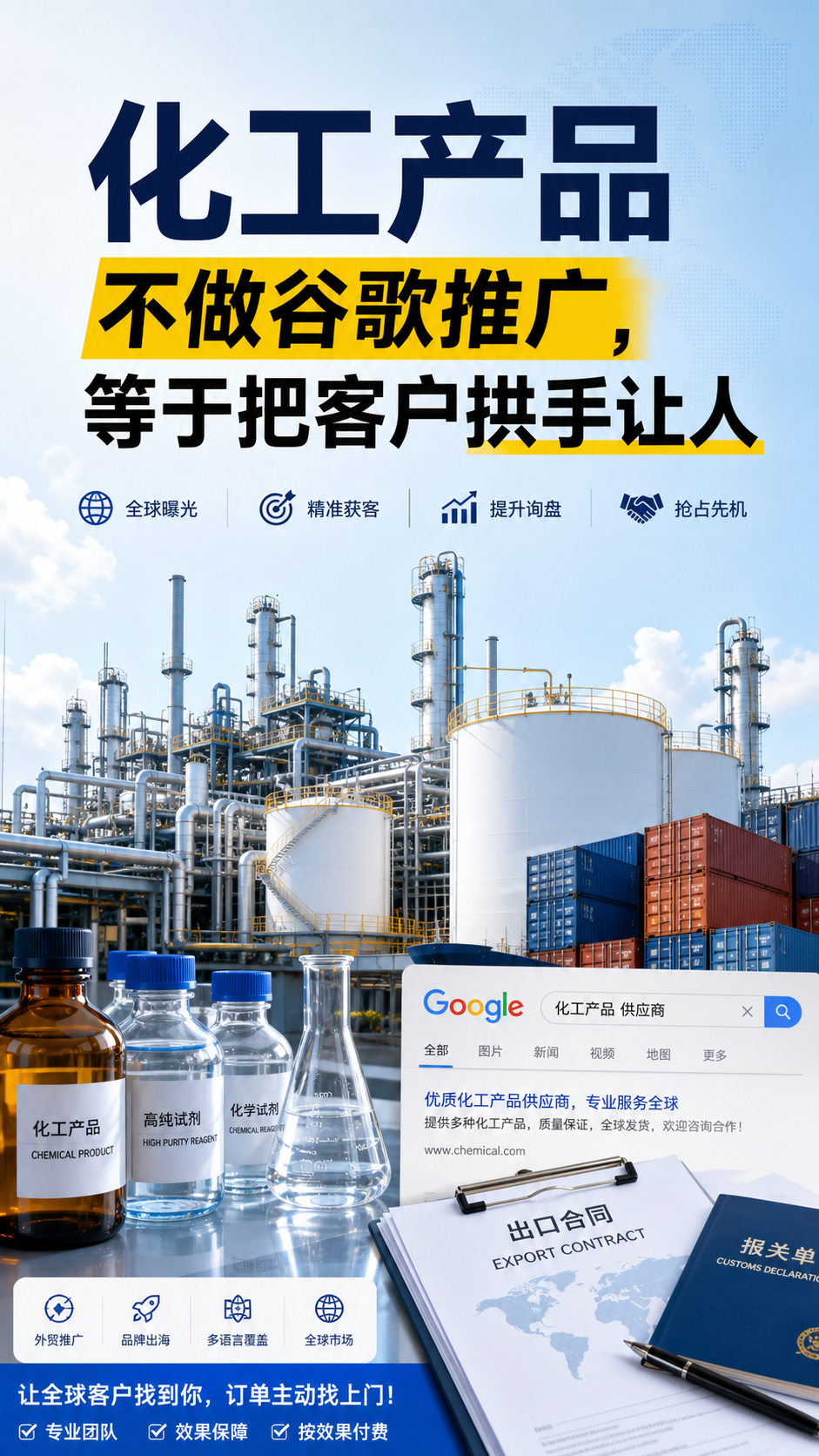
 Promoting chemical products on Google is essential—otherwise, you are effectively handing your customers over to competitors
 Can Zhejiang foreign trade independent websites still be developed today? Look at changes in traffic and lead generation
 What New Signals Are Emerging in Enterprise Services SaaS Marketing Reports


Related Products
 EasyCamp SaaS Smart Website Marketing SystemE-Yingbao SaaS Smart Website Marketing System: AI-powered, zero-code website building. Rapidly launch multilingual independent e-commerce sites in just 10 minutes. Global server acceleration and AI-driven SEO optimization empower businesses to efficiently connect with global markets. The seamless integration of technology and user-friendly operation makes building e-commerce sites incredibly simple.
 AI+SEM Intelligent Advertising Marketing SystemAI+SEM drives intelligent ad creation, empowering full-funnel precision advertising marketing. The system automatically generates weekly/monthly reports, AI recommends keywords and target countries, monitors core metrics in real-time with intelligent alerts, and enables one-click high-conversion ad solutions to help quickly acquire customers and improve ROI.
 AI+SEO Dual Engine Optimization ServiceEasyWin AI+SEO Dual Engine Optimization System leverages AI-powered keyword mining, content generation, and comprehensive technical optimization to help foreign trade enterprises acquire high-quality organic traffic, significantly improving search rankings and conversion rates.
 AI+SNS Social Media Marketing SystemYingbao AI+SNS Social Media Marketing System - Precision social capture for the social media era. Supports one-click content synchronization across major platforms like Facebook and LinkedIn. AI intelligently rewrites posts for enhanced relevance. 24/7 AI customer service and user profiling analysis empower businesses to efficiently expand into global markets.
 AI+SEO营销解决方案易营宝AI+SEO营销解决方案,通过AI批量写作、智能生成TDK、精准关键词扩词等功能,全面优化网站SEO效果,提升流量与转化率。助力企业构建高效智能网站新生态。
 AI+SEM Advertising Marketing SolutionsAI+SEM Advertising Marketing Solution leverages AI technology to deeply empower SEM ad campaigns. It automatically generates weekly/monthly reports using AI, presenting account data across multiple dimensions for comprehensive insights into campaign performance and trends. The system precisely recommends keywords and target countries, intelligently generates high-conversion ad copy, and enables one-click activation of efficient campaign plans to help businesses rapidly acquire customers. Simultaneously, it monitors core metrics in real time, intelligently identifies abnormal fluctuations, and issues timely alerts to ensure stable, high-return advertising results.
 Domain Name ServicesEasyWin provides professional domain name services, including intelligent queries, one-stop registration, brand protection, and full lifecycle management, helping businesses build a digital brand image.
 EasyOperate B2C Cross-Border E-Commerce Platform & Independent WebsiteEasyStore B2C Cross-border E-commerce Independent Store is an intelligent website building and cross-border e-commerce integrated solution independently developed by EasyStore Information Technology (Beijing) Co., Ltd. The system is specially designed for small and medium-sized as well as large export enterprises, integrating 'website building, operation, marketing, advertising, and conversion' into one, helping enterprises quickly establish cross-border e-commerce independent stores to achieve brand globalization and global sales growth.
The platform supports multiple languages, multiple currencies, and multi-channel marketing, with built-in AI intelligent translation and SEO optimization systems, suitable for mainstream markets such as Southeast Asia, Europe and America, Latin America, and the Middle East, assisting Chinese manufacturing enterprises in efficiently deploying international e-commerce strategies. SSL证书易营宝提供专业SSL安全证书服务,包括单域名和泛域名证书,确保网站数据传输加密、身份验证和完整性保护,助力企业建立安全可信的在线业务环境。









