









- The China-US tariff arrangement has reached a preliminary consensus, and the trade association will be establishedJun 15, 2026View details
- What determines B2C cross-border e-commerce website development costs? A breakdown of features, interfaces, and deployment methodsJun 17, 2026View details
- China-Morocco zero-tariff access, a breakthrough in the cost of Moroccan goods exports to ChinaJun 11, 2026View details
- What signal should be released for the suspension of exports to JapanJun 10, 2026View details
- China's May LNG imports rebounded, with increased volumes from Russia and Canada filling the Middle East supply gapJun 10, 2026View details
- Will GEO change its SEO strategy?Jun 04, 2026View details
What problems can the inquiry system solve? A practical method for moving from lead generation to sales follow-up
What Is a Lead Acquisition System Really Solving
Slow project progress, scattered customer leads, and sales follow-up breakdowns are key reasons many businesses are held back from growth. A lead acquisition system is designed for this, helping businesses streamline the entire process of acquiring, qualifying, assigning, following up on, and converting leads, so marketing investment can truly turn into business opportunities.
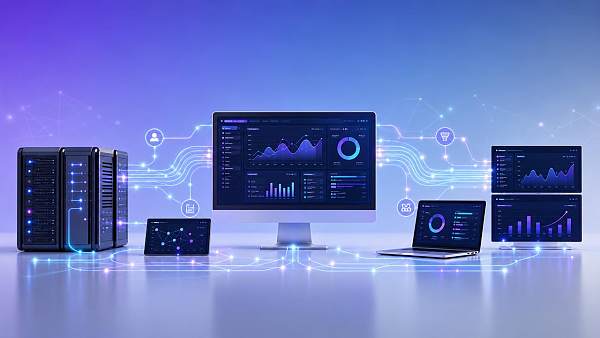
Many businesses are not short of traffic; what they truly lack is the ability to turn traffic into business opportunities. The website gets forms, social media receives private messages, ads bring clicks, but leads are scattered across inboxes, spreadsheets, and chat tools. In the end, they are either missed or followed up too late.
The core value of a lead acquisition system is not just “collecting leads.” It is more like an end-to-end business mechanism that moves customers from “seeing you,” to “wanting to talk,” to “keeping in touch,” and finally to “closing the deal.”
Recent changes show that customer decision-making is getting slower, but comparison is getting faster. Whoever identifies high-intent customers earlier is more likely to get the first chance. This also means that a lead acquisition system is shifting from a marketing tool to a growth infrastructure.
The Four Most Common Lead Acquisition Bottlenecks in Business
If you are evaluating a lead acquisition system, do not rush to look at features first. More importantly, first identify where the problem actually lies. In real business operations, the following four types of issues are the most common.
1. There are many lead sources, but no unified entry point
Website forms, search engines, landing pages, social media DMs, and short-video comments are all generating leads. The problem is that different channels operate independently, so sales cannot see complete information in time.
2. Lead assignment relies on manual work, and responses are slow
High-value customers often will not wait too long. Leads are passed around internally, and if the golden window is missed, conversion rates will drop significantly. In overseas markets in particular, time zone differences make the loss even worse.
3. The follow-up process is not transparent, making it difficult to track
Who contacted the customer, what was discussed, and when the next follow-up should happen are not consistently recorded. Management cannot see progress, and coordination between sales teams becomes difficult. In the end, it is easy to end up with “the customer was clearly interested, but no one followed up.”
4. There is no way to prove whether campaigns are effective, making budgets hard to optimize
Many companies can see clicks, but not the path to conversion. Without data linkage, it is hard to know which channel brings real business opportunities and which content attracts high-quality customers, causing budgets to be wasted on low-efficiency activities over the long term.
How to Build a Lead Acquisition System Implementation Chain
A truly effective lead acquisition system should cover at least four actions: acquisition, identification, assignment, and conversion. If any link is missing, the system can easily become a “collect-only, no-management” data pool.
Step 1: First consolidate all lead entry points
Websites, ad pages, social media homepages, online customer service, and search entry points should all be connected to a unified backend. The purpose is not only to make review easier, but also to lay the foundation for later scoring and assignment.
Step 2: Grade your leads
Do not treat all inquiries as equally valuable. A lead acquisition system should quickly determine priority based on source channel, visited pages, inquiry content, region, job title, and interaction frequency.
For example, a customer who has visited the quotation page and proactively submitted a request is usually worth a faster response than a visitor who only opened the homepage. Proper grading ensures that sales resources are not wasted on low-intent leads.
Step 3: Set up automatic assignment and alert mechanisms
High-intent leads need second-level alerts, and regular leads should also follow fixed circulation rules. Automatic assignment by region, product line, language, or customer type can significantly reduce internal waiting time.
Step 4: Standardize follow-up actions
Initial contact, needs confirmation, quotation follow-up, second follow-up, and dormant-customer reactivation all require clear checkpoints. A lead acquisition system can only produce real conversion results when it is integrated with the sales process.
How to Complete the Lead Loop from Website to Social Media
Today’s customer journey is no longer as simple as “search once, view one page, leave a form.” Many prospects first build awareness on social media, then verify on the website, and finally initiate an inquiry through private messages or a form.
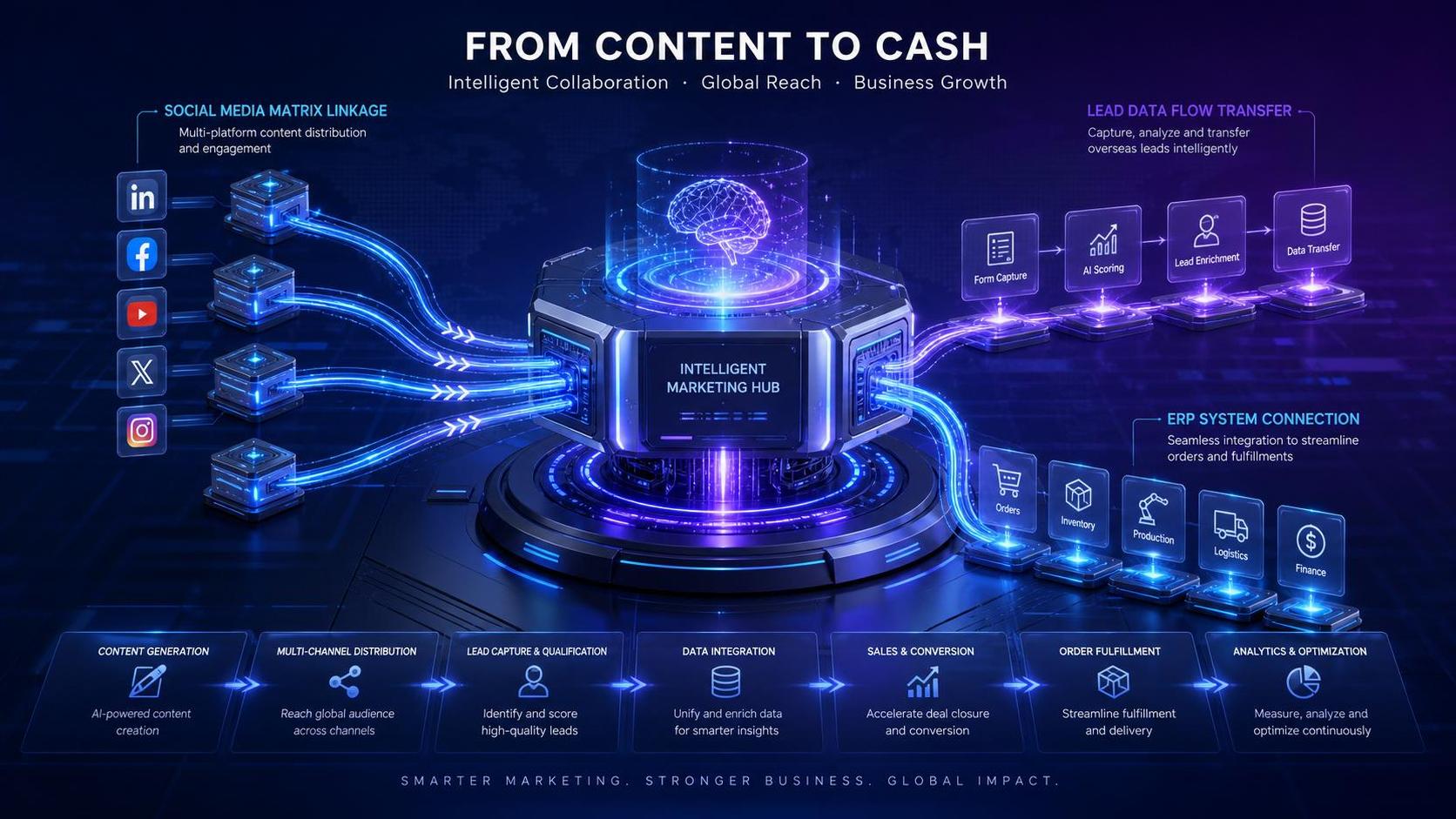
At this point, a single website tool is not enough. The value of integrating website and marketing services lies precisely in enabling content distribution, lead capture, and sales handoff to form a complete chain.
Based on EasyBizBao’s overall capabilities, businesses can leverage intelligent website building, SEO optimization, ad placement, and coordinated social media operations to guide traffic from multiple overseas channels into a trackable, analyzable, and convertible independent website system.
In social media lead management, the AI+SNS Social Intelligent Marketing System is a very suitable front-end complement to a lead acquisition system. It supports unified management across platforms such as Facebook, LinkedIn, Instagram, and Youtube, and independent website content can automatically adapt to different platform formats.
More practically, the system can identify high-value customers by analyzing user profiles and interaction behavior, and use intelligent customer service to handle most common inquiries first. When high-intent customers appear, they are automatically handed over to humans for continued follow-up, reducing the risk of missed orders.
A Set of Implementable Execution Methods
If a company is preparing to launch a lead acquisition system, do not try to implement everything at once. Start with the key scenarios first, as that makes it easier to achieve results.
- First, organize existing lead sources and identify which channels most often bring in effective inquiries.
- Then unify the data from website forms, social media DMs, ad landing pages, and online customer service.
- Set lead scoring rules to prioritize high-intent, high-match customers.
- Establish follow-up checkpoints and timeout reminders for sales to avoid leads being left unattended.
- Review channel quality on a weekly basis and continuously optimize content, placement, and pages.
The focus of this approach is not feature stacking, but ensuring that every lead can be seen, judged, followed up on, and measured. In this way, a lead acquisition system is not just software procurement, but a process upgrade.
What Capabilities Should You Focus on When Choosing a Solution
Different businesses have different requirements for a lead acquisition system, but several capabilities are worth prioritizing first.
- Can it connect websites, ads, social media, and customer service channels?
- Can it automatically identify high-quality leads and assign them quickly?
- Can it record a complete follow-up history for collaboration and review?
- Can it provide channel conversion analysis to support budget adjustments?
- Can it ensure data security and overseas compliance requirements?
If your business serves overseas markets, this point is especially important. For example, support for the OAuth2.0 protocol, compliance with GDPR standards, and ISO27001 information security certification will directly affect whether the system can be used stably over the long term.
Conclusion: Turn Leads into Real Growth Assets
The significance of a lead acquisition system has never been just about collecting a few more forms; it is about turning originally scattered customer touchpoints into a sustainable growth engine. It solves fundamental problems such as incomplete lead visibility, delayed follow-up, opaque processes, and hard-to-measure results.
When website building, search optimization, ad placement, social media operations, and the lead acquisition system are truly connected, marketing actions shift from “doing a lot” to “every step delivers results.” This is also why more and more companies are reexamining their customer acquisition systems today.
If your business is currently facing scattered leads, low conversion, or poor team coordination, prioritizing the lead acquisition system is often the most worthwhile first step. First make the process run smoothly, then scale traffic; growth becomes more stable and more repeatable.
Related Articles

Related Products
 EasyCamp SaaS Smart Website Marketing SystemE-Yingbao SaaS Smart Website Marketing System: AI-powered, zero-code website building. Rapidly launch multilingual independent e-commerce sites in just 10 minutes. Global server acceleration and AI-driven SEO optimization empower businesses to efficiently connect with global markets. The seamless integration of technology and user-friendly operation makes building e-commerce sites incredibly simple.
 AI+SEM Intelligent Advertising Marketing SystemAI+SEM drives intelligent ad creation, empowering full-funnel precision advertising marketing. The system automatically generates weekly/monthly reports, AI recommends keywords and target countries, monitors core metrics in real-time with intelligent alerts, and enables one-click high-conversion ad solutions to help quickly acquire customers and improve ROI.
 AI+SEO Dual Engine Optimization ServiceEasyWin AI+SEO Dual Engine Optimization System leverages AI-powered keyword mining, content generation, and comprehensive technical optimization to help foreign trade enterprises acquire high-quality organic traffic, significantly improving search rankings and conversion rates.
 AI+SNS Social Media Marketing SystemYingbao AI+SNS Social Media Marketing System - Precision social capture for the social media era. Supports one-click content synchronization across major platforms like Facebook and LinkedIn. AI intelligently rewrites posts for enhanced relevance. 24/7 AI customer service and user profiling analysis empower businesses to efficiently expand into global markets.
 AI+SEO营销解决方案易营宝AI+SEO营销解决方案,通过AI批量写作、智能生成TDK、精准关键词扩词等功能,全面优化网站SEO效果,提升流量与转化率。助力企业构建高效智能网站新生态。
 AI+SEM Advertising Marketing SolutionsAI+SEM Advertising Marketing Solution leverages AI technology to deeply empower SEM ad campaigns. It automatically generates weekly/monthly reports using AI, presenting account data across multiple dimensions for comprehensive insights into campaign performance and trends. The system precisely recommends keywords and target countries, intelligently generates high-conversion ad copy, and enables one-click activation of efficient campaign plans to help businesses rapidly acquire customers. Simultaneously, it monitors core metrics in real time, intelligently identifies abnormal fluctuations, and issues timely alerts to ensure stable, high-return advertising results.
 Domain Name ServicesEasyWin provides professional domain name services, including intelligent queries, one-stop registration, brand protection, and full lifecycle management, helping businesses build a digital brand image.
 EasyOperate B2C Cross-Border E-Commerce Platform & Independent WebsiteEasyStore B2C Cross-border E-commerce Independent Store is an intelligent website building and cross-border e-commerce integrated solution independently developed by EasyStore Information Technology (Beijing) Co., Ltd. The system is specially designed for small and medium-sized as well as large export enterprises, integrating 'website building, operation, marketing, advertising, and conversion' into one, helping enterprises quickly establish cross-border e-commerce independent stores to achieve brand globalization and global sales growth.
The platform supports multiple languages, multiple currencies, and multi-channel marketing, with built-in AI intelligent translation and SEO optimization systems, suitable for mainstream markets such as Southeast Asia, Europe and America, Latin America, and the Middle East, assisting Chinese manufacturing enterprises in efficiently deploying international e-commerce strategies. SSL证书易营宝提供专业SSL安全证书服务,包括单域名和泛域名证书,确保网站数据传输加密、身份验证和完整性保护,助力企业建立安全可信的在线业务环境。









