









- Which channel has the highest ROI in the global traffic ecosystem? Comparative analysis of search, social media, and advertisingJul 10, 2026View details
- What multilingual website services are available in Sanya? Which model is more suitable for local businesses going global?Jul 08, 2026View details
- How to view the complete list of China SaaS companies in the top 100? Practical methods for screening website-building and marketing service providersJul 08, 2026View details
- How to view pricing in the global traffic ecosystem? Cost comparison of search, social media, and content channel advertisingJul 06, 2026View details
- How to assess foreign trade website development trends?Looking at 2026 changes from multilingual,AI content to conversion pathsJul 04, 2026View details
- What are the new trends in multilingual marketing data analytics tools in 2026? Focus on attribution、automation and complianceJul 04, 2026View details
How to choose a website building platform for the Middle East? Comparison of Arabic language adaptation, payment integration, and operation and maintenance costs.
The decision to build a website in the Middle East market may seem like simply choosing a Middle Eastern website building platform, but in reality, it tests whether language support, local payment options, deployment structure, and future growth capabilities can all work together. For overseas businesses, a website is not just a display portal, but the underlying foundation for customer acquisition, conversion, and continuous operation. Comparing only initial quotes often results in higher costs in Arabic language adaptation, payment rollout timelines, and long-term maintenance.
First, understand why Middle Eastern website building platforms are more difficult to use than regular overseas websites.
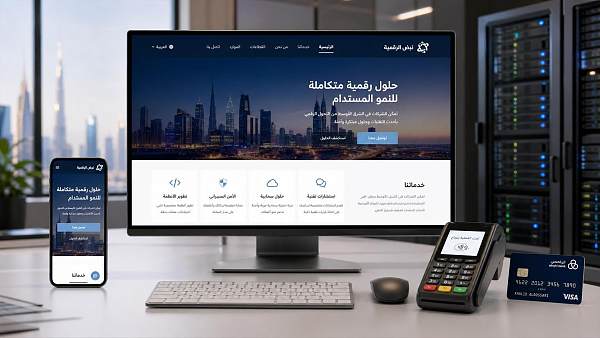
The challenge in choosing a website building platform for the Middle East lies not in "whether it can be launched," but in "whether it can stably run business operations after launch." Many systems support multiple languages, but may not be truly suitable for the Arabic environment. Page orientation, font display, form entry, search sorting, and mobile reading habits all affect the user experience.
More importantly, Middle Eastern users are highly sensitive to local payments, mobile access speeds, and trust levels. If a website loads slowly, has inconvenient payment processes, or suffers from unnatural language, even if traffic comes in, it's unlikely to convert into effective conversions. This is why Middle Eastern website building platforms cannot be judged solely by general foreign trade website building logic.
Arabic adaptation is not just about translating content into Arabic.
Arabic language compatibility is the first hurdle in evaluating a Middle Eastern website building platform. True compatibility includes at least three layers: interface presentation, content structure, and search engine friendliness.
Interface-level adaptation
Arabic is written from right to left, so navigation, button arrangement, and text/image order must be adjusted accordingly. If the system is simply a mirrored page, common problems will include incorrect carousel direction, misaligned form layout, reversed icon semantics, and misaligned card information on mobile devices.
Content-level adaptation
Arabic content cannot rely solely on machine translation. Product names, industry terminology, payment instructions, and after-sales terms are prone to misunderstandings without localization. This is especially true for B2B inquiry pages and e-commerce checkout pages, where any semantic ambiguity can negatively impact submission rates.
Search-level adaptation
For a Middle Eastern website building platform to also prioritize SEO, it needs to support independent language paths, Arabic title and description configuration, automatic sitemap generation, structured data, and static page optimization. Otherwise, even if a page is indexed, it will be difficult to achieve a stable ranking.
Payment integration determines whether a website can truly form a closed-loop transaction system.
In the Middle Eastern market, payment capability is not an add-on to e-commerce projects, but a core function. Technical evaluation should not only focus on whether the system supports international credit cards, but also on the maturity of local payment channels, currency settlement, risk control rules, and refund processes.
Many platforms offer standard interfaces, but when actually launching them, they often encounter problems such as complex qualification verification, incomplete interface documentation, and difficulties in reconciling bills. For cross-border websites, frequent payment failures not only result in lost orders but also directly impact advertising efficiency and brand trust.
If the business objective is not just website building, but also to generate sales through advertising and social media traffic, then the synergy between the payment system and the marketing system must also be considered. Conversion tracking, remarketing feedback, and order attribution will all impact subsequent growth efficiency.
Server deployment and maintenance costs are often underestimated.
When selecting a website building platform, many projects tend to focus their budget on the front-end pages and feature list, neglecting the ongoing costs of servers, CDN, security strategies, and upgrades and maintenance. In reality, long-term costs often determine whether a platform is worth choosing.
From a deployment perspective, the Middle Eastern market has high requirements for access stability. If users are mainly distributed in the Gulf region, whether the platform supports local acceleration, global node scheduling, and image resource compression will directly affect the first-screen speed. Even a one-second delay in page loading will increase bounce rate and wasted advertising.
From an operations and maintenance perspective, several details need to be considered: whether it supports automatic backup, hierarchical access control, vulnerability patching, log monitoring, plugin compatibility, and unified management of multi-language content. Open-source systems offer initial flexibility, but patching, compatibility, and manual maintenance costs may continue to increase later. SaaS platforms offer stronger standardization in the early stages, making them suitable for scenarios that prioritize deployment efficiency and multi-site management.
From website to marketing, integrated capabilities are closer to real business needs.
If a Middle Eastern website building platform only solves the "website building" problem, its value is actually limited. Real-world business needs a closed loop between the website, content, search, advertising, and data analytics.
The integrated platform approach, exemplified by YiYingBao, goes beyond simply selling templates. It integrates intelligent website building, SEO optimization, advertising, and multilingual operations into a single system. This approach eliminates the need for the technical team to repeatedly integrate data across multiple systems, and allows the marketing team to more quickly validate page performance and campaign results.
E-Creation has long served overseas markets, covering multiple regions including the Middle East. It has developed its own cloud-based intelligent website building system, cross-border e-commerce system, and AI+SEO/GEO capabilities, making it suitable for projects that need to balance website building efficiency, search engine indexing, and subsequent promotion. For overseas businesses looking to reduce cross-team collaboration costs, this type of solution is usually easier to implement stably.
The criteria for judgment should also differ depending on the business scenario.
Even within the same Middle Eastern website building platform, B2B official websites, cross-border e-commerce sites, and advertising landing pages have different priorities. Using the same evaluation criteria can easily lead to resource misallocation.
- B2B inquiry-based websites place greater emphasis on multilingual content management, form stability, page loading speed, and basic SEO capabilities.
- B2C e-commerce sites place greater emphasis on payment integration, inventory synchronization, order processing, promotional rules, and mobile shopping experience.
- For advertising landing pages: greater emphasis is placed on page creation efficiency, conversion tracking, A/B testing, and the ability to quickly replicate pages.
- Brand website scenario: Greater emphasis is placed on visual consistency, accuracy of Arabic expression, and building brand trust.
In other words, defining business objectives first, and then evaluating Middle Eastern website building platforms, will lead to a more accurate assessment. A platform suitable for brand display may not be suitable for a closed-loop transaction system; a platform with strong payment capabilities may not be suitable for long-term SEO growth.
During the implementation evaluation, it is recommended to ask more specific questions.
To avoid solutions looking too similar, it's best to address these issues upfront during the evaluation process. Instead of asking "Does it support Arabic?", directly confirm whether it supports right-to-left layout, Arabic search page, Arabic form validation, and independent language URLs.
Instead of asking "Does it support payment?", it's better to confirm existing Middle Eastern payment integration cases, average launch time, failed order handling methods, and whether reconciliation and refund processes are standardized.
Instead of just asking about deployment costs, it's better to break down the costs into the first year's fees, subsequent year's renewal fees, feature expansion costs, content maintenance costs, and cross-team collaboration costs. This is the only way to determine whether a Middle Eastern website building system platform is truly "cheap" or just "cheap upfront."
The key to selection is not that the more features the better.
Ultimately, choosing a website building platform for the Middle East boils down to one principle: the system's capabilities must match the target market, business model, and team resources. A platform that stably supports Arabic, local payments, rapid deployment, and subsequent marketing integration is usually more valuable than a solution with many single features but difficult maintenance.
In practice, you can first create three lists: required Arabic language skills, necessary payment methods, and maintenance and promotion needs for the next 12 months. Based on these three criteria, select a Middle Eastern website building platform, and then combine this with a trial environment, historical case studies, and service response speed for cross-evaluation. This will lead to a more stable selection and a closer match to real business results.
Related Articles
 Comparison between Easyyingbao and WordPress: Which is better suited for the long-term operation of foreign trade enterprises?
 How to choose a WhatsApp service provider? Assessing account stability, API capabilities, and compliance risks
 How to choose a GEO generative engine optimization company? Capability boundaries, deliverables, and evaluation criteria

Related Products
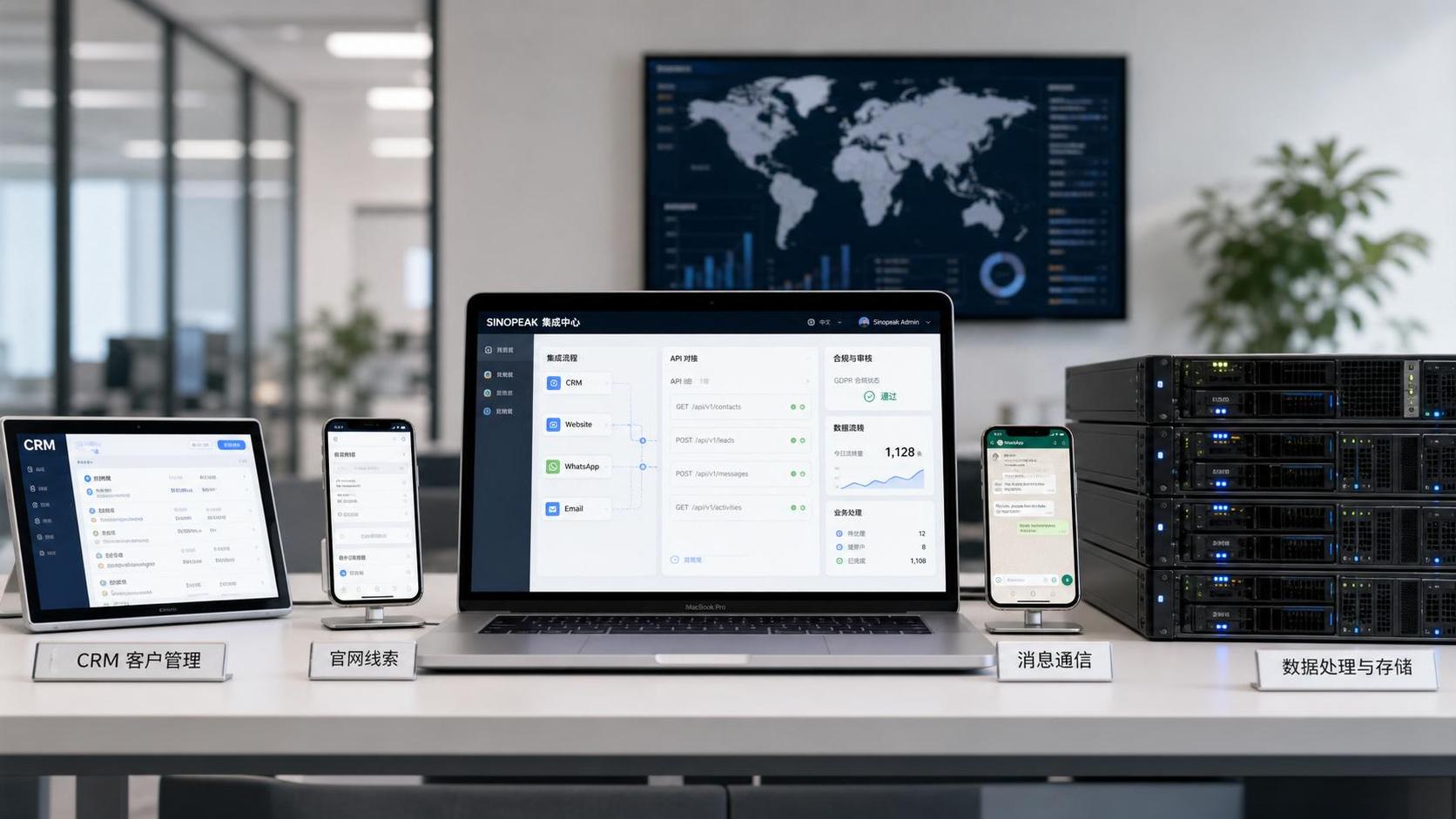
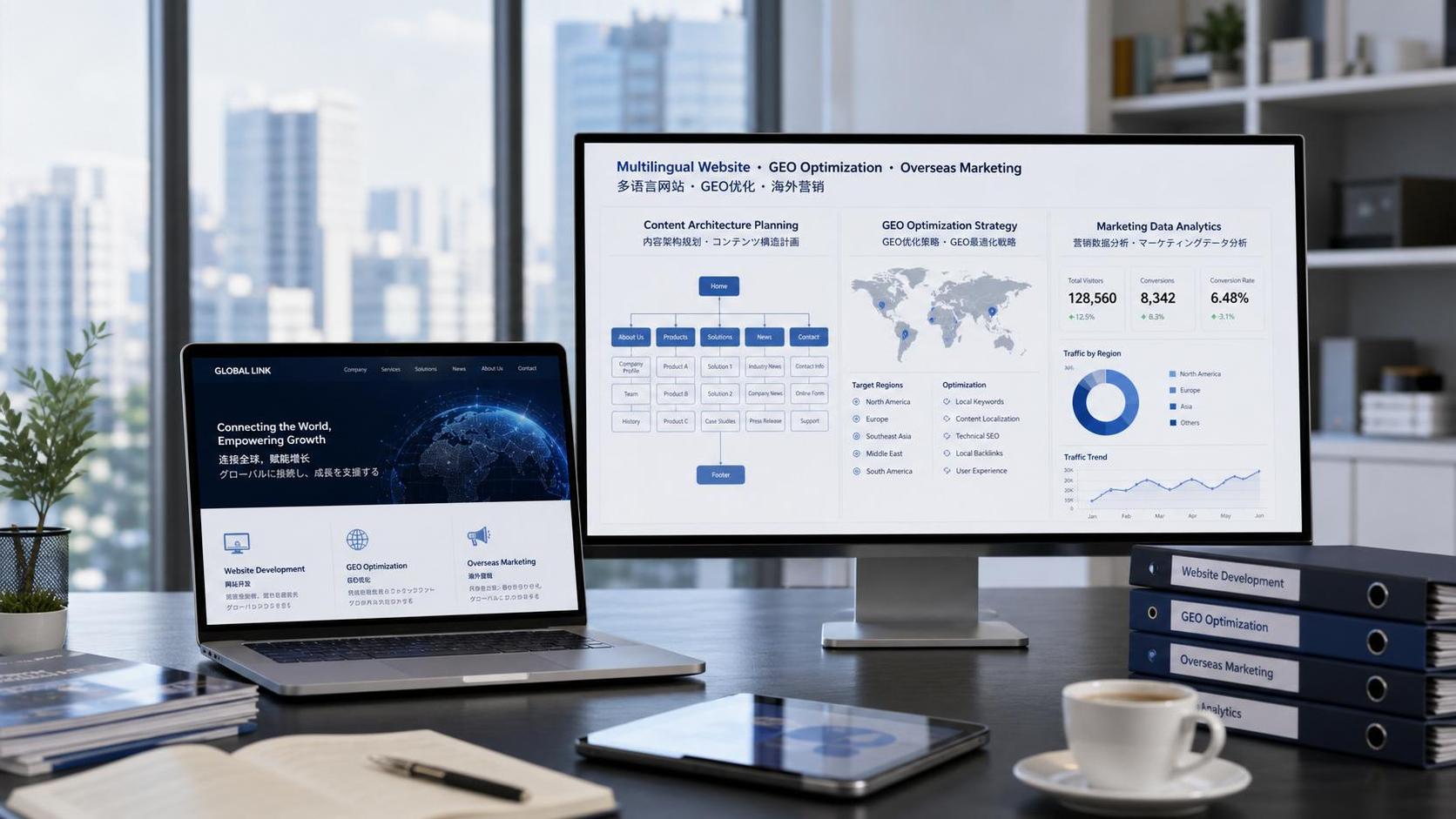
 EasyCamp SaaS Smart Website Marketing SystemE-Yingbao SaaS Smart Website Marketing System: AI-powered, zero-code website building. Rapidly launch multilingual independent e-commerce sites in just 10 minutes. Global server acceleration and AI-driven SEO optimization empower businesses to efficiently connect with global markets. The seamless integration of technology and user-friendly operation makes building e-commerce sites incredibly simple.
 AI+SEM Intelligent Advertising Marketing SystemAI+SEM drives intelligent ad creation, empowering full-funnel precision advertising marketing. The system automatically generates weekly/monthly reports, AI recommends keywords and target countries, monitors core metrics in real-time with intelligent alerts, and enables one-click high-conversion ad solutions to help quickly acquire customers and improve ROI.
 AI+SEO Dual Engine Optimization ServiceEasyWin AI+SEO Dual Engine Optimization System leverages AI-powered keyword mining, content generation, and comprehensive technical optimization to help foreign trade enterprises acquire high-quality organic traffic, significantly improving search rankings and conversion rates.
 AI+SNS Social Media Marketing SystemYingbao AI+SNS Social Media Marketing System - Precision social capture for the social media era. Supports one-click content synchronization across major platforms like Facebook and LinkedIn. AI intelligently rewrites posts for enhanced relevance. 24/7 AI customer service and user profiling analysis empower businesses to efficiently expand into global markets.
 AI+SEO营销解决方案易营宝AI+SEO营销解决方案,通过AI批量写作、智能生成TDK、精准关键词扩词等功能,全面优化网站SEO效果,提升流量与转化率。助力企业构建高效智能网站新生态。
 AI+SEM Advertising Marketing SolutionsAI+SEM Advertising Marketing Solution leverages AI technology to deeply empower SEM ad campaigns. It automatically generates weekly/monthly reports using AI, presenting account data across multiple dimensions for comprehensive insights into campaign performance and trends. The system precisely recommends keywords and target countries, intelligently generates high-conversion ad copy, and enables one-click activation of efficient campaign plans to help businesses rapidly acquire customers. Simultaneously, it monitors core metrics in real time, intelligently identifies abnormal fluctuations, and issues timely alerts to ensure stable, high-return advertising results.
 Domain Name ServicesEasyWin provides professional domain name services, including intelligent queries, one-stop registration, brand protection, and full lifecycle management, helping businesses build a digital brand image.
 EasyOperate B2C Cross-Border E-Commerce Platform & Independent WebsiteEasyStore B2C Cross-border E-commerce Independent Store is an intelligent website building and cross-border e-commerce integrated solution independently developed by EasyStore Information Technology (Beijing) Co., Ltd. The system is specially designed for small and medium-sized as well as large export enterprises, integrating 'website building, operation, marketing, advertising, and conversion' into one, helping enterprises quickly establish cross-border e-commerce independent stores to achieve brand globalization and global sales growth.
The platform supports multiple languages, multiple currencies, and multi-channel marketing, with built-in AI intelligent translation and SEO optimization systems, suitable for mainstream markets such as Southeast Asia, Europe and America, Latin America, and the Middle East, assisting Chinese manufacturing enterprises in efficiently deploying international e-commerce strategies. SSL证书易营宝提供专业SSL安全证书服务,包括单域名和泛域名证书,确保网站数据传输加密、身份验证和完整性保护,助力企业建立安全可信的在线业务环境。









