









- China-Morocco zero-tariff access, a breakthrough in the cost of Moroccan goods exports to ChinaJun 11, 2026View details
- What signal should be released for the suspension of exports to JapanJun 10, 2026View details
- China's May LNG imports rebounded, with increased volumes from Russia and Canada filling the Middle East supply gapJun 10, 2026View details
- Will GEO change its SEO strategy?Jun 04, 2026View details
- What types of businesses are end-to-end solutions suitable for?Jun 03, 2026View details
- 2026 Global Growth Channel TrendsJun 02, 2026View details
What’s the difference between a cross-border e-commerce independent site and a marketplace store? Which overseas expansion stage is it suitable for?
Cross-border e-commerce independent websites and platform stores are not mutually exclusive; rather, they are channel choices a business makes at different stages of going global. For business evaluators, the key is not "which one is more popular," but which model better fits the current customer acquisition efficiency, brand goals, budget structure, and organizational capabilities.
If a company is still in the trial stage, a platform store is usually easier to get started with; if it has already entered the branding and long-term operation stage, the value of a cross-border e-commerce independent website will become increasingly apparent. The truly efficient path is often not an either-or choice, but a combined configuration based on the stage.
To sum up: independent websites and platform stores are suited to different business stages
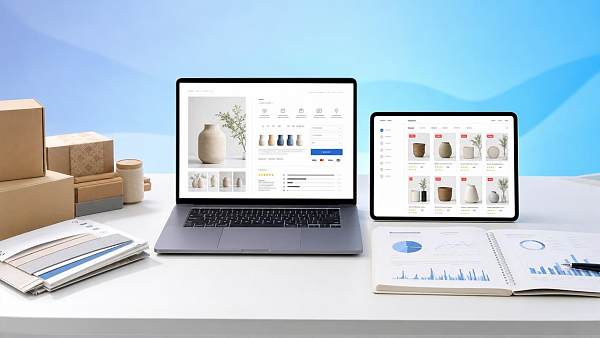
When evaluating overseas expansion models, many companies tend to regard independent websites and platform stores as direct competitors. In fact, their underlying logic is different: platforms provide existing traffic and rule-based systems, while independent websites provide brand assets and operational autonomy.
For business evaluators, the focus should not stop at "is the website building cost high" or "is the platform traffic large," but rather on whether the company wants short-term orders or to build a sustainable overseas operation base.
If a company currently lacks a stable product model, has average supply chain coordination, and the team does not yet have mature overseas marketing capabilities, then a platform store is more suitable for quickly validating the market. Conversely, if the company already has stable products, clear positioning, and profit requirements, an independent website is usually worth the investment.
What are the advantages of a platform store: suitable for quickly acquiring orders and market feedback
The biggest advantage of a platform store is its mature traffic entry. Whether it is Amazon, eBay, or other regional platforms, users already have clear purchase intent, and sellers can leverage the platform's search, recommendation, and promotion mechanisms to reach consumers faster.
This means that at the startup stage, companies do not necessarily need to first solve the problem of "where traffic comes from." For teams with limited budgets who want to obtain order samples and user feedback as quickly as possible, the trial-and-error cost of a platform store is usually lower, and the launch speed is faster.
In addition, platform rules, payments, logistics, and review mechanisms are relatively well developed, helping companies quickly establish a basic transaction loop. For companies that have not yet formed a complete overseas operating system, this standardized environment can indeed reduce early-stage complexity.
However, the advantages of a platform also come with limitations. What companies obtain is platform traffic, not user assets that truly belong to them; once rules change, commissions rise, or advertising costs increase, profit margins and operational stability will be directly affected.
The core value of a cross-border e-commerce independent website: not "one more website," but an owned growth asset
Many people underestimate cross-border e-commerce independent websites because they only understand them as an online display page. In fact, the real significance of an independent website is that a company begins to own its own traffic pool, content base, customer data, and brand expression capability.
In a platform model, customers usually remember the platform first, then the product; in an independent website model, a company has the opportunity to let customers remember the brand directly. For companies that hope to move away from price competition, increase repeat purchase rates, and build premium pricing power, this is extremely important.
An independent website also means greater operational freedom. Page structure, marketing campaigns, membership systems, retargeting strategies, SEO content layout, and multilingual deployment can all be independently designed according to the target market and product strategy, without being completely constrained by platform templates.
For example, in industries such as industrial manufacturing, environmentally friendly materials, and packaging solutions, companies often need more than just selling products; they need to explain technology, present case studies, and build trust. In this case, a website with a clear structure and layered content is often more persuasive than a single product page.
A website positioned for solutions in sectors such as paper making, packaging, environmental protection is especially suitable for carrying brand stories, technical strength, scenario-based explanations, and inquiry conversion through an independent website, rather than relying solely on platform shelf logic.
The four differences business evaluators should pay attention to: traffic, cost, brand, risk
The first is the difference in traffic sources. A platform store is more like "renting a commercial booth": traffic efficiency is high, but it is highly dependent on platform distribution; a cross-border e-commerce independent website is more like "opening your own store": in the early stage you must attract traffic yourself, but in the long run it can accumulate search rankings, private-domain users, and brand recognition.
The second is the difference in cost structure. A platform store usually requires relatively low upfront investment, but it continuously bears commissions, ad bidding, promotional activity, and rule-based costs; an independent website requires website building and marketing investment in the early stage, but long-term marginal costs are more controllable, making it especially suitable for continuous operations.
The third is the difference in brand capability. Platforms focus more on transaction efficiency, while independent websites focus more on brand expression. If a company sells standardized products, platforms are more likely to generate volume; if a company sells differentiated products, customized services, or brand value, an independent website can better amplify its advantages.
The fourth is the difference in risk structure. The risk of a platform model lies in rule dependence: store ratings, account security, and category policies may all affect operational stability; the risk of an independent website lies in the need for stronger operational capabilities, including content development, SEO optimization, ad placement, and conversion design.
At what stage is a company better suited to prioritize a platform store
The first type is companies that are just starting to go global and still have insufficient awareness of overseas markets. Such companies need to quickly verify whether the product is accepted, whether the pricing is reasonable, and whether the target market is clear, and the platform can help them see order feedback faster.
The second type is sellers with fast supply chain response but insufficient brand-building capability for the time being. The platform is naturally suitable for growth driven by commodity efficiency, especially in businesses with rich SKUs, fast new product launches, and strong emphasis on best-seller logic, where the platform can more easily bring short-term advantages.
The third type is teams that value short-term returns more. If the company's management wants to see sales results quickly, a platform store usually makes it easier to form a clear data loop, which is convenient for phased evaluation at the business and finance levels.
That said, this does not mean such companies do not need an independent website. Even if the platform is the focus in the short term, it is still recommended to build a basic official website or brand website in parallel, so as to prepare in advance for future ad placements, brand carrying, and customer trust building.
At what stage is a company better suited to focus on a cross-border e-commerce independent website
When a company already has a stable supply and a certain customer base, a cross-border e-commerce independent website should usually enter the stage of key investment. At this point, the company is no longer only pursuing "orders," but is more concerned with profit quality, customer attribution, and the certainty of long-term growth.
If a company has already found that platform traffic costs continue to rise, homogeneous competition is intense, and price pressure is increasing, then an independent website is an important way to break through the bottleneck. It can help the company shift competition from "price comparison" to "brand comparison, content comparison, and experience comparison".
This is especially true for B2B foreign trade companies, factory-based enterprises, and brand global expansion companies. Before making formal inquiries or purchases, many overseas customers will first search for the company website, product materials, case studies, and brand credibility, and an independent website is often a key touchpoint before a deal is made.
This is also why more and more companies are beginning to value AI website building, multilingual deployment, SEO optimization, and landing page development. An independent website that can be searched, can clearly convey value, and can complete conversions is no longer just a display tool; it is an infrastructure for growth.
The most realistic choice is not either-or, but "platform customer acquisition + independent website accumulation"
From actual operations, mature companies rarely bet on a single channel. A more common and more stable approach is to use platforms to carry transaction efficiency, while using a cross-border e-commerce independent website to accumulate brand and customer assets, forming a growth structure that combines short-term and long-term benefits.
For example, platforms can handle new product testing, order acquisition, and market feedback functions; independent websites can handle brand display, content marketing, search traffic, ad conversion, and secondary conversion functions. Combining the two can both reduce the risk of relying on a single channel and improve overall operational resilience.
If the industry a company is in has high requirements for brand trust, the importance of an independent website will further increase. In particular, for businesses involving manufacturing capabilities, environmental standards, and solution delivery, a website is needed to fully showcase the company's strength and service logic.
At the website presentation level, features such as single-column content sections, fully responsive architecture, high-definition industrial and ecological scene visuals, and online appointment forms can significantly improve business visitors' comprehension efficiency and inquiry willingness. This is also the practical value of a high-quality independent website.
How to determine whether you should build an independent website now
When evaluating business needs, you can first look at four questions. First, whether the company already has a clear target market and core products; second, whether it wants to reduce dependence on platform rules and ad bidding; third, whether it needs to accumulate customer data and brand assets; and fourth, whether it has the capability for continuous operations.
If two or more of these four questions are answered "yes," then an independent website should no longer be seen as an optional supplement, but rather as a core project in the overseas expansion layout. Because it is directly related to the company's future growth initiative.
Of course, an independent website is not something that naturally generates orders once it is built. It is more like a systematic project that requires coordination among website building, content, SEO, advertising, social media, and data optimization. That is precisely why, when choosing a service provider, companies should pay more attention to whether they have integrated capabilities in "website building + marketing."
For companies that hope to keep acquiring customers overseas, simply having a beautiful official website is far from enough. What matters more is making the website indexable, promotable, and convertible, and continuously optimizing it as the business grows; that is the value that business investment should truly evaluate.
Conclusion: make choices by stage and plan with the long term in mind
A platform store is suitable for rapid launch, while a cross-border e-commerce independent website is suitable for long-term operations; a platform solves "how to get a deal first," while an independent website solves "how to achieve sustainable growth." The difference between the two is not only the channel form, but also the company's mindset toward overseas expansion.
For business evaluators, the most important thing is not blindly chasing trends, but making a rational configuration based on the company's current stage, budget structure, brand goals, and organizational capabilities. In the short term, focus on efficiency; in the long term, focus on assets; this is often the more stable overseas expansion path.
If a company has already moved from "trial expansion" to "systematic growth," then deploying an independent website and overseas marketing system as early as possible will be more conducive to building global business capabilities that are replicable, accumulable, and scalable. This is also an important watershed in future cross-border competition.
Related Articles
 B2C Cross-border Marketplace Platform: Build Your Own Site or SaaS? The Selection Criteria Suitable for Small and Medium-sized Enterprises
 How to choose a B2C cross-border e-commerce source code system? First look at the architecture, language, and difficulty of secondary development
 SaaS website data security? How should permissions, backups, and isolation mechanisms be assessed?

Related Products
 EasyCamp SaaS Smart Website Marketing SystemE-Yingbao SaaS Smart Website Marketing System: AI-powered, zero-code website building. Rapidly launch multilingual independent e-commerce sites in just 10 minutes. Global server acceleration and AI-driven SEO optimization empower businesses to efficiently connect with global markets. The seamless integration of technology and user-friendly operation makes building e-commerce sites incredibly simple.
 AI+SEM Intelligent Advertising Marketing SystemAI+SEM drives intelligent ad creation, empowering full-funnel precision advertising marketing. The system automatically generates weekly/monthly reports, AI recommends keywords and target countries, monitors core metrics in real-time with intelligent alerts, and enables one-click high-conversion ad solutions to help quickly acquire customers and improve ROI.
 AI+SEO Dual Engine Optimization ServiceEasyWin AI+SEO Dual Engine Optimization System leverages AI-powered keyword mining, content generation, and comprehensive technical optimization to help foreign trade enterprises acquire high-quality organic traffic, significantly improving search rankings and conversion rates.
 AI+SNS Social Media Marketing SystemYingbao AI+SNS Social Media Marketing System - Precision social capture for the social media era. Supports one-click content synchronization across major platforms like Facebook and LinkedIn. AI intelligently rewrites posts for enhanced relevance. 24/7 AI customer service and user profiling analysis empower businesses to efficiently expand into global markets.
 AI+SEO营销解决方案易营宝AI+SEO营销解决方案,通过AI批量写作、智能生成TDK、精准关键词扩词等功能,全面优化网站SEO效果,提升流量与转化率。助力企业构建高效智能网站新生态。
 AI+SEM Advertising Marketing SolutionsAI+SEM Advertising Marketing Solution leverages AI technology to deeply empower SEM ad campaigns. It automatically generates weekly/monthly reports using AI, presenting account data across multiple dimensions for comprehensive insights into campaign performance and trends. The system precisely recommends keywords and target countries, intelligently generates high-conversion ad copy, and enables one-click activation of efficient campaign plans to help businesses rapidly acquire customers. Simultaneously, it monitors core metrics in real time, intelligently identifies abnormal fluctuations, and issues timely alerts to ensure stable, high-return advertising results.
 Domain Name ServicesEasyWin provides professional domain name services, including intelligent queries, one-stop registration, brand protection, and full lifecycle management, helping businesses build a digital brand image.
 EasyOperate B2C Cross-Border E-Commerce Platform & Independent WebsiteEasyStore B2C Cross-border E-commerce Independent Store is an intelligent website building and cross-border e-commerce integrated solution independently developed by EasyStore Information Technology (Beijing) Co., Ltd. The system is specially designed for small and medium-sized as well as large export enterprises, integrating 'website building, operation, marketing, advertising, and conversion' into one, helping enterprises quickly establish cross-border e-commerce independent stores to achieve brand globalization and global sales growth.
The platform supports multiple languages, multiple currencies, and multi-channel marketing, with built-in AI intelligent translation and SEO optimization systems, suitable for mainstream markets such as Southeast Asia, Europe and America, Latin America, and the Middle East, assisting Chinese manufacturing enterprises in efficiently deploying international e-commerce strategies. SSL证书易营宝提供专业SSL安全证书服务,包括单域名和泛域名证书,确保网站数据传输加密、身份验证和完整性保护,助力企业建立安全可信的在线业务环境。









