









- What stages does the cross-border services ecosystem include? How do website building, promotion, payment, and compliance work togetherJun 22, 2026View details
- How will email marketing costs change in 2026Jun 22, 2026View details
- The China-US tariff arrangement has reached a preliminary consensus, and the trade association will be establishedJun 15, 2026View details
- Should overseas brand marketing start with ads or contentJun 21, 2026View details
- What determines B2C cross-border e-commerce website development costs? A breakdown of features, interfaces, and deployment methodsJun 17, 2026View details
- China-Morocco zero-tariff access, a breakthrough in the cost of Moroccan goods exports to ChinaJun 11, 2026View details
What’s the difference between SaaS website building and custom development? Budget, launch speed, and scalability compared
SaaS website building and custom development are often placed on the same comparison chart, but the problems they solve are not exactly the same. The former emphasizes standardization, fast launch, and continuous iteration, while the latter is better suited to complex processes, deep business integration, and special functional requirements. For website and marketing integration projects, the budget is only the starting point; what truly affects the outcome is often the launch pace, lead generation path, post-launch maintenance pressure, and whether it can support overseas promotion, SEO indexing, and sustained conversion.
First, look at the core difference: it is not about who is better, but who is a better fit
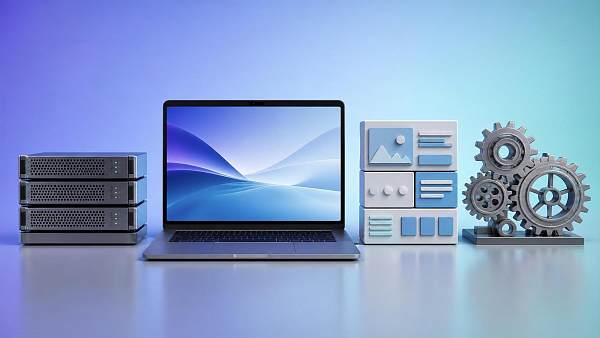
Simply put, SaaS website building is based on mature platform-based website construction. Page modules, backend capabilities, permission management, and deployment environment are usually already in place, and the enterprise mainly completes the content, structure, and marketing configuration.
Custom development, on the other hand, starts from requirements and redesigns the system. It not only covers front-end pages, but may also involve order logic, quotation systems, membership systems, API integration, and internal business processes.
Therefore, the biggest difference between the two is not only the technical route, but also the project goal. If the core goal is to launch quickly, validate the market, and keep promoting continuously, SaaS website building usually has the advantage; if the business rules are complex and standard products are difficult to support, custom development is more suitable.
Budget judgment should not be based only on the initial investment
Many projects only compare development quotes when they are first launched, which easily underestimates the follow-up cost. The cost structure of SaaS website building is usually clearer, including system usage, templates or components, server operations and maintenance, basic security, and version upgrades.
Custom development usually has a higher upfront expenditure because requirement analysis, prototyping, development testing, and delivery acceptance all require separate investment. After launch, maintenance, bug fixes, compatibility, and expansion costs will continue to occur.
If the project is still in the business validation stage, or if overseas advertising needs rapid experimentation, too much technical investment in the early stage may not be necessary. In contrast, using SaaS website building to first complete a landing page, an independent site, or a multilingual official website, and then decide on further expansion based on data, usually offers better financial controllability.
Launch speed directly affects the market window
Website launch timing is not just a project progress issue; it also relates to promotion launch, content indexing, ad delivery, and sales lead return flow. Especially in foreign trade lead generation and brand going global scenarios, one step slower often means missing one round of traffic accumulation.
The advantage of SaaS website building is obvious here. Mature systems already have page editing, multilingual management, form lead capture, basic SEO settings, mobile adaptation, and other capabilities, so projects can usually move into content publishing and marketing testing faster.
Although custom development can highly match requirements, requirement confirmation, rework communication, and testing acceptance all lengthen the cycle. For projects that need to coordinate Google SEO, ad placement, and social media traffic, this time cost should not be ignored.
For integrated platforms like 易营宝 that combine website building and marketing, the value lies not only in “getting the site built,” but in enabling the website to enter a promotable, indexable, and convertible state as quickly as possible. The significance of more than ten years of industry experience and AI-driven systems is also reflected in shortening the path from website creation to customer acquisition.
Scalability should be viewed separately: feature expansion and business expansion are not the same thing
When many people mention scalability, they automatically assume custom development is stronger. That judgment is not complete. Custom development has more freedom in “unique feature expansion,” but SaaS website building is often more efficient in “business replication expansion.”
If the future plan includes adding multilingual sites, industry landing pages, regional sub-sites, or marketing campaign pages, SaaS website building is more suitable for rapid replication and unified management. Template rules, content structure, and SEO settings can all be reused, which benefits standardized operations.
If the future requires connecting ERP, CRM, quotation systems, dealer systems, or complex member centers, custom development is more likely to support deep data flows and business logic.
In other words, when evaluating scalability, first ask what the expansion actually is: more pages, more markets, more advertising actions, or more systems, more processes, and more organizational collaboration.
A commonly overlooked basic item
No matter which route is chosen, domain strategy should not be left until the end. In brand going global scenarios, the main domain, common suffixes, and spelling variants are often related to brand protection, search recognition, and the stability of subsequent promotion.
If inquiry, registration, DNS resolution, and renewal reminders need to be handled in parallel during the website-building stage, domain services and similar supporting capabilities will save more time. In particular, support for automatic resolution, status monitoring, and multi-cloud provider access can reduce launch delays caused by manual configuration.
Which business scenarios are more suitable for SaaS website building
From a practical application perspective, the following scenarios are more likely to benefit from SaaS website building:
- Need to quickly launch a corporate official website, multilingual site, or overseas independent site;
- Website goals are closely aligned with SEO, ad placement, and social media lead generation;
- Want to validate inquiry conversion first before deciding whether to develop further in depth;
- Internal technical resources are limited, and long-term system operations and maintenance pressure is not desired;
- Need to push multiple markets at the same time, where site replication efficiency is critical.
This is also why SaaS website building is becoming increasingly common in cross-border e-commerce, manufacturing foreign trade, and brand going global fields. A website is no longer just a display window, but part of a lead generation system.
When is custom development worth considering
If a project has the following characteristics, custom development is more justifiable:
- The core business process is highly specialized, and standard systems cannot support it;
- Complex permission settings, approval flows, or deep data interfaces are required;
- The website itself is a business system, not just a marketing front end;
- The business model has already been validated, and there is willingness to invest in long-term dedicated capabilities;
- An internal stable technical team is available and can support continuous maintenance.
Such projects are not suitable for pursuing speed alone; they require more attention to system boundaries, secondary development capability, and the technical debt over the next three to five years.
When making a decision, it is better to ask more specific questions
When evaluating SaaS website building versus custom development, instead of abstractly discussing “which is more advanced,” it is better to break the judgment down into several concrete questions.
- After the website goes live, is the primary goal display, lead generation, or transaction;
- Within the next year, will the site frequently expand languages, expand markets, and add pages;
- Is SEO-friendly structure, ad landing pages, and data tracking collaboration needed;
- How much of the requirement must be custom-developed, and how much is merely a matter of preference;
- Who will be responsible for follow-up maintenance, and whether version upgrades and system restructuring costs are acceptable.
If these questions are answered clearly, the solution choice usually will not be too difficult. In many cases, the problem is not choosing the wrong tool, but mixing marketing requirements, content strategy, and system requirements together from the very beginning.
A more stable path is often to run growth first, then decide on deeper development
For website projects that emphasize global customer acquisition, a more realistic approach is to first establish a website foundation that can go live, can be promoted, and can be optimized, and then decide the next step based on traffic data, lead quality, and content performance.
SaaS website building is well suited to take on this “run first” task, especially in multilingual official websites, B2B lead generation sites, brand independent sites, and ad landing page scenarios, where technical preparation can be converted into market action more quickly.
If later evidence shows that the business logic truly exceeds platform boundaries, then entering the custom development stage will make the decision basis more sufficient and the investment more directional. At the same time, locking in the domain, content structure, basic SEO items, and marketing data touchpoints first is often more efficient than pursuing “full customization” from the start.
From this perspective, SaaS website building and custom development are not mutually exclusive, but two tools for enterprises at different development stages. Clarify the business objectives first, then verify item by item against budget, launch speed, and expansion direction; this is often a more accurate answer than a simple price comparison.
Related Articles
Related Products
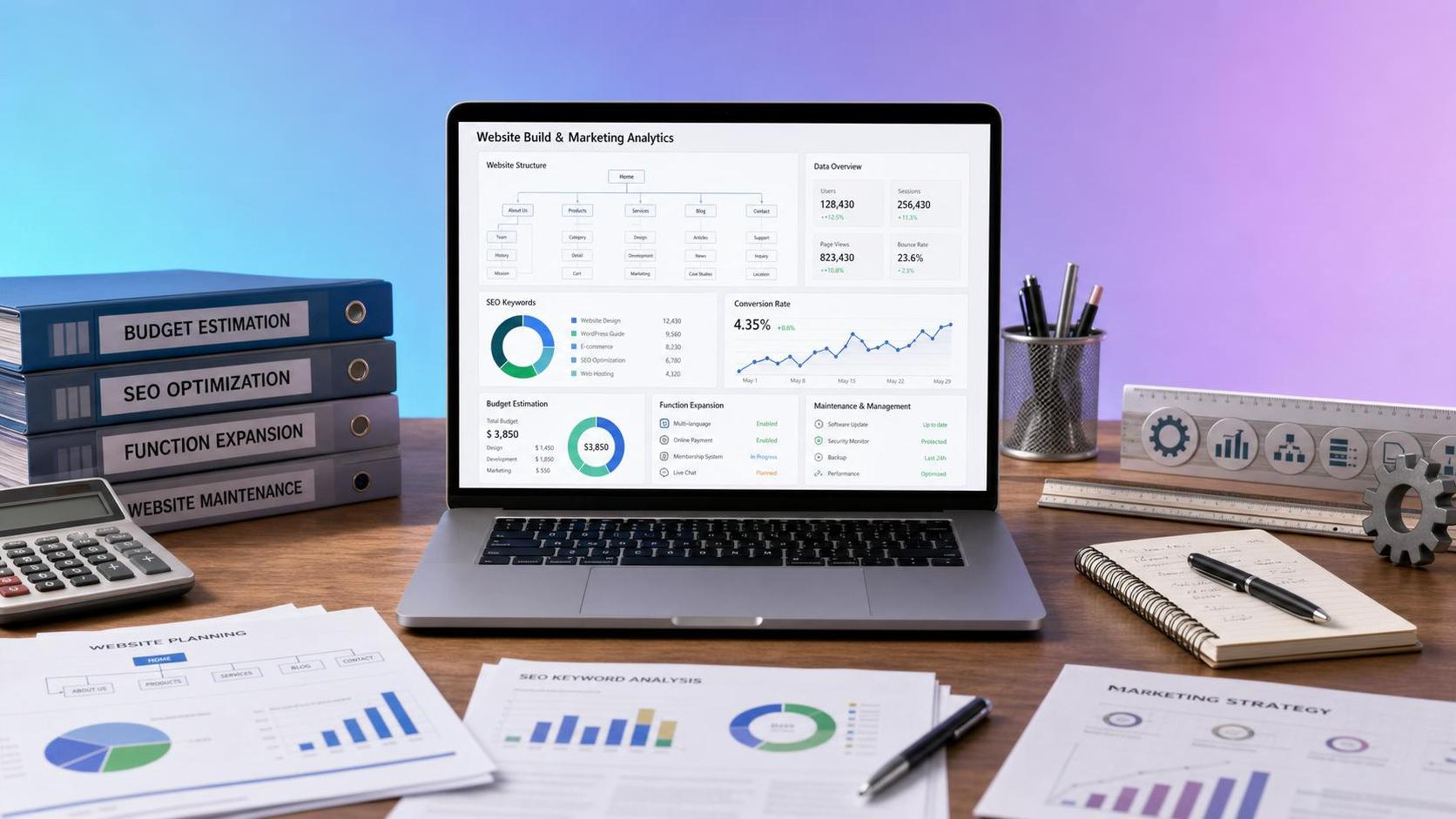
 EasyCamp SaaS Smart Website Marketing SystemE-Yingbao SaaS Smart Website Marketing System: AI-powered, zero-code website building. Rapidly launch multilingual independent e-commerce sites in just 10 minutes. Global server acceleration and AI-driven SEO optimization empower businesses to efficiently connect with global markets. The seamless integration of technology and user-friendly operation makes building e-commerce sites incredibly simple.
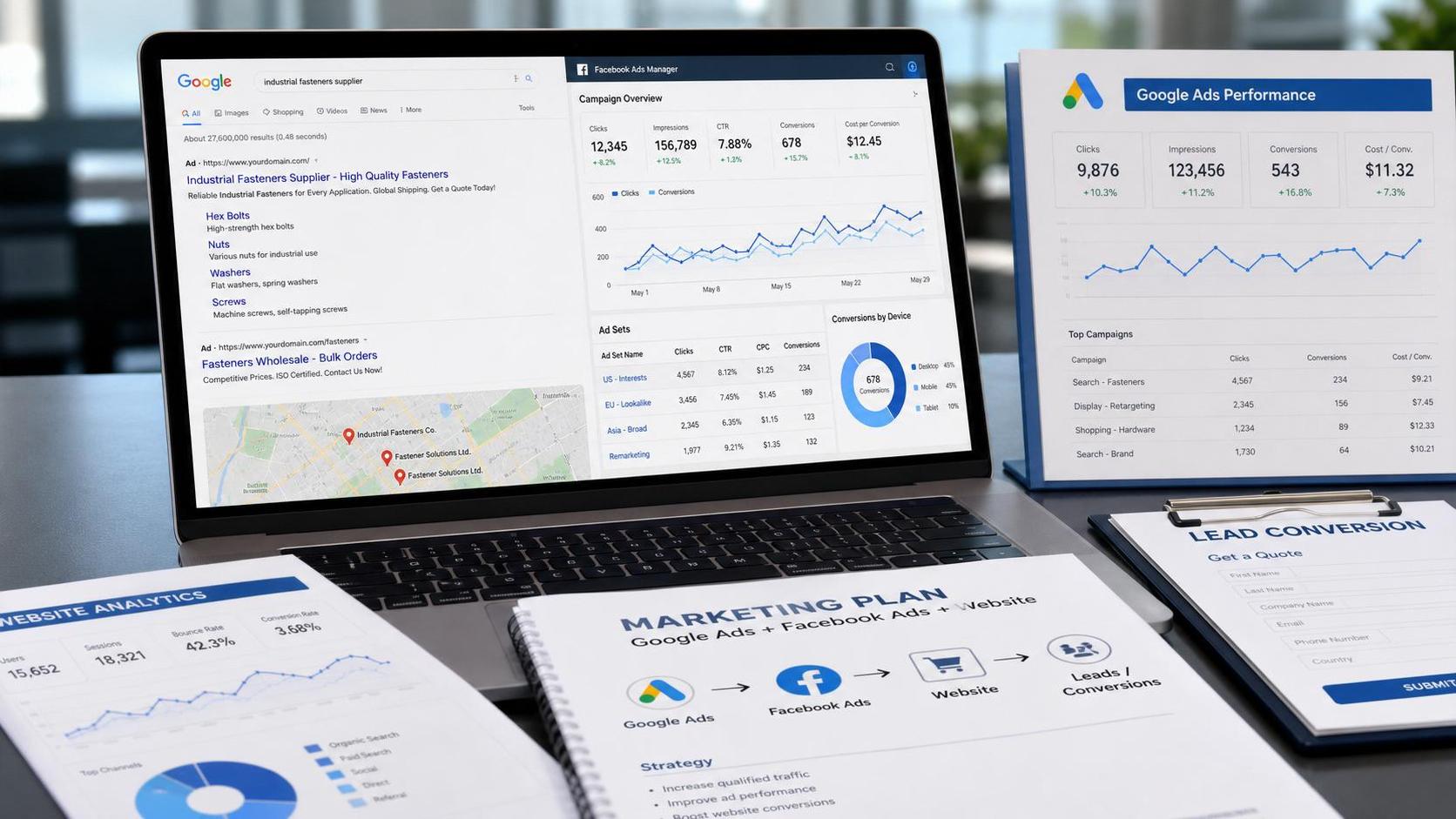
 AI+SEM Intelligent Advertising Marketing SystemAI+SEM drives intelligent ad creation, empowering full-funnel precision advertising marketing. The system automatically generates weekly/monthly reports, AI recommends keywords and target countries, monitors core metrics in real-time with intelligent alerts, and enables one-click high-conversion ad solutions to help quickly acquire customers and improve ROI.
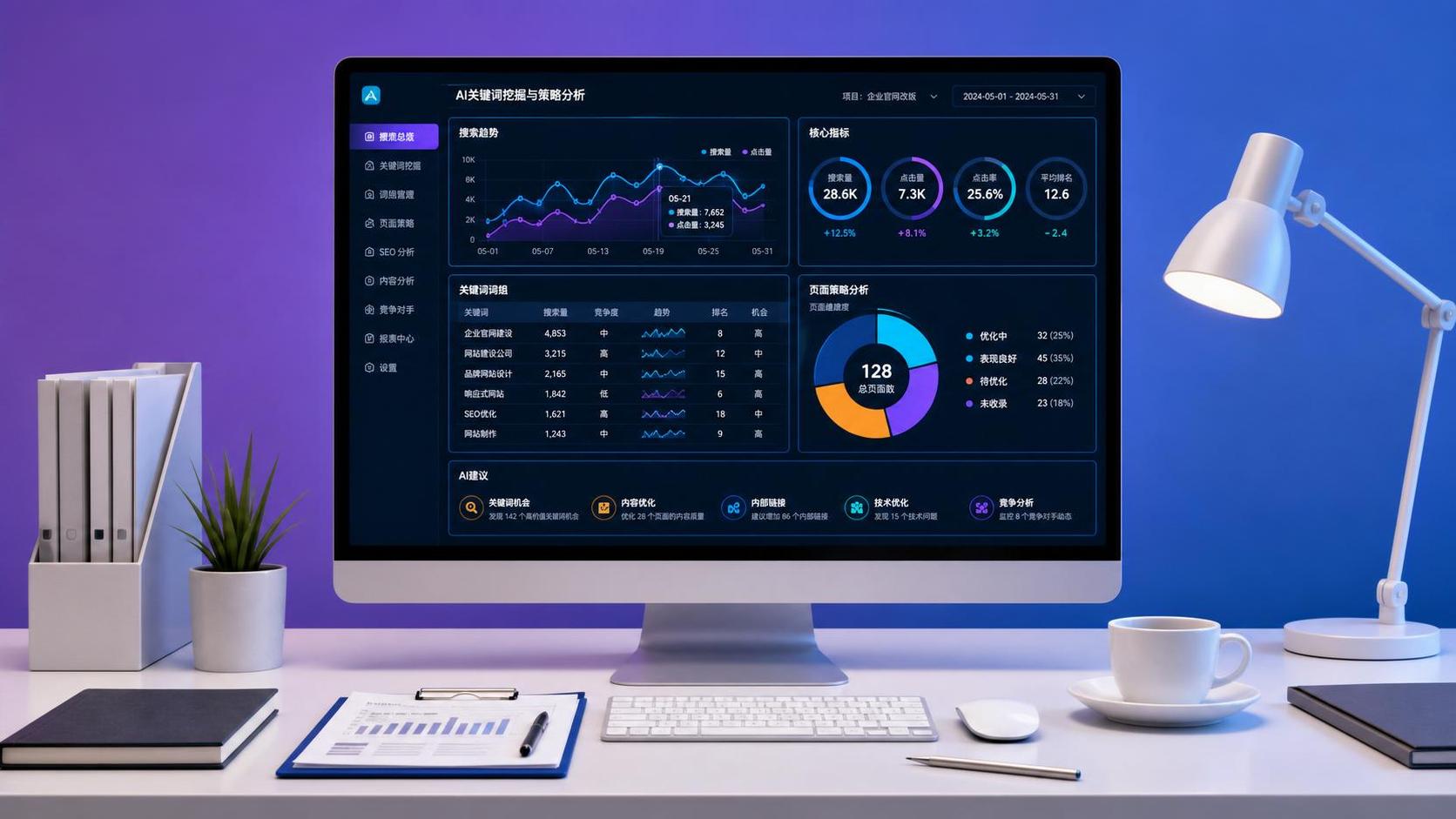
 AI+SEO Dual Engine Optimization ServiceEasyWin AI+SEO Dual Engine Optimization System leverages AI-powered keyword mining, content generation, and comprehensive technical optimization to help foreign trade enterprises acquire high-quality organic traffic, significantly improving search rankings and conversion rates.
 AI+SNS Social Media Marketing SystemYingbao AI+SNS Social Media Marketing System - Precision social capture for the social media era. Supports one-click content synchronization across major platforms like Facebook and LinkedIn. AI intelligently rewrites posts for enhanced relevance. 24/7 AI customer service and user profiling analysis empower businesses to efficiently expand into global markets.
 AI+SEO营销解决方案易营宝AI+SEO营销解决方案,通过AI批量写作、智能生成TDK、精准关键词扩词等功能,全面优化网站SEO效果,提升流量与转化率。助力企业构建高效智能网站新生态。
 AI+SEM Advertising Marketing SolutionsAI+SEM Advertising Marketing Solution leverages AI technology to deeply empower SEM ad campaigns. It automatically generates weekly/monthly reports using AI, presenting account data across multiple dimensions for comprehensive insights into campaign performance and trends. The system precisely recommends keywords and target countries, intelligently generates high-conversion ad copy, and enables one-click activation of efficient campaign plans to help businesses rapidly acquire customers. Simultaneously, it monitors core metrics in real time, intelligently identifies abnormal fluctuations, and issues timely alerts to ensure stable, high-return advertising results.
 Domain Name ServicesEasyWin provides professional domain name services, including intelligent queries, one-stop registration, brand protection, and full lifecycle management, helping businesses build a digital brand image.
 EasyOperate B2C Cross-Border E-Commerce Platform & Independent WebsiteEasyStore B2C Cross-border E-commerce Independent Store is an intelligent website building and cross-border e-commerce integrated solution independently developed by EasyStore Information Technology (Beijing) Co., Ltd. The system is specially designed for small and medium-sized as well as large export enterprises, integrating 'website building, operation, marketing, advertising, and conversion' into one, helping enterprises quickly establish cross-border e-commerce independent stores to achieve brand globalization and global sales growth.
The platform supports multiple languages, multiple currencies, and multi-channel marketing, with built-in AI intelligent translation and SEO optimization systems, suitable for mainstream markets such as Southeast Asia, Europe and America, Latin America, and the Middle East, assisting Chinese manufacturing enterprises in efficiently deploying international e-commerce strategies. SSL证书易营宝提供专业SSL安全证书服务,包括单域名和泛域名证书,确保网站数据传输加密、身份验证和完整性保护,助力企业建立安全可信的在线业务环境。









