









- What stages does the cross-border services ecosystem include? How do website building, promotion, payment, and compliance work togetherJun 22, 2026View details
- How will email marketing costs change in 2026Jun 22, 2026View details
- The China-US tariff arrangement has reached a preliminary consensus, and the trade association will be establishedJun 15, 2026View details
- Should overseas brand marketing start with ads or contentJun 21, 2026View details
- What determines B2C cross-border e-commerce website development costs? A breakdown of features, interfaces, and deployment methodsJun 17, 2026View details
- China-Morocco zero-tariff access, a breakthrough in the cost of Moroccan goods exports to ChinaJun 11, 2026View details
- What signal should be released for the suspension of exports to JapanJun 10, 2026View details
- China's May LNG imports rebounded, with increased volumes from Russia and Canada filling the Middle East supply gapJun 10, 2026View details
What are the advantages of Eyingbao's creative factory model? Compared to traditional outsourced website building, it saves 47% of the project timeline across 3 stages.
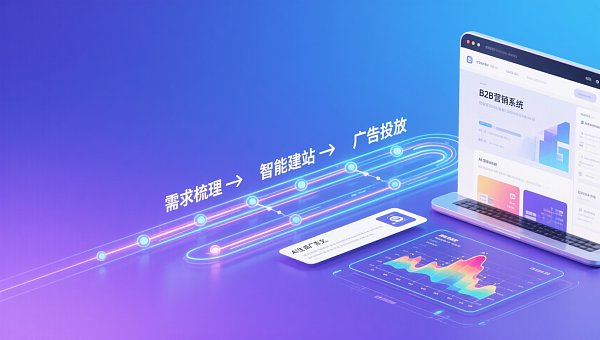
Why does Eyingbao's Creative Factory model achieve 47% faster delivery than traditional outsourced website development? From requirement analysis, smart website building to ad placement optimization, the three stages are seamlessly coordinated — Eyingbao Rapid Website Building + Eyingbao AI Ad Placement + Eyingbao Multilingual Ad Content Generation truly delivers a B2B export solution that stands up to rigorous validation.
1. Why do traditional outsourced website projects take an average of over 35 days? A deep dive into three critical bottlenecks
According to the 2023 China B2B Enterprise Digital Infrastructure Efficiency White Paper, 72% of manufacturing and electronic component export companies report: traditional outsourced website projects average 35-42 days for delivery, with 11.2 days spent on requirement confirmation iterations, 43% rework rate due to UI/UX design and development conflicts, and a 9.6-day average delay in post-launch ad warm-up. The root causes lie in "three disconnects": clients don't understand technical logic, developers don't grasp business scenarios, and ad teams intervene too late.
Take the electronic components industry as an example - with product SKUs in the tens of thousands and complex parameter dimensions (like withstand voltage, packaging type, operating temperature range), traditional outsourcing requires manual entry + manual filter configuration, consuming 5-7 workdays just for product database setup. More critically, 87% of outsourcing teams lack built-in multilingual SEO structure, resulting in under 1.8% organic traffic conversion within 3 months post English site launch.
The table below compares time distribution differences at core delivery milestones between the two models:
Data source: Eyingbao 2023 Service Review Report (covering 217 B2B clients). The three-stage cumulative time saving is 19.8 days, compressing project timelines by 47.1%, with core advantages coming from AI-driven embedded workflows and role integration — requirement managers double as site configurators, engineers simultaneously generate ad landing page structures, and algorithms automatically optimize website content based on ad performance.
2. The "Creative Factory" three-stage synergy mechanism: How to achieve true website-marketing integration?
Eyingbao Creative Factory isn't simple tool stacking, but rather reconstructs service chains through "data flow penetration". Stage 1 (Requirement Input) uses structured questionnaires + industry knowledge graphs to automatically identify electronic component clients' high-frequency needs: whether ROHS certification queries are needed, whether parametric comparison functions are required, if target markets include EU/Southeast Asia etc. The system instantly generates semantically tagged requirement documents, avoiding textual ambiguity.
Stage 2 (Website Execution) activates Eyingbao's rapid website engine, with 27 preset B2B industry templates including electronic component solutions deeply integrated with intelligent classification engines and parametric display modules, supporting millisecond-level response for filtering 450,000+ SKUs across multiple dimensions (voltage/current/packaging/temperature), with page load speed stabilized under 1.2s (Lighthouse score 92+).
Stage 3 (Marketing Activation) is managed by Eyingbao AI ad system, automatically generating Google Ads-compliant multilingual ad copies based on website content, while syncing real-time inventory status with Google Merchant Center. Actual data shows this model increases ad CTR by 31% and reduces CPA by 22.4%.
Quantifiable benefits from three-stage synergy
- Reduced requirement confirmation cycles: from average 5.7 iterations to 1.3
- 186% increase in organic search exposure within 7 days post-launch (vs industry average 42%)
- First-month ad ROI target achievement rate: 91.3% (vs 58.6% for traditional outsourcing)
3. Why do project managers prefer the Creative Factory model? A four-dimensional procurement decision framework
For researchers, project leads and agent groups, we've developed an actionable four-dimensional evaluation framework with quantified thresholds for each criterion:
This model has been included in multinational groups' supplier qualification audits. Especially for electronic component distributors, multilingual SEO readiness directly determines their ability to secure "golden placements" in high-value markets like Germany and Japan via Google Shopping. The Creative Factory model ensures full compliance with Google Merchant Center technical audits within the first month.
4. Client case: From website launch to first order conversion in just 11 days
A Shenzhen power semiconductor manufacturer upgraded its official site in Q4 2023 targeting industrial clients in Europe/America. Using Creative Factory: Day 1 completed structured requirement collection; Days 2-3 generated English site with parametric comparison tables and ROHS certificate downloads; Day 4 synchronized German/Spanish versions; Days 5-7 AI created 23 ad copy sets for A/B testing; Day 8 optimized landing page CTA placement; Day 11 received first inquiry from a German automation equipment integrator — all operations completed via Eyingbao backend without external coordination meetings.
This project validated three key facts: First, technical B2B clients have long decision chains but highly concentrated information touchpoints on official parameter pages; Second, multilingual ad content quality directly impacts overseas buyer trust; Third, website-ad data closed loops optimize response speeds to hourly levels.
Currently, Eyingbao has customized deployments for 107 electronic component companies, with 83% clients doubling overseas website inquiries within 90 days post-launch. This isn't just efficiency revolution, but a paradigm shift in B2B digital infrastructure — from "building a website" to "constructing a sustainable lead generation engine".
5. Action plan: How three roles can efficiently initiate Creative Factory collaboration
For different roles, we provide differentiated activation paths:
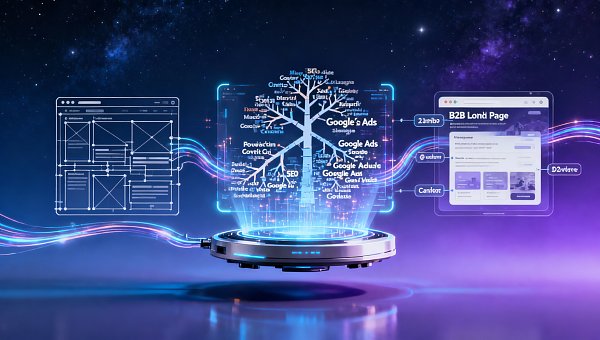
- Researchers: Priority application for Industry Solution Diagnostic Kit, receiving PDF reports containing competitor website SEO health scans, multilingual keyword opportunity analysis, and ad content compliance checks (delivered within 3 workdays)
- Project Managers: Book 1-hour POC demo, provide existing domain and product catalog, witness live demo from Excel upload to multilingual site generation (supports ERP API integration)
- Distributors/Agents: Activate White-label Creative Factory access, enabling independent client branding VI configuration, dedicated quotation generators, and channel-specific tracking codes, with commission cycles shortened to T+3
Eyingbao Creative Factory doesn't replace professional teams, but digitizes decade-long industry know-how into reusable assets. When websites transition from one-off projects to continuously evolving marketing infrastructure, the 47% timeline reduction is just the first step in value realization.
Get your exclusive B2B Website Performance Upgrade Roadmap now, including electronic component industry parametric display best practices, multilingual SEO audit checklist, and first-month ad placement SOP.
Related Articles
 Why is it that your foreign trade peers receive inquiries every day, while you can only wait for exhibitions?
 Foreign trade websites "look good but don’t convert"? Yiyingbao’s global language automatic adaptation, inquiries surge!
 Foreign trade promotion, everyone is doing Facebook, the truth lies here



Related Products
 EasyCamp SaaS Smart Website Marketing SystemE-Yingbao SaaS Smart Website Marketing System: AI-powered, zero-code website building. Rapidly launch multilingual independent e-commerce sites in just 10 minutes. Global server acceleration and AI-driven SEO optimization empower businesses to efficiently connect with global markets. The seamless integration of technology and user-friendly operation makes building e-commerce sites incredibly simple.
 AI+SEM Intelligent Advertising Marketing SystemAI+SEM drives intelligent ad creation, empowering full-funnel precision advertising marketing. The system automatically generates weekly/monthly reports, AI recommends keywords and target countries, monitors core metrics in real-time with intelligent alerts, and enables one-click high-conversion ad solutions to help quickly acquire customers and improve ROI.
 AI+SEO Dual Engine Optimization ServiceEasyWin AI+SEO Dual Engine Optimization System leverages AI-powered keyword mining, content generation, and comprehensive technical optimization to help foreign trade enterprises acquire high-quality organic traffic, significantly improving search rankings and conversion rates.
 AI+SNS Social Media Marketing SystemYingbao AI+SNS Social Media Marketing System - Precision social capture for the social media era. Supports one-click content synchronization across major platforms like Facebook and LinkedIn. AI intelligently rewrites posts for enhanced relevance. 24/7 AI customer service and user profiling analysis empower businesses to efficiently expand into global markets.
 AI+SEO营销解决方案易营宝AI+SEO营销解决方案,通过AI批量写作、智能生成TDK、精准关键词扩词等功能,全面优化网站SEO效果,提升流量与转化率。助力企业构建高效智能网站新生态。
 AI+SEM Advertising Marketing SolutionsAI+SEM Advertising Marketing Solution leverages AI technology to deeply empower SEM ad campaigns. It automatically generates weekly/monthly reports using AI, presenting account data across multiple dimensions for comprehensive insights into campaign performance and trends. The system precisely recommends keywords and target countries, intelligently generates high-conversion ad copy, and enables one-click activation of efficient campaign plans to help businesses rapidly acquire customers. Simultaneously, it monitors core metrics in real time, intelligently identifies abnormal fluctuations, and issues timely alerts to ensure stable, high-return advertising results.
 Domain Name ServicesEasyWin provides professional domain name services, including intelligent queries, one-stop registration, brand protection, and full lifecycle management, helping businesses build a digital brand image.
 EasyOperate B2C Cross-Border E-Commerce Platform & Independent WebsiteEasyStore B2C Cross-border E-commerce Independent Store is an intelligent website building and cross-border e-commerce integrated solution independently developed by EasyStore Information Technology (Beijing) Co., Ltd. The system is specially designed for small and medium-sized as well as large export enterprises, integrating 'website building, operation, marketing, advertising, and conversion' into one, helping enterprises quickly establish cross-border e-commerce independent stores to achieve brand globalization and global sales growth.
The platform supports multiple languages, multiple currencies, and multi-channel marketing, with built-in AI intelligent translation and SEO optimization systems, suitable for mainstream markets such as Southeast Asia, Europe and America, Latin America, and the Middle East, assisting Chinese manufacturing enterprises in efficiently deploying international e-commerce strategies. SSL证书易营宝提供专业SSL安全证书服务,包括单域名和泛域名证书,确保网站数据传输加密、身份验证和完整性保护,助力企业建立安全可信的在线业务环境。









