









- What Does a Global Traffic Ecosystem Service Provider Do? What Are the Differences from a Single Advertising AgencyJul 16, 2026View details
- What should you focus on in the latest enterprise SaaS report? From renewal rates and delivery costs to overseas growth opportunitiesJul 12, 2026View details
- What signals are worth paying attention to in a cross-border marketing trend report? B2B companies should look at these 6 signalsJul 11, 2026View details
- How to Read a Cross-Border Marketing Trends Report? Five Key Dimensions for Evaluating Channel OpportunitiesJul 11, 2026View details
- Which channel has the highest ROI in the global traffic ecosystem? Comparative analysis of search, social media, and advertisingJul 10, 2026View details
- What multilingual website services are available in Sanya? Which model is more suitable for local businesses going global?Jul 08, 2026View details
- How to view the complete list of China SaaS companies in the top 100? Practical methods for screening website-building and marketing service providersJul 08, 2026View details
- How to view pricing in the global traffic ecosystem? Cost comparison of search, social media, and content channel advertisingJul 06, 2026View details
Digital marketing service tutorial: learn advertising or content first
When learning digital marketing service tutorials, should you learn advertising first or content first? If you are a business owner, an operator, or someone evaluating one-stop marketing platform services, the conclusion can be stated first: there is no absolute fixed order; the truly correct sequence is to first learn “goals and conversion paths,” and then decide whether to first strengthen advertising capabilities or content capabilities. If a company currently urgently needs customer acquisition and wants to validate product-market feedback, it is usually faster to learn advertising first; if a company needs to build its brand, organic traffic, and customer trust over the long term, it should usually learn content first. A more practical approach is to understand social platform content marketing, Meta advertising techniques, and search engine optimization methods within the same growth chain, rather than learning them in isolation.
The reason many companies invest heavily in digital marketing yet achieve only average results is not because they did not create content, nor because they do not know how to run ads, but because they have not clearly figured out: at different stages, should they prioritize exposure, leads, conversions, or trust building? This article will help you judge the question of “should you learn advertising first or content first” from four dimensions: search intent, business goals, input-output efficiency, and execution path.
Conclusion first: when companies learn digital marketing, the first thing is not to learn tools, but to determine growth goals first

Judging from the real intent behind users searching this question, people are usually not simply trying to compare whether “content” or “advertising” is more advanced, but rather want to know: with a limited budget, limited team, and limited time, which one is easier to produce results if learned first.
For information researchers, technical evaluators, and business decision-makers, the biggest concerns are often the following questions:
- Is the company now more suitable for rapid customer acquisition, or should it first build a foundation for long-term growth?
- At what stage, in what industry, and under what budget are content marketing and advertising each more suitable?
- If team capability is limited, which capability should be strengthened first with lower risk?
- How can you avoid the common problems of “content is created but gets no traffic, ads are launched but get no conversions”?
Therefore, the real focus this article should develop is not a broad introduction to digital marketing concepts, but helping readers establish a decision-making framework:
- First clarify the goal: is it brand awareness, lead generation, or sales conversion;
- Then look at the company’s current shortcoming: lack of traffic, lack of trust, or lack of conversion;
- Finally decide the learning sequence and resource allocation, instead of blindly following trends.
When should you learn advertising first: when you want to validate the market quickly and get leads as soon as possible
If the company’s most important current task is to “obtain customer feedback as soon as possible,” then it should usually learn advertising first. The reason is simple: advertising can validate more quickly whether the product, audience, copy, and conversion path are working.
Especially in the following scenarios, learning advertising first is more valuable:
- A new product has just launched and needs to quickly test market response;
- The sales team urgently needs leads and cannot wait long for organic traffic growth;
- The company is entering a new region or overseas market and needs to quickly find its target audience;
- There is already an official website or landing page, but traffic volume is insufficient to generate effective conversion data.
From an execution perspective, the advantages of learning advertising first are mainly reflected in three aspects:
- Fast feedback: after ads go live, metrics such as click-through rate, inquiry rate, and registration rate can usually be seen very quickly;
- Testability: different audiences, creatives, pages, and pricing strategies can be compared quickly;
- Scalability: once the path is proven effective, the budget can continue to be increased to scale results.
But there is one key reminder here: advertising is not “spending money to buy results,” but “spending money to buy validation”. If your page, brand trust, content explanation, and basic website experience are all poor, advertising will only expose the problems faster.
For example, when a company is running Meta ads, the ad creative may bring users to the official website, but if the website loads slowly, the page lacks clear selling points, the form is complicated, or there are no security trust signals, the conversion rate will be very low. For websites involving registration, login, membership systems, or online payments, the basic security capability should also be improved at the same time. For example, configure SSL certificates for the official website, membership system, or API interfaces, and improve data transmission security and user trust through capabilities such as SHA-256 encryption, 2048-bit keys, and HSTS support, which also has a practical impact on ad conversion.
When should you learn content first: when you want to reduce long-term customer acquisition costs and build trust assets

If a company is not particularly anxious about generating leads immediately, but is more concerned with long-term brand building, search traffic accumulation, and customer education, then learning content first is usually more cost-effective.
The reason content is important is not because “publishing articles and videos” itself has value, but because high-quality content can serve three core functions:
- Help customers find you during the search stage and increase organic exposure;
- Help customers understand the value of products and services and reduce sales communication costs;
- Build professionalism and credibility before decision-making, thereby increasing subsequent conversion rates.
Especially in the website + integrated marketing services industry, content often serves not only SEO, but also pre-sales education. For example, when customers evaluate website building, SEO optimization, social media marketing, and advertising solutions, they usually search for tutorials, case studies, pricing logic, implementation processes, and methods for judging effectiveness. If a company can continuously produce such content, it becomes easier to capture the search needs of “information researchers” and “technical evaluators.”
Learning content first is more suitable in the following situations:
- The industry has a long decision-making chain, and customers will not place an order after seeing just one ad;
- The product or service is relatively complex and its value needs to be explained clearly first;
- The company hopes to gradually reduce customer acquisition costs and not rely entirely on advertising;
- The official website has weak content, making it difficult for search engines to understand the site’s topic and professionalism.
However, the biggest misconception in content marketing is focusing only on output and not on conversion. When companies create content, they cannot stop at “update frequency,” but should design the content structure around users’ real questions, for example:
- Tutorial type: what to learn first, how to do it, and what steps are involved;
- Comparison type: how to choose between option A and option B;
- Decision type: what should be invested in first when the budget is limited;
- Consideration type: whether implementation is difficult, whether maintenance costs are high, and whether the risks are significant.
The most practical judgment method: decide the learning sequence based on the company’s stage, rather than arguing about which is more important
For most companies, the best answer to “learn advertising first or content first” is not to choose one or the other, but to divide it by stages.
Stage 1: first clarify the transaction path
You must first know where customers come from, why they inquire, why they buy, and why they are lost. If the path is not clear, learning either one can easily go off track.
Stage 2: use advertising to validate demand, and use content to carry trust
Advertising is responsible for quickly bringing in target users, while content is responsible for explaining value, reducing doubts, and improving conversion. This is a more efficient one-stop marketing platform service approach.
Stage 3: connect SEO, social media, and advertising into a closed loop
Search engine optimization methods solve long-term organic traffic, social platform content marketing solves interaction and interest generation, and Meta advertising techniques solve precise reach and result scaling. When the three work together, the effect is usually better than fighting from a single point.
If you are still unsure how to judge, you can refer to this simple framework:
What companies really should learn is not just content or advertising, but a practical growth system that can be implemented
From the perspective of business operations, what is most worth learning first in digital marketing service tutorials is actually not a single isolated skill, but “how to connect the website, content, advertising, conversion, and data analysis together.”
Taking integrated marketing services as an example, a mature solution usually includes:
- Smart website building: ensure that page structure, speed, mobile experience, and conversion paths are reasonable;
- SEO optimization: make it easier for potential customers to discover you during the search stage;
- Content system: continuously produce content around user questions that can be understood, searched, and converted;
- Advertising: quickly expand reach and lead generation through precise targeting;
- Data analysis: continuously optimize based on click, dwell time, inquiry, and transaction data.
For global digital marketing service providers like 易营宝 that have been deeply engaged in the field for ten years, their value lies not only in providing a single service, but in breaking through smart website building, SEO optimization, social media marketing, and advertising on the basis of “technological innovation + localized services,” helping companies build truly executable full-chain growth capabilities. For business decision-makers, this is more important than simply struggling with “which one to learn first.”
In addition, many companies ignore the underlying website environment when advancing content and advertising, causing traffic to come in but not stay. For example, if pages such as e-commerce platforms, corporate websites, membership systems, and API interfaces lack complete HTTPS security configuration, it will not only affect user trust, but also search performance and form conversion. In this case, security solutions that support automatic CSR generation, automatic domain ownership verification, automatic certificate deployment, and automatic HTTP to HTTPS redirection configuration can be combined to reduce the burden of technical maintenance. This is especially suitable for teams hoping to improve site stability and security experience.
Practical advice for different roles: how managers, executors, and technical staff should get started
For business decision-makers:
Do not first ask “should we learn advertising or content,” but first ask “what is this year’s growth goal?” If the goal is short-term customer acquisition, prioritize building advertising testing capabilities; if the goal is to reduce long-term customer acquisition costs, prioritize building content assets and SEO foundations.
For marketing executors:
First learn how to build a basic conversion path, and then learn channel techniques. Whether doing content or advertising, pay attention to: who the target users are, what the core selling points are, whether the landing page is persuasive, and how the data will be reviewed and analyzed.
For technical evaluators and maintenance personnel:
Website performance, security, and deployment convenience should be included in marketing effectiveness evaluation. For example, in projects involving HTTPS upgrades, if a solution deeply integrated with the website-building system can achieve automatic application, automatic verification, automatic deployment, and centralized management, it can significantly reduce subsequent maintenance complexity.
For agents, distributors, and channel partners:
It is recommended to first master the combined approach of “content + advertising.” Because your clients’ needs are usually more fragmented, and a single capability is often difficult to meet the actual growth demands of companies at different stages.
Summary: whether to learn advertising first or content first depends on what you currently lack the most
Back to the original question: in digital marketing service tutorials, should you learn advertising first or content first? The most accurate answer is: if you want short-term results, learn advertising first; if you want long-term accumulation, learn content first; if you truly want to do marketing well, you must combine the two as early as possible.
For companies, content is responsible for building awareness and trust, advertising is responsible for scaling reach and validating conversion, SEO is responsible for capturing ongoing search demand, and the website is the infrastructure of the entire conversion system. Only by understanding these links within the same growth framework does the learning sequence become meaningful, and input-output efficiency becomes easier to improve.
If you are evaluating digital marketing services, you may first judge from four dimensions: your own goals, budget cycle, team capability, and website foundation. If you want quick results, first strengthen advertising; if you want steady accumulation, first strengthen content; if you truly want to reduce trial-and-error costs, then build a complete system from traffic to conversion to repeat purchase.
Related Articles
 What exactly should be the focus of a foreign trade website?!!!
 Attention! Builders' must-see: Yibingbao AI components updated, design efficiency directly doubled!
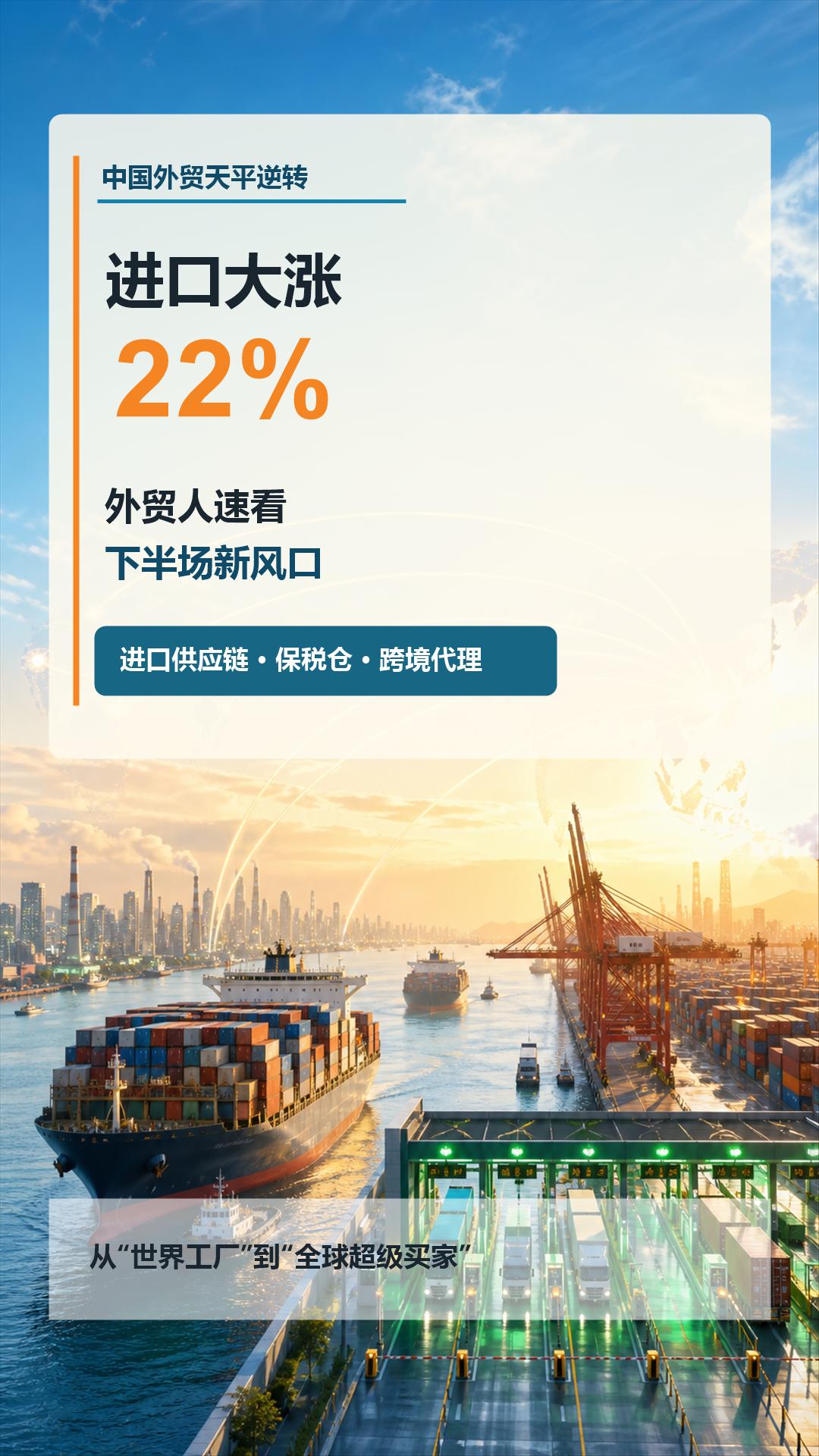
 China's foreign trade sees a turnaround: imports surge by 22%! Foreign trade professionals should quickly take note of the new trends in the second half of the year


Related Products
 EasyCamp SaaS Smart Website Marketing SystemE-Yingbao SaaS Smart Website Marketing System: AI-powered, zero-code website building. Rapidly launch multilingual independent e-commerce sites in just 10 minutes. Global server acceleration and AI-driven SEO optimization empower businesses to efficiently connect with global markets. The seamless integration of technology and user-friendly operation makes building e-commerce sites incredibly simple.
 AI+SEM Intelligent Advertising Marketing SystemAI+SEM drives intelligent ad creation, empowering full-funnel precision advertising marketing. The system automatically generates weekly/monthly reports, AI recommends keywords and target countries, monitors core metrics in real-time with intelligent alerts, and enables one-click high-conversion ad solutions to help quickly acquire customers and improve ROI.
 AI+SEO Dual Engine Optimization ServiceEasyWin AI+SEO Dual Engine Optimization System leverages AI-powered keyword mining, content generation, and comprehensive technical optimization to help foreign trade enterprises acquire high-quality organic traffic, significantly improving search rankings and conversion rates.
 AI+SNS Social Media Marketing SystemYingbao AI+SNS Social Media Marketing System - Precision social capture for the social media era. Supports one-click content synchronization across major platforms like Facebook and LinkedIn. AI intelligently rewrites posts for enhanced relevance. 24/7 AI customer service and user profiling analysis empower businesses to efficiently expand into global markets.
 AI+SEO营销解决方案易营宝AI+SEO营销解决方案,通过AI批量写作、智能生成TDK、精准关键词扩词等功能,全面优化网站SEO效果,提升流量与转化率。助力企业构建高效智能网站新生态。
 AI+SEM Advertising Marketing SolutionsAI+SEM Advertising Marketing Solution leverages AI technology to deeply empower SEM ad campaigns. It automatically generates weekly/monthly reports using AI, presenting account data across multiple dimensions for comprehensive insights into campaign performance and trends. The system precisely recommends keywords and target countries, intelligently generates high-conversion ad copy, and enables one-click activation of efficient campaign plans to help businesses rapidly acquire customers. Simultaneously, it monitors core metrics in real time, intelligently identifies abnormal fluctuations, and issues timely alerts to ensure stable, high-return advertising results.
 Domain Name ServicesEasyWin provides professional domain name services, including intelligent queries, one-stop registration, brand protection, and full lifecycle management, helping businesses build a digital brand image.
 EasyOperate B2C Cross-Border E-Commerce Platform & Independent WebsiteEasyStore B2C Cross-border E-commerce Independent Store is an intelligent website building and cross-border e-commerce integrated solution independently developed by EasyStore Information Technology (Beijing) Co., Ltd. The system is specially designed for small and medium-sized as well as large export enterprises, integrating 'website building, operation, marketing, advertising, and conversion' into one, helping enterprises quickly establish cross-border e-commerce independent stores to achieve brand globalization and global sales growth.
The platform supports multiple languages, multiple currencies, and multi-channel marketing, with built-in AI intelligent translation and SEO optimization systems, suitable for mainstream markets such as Southeast Asia, Europe and America, Latin America, and the Middle East, assisting Chinese manufacturing enterprises in efficiently deploying international e-commerce strategies. SSL证书易营宝提供专业SSL安全证书服务,包括单域名和泛域名证书,确保网站数据传输加密、身份验证和完整性保护,助力企业建立安全可信的在线业务环境。









