









- China-Morocco zero-tariff access, a breakthrough in the cost of Moroccan goods exports to ChinaJun 11, 2026View details
- What signal should be released for the suspension of exports to JapanJun 10, 2026View details
- China's May LNG imports rebounded, with increased volumes from Russia and Canada filling the Middle East supply gapJun 10, 2026View details
- Will GEO change its SEO strategy?Jun 04, 2026View details
- What types of businesses are end-to-end solutions suitable for?Jun 03, 2026View details
- 2026 Global Growth Channel TrendsJun 02, 2026View details
- Changes in Search Engine Ranking Factors in 2026Jun 06, 2026View details
- Which stages is the brand visibility enhancement service suitable forMay 29, 2026View details
Is AI website building in Hangzhou suitable for SMEs? Understand the input-output clearly
Whether Hangzhou AI website building is suitable for small and medium-sized enterprises, the answer is not “suitable for all,” but depends on whether it can truly deliver lower customer acquisition costs, faster launch efficiency, and more measurable long-term returns. For many small and medium-sized enterprises in Hangzhou and surrounding areas, if the goal of building a website is not just to “have an official website,” but to have the website serve functions such as brand presentation, search-based customer acquisition, lead conversion, and ongoing marketing collaboration, then AI website building is usually more worth considering than traditional website building. Especially when companies focus on budget efficiency, launch cycle, ongoing maintenance pressure, and SEO foundation capabilities, input-output ratio is often more critical than simply comparing “website building prices.”
From a practical decision-making perspective, what business managers care most about is not the technical concept, but several more realistic questions: how much the website will cost, how long it will take to go live, whether there will be continuous additional costs later, whether the website can bring inquiries, and whether it can work in coordination with SEO, advertising campaigns, and social media operations. Based on these questions, the value of the Eyingbao intelligent website building solution lies not in “AI” itself, but in whether it helps companies shorten the website building cycle, improve search friendliness, lower the maintenance threshold, and make the input-output ratio clearer through data tracking.
Why small and medium-sized enterprises care about the input-output ratio of “Hangzhou AI website building”
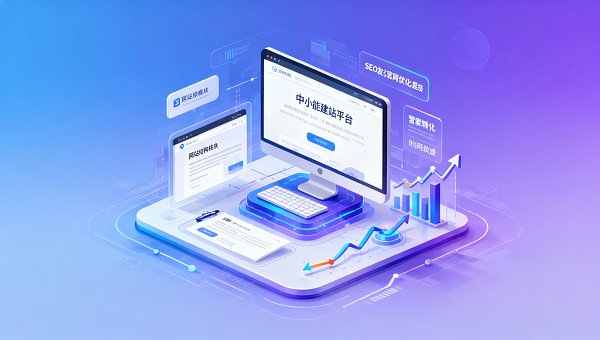
For small and medium-sized enterprises, website construction is no longer a standalone technical procurement, but part of a digital marketing system. When many companies built official websites in the past, there were usually three common problems:
- The upfront investment was not low, but after the website went live, there was almost no traffic or inquiries;
- The pages looked good, but were not suitable for search engine crawling, making subsequent SEO optimization costly;
- Every time content needed to be changed, they had to find an outsourcing provider or technical staff, resulting in low maintenance efficiency and, instead, higher long-term costs.
Therefore, the core intent behind searches such as “Is Hangzhou AI website building suitable for small and medium-sized enterprises?” is actually to determine whether there is a website building approach that better fits the budgets and growth pace of small and medium-sized enterprises, enabling both rapid implementation and marketing effectiveness.
If a company only needs a temporary display page and does not value subsequent promotion, then the advantages of AI website building may not be fully reflected. But if a company needs to operate its official website for the long term and hopes the website can become part of its organic traffic entry point, ad landing pages, and brand assets, then the focus on input-output ratio must come first.
Compared with traditional website building, where exactly is the difference with AI website building
When comparing solutions, many companies tend to look only at quotations. In fact, what should really be compared is the “total cost” and the “total return.”
Traditional website building is usually more suitable for highly customized needs, but its problems are also obvious: long requirement-sorting cycles, design and development that rely on manual work, high modification costs, SEO foundations that often need to be added later, and high technical requirements for maintenance. What seems like a website building project in the early stage may later turn into continuous additional investment.
AI website building mainly shows its advantages in the following aspects:
- Faster launch: Suitable for companies that want to quickly test the market or rapidly launch product pages or招商 pages;
- More standardized templates and structure: Easier to accommodate mobile adaptation, page standards, and basic SEO structure;
- Higher content production efficiency: Suitable for companies with many products or multi-region page needs;
- Lower maintenance threshold: Marketing, operations, and after-sales personnel can also participate in updates, without relying entirely on technical staff;
- Easier integration with marketing systems: Convenient for combining SEO optimization, advertising campaigns, and data tracking to support overall growth.
Of course, AI website building is not万能 either. If a company has extremely high requirements for interaction, system logic, and complex function development, traditional custom development is still more suitable. So the key to decision-making is not “which one is more advanced,” but “which one better fits the needs of the current business stage.”
Which Hangzhou small and medium-sized enterprises are more suitable for choosing AI website building
From the perspective of industry application, the following types of enterprises are usually more suitable for AI website building:
- Manufacturing, service, and trading enterprises that are undergoing brand upgrades and hope to have a professional official website as soon as possible;
- Enterprises that want to gain search traffic from Baidu, Google, and other platforms, and value basic SEO layout;
- Enterprises with needs for招商, recruiting agents, or regional distribution, and that need to build product pages and solution pages in batches;
- Companies with small marketing teams but that hope the website can undertake long-term lead conversion tasks;
- Enterprises with outdated websites, slow loading speeds, and poor mobile experience that are preparing for a low-cost upgrade.
Especially for audiences such as dealers, distributors, and agents, the website is not only a headquarters display window, but may also be a customer acquisition tool for regional markets. Whether the page structure is clear, whether product information can be updated quickly, and whether landing pages are conducive to conversion will all directly affect business efficiency.
For after-sales maintenance personnel, the value of AI website building is reflected in maintainability: whether backend operations are simple, whether page updates are convenient, and whether it is easy to expand content and fix problems after launch. All of these will affect later operation and maintenance costs.
When judging input-output ratio, small and medium-sized enterprises should focus on these 5 indicators
If a company only asks “How much does website building cost,” it is easy to make one-sided decisions. The truly scientific way to judge is to use quantifiable indicators to assess the input-output ratio of AI website building.
1. Launch cycle
The faster the website goes live, the earlier it can start acquiring traffic, accumulating indexed pages, and receiving advertising traffic. The opportunity cost for many small and medium-sized enterprises is not low; going live one month later may mean losing one sales cycle.
2. First-year total cost
You need to calculate website building fees, domain and server costs, content production, basic SEO deployment, and subsequent modification costs together, rather than looking only at the initial quotation.
3. Organic traffic acquisition capability
Website structure, page loading speed, TDK settings, content scalability, internal linking logic, and other factors all affect subsequent SEO performance. A site that is not search-friendly will have higher optimization costs later.
4. Lead conversion capability
Whether there are clear forms, consultation entry points, phone buttons, product page logic, case study pages, and trust endorsements will directly affect the inquiry rate.
5. Maintenance cost
If every image change, copy update, or product addition requires outsourcing, costs will continue to rise in the long run. Small and medium-sized enterprises need website systems with lower thresholds and sustainable operation capabilities.
When many companies carry out digital transformation, they also pay attention to management collaboration and process optimization at the same time. This actually follows the same logic behind website construction: “investment should be converted into operational efficiency.” For example, when studying operational data, budget allocation, and process collaboration, you can also refer to Analysis of application strategies for the integration of business and finance in the transformation practices of financial management in public institutions and similar content, to understand from another perspective the importance of “quantifiable investment, traceable processes, and assessable results.”
Why the Eyingbao intelligent website building solution is more suitable for enterprises that focus on long-term growth
For small and medium-sized enterprises, if a website cannot enter the marketing closed loop, it is difficult to reflect its true value. As an integrated website + marketing service provider, Eyingbao’s advantage is not just building a website, but connecting website building, SEO, social media, and advertising campaigns, so that the website becomes growth infrastructure.
Specifically, the Eyingbao intelligent website building solution is more suitable for enterprises that value the following points:
- Emphasis on search-based customer acquisition: Not only page construction, but also search-friendly structure and space for subsequent optimization;
- Emphasis on site speed: Site acceleration optimization can improve user experience and also help search performance;
- Emphasis on data-driven advertising: The website can receive advertising traffic and optimize campaign efficiency through data feedback;
- Emphasis on localized service: During communication, launch, and adjustment processes, enterprises need a service team that responds faster and understands the business more deeply;
- Emphasis on long-term scalability: When adding new sections, activity pages, or product pages later, there is no need to completely rebuild everything.
Eyingbao Information Technology (Beijing) Co., Ltd. has been deeply engaged in the industry for ten years. With artificial intelligence and big data as its core driving forces, it has formed full-chain capabilities in intelligent website building, SEO optimization, social media marketing, and advertising campaigns. For enterprises that want to truly make use of their official websites, this kind of integrated capability is more practically meaningful than single-point website building, because it reduces the communication loss caused by collaboration among multiple service providers and is also more conducive to unified tracking of input-output ratio.
The most common concern of enterprises: will AI website building be “cheap but ineffective”
This is a very real concern, and it is necessary to see it clearly in advance.
Some enterprises’ negative impression of AI website building often comes from low-quality template sites: serious page homogenization, empty content, poor SEO foundation, and chaotic conversion paths. Although such sites are low-priced and fast to launch, they have no business value, so naturally there is no input-output ratio to speak of.
So the issue is not “whether AI website building works,” but “what solution is used, who does it, and whether it is planned around business goals.”
To judge whether an AI website building solution is reliable, you can focus on the following:
- Whether it first sorts out enterprise goals instead of directly applying a template;
- Whether it considers keyword layout and search entry points;
- Whether it has a complete content structure including cases, products, advantages, and contact conversion;
- Whether it supports subsequent optimization and continuous content updates;
- Whether it can combine advertising campaigns and data analysis for continuous iteration.
If these capabilities are in place, AI website building will not only not be “ineffective,” but may actually fit the business logic of small and medium-sized enterprises better than traditional one-time website building.
How Hangzhou small and medium-sized enterprises should make decisions to avoid pitfalls
If you are currently in the selection stage, it is recommended to judge in the following order:
- First clarify the goal: Is it brand presentation, search-based customer acquisition,招商 and franchise recruitment, or advertising reception? Different goals mean different website building methods and budget allocations.
- Then look at the content foundation: Whether there are product materials, cases, FAQ, solutions, qualification certificates, etc. The more complete the content, the better the website’s conversion foundation.
- Evaluate subsequent operation capabilities: Does the company have internal staff who can continuously update content, cooperate with SEO, and handle leads?
- Check whether the service is integrated: If only website building is considered without subsequent promotion, the website can easily become a “good-looking but idle” asset.
- Look at the ROI cycle: Don’t just ask “how much does it cost now,” but also ask “can it bring stable inquiries after 6 months” and “will it still have expansion value after 1 year.”
If an enterprise is still not very familiar with digital marketing, choosing a service provider with overall strategic capabilities is often a safer option. Because the truly difficult part is not building the website, but making the website a customer acquisition tool.
Overall, whether Hangzhou AI website building is suitable for small and medium-sized enterprises does not depend on the “AI” label itself, but on whether it can help enterprises achieve faster launch, lower maintenance costs, a better search foundation, and clearer conversion results with a more reasonable budget. For enterprises that value customer acquisition efficiency, brand accumulation, and long-term growth, AI website building is usually a solution more worthy of serious evaluation. Especially when website building can work in coordination with SEO, site acceleration, and advertising optimization, the input-output ratio is no longer just a theoretical concept, but will gradually be reflected in traffic, leads, and transaction efficiency. When making decisions, enterprises are advised to pay less attention to hype and more attention to goal fit, data traceability, and long-term operational value, so as to make a choice that truly suits them.
Related Articles



Related Products
 EasyCamp SaaS Smart Website Marketing SystemE-Yingbao SaaS Smart Website Marketing System: AI-powered, zero-code website building. Rapidly launch multilingual independent e-commerce sites in just 10 minutes. Global server acceleration and AI-driven SEO optimization empower businesses to efficiently connect with global markets. The seamless integration of technology and user-friendly operation makes building e-commerce sites incredibly simple.
 AI+SEM Intelligent Advertising Marketing SystemAI+SEM drives intelligent ad creation, empowering full-funnel precision advertising marketing. The system automatically generates weekly/monthly reports, AI recommends keywords and target countries, monitors core metrics in real-time with intelligent alerts, and enables one-click high-conversion ad solutions to help quickly acquire customers and improve ROI.
 AI+SEO Dual Engine Optimization ServiceEasyWin AI+SEO Dual Engine Optimization System leverages AI-powered keyword mining, content generation, and comprehensive technical optimization to help foreign trade enterprises acquire high-quality organic traffic, significantly improving search rankings and conversion rates.
 AI+SNS Social Media Marketing SystemYingbao AI+SNS Social Media Marketing System - Precision social capture for the social media era. Supports one-click content synchronization across major platforms like Facebook and LinkedIn. AI intelligently rewrites posts for enhanced relevance. 24/7 AI customer service and user profiling analysis empower businesses to efficiently expand into global markets.
 AI+SEO营销解决方案易营宝AI+SEO营销解决方案,通过AI批量写作、智能生成TDK、精准关键词扩词等功能,全面优化网站SEO效果,提升流量与转化率。助力企业构建高效智能网站新生态。
 AI+SEM Advertising Marketing SolutionsAI+SEM Advertising Marketing Solution leverages AI technology to deeply empower SEM ad campaigns. It automatically generates weekly/monthly reports using AI, presenting account data across multiple dimensions for comprehensive insights into campaign performance and trends. The system precisely recommends keywords and target countries, intelligently generates high-conversion ad copy, and enables one-click activation of efficient campaign plans to help businesses rapidly acquire customers. Simultaneously, it monitors core metrics in real time, intelligently identifies abnormal fluctuations, and issues timely alerts to ensure stable, high-return advertising results.
 Domain Name ServicesEasyWin provides professional domain name services, including intelligent queries, one-stop registration, brand protection, and full lifecycle management, helping businesses build a digital brand image.
 EasyOperate B2C Cross-Border E-Commerce Platform & Independent WebsiteEasyStore B2C Cross-border E-commerce Independent Store is an intelligent website building and cross-border e-commerce integrated solution independently developed by EasyStore Information Technology (Beijing) Co., Ltd. The system is specially designed for small and medium-sized as well as large export enterprises, integrating 'website building, operation, marketing, advertising, and conversion' into one, helping enterprises quickly establish cross-border e-commerce independent stores to achieve brand globalization and global sales growth.
The platform supports multiple languages, multiple currencies, and multi-channel marketing, with built-in AI intelligent translation and SEO optimization systems, suitable for mainstream markets such as Southeast Asia, Europe and America, Latin America, and the Middle East, assisting Chinese manufacturing enterprises in efficiently deploying international e-commerce strategies. SSL证书易营宝提供专业SSL安全证书服务,包括单域名和泛域名证书,确保网站数据传输加密、身份验证和完整性保护,助力企业建立安全可信的在线业务环境。









