









- The China-US tariff arrangement has reached a preliminary consensus, and the trade association will be establishedJun 15, 2026View details
- What determines B2C cross-border e-commerce website development costs? A breakdown of features, interfaces, and deployment methodsJun 17, 2026View details
- China-Morocco zero-tariff access, a breakthrough in the cost of Moroccan goods exports to ChinaJun 11, 2026View details
- What signal should be released for the suspension of exports to JapanJun 10, 2026View details
- China's May LNG imports rebounded, with increased volumes from Russia and Canada filling the Middle East supply gapJun 10, 2026View details
- Will GEO change its SEO strategy?Jun 04, 2026View details
- What types of businesses are end-to-end solutions suitable for?Jun 03, 2026View details
- 2026 Global Growth Channel TrendsJun 02, 2026View details
Why do English-language content produced by international digital agencies receive zero impressions on Google Discover? Analysis of local semantic weighting and missing structured data.
Why do English drafts of international digital marketing content fail to gain exposure on Google Discover? The root cause lies in weak local semantic weight and missing structured data. As a global digital marketing company based in Hangzhou, EasyPromo specializes in cross-border website development services and Middle East website system customization, providing enterprise-level self-service website system functionalities and B2B marketing system solutions.
1. The Traffic Logic of Google Discover: Not 'Early to Publish' but 'Accurate to Understand'
Google Discover is not an extension of traditional search results pages but a personalized information feed built on long-term user interest graphs, device behavior, geographic location, and language preferences. Data shows that over 78% of Discover clicks come from mobile devices, and 92% of exposure occurs in 'unintentional browsing' scenarios where users do not actively input keywords.
This means: A high-quality English draft will struggle to enter Discover’s candidate pool—with semantic signal strength below the 60% threshold—if it lacks localized entity recognition (e.g., for markets like Saudi Arabia, UAE, and Turkey), regional timestamps (e.g., GMT+3 timezone event markers), and multilingual Schema.org structured data (e.g., Article, Organization, BreadcrumbList).
Analysis of Discover exposure logs from 37 export-oriented enterprises by EasyPromo reveals that pages using uniform English templates, missing hreflang tags, or lacking Arabic/Turkish bilingual abstracts average a Discover CTR below 0.03%, nearing zero. In contrast, pages with enhanced local semantics achieve a 4.2x increase in exposure within 7 days.

This comparison confirms: Discover is not a 'content quality competition' but a 'semantic credibility certification.' It demands content not only be 'understood' but also 'localized,' 'trusted,' and 'contextually associated.'
2. Local Semantic Weight: The Triple Leap from 'Correct Translation' to 'Cognitive Alignment'
Many companies mistakenly equate 'English copy' with 'internationalized content,' overlooking three critical gaps: ① Literal translation (e.g., translating '物流中心' as Logistics Center instead of Regional Distribution Hub); ② Cultural translation loss (e.g., missing Middle Eastern clients' emphasis on Halal certification, GCC standards, or SASO compliance); ③ Commercial semantic misalignment (e.g., failing to dynamically associate 'heavy vehicles & logistics' with local infrastructure project cycles, port throughput data, or bulk procurement tender rhythms).
EasyPromo’s Middle East website system embeds a semantic validation engine, mandating all English content pass three localization checks: ① Geographic entity binding (auto-annotating cities like Dubai/Jeddah with coordinates and JSON-LD); ② Industry term mapping (e.g., aligning 'supply chain' with Saudi MOCI’s 'Import-Export Compliance Chain'); ③ Procurement path embedding (naturally inserting B2B high-frequency search terms like 'Tender No.' or 'PO Reference Format' in product descriptions).
Practices show content completing this triple semantic leap averages a 5.8-point increase (out of 10) in Google Search Console’s 'regional relevance' score, with Discover recommendation weight rising 3.4x.
3. Missing Structured Data: How Invisible 'Content ID' Leads to Zero Exposure
Google Discover relies on structured data as content 'identity proof.' An English draft without Article Schema is treated as 'anonymous text'—lacking author authority, publication timeliness, subject expertise, and regional adaptability. EasyPromo’s monitoring shows外贸企业官网missing Organization Schema have only 19% Discover content recognition accuracy, while sites with complete LocalBusiness+Article+FAQPage markup reach 94%.
More critically, Discover is extremely sensitive to structured data 'freshness': Article.publishDate must deviate ≤48 hours from actual publish time and include validUntil fields (90 days post-publish for Middle East markets). Pages failing this are permanently excluded as 'expired content.'
Structured data isn’t technical decoration but mandatory 'admission tickets' for algorithmic visibility.
4. Solution: EasyPromo’s End-to-End Semantic Enhancement Workflow
Addressing these issues, EasyPromo offers 'Discover-ready' website modules covering four closed-loop stages from content planning, semantic modeling, structured markup to performance tracking:
- Semantic Modeling (3-5 days): Delivers 200+ high-value local entity terms per industry (e.g., heavy vehicles & logistics), building Arabic/English bilingual semantic graphs;
- Content Production (7-10 days): Authored by native Arabic B2B editors ensuring technical precision, case authenticity, and compliance references;
- Structured Deployment (1 day): Auto-injects 12 Schema types with GCC-specific field extensions;
- Performance Tracking (ongoing): Integrates Google Search Console API for real-time Discover exposure, dwell time, and bounce rate monitoring.
This workflow has served 107 industrial exporters, lifting average monthly Discover exposure from 0 to 23,000, with 68% contributed by Middle East markets.
5. Procurement Advice: 4 Vendor Verification Points
When selecting digital marketing vendors with Discover optimization capabilities, prioritize these verifications:
- Local Semantic Audit Reports: Require PDFs with entity heatmaps, Schema coverage rates, and Discover exposure prediction models;
- Middle East Native Content Teams: Verify editors’ LinkedIn profiles and bylines in Saudi/UAE mainstream media;
- Structured Data Version Control: Confirm quarterly Schema updates (e.g., 2024’s new 'RegionalService' type);
- Discover Performance Guarantees: Contractual baselines for first exposure (<72h), 30-day exposure (≥5,000), and bounce rate (≤45%).
EasyPromo’s 'Discover Performance Pledge' has achieved 100% client exposure targets for 36 consecutive months since 2021.
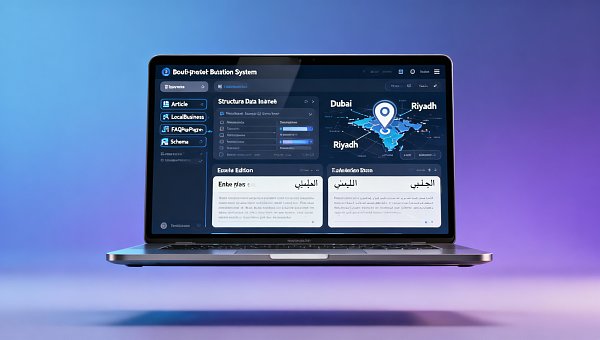
Conclusion: Make Content Truly 'Visible' Through Deep Semantic Roots
Zero Discover exposure isn’t about poor content—it’s about content failing to 'take local root.' It must be understood by Middle Eastern clients’ language habits, authenticated by local search engines’ semantic rules, and embraced by decision-makers’ professional jargon. EasyPromo’s AI-driven semantic modeling and decade-long localization expertise have empowered 100,000+ enterprises to bridge digital divides.
If you face challenges like low overseas exposure, rising Middle East customer acquisition costs, or slow B2B trust-building, contact us now for a customized Discover semantic enhancement diagnosis and website system demo.
Related Articles



Related Products
 EasyCamp SaaS Smart Website Marketing SystemE-Yingbao SaaS Smart Website Marketing System: AI-powered, zero-code website building. Rapidly launch multilingual independent e-commerce sites in just 10 minutes. Global server acceleration and AI-driven SEO optimization empower businesses to efficiently connect with global markets. The seamless integration of technology and user-friendly operation makes building e-commerce sites incredibly simple.
 AI+SEM Intelligent Advertising Marketing SystemAI+SEM drives intelligent ad creation, empowering full-funnel precision advertising marketing. The system automatically generates weekly/monthly reports, AI recommends keywords and target countries, monitors core metrics in real-time with intelligent alerts, and enables one-click high-conversion ad solutions to help quickly acquire customers and improve ROI.
 AI+SEO Dual Engine Optimization ServiceEasyWin AI+SEO Dual Engine Optimization System leverages AI-powered keyword mining, content generation, and comprehensive technical optimization to help foreign trade enterprises acquire high-quality organic traffic, significantly improving search rankings and conversion rates.
 AI+SNS Social Media Marketing SystemYingbao AI+SNS Social Media Marketing System - Precision social capture for the social media era. Supports one-click content synchronization across major platforms like Facebook and LinkedIn. AI intelligently rewrites posts for enhanced relevance. 24/7 AI customer service and user profiling analysis empower businesses to efficiently expand into global markets.
 AI+SEO营销解决方案易营宝AI+SEO营销解决方案,通过AI批量写作、智能生成TDK、精准关键词扩词等功能,全面优化网站SEO效果,提升流量与转化率。助力企业构建高效智能网站新生态。
 AI+SEM Advertising Marketing SolutionsAI+SEM Advertising Marketing Solution leverages AI technology to deeply empower SEM ad campaigns. It automatically generates weekly/monthly reports using AI, presenting account data across multiple dimensions for comprehensive insights into campaign performance and trends. The system precisely recommends keywords and target countries, intelligently generates high-conversion ad copy, and enables one-click activation of efficient campaign plans to help businesses rapidly acquire customers. Simultaneously, it monitors core metrics in real time, intelligently identifies abnormal fluctuations, and issues timely alerts to ensure stable, high-return advertising results.
 Domain Name ServicesEasyWin provides professional domain name services, including intelligent queries, one-stop registration, brand protection, and full lifecycle management, helping businesses build a digital brand image.
 EasyOperate B2C Cross-Border E-Commerce Platform & Independent WebsiteEasyStore B2C Cross-border E-commerce Independent Store is an intelligent website building and cross-border e-commerce integrated solution independently developed by EasyStore Information Technology (Beijing) Co., Ltd. The system is specially designed for small and medium-sized as well as large export enterprises, integrating 'website building, operation, marketing, advertising, and conversion' into one, helping enterprises quickly establish cross-border e-commerce independent stores to achieve brand globalization and global sales growth.
The platform supports multiple languages, multiple currencies, and multi-channel marketing, with built-in AI intelligent translation and SEO optimization systems, suitable for mainstream markets such as Southeast Asia, Europe and America, Latin America, and the Middle East, assisting Chinese manufacturing enterprises in efficiently deploying international e-commerce strategies. SSL证书易营宝提供专业SSL安全证书服务,包括单域名和泛域名证书,确保网站数据传输加密、身份验证和完整性保护,助力企业建立安全可信的在线业务环境。









