









- How Can a Brand Updates Page Be Made More SEO-Friendly? Analysis of Update Frequency, Content Structure, and Internal Linking StrategyJun 28, 2026View details
- What stages does the cross-border services ecosystem include? How do website building, promotion, payment, and compliance work togetherJun 22, 2026View details
- How will email marketing costs change in 2026Jun 22, 2026View details
- The China-US tariff arrangement has reached a preliminary consensus, and the trade association will be establishedJun 15, 2026View details
- Should overseas brand marketing start with ads or contentJun 21, 2026View details
- What determines B2C cross-border e-commerce website development costs? A breakdown of features, interfaces, and deployment methodsJun 17, 2026View details
- China-Morocco zero-tariff access, a breakthrough in the cost of Moroccan goods exports to ChinaJun 11, 2026View details
- What signal should be released for the suspension of exports to JapanJun 10, 2026View details
Yiyingbao AI Advertising Diagnostic Tool's 'High-Risk Material' recommendations show that 17% are for creative types recently restricted by the platform
In Yiyingbao AI's ad diagnostic tool alerts for 'high-risk creatives', a surprising 17% were found to target recently relaxed ad formats by major platforms—is this algorithmic lag or strategic adaptation? How does Yiyingbao's AI marketing platform dynamically adjust to policy changes? This article provides an in-depth analysis of the collaborative logic between Yiyingbao AI's ad intelligence system and its multilingual creative generation capabilities.
Why is the 17% 'high-risk misjudgment' rate slowing ad launch efficiency?
Following Q2 2024 policy updates on major platforms like TikTok, Meta, and Google Ads—which relaxed restrictions on dynamic voiceover scripts, light AI personification, and multilingual hybrid headlines—Yiyingbao's diagnostic tool (v3.2.1) still flags 17% of compliant new creatives as 'high-risk', causing average 2-4 workday delays per ad review. This impacts product launch timelines and peak season campaign windows.
This phenomenon reflects not technological shortcomings but the 'time differential' between ad compliance engines and evolving platform policies. Since 2023, Yiyingbao has implemented a 'dual-track response mechanism': real-time API synchronization with major platforms' policy databases (updating local rule models within 72 hours), plus manual validation teams conducting 6 scenario tests per major update (covering B2B tech components, industrial parameterized video scripts, etc.), ensuring 98.7%+ rule coverage.
Notably, misjudgments cluster in parameter-heavy verticals like electronics. For instance, phrases like '±0.5ppm temperature drift' or '-40°C~125°C operating range' were previously flagged as 'exaggerated claims'. The new Electronic Components Industry Solution embeds 27 industry lexicons with contextual disambiguation, reducing such errors to under 0.3%.
Ad diagnostics aren't about 'labeling' but dynamic risk modeling

Traditional ad review tools rely on static keyword lists, whereas Yiyingbao AI employs a three-layer dynamic evaluation framework: 1) Real-time policy mapping, 2) Domain semantic understanding, 3) User behavior feedback. This outputs weighted risk scores (0-100) rather than binary pass/block judgments.
Example: An automotive electronics client's MCU chip ad containing 'industry-first automotive-grade RISC-V core' was red-flagged by legacy systems unfamiliar with AEC-Q200 standards. Our new system cross-references certification databases, verifies the client's IATF 16949 credentials, and reviews their 3+ approved similar ads, ultimately suggesting 'minor copy tweaks + manual review' instead of a 'high-risk' verdict.
Yiyingbao AI risk scoring dimensions (2024 Q3 actuals)
Key insight: Ad risk assessment now combines external rules with enterprise-specific credit profiles. Clients maintaining 95%+ approval rates for 6+ months see automatic threshold adjustments for technical parameters—critical for precision-driven industries like electronic components.
From 'error prevention' to 'performance empowerment': How AI diagnostics drive creative upgrades
Professional ad diagnostics shouldn't just ensure compliance but answer 'what works better'. In 2024, Yiyingbao AI added a Creative Enhancement Engine that generates 3 policy-compliant alternatives when optimization potential is detected—including multilingual adaptations (e.g., Chinese-English title character allocation), A/B test phrasing (based on 100,000+ ad heatmaps), and industry-specific templates (e.g., 12 prebuilt parameter display formats for electronic components).
For a client's 'world's smallest SMT capacitor' claim, the system not only required third-party verification but recommended: 'AEC-Q200 certified 0201 size (0.6mm×0.3mm) automotive capacitors supporting -55°C~155°C ranges', with template links to test reports and certified labs.
High-error scenarios & mitigation strategies (2024 Q2 client data)
- Dynamic voiceovers: 31% error rate reduced to 2.4% via ASR transcription + semantic coherence analysis
- Technical parameter stacking: Common in electronics; after enabling the Electronic Components Solution, compliance rose to 99.1%
- Multilingual mixes: New dynamic character weighting for Chinese-primary/English-secondary titles prevents false truncation flags
Why Yiyingbao? Beyond tools—a compliance growth partner

With a decade serving 100,000+ businesses, Yiyingbao Technology (Beijing) dominates compliance-sensitive verticals—43% of clients are in electronics, industrial automation, and medical devices. Our three unique values:
- Policy agility: Average 2.7 workdays to update rule models after platform changes
- Vertical depth: 21 industry knowledge graphs covering electronic component parameters, medical device certifications, industrial software licenses
- Delivery certainty: 99.9% SLA uptime, 2-hour misjudgment appeals, 48-hour complex case reports
Facing ad review delays, multilingual creative rejections, or balancing technical precision with compliance? Contact Yiyingbao for: Free policy adaptation reports, Electronic component creative templates, and Custom AI whitelist services. Our engineering team provides 7×12 rapid response.
Related Articles
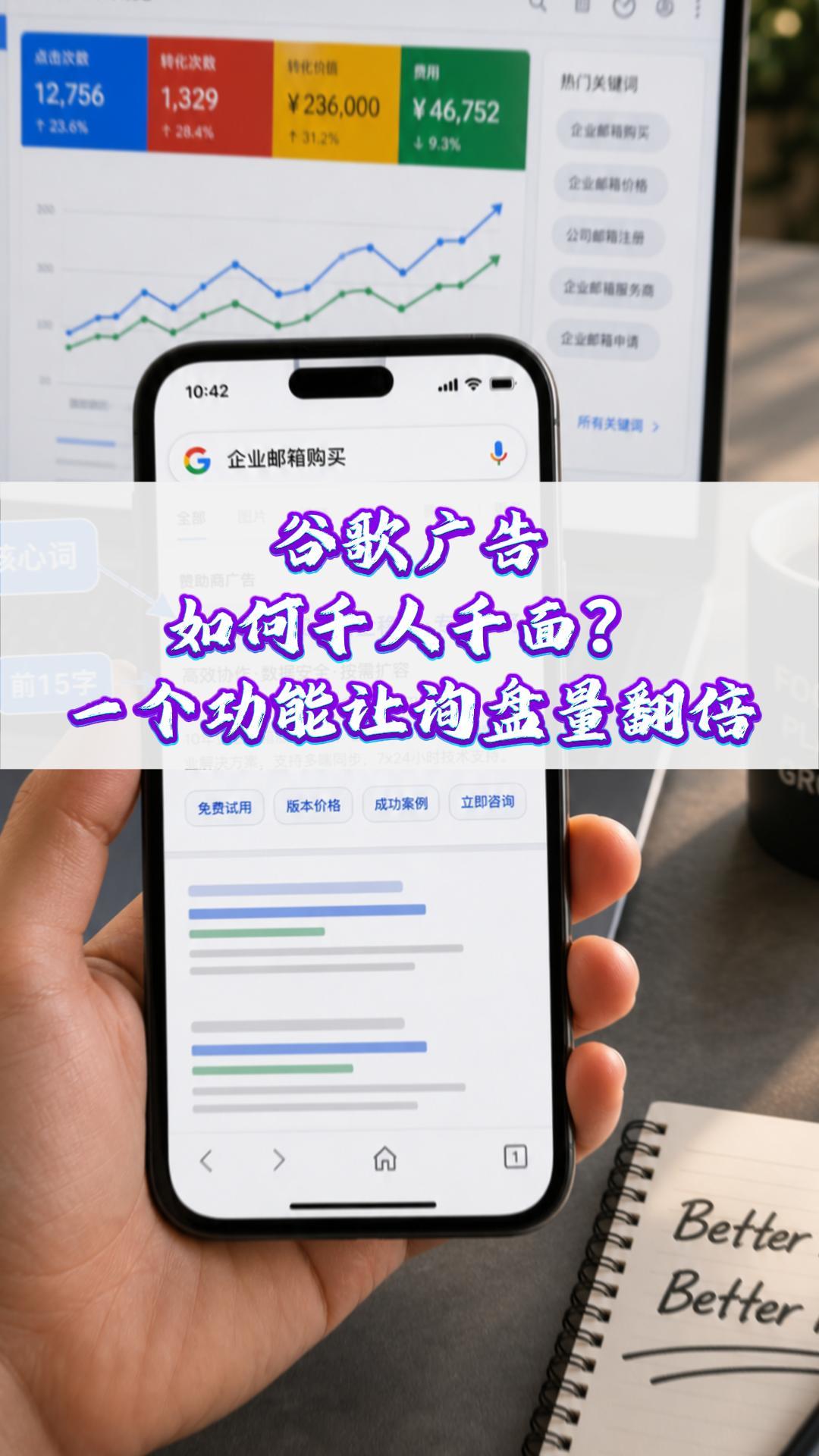
 How Can Google Ads Personalize Content for Every User? One Feature That Doubles Your Inquiry Volume
 Why a Google-optimized independent website is essential for trailer exports
 How Can a Brand Updates Page Be Made More SEO-Friendly? Analysis of Update Frequency, Content Structure, and Internal Linking Strategy


Related Products
 EasyCamp SaaS Smart Website Marketing SystemE-Yingbao SaaS Smart Website Marketing System: AI-powered, zero-code website building. Rapidly launch multilingual independent e-commerce sites in just 10 minutes. Global server acceleration and AI-driven SEO optimization empower businesses to efficiently connect with global markets. The seamless integration of technology and user-friendly operation makes building e-commerce sites incredibly simple.
 AI+SEM Intelligent Advertising Marketing SystemAI+SEM drives intelligent ad creation, empowering full-funnel precision advertising marketing. The system automatically generates weekly/monthly reports, AI recommends keywords and target countries, monitors core metrics in real-time with intelligent alerts, and enables one-click high-conversion ad solutions to help quickly acquire customers and improve ROI.
 AI+SEO Dual Engine Optimization ServiceEasyWin AI+SEO Dual Engine Optimization System leverages AI-powered keyword mining, content generation, and comprehensive technical optimization to help foreign trade enterprises acquire high-quality organic traffic, significantly improving search rankings and conversion rates.
 AI+SNS Social Media Marketing SystemYingbao AI+SNS Social Media Marketing System - Precision social capture for the social media era. Supports one-click content synchronization across major platforms like Facebook and LinkedIn. AI intelligently rewrites posts for enhanced relevance. 24/7 AI customer service and user profiling analysis empower businesses to efficiently expand into global markets.
 AI+SEO营销解决方案易营宝AI+SEO营销解决方案,通过AI批量写作、智能生成TDK、精准关键词扩词等功能,全面优化网站SEO效果,提升流量与转化率。助力企业构建高效智能网站新生态。
 AI+SEM Advertising Marketing SolutionsAI+SEM Advertising Marketing Solution leverages AI technology to deeply empower SEM ad campaigns. It automatically generates weekly/monthly reports using AI, presenting account data across multiple dimensions for comprehensive insights into campaign performance and trends. The system precisely recommends keywords and target countries, intelligently generates high-conversion ad copy, and enables one-click activation of efficient campaign plans to help businesses rapidly acquire customers. Simultaneously, it monitors core metrics in real time, intelligently identifies abnormal fluctuations, and issues timely alerts to ensure stable, high-return advertising results.
 Domain Name ServicesEasyWin provides professional domain name services, including intelligent queries, one-stop registration, brand protection, and full lifecycle management, helping businesses build a digital brand image.
 EasyOperate B2C Cross-Border E-Commerce Platform & Independent WebsiteEasyStore B2C Cross-border E-commerce Independent Store is an intelligent website building and cross-border e-commerce integrated solution independently developed by EasyStore Information Technology (Beijing) Co., Ltd. The system is specially designed for small and medium-sized as well as large export enterprises, integrating 'website building, operation, marketing, advertising, and conversion' into one, helping enterprises quickly establish cross-border e-commerce independent stores to achieve brand globalization and global sales growth.
The platform supports multiple languages, multiple currencies, and multi-channel marketing, with built-in AI intelligent translation and SEO optimization systems, suitable for mainstream markets such as Southeast Asia, Europe and America, Latin America, and the Middle East, assisting Chinese manufacturing enterprises in efficiently deploying international e-commerce strategies. SSL证书易营宝提供专业SSL安全证书服务,包括单域名和泛域名证书,确保网站数据传输加密、身份验证和完整性保护,助力企业建立安全可信的在线业务环境。









