









- Can Zhejiang foreign trade independent websites still be developed today? Look at changes in traffic and lead generationJul 28, 2026View details
- What New Signals Are Emerging in Enterprise Services SaaS Marketing ReportsJul 27, 2026View details
- What Does a Global Traffic Ecosystem Service Provider Do? What Are the Differences from a Single Advertising AgencyJul 16, 2026View details
- What should you focus on in the latest enterprise SaaS report? From renewal rates and delivery costs to overseas growth opportunitiesJul 12, 2026View details
- What signals are worth paying attention to in a cross-border marketing trend report? B2B companies should look at these 6 signalsJul 11, 2026View details
- How to Read a Cross-Border Marketing Trends Report? Five Key Dimensions for Evaluating Channel OpportunitiesJul 11, 2026View details
- Which channel has the highest ROI in the global traffic ecosystem? Comparative analysis of search, social media, and advertisingJul 10, 2026View details
- What multilingual website services are available in Sanya? Which model is more suitable for local businesses going global?Jul 08, 2026View details
RCEP Official Website Credibility AI Scoring System Launches
On 2026年5月18日, the RCEP Secretariat officially launched the world’s first regional official website credibility AI assessment platform (RCTS), carrying out automated credibility evaluations for the official websites of B2B suppliers across 15 member countries including China and ASEAN. This mechanism directly affects procurement exposure and ranking weight for Chinese export enterprises to Southeast Asia, and has a particularly substantive impact on export industries with a high degree of standardization and heavy reliance on online inquiries, such as electronic components, light manufacturing, mechanical parts, and textile accessories.
Event Overview
On 2026年5月18日, the RCEP Secretariat launched the ‘Cross-border Official Website Credibility AI Scoring System’ (RCTS). This system targets the official websites of B2B suppliers in 15 RCEP member countries including China, Vietnam, and Thailand, and automatically scans and evaluates four categories of indicators: multilingual response speed, localized customer service online availability, searchability of product compliance documents, and authenticity of transaction history, generating a credibility label scored from 0–100. This score has already been integrated into the procurement recommendation algorithms of mainstream Southeast Asian B2B platforms (such as TradeAsia and SMEHub), directly affecting the ranking weight of Chinese suppliers in regional buyer search results.
Which Segments Are Affected
Direct Trading Enterprises
These enterprises usually use their own official websites as a core customer acquisition channel, and their websites are the first touchpoint for overseas buyers to verify qualifications. The RCTS score will directly determine the proportion of organic traffic allocation they receive on platforms such as TradeAsia. A low score may cause a significant drop in rankings under the same keywords, affecting inquiry conversion efficiency.
Processing and Manufacturing Enterprises (including OEM/ODM)
Most manufacturing company websites focus on showcasing production capacity and listing certifications, but often lack real-time multilingual customer support or verifiable proof of past orders. The system’s identification of the ‘authenticity of transaction history’ dimension may amplify information asymmetry—even if actual fulfillment capability is strong, if the website does not present verifiable delivery cases in a structured way (such as redacted contract excerpts, logistics tracking number ranges, customs clearance screenshots, etc.), the score is likely to be underestimated.
Channel Distribution Enterprises (including integrated foreign trade service companies)
Their websites often host joint showcase pages for multiple factories, where delayed content updates and unsynchronized multilingual versions are prominent issues. RCTS’s millisecond-level detection of ‘multilingual response speed’ and ‘localized customer service online availability’ may turn translation plugins that are not deployed in real time or offline customer service entry points into point deductions, thereby weakening their credibility endorsement as regional agents.
Supply Chain Service Enterprises (including testing and certification, logistics, and customs declaration service providers)
Although these companies’ official websites do not directly close transactions, they are often used by buyers as auxiliary tools for supplier due diligence. If the cooperative factory lists, compliance document templates, customs clearance timeliness data, and similar content embedded in their websites cannot be effectively captured by RCTS or have unverifiable sources, it may indirectly reduce the overall relevance of the credibility labels associated with the clients they serve.
What Relevant Companies or Practitioners Should Focus On and How to Respond at Present
Pay attention to the follow-up white paper on evaluation details and sample validation mechanism issued by the RCEP Secretariat
At present, only the names of the four-dimensional indicators have been disclosed, while key parameters such as the weight of each dimension, data collection frequency, and threshold values for anomaly determination have not been revealed. Companies need to track whether the Secretariat will release test accounts, simulated scoring tools, or analyses of typical low-score cases, so as to avoid directional bias caused by optimization based solely on experience.
Prioritize checking the deployment quality of machine-readable compliance documents on the official website
Focus on checking whether product certification certificates in PDF/HTML format (such as Thailand’s TISI and Vietnam’s CR), certificates of origin, and RoHS/REACH declarations follow standard naming conventions, embed structured metadata (such as schema.org/Product), and support full-text on-site search, rather than being placed only as images on the last page of the ‘Qualifications and Honors’ section.
Distinguish between platform integration stages and the activation rhythm of the algorithm
TradeAsia and SMEHub have confirmed integration of RCTS scores, but have not explained whether it has been fully enabled or whether transitional weighting coefficients have been set. Companies should not immediately rewrite the entire website architecture, but should first monitor fluctuations in their keyword rankings on the two platforms, compare the time lag between score changes and traffic changes, and determine the actual point at which the algorithm takes effect.
Establish a routine official website credibility inspection mechanism rather than a one-time overhaul
Because RCTS is a continuous scanning system, metrics such as customer service online status and multilingual page loading delay are dynamic indicators. It is recommended to incorporate ‘localized customer service response time’ and ‘first-screen rendering time for non-English language pages’ into IT operations KPI, with weekly reviews by the technical team, so as to avoid unexpected point deductions caused by CDN configuration changes or translation plugin upgrades.
Editorial Viewpoint / Industry Observation
Observably, this initiative is not yet a binding compliance requirement but functions as a de facto market access signal—it’s integration into procurement algorithms means commercial consequences are already materializing for suppliers with low scores. Analysis shows the system prioritizes verifiability over self-declaration: static text claims matter less than machine-confirmed behaviors (e.g., live chat uptime, structured document markup). From an industry perspective, it marks a shift from ‘having documentation’ to ‘making documentation algorithmically discoverable and cross-validated’. Current implementation appears focused on B2B platform ranking; expansion to customs pre-clearance or trade finance eligibility remains unconfirmed and requires monitoring.
Conclusion:
The launch of the RCEP official website credibility AI scoring system marks a new stage in the digital governance of regional trade, moving from information interconnection to mutual credit recognition. Its current significance lies not in establishing mandatory market entry thresholds, but in restructuring the information filtering logic on the procurement side—credibility is gradually shifting from a manual due diligence item into a quantifiable, embeddable, and interoperable infrastructure variable. Companies should better understand this as an adaptive stress test for the underlying rules of RCEP digital trade, rather than as a usage guide for a single technical tool.
Source note:
Main sources: RCEP Secretariat announcement dated 2026年5月18日; TradeAsia platform developer API update log dated 2026年5月20日; SMEHub procurement algorithm white paper (V2.1, released in 2026年5月).
Items requiring continued observation: whether regulators in member countries will incorporate RCTS scores into export credit insurance rating references; whether ASEAN customs authorities will pilot its use for determining fast-track release under low-risk clearance channels.
Related Articles
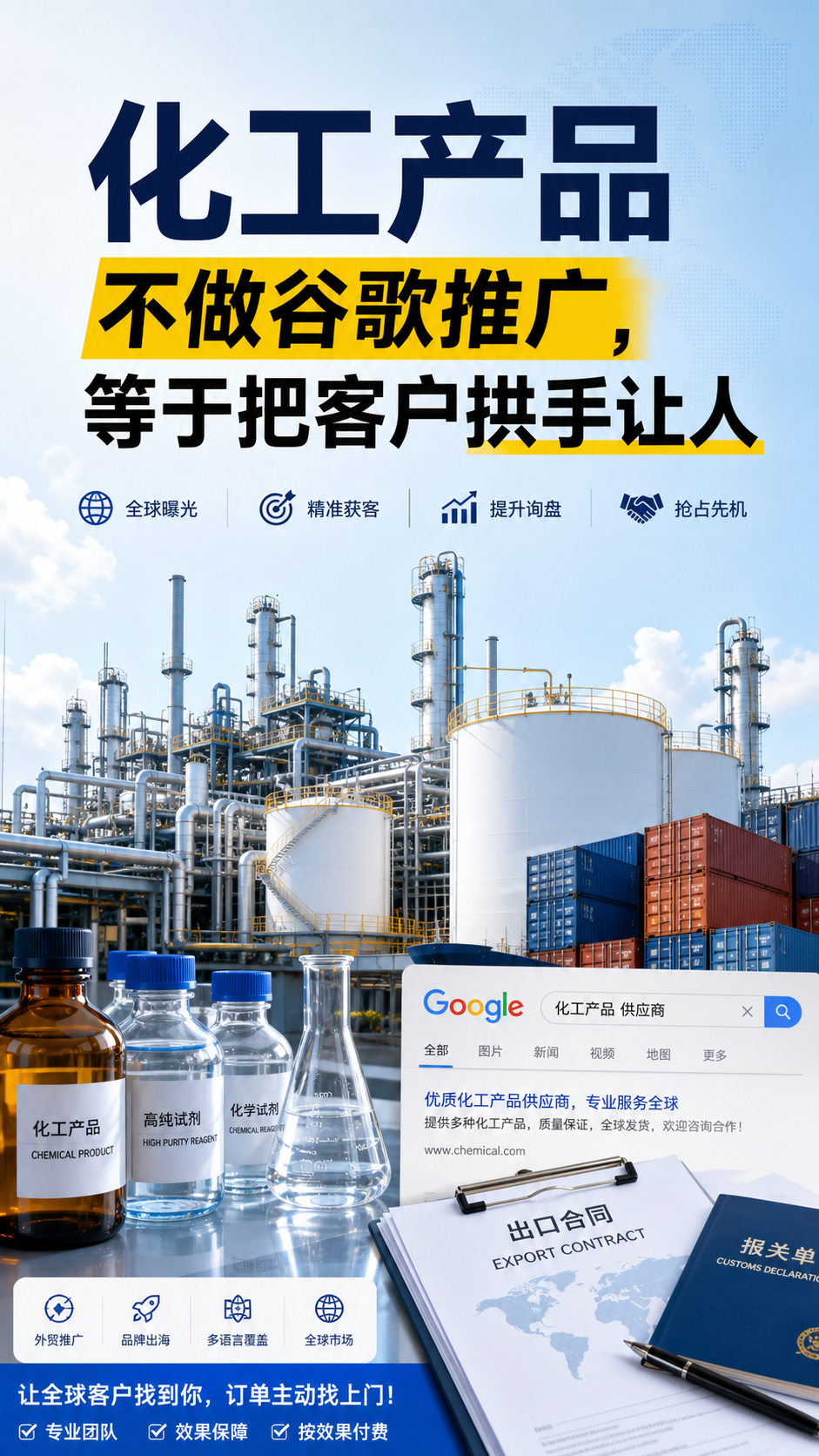
 Promoting chemical products on Google is essential—otherwise, you are effectively handing your customers over to competitors
 Can Zhejiang foreign trade independent websites still be developed today? Look at changes in traffic and lead generation
 What New Signals Are Emerging in Enterprise Services SaaS Marketing Reports


Related Products
 EasyCamp SaaS Smart Website Marketing SystemE-Yingbao SaaS Smart Website Marketing System: AI-powered, zero-code website building. Rapidly launch multilingual independent e-commerce sites in just 10 minutes. Global server acceleration and AI-driven SEO optimization empower businesses to efficiently connect with global markets. The seamless integration of technology and user-friendly operation makes building e-commerce sites incredibly simple.
 AI+SEM Intelligent Advertising Marketing SystemAI+SEM drives intelligent ad creation, empowering full-funnel precision advertising marketing. The system automatically generates weekly/monthly reports, AI recommends keywords and target countries, monitors core metrics in real-time with intelligent alerts, and enables one-click high-conversion ad solutions to help quickly acquire customers and improve ROI.
 AI+SEO Dual Engine Optimization ServiceEasyWin AI+SEO Dual Engine Optimization System leverages AI-powered keyword mining, content generation, and comprehensive technical optimization to help foreign trade enterprises acquire high-quality organic traffic, significantly improving search rankings and conversion rates.
 AI+SNS Social Media Marketing SystemYingbao AI+SNS Social Media Marketing System - Precision social capture for the social media era. Supports one-click content synchronization across major platforms like Facebook and LinkedIn. AI intelligently rewrites posts for enhanced relevance. 24/7 AI customer service and user profiling analysis empower businesses to efficiently expand into global markets.
 AI+SEO营销解决方案易营宝AI+SEO营销解决方案,通过AI批量写作、智能生成TDK、精准关键词扩词等功能,全面优化网站SEO效果,提升流量与转化率。助力企业构建高效智能网站新生态。
 AI+SEM Advertising Marketing SolutionsAI+SEM Advertising Marketing Solution leverages AI technology to deeply empower SEM ad campaigns. It automatically generates weekly/monthly reports using AI, presenting account data across multiple dimensions for comprehensive insights into campaign performance and trends. The system precisely recommends keywords and target countries, intelligently generates high-conversion ad copy, and enables one-click activation of efficient campaign plans to help businesses rapidly acquire customers. Simultaneously, it monitors core metrics in real time, intelligently identifies abnormal fluctuations, and issues timely alerts to ensure stable, high-return advertising results.
 Domain Name ServicesEasyWin provides professional domain name services, including intelligent queries, one-stop registration, brand protection, and full lifecycle management, helping businesses build a digital brand image.
 EasyOperate B2C Cross-Border E-Commerce Platform & Independent WebsiteEasyStore B2C Cross-border E-commerce Independent Store is an intelligent website building and cross-border e-commerce integrated solution independently developed by EasyStore Information Technology (Beijing) Co., Ltd. The system is specially designed for small and medium-sized as well as large export enterprises, integrating 'website building, operation, marketing, advertising, and conversion' into one, helping enterprises quickly establish cross-border e-commerce independent stores to achieve brand globalization and global sales growth.
The platform supports multiple languages, multiple currencies, and multi-channel marketing, with built-in AI intelligent translation and SEO optimization systems, suitable for mainstream markets such as Southeast Asia, Europe and America, Latin America, and the Middle East, assisting Chinese manufacturing enterprises in efficiently deploying international e-commerce strategies. SSL证书易营宝提供专业SSL安全证书服务,包括单域名和泛域名证书,确保网站数据传输加密、身份验证和完整性保护,助力企业建立安全可信的在线业务环境。









