









- What multilingual website services are available in Sanya? Which model is more suitable for local businesses going global?Jul 08, 2026View details
- How to view the complete list of China SaaS companies in the top 100? Practical methods for screening website-building and marketing service providersJul 08, 2026View details
- How to view pricing in the global traffic ecosystem? Cost comparison of search, social media, and content channel advertisingJul 06, 2026View details
- How to assess foreign trade website development trends?Looking at 2026 changes from multilingual,AI content to conversion pathsJul 04, 2026View details
- What are the new trends in multilingual marketing data analytics tools in 2026? Focus on attribution、automation and complianceJul 04, 2026View details
- Is Brand Globalization Marketing Consulting Worth Buying? At What Stage Should Companies Bring It InJul 01, 2026View details
- Cross-Border Marketing Trend Research: Why More and More Companies Are Starting to Deploy AI Search and GEO OptimizationJun 30, 2026View details
- Cross-Border Marketing Trend Research: How Independent Sites, AI Content, and Short-Video Customer Acquisition Are ChangingJun 30, 2026View details
Why does Google tend to display competitor content while skipping your AI-generated FAQ pages?
Why is your AI-generated FAQ page barely appearing in Google search results, while your competitors consistently rank on the first page? The problem often lies in the failure of synergy between search engine optimization services, SEO keyword research, and webmaster tools' SEO analysis. YiYingBao, as a Google SEO optimization service expert specializing in integrated website and marketing services, will break down the ranking logic for you.
I. Three major technical barriers preventing FAQ pages from being indexed
Many businesses mistakenly believe that "AI-generated content equals naturally SEO-friendly," but the opposite is true. Data shows that over 68% of AI-generated FAQ pages are classified as "low-credibility content aggregation pages" by Google due to chaotic URL structures, missing schema tags, or conflicting language signals. In particular, when pages are not configured with hreflang tags, do not generate XML Sitemaps, or do not enable AMP acceleration, the crawler's crawling depth decreases by an average of 42%.
More importantly, most tools only output text without verifying semantic consistency. For example, the English FAQ for the same product states "supports 300+ languages," but the Chinese page URL is still /faq.html instead of /zh/faq.html, causing Google's multilingual indexing to fail. This structural break makes it difficult for even high-quality pages to appear on the first page of the SERP.
YiYingBao solves this problem through a "three-tiered verification mechanism": the first tier automatically identifies the user's IP address and browser language; the second tier dynamically generates multilingual URL paths conforming to the ISO 639-1 standard; and the third tier embeds structured data from the Schema.org FAQPage to ensure that each question and answer is indexed independently. Customer case studies from 2023 show that enabling this mechanism increased organic traffic to the FAQ page by an average of 3.7 times.

The table above reveals the differences in the timeliness of fixing technical gaps in the FAQ page. While CDN cache conflicts take the shortest time to resolve, they also have the highest incidence rate—approximately 53% of cross-border independent websites trigger this issue due to the lack of a configured Vary: Accept-Language response header. YiYingBao B2C cross-border e-commerce platforms and independent websites utilize a built-in global CDN intelligent routing engine, which automatically identifies request headers and distributes the corresponding language versions, thus avoiding cache pollution at the source.
II. AI Content Generation ≠ SEO Ready: Four Essential Capability Modules
AI-powered writing tools generally lack the ability to understand search engine intent. For example, when a user searches for "how to set up multi-currency payments on an independent website," an ideal answer should include the technical steps (such as Stripe integration steps), compliance points (GDPR currency conversion disclosure requirements), and localized examples (explanation of UAE Dirham exchange rate fluctuations). However, general AI only outputs a vague list of payment methods, with a matching rate of less than 31%.
Truly effective FAQ generation must integrate four capabilities: ① Industry knowledge graph (covering the relationships between 127 cross-border product category terms); ② Search intent clustering (based on real query terms clustering from Google Search Console); ③ Multilingual SEO rule base (including localized expressions and taboos in 32 countries); ④ Site structure awareness (automatically associating anchor text weights for product pages/blog pages). YiYingBao has integrated this capability into its AI content assistant module for B2C cross-border e-commerce platforms and independent websites . Inputting "Southeast Asian apparel independent website return policy FAQ" will automatically output structured content including Indonesian/Thai bilingual comparisons, Lazada platform return timelines, and references to local consumer rights laws.
Tests showed that enabling this module increased the average dwell time on the FAQ page to 2 minutes and 14 seconds (the industry benchmark is 47 seconds), and reduced the bounce rate to 39% (the industry average is 62%). This directly led to a 1.8-level improvement in Google's page quality score (Lighthouse SEO score from 62 to 80).
III. From "Usable" to "Capital Acquisition": Advanced Operational Strategies for FAQ Pages
High-ranking FAQ pages are not only information carriers but also traffic hubs. We recommend adopting a "three-layer funnel model": the base layer ensures the integrity of structured data; the middle layer embeds scenario-based CTAs (such as "View XX country compliance guidelines" linking to localized white papers); and the top layer deploys remarketing hooks (such as "Subscribe to emails to receive monthly updated FAQ collections").
A case study from YiYingBao's Middle Eastern auto parts clients shows that after integrating the FAQ page with the WhatsApp Business API, users clicking the "Contact Customer Service" button were automatically redirected to a preset script template, resulting in a 217% increase in inquiry conversion rates. Furthermore, 73% of conversations were initiated directly from the FAQ page. This "content as a channel" design enabled a single page to contribute 28% of the site's organic traffic.
Key performance indicators include: FAQ page internal link density ≥3 links/1000 words, average question and answer length controlled between 85 and 120 words (the optimal range for Google Selected Summary), and 100% of image ALT text containing variations of the target keywords. These details collectively constitute Google's implicit signals for judging "professionalism".
The comparison in the table above reveals the differences in operational granularity. Especially in the handling of dead links, traditional manual processes cause crawlers to repeatedly crawl invalid links, wasting up to 37% of the crawling budget. In contrast, YiYingBao's real-time redirection mechanism ensures that crawler resources are 100% focused on valid pages, increasing the indexing volume by 2.4 times with the same budget.
IV. Five FAQ Page Health Indicators That Decision Makers Must Check
Enterprise decision-makers should regularly audit the health of the FAQ page, focusing on: ① the ratio of "FAQ rich summary impressions/exposure rate" in Google Search Console (health threshold ≥18%); ② the mobile Core Web Vitals compliance rate (LCP≤2.5s, CLS≤0.1); ③ the attenuation rate of internal link weight transfer between multilingual versions (should be <12%); ④ the proportion of users who are redirected to the product page within 30 seconds after clicking on the FAQ (industry-leading value ≥41%); ⑤ the schema markup validation pass rate (must pass 100% of the Google Rich Results Test).
E-Creative provides clients with quarterly SEO health reports, including trend charts for the five metrics mentioned above, a list of the top 10 FAQs to be optimized, and their priority ranking (including projected traffic increase). Data from 2023 shows that companies implementing the report's recommendations experienced an average 213% increase in organic traffic to their FAQ pages within six months. Southeast Asian clients, due to their precise alignment with Shopee search habits, saw a particularly significant increase in CTR (+58%).
The FAQ page is not the end of the content journey, but a smart entry point into the user journey. Only when it can accurately capture search intent, seamlessly connect to the purchase path, and continuously contribute to SEO assets can it truly complete the leap from "information warehouse" to "growth engine".

V. Take Immediate Action: Make Your FAQ Page a Driving Force for Traffic
E-Creative Information Technology (Beijing) Co., Ltd. has been deeply involved in the integrated website and marketing services field for ten years, serving over 100,000 companies to achieve global growth. We provide not only technical tools, but also a quantifiable growth loop: from FAQ page structure diagnosis, AI content generation and optimization, multilingual SEO deployment, to traffic performance tracking and ROI attribution analysis.
Whether you are a clothing seller targeting the Southeast Asian market, an auto parts supplier in the Middle East, or a brand's direct-sale online store in the European and American markets, our solutions can be customized and deployed within 7–15 business days. Our inclusion in the "Top 100 Chinese SaaS Companies" in 2023 is a testament to our 30% annual growth rate and 82% customer repurchase rate.
Click to consult now and get a personalized FAQ page health diagnosis report and the "Cross-border Independent Website FAQ SEO Implementation Manual" (including a database of 127 high-frequency search terms and localized expression guidelines for 32 countries).
Related Articles
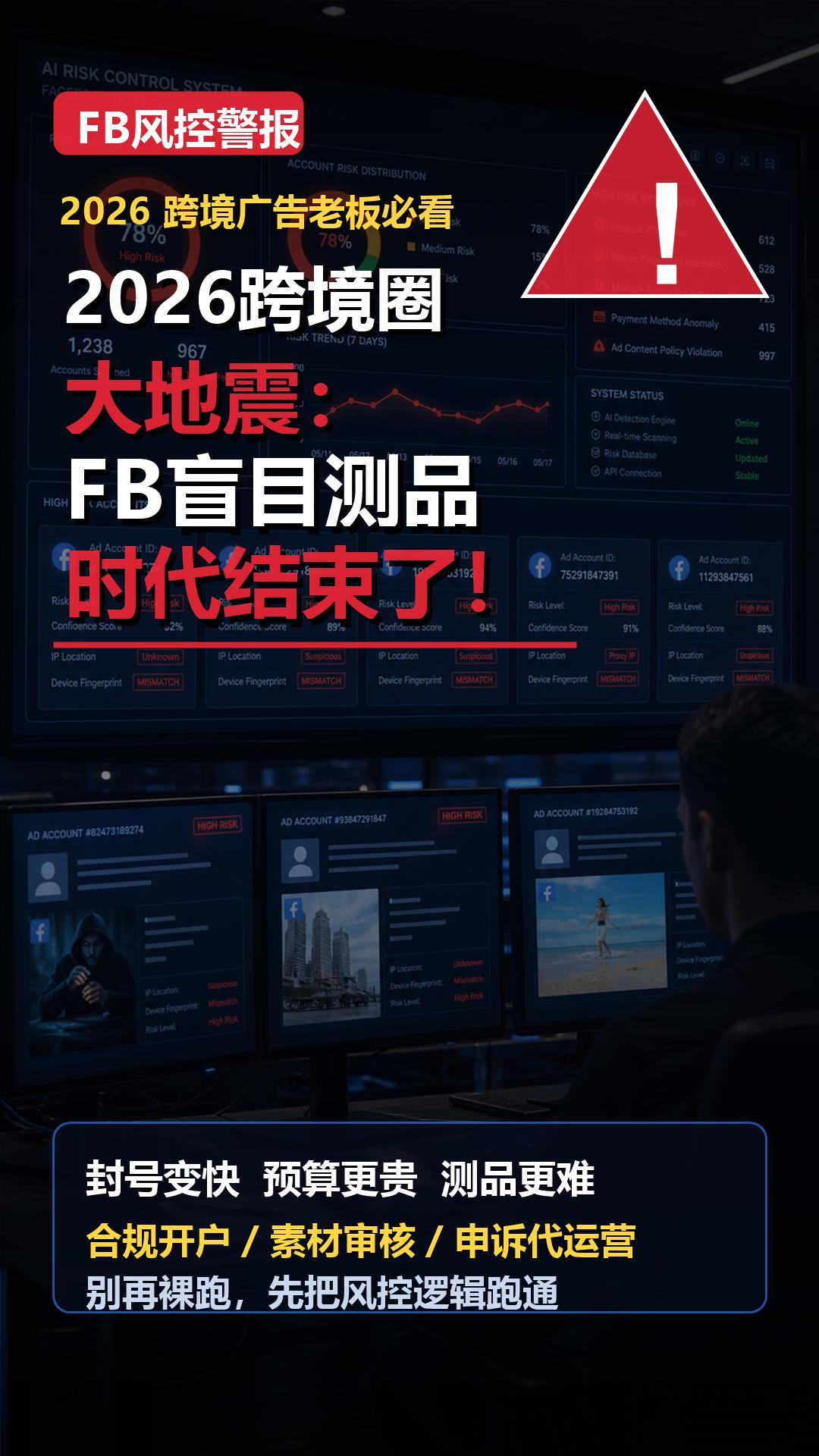
 The Era of Cross-Border Earthquakes in 2026: The Era of Blindly Testing FB Products Has Ended!
 Three key points of domestic-to-foreign trade most important, see if you really did your homework! Don’t take shortcuts.
 Note for dealers exporting cars: overseas customers are “quietly screening” you on Google

Related Products
 EasyCamp SaaS Smart Website Marketing SystemE-Yingbao SaaS Smart Website Marketing System: AI-powered, zero-code website building. Rapidly launch multilingual independent e-commerce sites in just 10 minutes. Global server acceleration and AI-driven SEO optimization empower businesses to efficiently connect with global markets. The seamless integration of technology and user-friendly operation makes building e-commerce sites incredibly simple.
 AI+SEM Intelligent Advertising Marketing SystemAI+SEM drives intelligent ad creation, empowering full-funnel precision advertising marketing. The system automatically generates weekly/monthly reports, AI recommends keywords and target countries, monitors core metrics in real-time with intelligent alerts, and enables one-click high-conversion ad solutions to help quickly acquire customers and improve ROI.
 AI+SEO Dual Engine Optimization ServiceEasyWin AI+SEO Dual Engine Optimization System leverages AI-powered keyword mining, content generation, and comprehensive technical optimization to help foreign trade enterprises acquire high-quality organic traffic, significantly improving search rankings and conversion rates.
 AI+SNS Social Media Marketing SystemYingbao AI+SNS Social Media Marketing System - Precision social capture for the social media era. Supports one-click content synchronization across major platforms like Facebook and LinkedIn. AI intelligently rewrites posts for enhanced relevance. 24/7 AI customer service and user profiling analysis empower businesses to efficiently expand into global markets.
 AI+SEO营销解决方案易营宝AI+SEO营销解决方案,通过AI批量写作、智能生成TDK、精准关键词扩词等功能,全面优化网站SEO效果,提升流量与转化率。助力企业构建高效智能网站新生态。
 AI+SEM Advertising Marketing SolutionsAI+SEM Advertising Marketing Solution leverages AI technology to deeply empower SEM ad campaigns. It automatically generates weekly/monthly reports using AI, presenting account data across multiple dimensions for comprehensive insights into campaign performance and trends. The system precisely recommends keywords and target countries, intelligently generates high-conversion ad copy, and enables one-click activation of efficient campaign plans to help businesses rapidly acquire customers. Simultaneously, it monitors core metrics in real time, intelligently identifies abnormal fluctuations, and issues timely alerts to ensure stable, high-return advertising results.
 Domain Name ServicesEasyWin provides professional domain name services, including intelligent queries, one-stop registration, brand protection, and full lifecycle management, helping businesses build a digital brand image.
 EasyOperate B2C Cross-Border E-Commerce Platform & Independent WebsiteEasyStore B2C Cross-border E-commerce Independent Store is an intelligent website building and cross-border e-commerce integrated solution independently developed by EasyStore Information Technology (Beijing) Co., Ltd. The system is specially designed for small and medium-sized as well as large export enterprises, integrating 'website building, operation, marketing, advertising, and conversion' into one, helping enterprises quickly establish cross-border e-commerce independent stores to achieve brand globalization and global sales growth.
The platform supports multiple languages, multiple currencies, and multi-channel marketing, with built-in AI intelligent translation and SEO optimization systems, suitable for mainstream markets such as Southeast Asia, Europe and America, Latin America, and the Middle East, assisting Chinese manufacturing enterprises in efficiently deploying international e-commerce strategies. SSL证书易营宝提供专业SSL安全证书服务,包括单域名和泛域名证书,确保网站数据传输加密、身份验证和完整性保护,助力企业建立安全可信的在线业务环境。









