









- How Can a Brand Updates Page Be Made More SEO-Friendly? Analysis of Update Frequency, Content Structure, and Internal Linking StrategyJun 28, 2026View details
- What stages does the cross-border services ecosystem include? How do website building, promotion, payment, and compliance work togetherJun 22, 2026View details
- How will email marketing costs change in 2026Jun 22, 2026View details
- The China-US tariff arrangement has reached a preliminary consensus, and the trade association will be establishedJun 15, 2026View details
- Should overseas brand marketing start with ads or contentJun 21, 2026View details
- What determines B2C cross-border e-commerce website development costs? A breakdown of features, interfaces, and deployment methodsJun 17, 2026View details
- China-Morocco zero-tariff access, a breakthrough in the cost of Moroccan goods exports to ChinaJun 11, 2026View details
- What signal should be released for the suspension of exports to JapanJun 10, 2026View details
How Does AI Website Acceleration Technology Improve User Experience? An Analysis of the Relationship Between Above-the-Fold Speed and Conversions
AI Website Acceleration Technology Solutions for Improving User Experience: Why First-Screen Speed Comes First
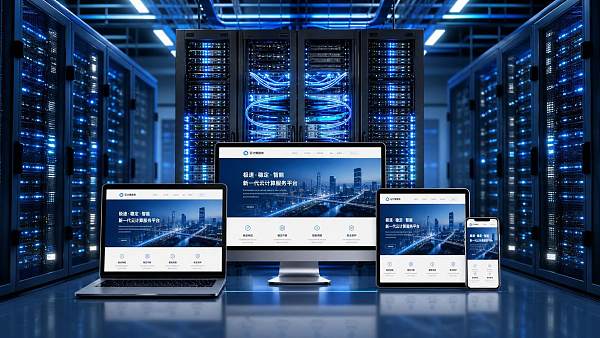
As traffic becomes increasingly expensive, speed is no longer just a technical metric, but a business variable that affects conversion. Many websites have decent content, but their first screen loads slowly. Users leave before seeing the core information, and subsequent advertising, SEO, and inquiry funnels are all dragged down.
This is also why AI website acceleration technology solutions for improving user experience are becoming a key evaluation focus in integrated website development and marketing service projects. For technical teams, what truly matters is not “whether acceleration has been implemented,” but “whether users can see, click, and submit faster.”
From a practical business perspective, first-screen speed directly affects three outcomes. The first is willingness to stay, the second is interaction depth, and the third is conversion efficiency. The earlier a page becomes usable, the more likely users are to continue browsing products, viewing case studies, filling out forms, and even completing orders.
If a website targets overseas markets, the problem becomes more obvious. Network environments, device models, access regions, and content languages are all more complex. Without a systematic AI website acceleration technology solution for improving user experience, there is often a gap where local tests are fast, but real users experience slow access.
Why First-Screen Speed Affects Conversion and SEO
At its core, first-screen speed affects the first impression. In the first few seconds after opening a page, users quickly judge whether the site is trustworthy and worth waiting for. This judgment is especially direct on advertising landing pages, B2B inquiry pages, and cross-border e-commerce sites.
When the first screen remains incomplete for too long, users usually respond in three ways: closing the page, returning to search results, or switching to a competitor’s website. For a business, this is not simply an increase in bounce rate, but a continuous amplification of customer acquisition costs.
From a search performance perspective, speed also affects crawl efficiency, page experience signals, and mobile performance. Search engines are more willing to recommend pages that load reliably, support smooth interaction, and have a clear structure. In other words, an AI website acceleration technology solution for improving user experience is not only front-end optimization, but also a foundational SEO capability.
More importantly, speed and conversion do not have a linear relationship. For many websites, the most obvious improvement occurs when they are optimized from “slow” to “acceptable”; and when moving from “acceptable” to “faster,” the transaction efficiency of high-value pages can often be further improved, especially in scenarios with high average order value and multi-step decision-making.
Common Impact Paths
- The first screen is slow, users cannot see the value proposition, and dwell time decreases.
- Interaction is delayed, button clicks receive no response, and form submissions are interrupted.
- Page layout shifts are obvious, disrupting reading and checkout paths.
- The mobile experience is poor, damaging both paid traffic and organic traffic.
AI Website Acceleration Technology Solutions for Improving User Experience Are Not Just About Compressing Resources
When many teams talk about acceleration, their first reaction is image compression, CDN deployment, and script merging. These are certainly important, but they are not enough on their own. More effective AI website acceleration technology solutions for improving user experience have now shifted from static optimization to dynamic awareness and intelligent scheduling.
AI-driven acceleration focuses on identifying different access scenarios and then automatically selecting more suitable loading strategies. For example, access routes differ by country, processing capabilities differ by device, and conversion tasks differ by page, so loading priorities should not be the same.
A mature solution usually makes dynamic adjustments around real user experience rather than applying the same set of rules to every page. The value of doing so lies in prioritizing limited resources for key first-screen content, core interaction modules, and high-conversion components.
Implementable Technical Capabilities
- Intelligent resource prioritization, loading headlines, hero images, and call-to-action buttons first.
- Automatic allocation of nodes and caching strategies based on region and network quality.
- Output of different image sizes and script versions according to device capabilities.
- Prediction of users’ next actions and prefetching of high-probability page resources in advance.
- Identification of low-value scripts to reduce the interference of third-party tags with the first screen.
This type of solution is especially useful for foreign trade official websites, multilingual websites, B2C cross-border e-commerce sites, and advertising landing pages. It does not solve a single-point performance issue, but overall experience consistency across multiple regions, multiple devices, and multiple business goals.
What Standards Should Be Prioritized During Technical Evaluation
When evaluating an AI website acceleration technology solution for improving user experience, you should not only look at demo page scores. Scores can be used as a reference, but what is truly valuable is the verifiability of stability, adaptability, and business results. Otherwise, it is easy to see impressive results in a test environment but ordinary performance online.
A more practical approach is to evaluate technical metrics together with business metrics. The former determines the capability of the solution, while the latter determines the return on investment. Only when both are valid is the solution worth advancing.
Points Easily Overlooked During Evaluation
- Testing only the homepage, while ignoring product pages, landing pages, and multilingual pages.
- Looking only at lab data, while ignoring real user access data.
- Ignoring the slowdown caused by third-party analytics, customer service tools, and advertising code.
- Lacking continuous monitoring after launch, making optimization results impossible to review.
For Global Business, How Website Acceleration Works Together with Integrated Marketing
Judging from recent changes, website speed can no longer be handled in isolation. It interacts with website architecture, SEO optimization, advertising, social media traffic acquisition, and AI search visibility. When page speed is unstable, the larger the paid traffic volume, the more obvious the waste becomes.
In this context, integrated website + marketing services have greater practical value. Taking 易营宝 as an example, its AI-driven capabilities in intelligent website building, cross-border e-commerce, AI advertising marketing, and AI+SEO/GEO optimization can manage website performance, content distribution, and customer acquisition funnels within the same system.
The advantage of this model is not only making the website faster, but making “faster” directly serve indexing, ranking, clicks, dwell time, and conversion. For companies expanding overseas, this is more likely to produce stable results than purchasing several technical tools separately.
Especially when a business covers North America, Europe, Southeast Asia, Japan and South Korea, the Middle East, and Latin America, a unified platform can more easily handle coordination among multilingual content, multi-region access, and multi-channel advertising. This is also why AI website acceleration technology solutions for improving user experience increasingly emphasize platform-based capabilities.
Implementation Recommendations: From Speed Optimization to Conversion Optimization
To truly advance an AI website acceleration technology solution for improving user experience, it is recommended to first define the target pages and then implement optimization by priority. The homepage is important, but high-conversion pages deserve higher priority, such as product detail pages, inquiry pages, quotation pages, and advertising landing pages.
During actual implementation, you can proceed in the following order.
- Start with real user speed testing, distinguishing by region, device, and page type.
- Review key first-screen elements and establish clear loading priorities.
- Remove redundant scripts, heavy assets, and low-value plugins.
- Introduce AI scheduling strategies to dynamically optimize by network and device.
- Bind speed metrics with conversion metrics for tracking and continuous review.
Finally, it is important to note that speed optimization is not a one-time project. New page launches, added advertising scripts, updated image assets, and expanded market regions can all affect the experience again. Therefore, a truly effective AI website acceleration technology solution for improving user experience must have continuous monitoring, automatic adjustment, and business-linked capabilities.
For companies that want to balance website building, SEO, advertising, and global conversion, optimizing first-screen speed is often the starting point for improving overall growth efficiency. With faster speed and a more stable user experience, every subsequent marketing investment is more likely to convert into real results.
Related Articles
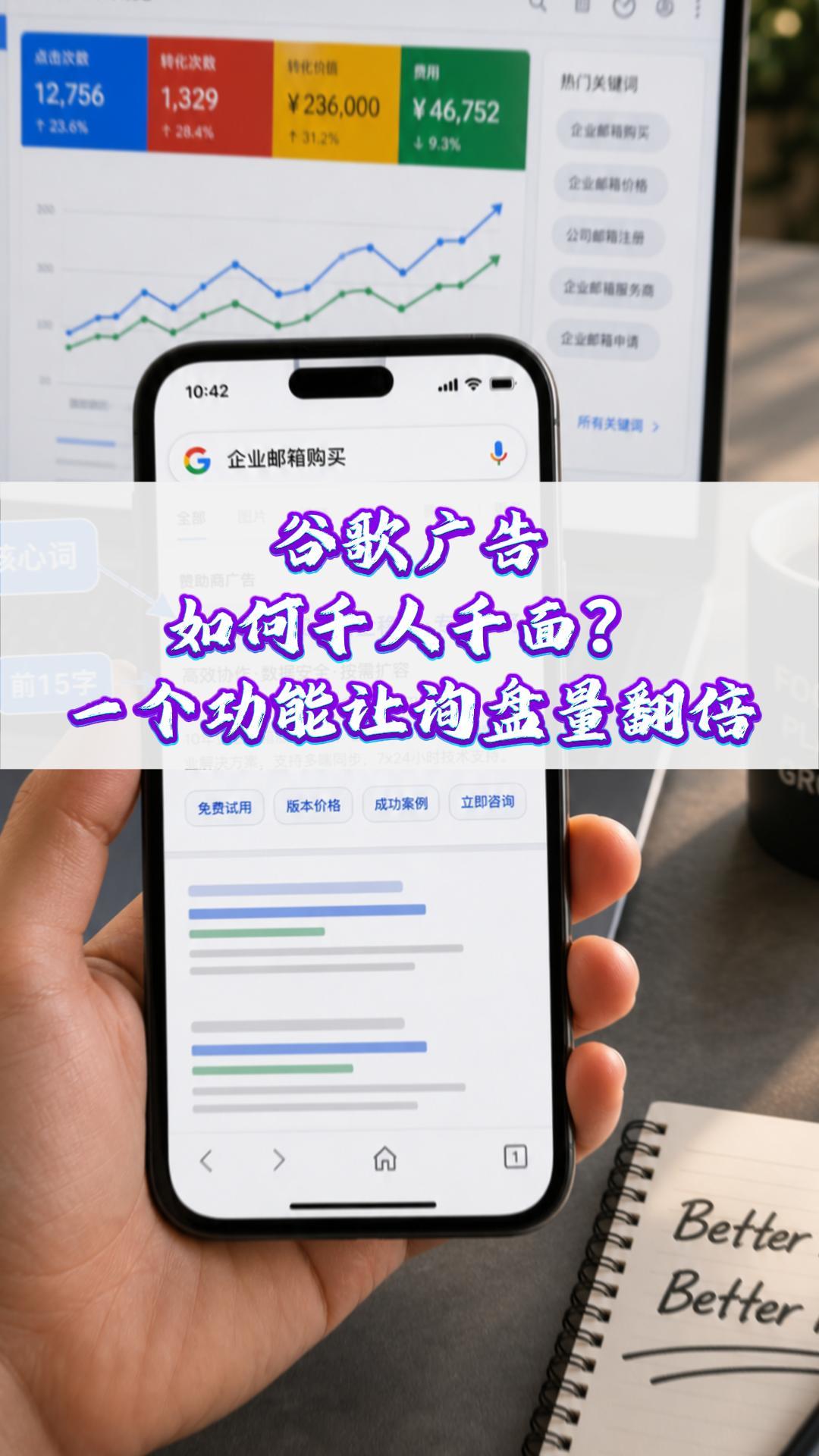
 How can Google Ads deliver one-to-one personalization? One feature can double your inquiry volume#ExportMarketing#OverseasPromotion#GoogleAds#SocialMediaMarketing#ForeignTradeIndependentWebsite
 Why a Google-optimized independent website is essential for trailer exports
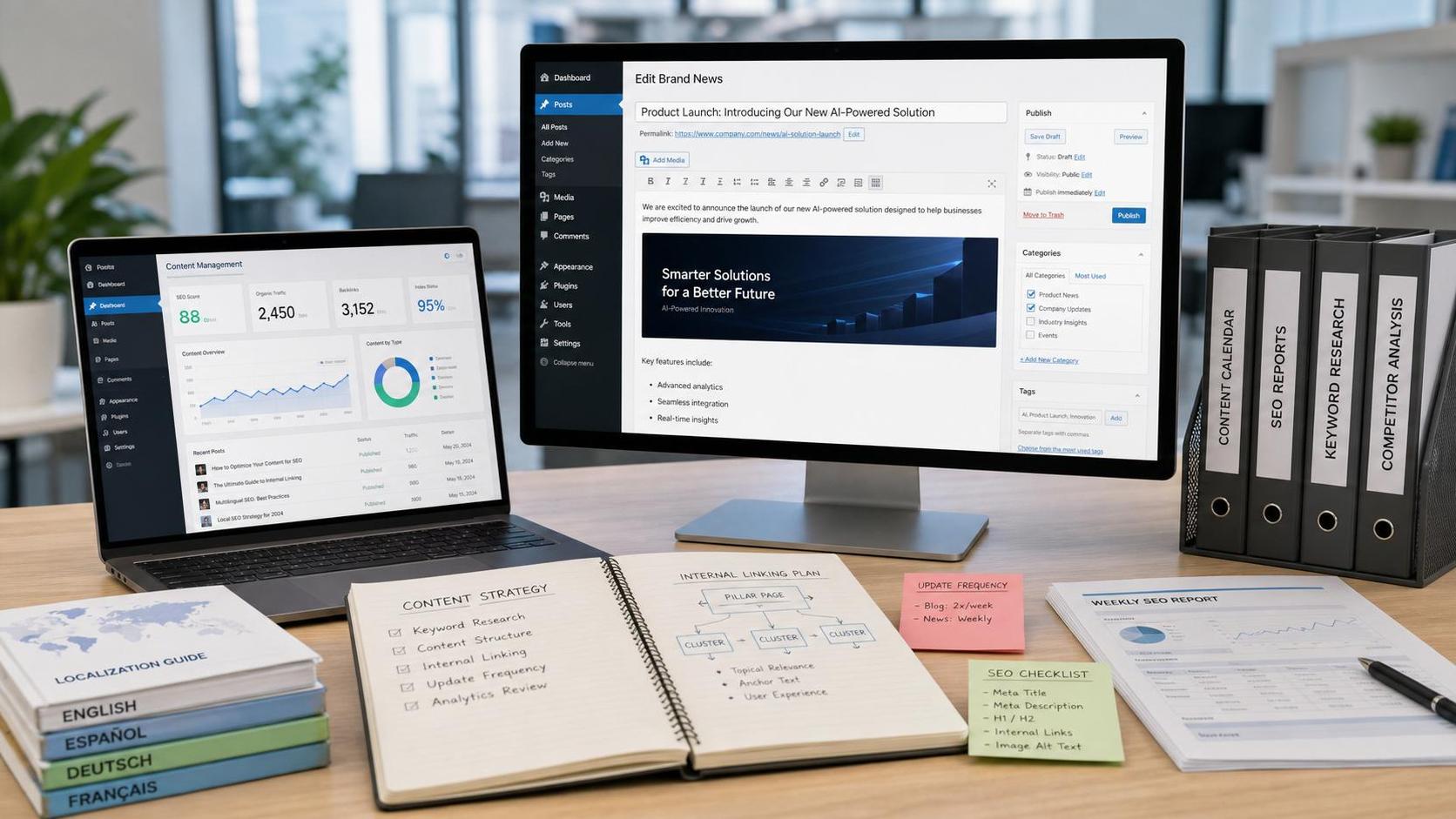
 How Can a Brand Updates Page Be Made More SEO-Friendly? Analysis of Update Frequency, Content Structure, and Internal Linking Strategy

Related Products
 EasyCamp SaaS Smart Website Marketing SystemE-Yingbao SaaS Smart Website Marketing System: AI-powered, zero-code website building. Rapidly launch multilingual independent e-commerce sites in just 10 minutes. Global server acceleration and AI-driven SEO optimization empower businesses to efficiently connect with global markets. The seamless integration of technology and user-friendly operation makes building e-commerce sites incredibly simple.
 AI+SEM Intelligent Advertising Marketing SystemAI+SEM drives intelligent ad creation, empowering full-funnel precision advertising marketing. The system automatically generates weekly/monthly reports, AI recommends keywords and target countries, monitors core metrics in real-time with intelligent alerts, and enables one-click high-conversion ad solutions to help quickly acquire customers and improve ROI.
 AI+SEO Dual Engine Optimization ServiceEasyWin AI+SEO Dual Engine Optimization System leverages AI-powered keyword mining, content generation, and comprehensive technical optimization to help foreign trade enterprises acquire high-quality organic traffic, significantly improving search rankings and conversion rates.
 AI+SNS Social Media Marketing SystemYingbao AI+SNS Social Media Marketing System - Precision social capture for the social media era. Supports one-click content synchronization across major platforms like Facebook and LinkedIn. AI intelligently rewrites posts for enhanced relevance. 24/7 AI customer service and user profiling analysis empower businesses to efficiently expand into global markets.
 AI+SEO营销解决方案易营宝AI+SEO营销解决方案,通过AI批量写作、智能生成TDK、精准关键词扩词等功能,全面优化网站SEO效果,提升流量与转化率。助力企业构建高效智能网站新生态。
 AI+SEM Advertising Marketing SolutionsAI+SEM Advertising Marketing Solution leverages AI technology to deeply empower SEM ad campaigns. It automatically generates weekly/monthly reports using AI, presenting account data across multiple dimensions for comprehensive insights into campaign performance and trends. The system precisely recommends keywords and target countries, intelligently generates high-conversion ad copy, and enables one-click activation of efficient campaign plans to help businesses rapidly acquire customers. Simultaneously, it monitors core metrics in real time, intelligently identifies abnormal fluctuations, and issues timely alerts to ensure stable, high-return advertising results.
 Domain Name ServicesEasyWin provides professional domain name services, including intelligent queries, one-stop registration, brand protection, and full lifecycle management, helping businesses build a digital brand image.
 EasyOperate B2C Cross-Border E-Commerce Platform & Independent WebsiteEasyStore B2C Cross-border E-commerce Independent Store is an intelligent website building and cross-border e-commerce integrated solution independently developed by EasyStore Information Technology (Beijing) Co., Ltd. The system is specially designed for small and medium-sized as well as large export enterprises, integrating 'website building, operation, marketing, advertising, and conversion' into one, helping enterprises quickly establish cross-border e-commerce independent stores to achieve brand globalization and global sales growth.
The platform supports multiple languages, multiple currencies, and multi-channel marketing, with built-in AI intelligent translation and SEO optimization systems, suitable for mainstream markets such as Southeast Asia, Europe and America, Latin America, and the Middle East, assisting Chinese manufacturing enterprises in efficiently deploying international e-commerce strategies. SSL证书易营宝提供专业SSL安全证书服务,包括单域名和泛域名证书,确保网站数据传输加密、身份验证和完整性保护,助力企业建立安全可信的在线业务环境。









