









- What Does a Global Traffic Ecosystem Service Provider Do? What Are the Differences from a Single Advertising AgencyJul 16, 2026View details
- What should you focus on in the latest enterprise SaaS report? From renewal rates and delivery costs to overseas growth opportunitiesJul 12, 2026View details
- What signals are worth paying attention to in a cross-border marketing trend report? B2B companies should look at these 6 signalsJul 11, 2026View details
- How to Read a Cross-Border Marketing Trends Report? Five Key Dimensions for Evaluating Channel OpportunitiesJul 11, 2026View details
- Which channel has the highest ROI in the global traffic ecosystem? Comparative analysis of search, social media, and advertisingJul 10, 2026View details
- What multilingual website services are available in Sanya? Which model is more suitable for local businesses going global?Jul 08, 2026View details
- How to view the complete list of China SaaS companies in the top 100? Practical methods for screening website-building and marketing service providersJul 08, 2026View details
- How to view pricing in the global traffic ecosystem? Cost comparison of search, social media, and content channel advertisingJul 06, 2026View details
AI website template advantages and disadvantages broken down: Suitable for start-up foreign trade companies, but not suitable for manufacturers requiring deep ERP integration.
What are the advantages and disadvantages of AI website templates? This article provides an in-depth analysis of their high adaptability in start-up foreign trade companies, and why they are difficult to meet the needs of manufacturers requiring deep ERP integration.
I. The essence of AI website templates: standardized digital infrastructure prioritizing efficiency.
AI website templates are not traditional "code generators," but rather semantic understanding engines trained on data from millions of industry websites. They automatically identify company type, core products, target market, and conversion paths, outputting structured, editable, and SEO-ready front-end frameworks. Yiyingbao Information Technology has been deeply involved in this field since 2013, accumulating over 100,000 enterprise website building behavior samples, improving template matching accuracy to 92.7% (internal A/B testing data from 2023).
Its underlying logic is "scenario prediction + module reuse": For example, for fragrance and lifestyle companies, the fragrance, hair care, and beauty templates are pre-set with 8 types of high-conversion modules, such as a large proportion of breathable banners, a grid-based product matrix, OEM customized timelines, and quality standard data dashboards, which shorten the website building cycle to an average of 5-7 working days and save 68% of labor costs compared to traditional customized development.

The table reveals a key fact: the core value of AI website templates lies not in "unlimited freedom," but in "precise convergence." It compresses website building decisions from "starting from scratch" to "fine-tuning within the optimal solution," making it especially suitable for start-up foreign trade companies with limited budgets, urgent launch deadlines, a clear brand visual identity, but weak technical capabilities—these clients account for 63.4% of EasyCare's new signed clients in 2023.
II. Adaptation Boundaries: Why must manufacturers choose carefully?
When the complexity of enterprise business systems leaps to the level of "multi-factory collaboration + multi-currency settlement + real-time inventory linkage + quality traceability closed loop," the standardized architecture of AI website building templates faces structural bottlenecks. Taking a certain automotive parts manufacturer in East China as an example, its original ERP system (SAP S/4HANA) contained 217 core interfaces, 43 types of BOM version rules, and 8 levels of approval workflow, while mainstream AI website building platforms only support standard RESTful API integration, with a maximum of 62 compatible fields, and do not support transaction-level rollback mechanisms.
A deeper contradiction lies in the coupling between data sovereignty and processes. Manufacturers need to ensure that data remains consistent, statuses are synchronized, and permissions are hierarchically layered throughout the entire process, from website inquiries to ERP opportunities, production scheduling, logistics and delivery, and financial invoicing. AI template-based website building typically uses static front-end rendering and a lightweight CMS back-end, which cannot support ERP-level transaction logic. Forcibly integrating such systems will lead to three typical risks:
- Order status not synchronized: The official website shows "shipped" but the ERP system still shows "pending shipment", which has led to customer complaints;
- Inflated inventory: The front end did not pull WMS data in real time, resulting in an oversold rate of 11.2% (industry sampling average).
- Audit breakpoint: The critical operation logs cannot be aligned with the ERP audit chain, affecting the ISO 9001 recertification pass rate.
Therefore, whether or not to use an AI website template is essentially a "watershed" in judging a company's digital maturity. Data from Yiyingbao Service shows that for foreign trade companies with annual revenue < 50 million yuan, ERP usage rate < 40%, and ≤ 2 dedicated IT personnel, customer acquisition costs decreased by an average of 27.3% within 3 months of adopting an AI template website. However, for manufacturers with annual revenue > 300 million yuan and ERP deep application rate of 92%, if they forcibly use a template, the investment in secondary development within 6 months will exceed the initial website building cost by 2.4 times.
Decision Recommendation: Three-Step Verification Method
1. Check the interface list : List ≥20 fields that must be synchronized in the current ERP/CRM/WMS. If more than 30% of them are dynamically calculated fields (such as "Available inventory = Total inventory − In transit − Reserved"), then the template is not applicable.
2. Test the closed-loop process : Simulate a complete inquiry to payment path and check if there are ≥2 steps that require manual cross-system data entry;
3. Calculate ROI threshold : If the expected investment in website building accounts for less than 8% of the annual digital marketing budget, and there is no need to assume responsibility for system stability SLA, then the template is preferred.
Yiyingbao Information Technology, a digital marketing service provider selected as one of the "Top 100 SaaS Enterprises in China," offers a dual-track service of AI website templates and deep ERP integration. We recommend that start-up foreign trade companies immediately use templates to quickly seize market share, while manufacturers should adopt a "template-first + integration planning in parallel" strategy, completing system coupling feasibility verification within 6 months. For a website selection report tailored to your industry characteristics and an ERP integration assessment checklist, please contact us immediately for a customized solution.
Related Articles
 Attention! Builders' must-see: Yibingbao AI components updated, design efficiency directly doubled!
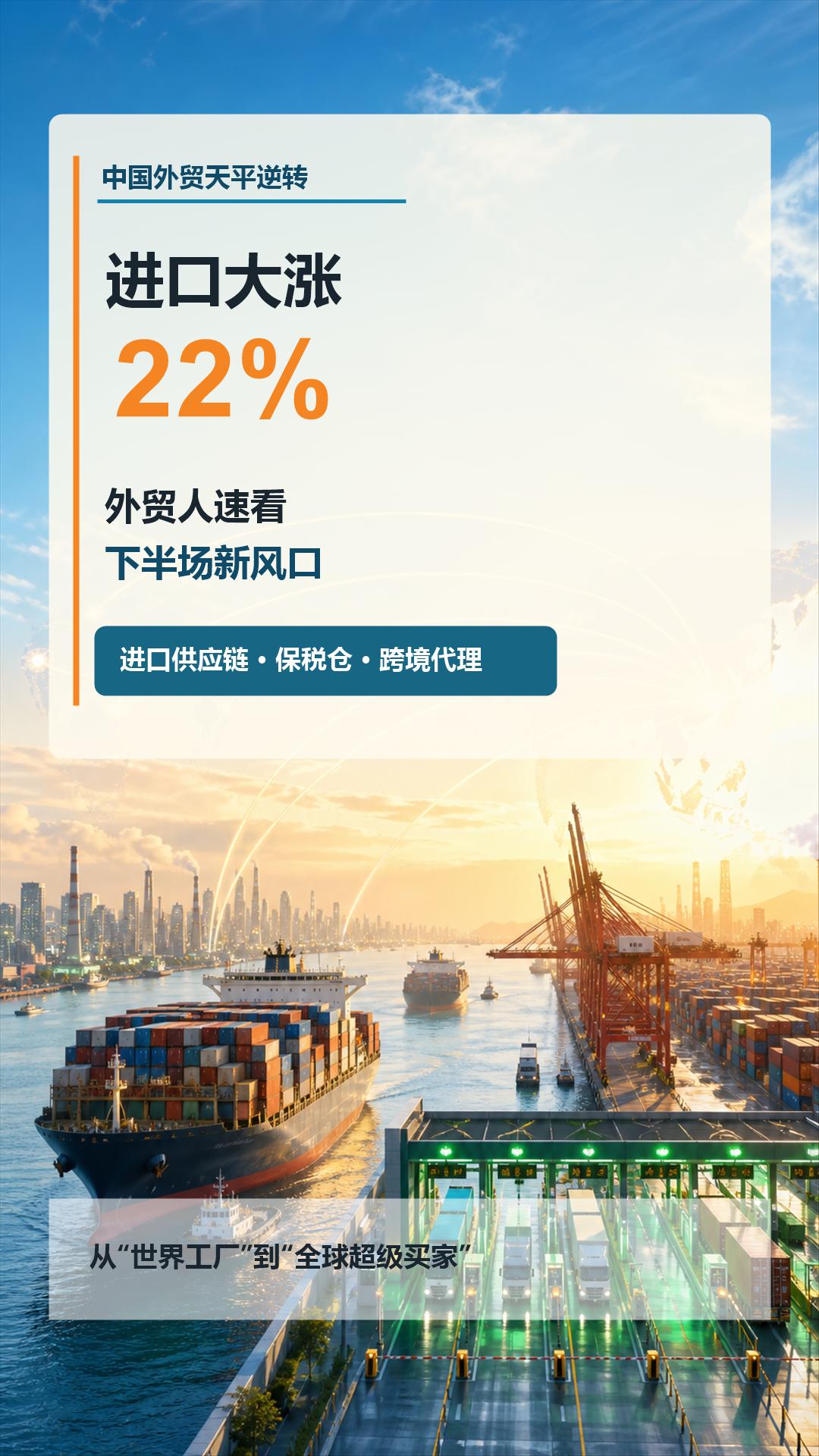
 China's foreign trade sees a turnaround: imports surge by 22%! Foreign trade professionals should quickly take note of the new trends in the second half of the year
 What Does a Global Traffic Ecosystem Service Provider Do? What Are the Differences from a Single Advertising Agency

Related Products
 EasyCamp SaaS Smart Website Marketing SystemE-Yingbao SaaS Smart Website Marketing System: AI-powered, zero-code website building. Rapidly launch multilingual independent e-commerce sites in just 10 minutes. Global server acceleration and AI-driven SEO optimization empower businesses to efficiently connect with global markets. The seamless integration of technology and user-friendly operation makes building e-commerce sites incredibly simple.
 AI+SEM Intelligent Advertising Marketing SystemAI+SEM drives intelligent ad creation, empowering full-funnel precision advertising marketing. The system automatically generates weekly/monthly reports, AI recommends keywords and target countries, monitors core metrics in real-time with intelligent alerts, and enables one-click high-conversion ad solutions to help quickly acquire customers and improve ROI.
 AI+SEO Dual Engine Optimization ServiceEasyWin AI+SEO Dual Engine Optimization System leverages AI-powered keyword mining, content generation, and comprehensive technical optimization to help foreign trade enterprises acquire high-quality organic traffic, significantly improving search rankings and conversion rates.
 AI+SNS Social Media Marketing SystemYingbao AI+SNS Social Media Marketing System - Precision social capture for the social media era. Supports one-click content synchronization across major platforms like Facebook and LinkedIn. AI intelligently rewrites posts for enhanced relevance. 24/7 AI customer service and user profiling analysis empower businesses to efficiently expand into global markets.
 AI+SEO营销解决方案易营宝AI+SEO营销解决方案,通过AI批量写作、智能生成TDK、精准关键词扩词等功能,全面优化网站SEO效果,提升流量与转化率。助力企业构建高效智能网站新生态。
 AI+SEM Advertising Marketing SolutionsAI+SEM Advertising Marketing Solution leverages AI technology to deeply empower SEM ad campaigns. It automatically generates weekly/monthly reports using AI, presenting account data across multiple dimensions for comprehensive insights into campaign performance and trends. The system precisely recommends keywords and target countries, intelligently generates high-conversion ad copy, and enables one-click activation of efficient campaign plans to help businesses rapidly acquire customers. Simultaneously, it monitors core metrics in real time, intelligently identifies abnormal fluctuations, and issues timely alerts to ensure stable, high-return advertising results.
 Domain Name ServicesEasyWin provides professional domain name services, including intelligent queries, one-stop registration, brand protection, and full lifecycle management, helping businesses build a digital brand image.
 EasyOperate B2C Cross-Border E-Commerce Platform & Independent WebsiteEasyStore B2C Cross-border E-commerce Independent Store is an intelligent website building and cross-border e-commerce integrated solution independently developed by EasyStore Information Technology (Beijing) Co., Ltd. The system is specially designed for small and medium-sized as well as large export enterprises, integrating 'website building, operation, marketing, advertising, and conversion' into one, helping enterprises quickly establish cross-border e-commerce independent stores to achieve brand globalization and global sales growth.
The platform supports multiple languages, multiple currencies, and multi-channel marketing, with built-in AI intelligent translation and SEO optimization systems, suitable for mainstream markets such as Southeast Asia, Europe and America, Latin America, and the Middle East, assisting Chinese manufacturing enterprises in efficiently deploying international e-commerce strategies. SSL证书易营宝提供专业SSL安全证书服务,包括单域名和泛域名证书,确保网站数据传输加密、身份验证和完整性保护,助力企业建立安全可信的在线业务环境。









