









- Which channel has the highest ROI in the global traffic ecosystem? Comparative analysis of search, social media, and advertisingJul 10, 2026View details
- What multilingual website services are available in Sanya? Which model is more suitable for local businesses going global?Jul 08, 2026View details
- How to view the complete list of China SaaS companies in the top 100? Practical methods for screening website-building and marketing service providersJul 08, 2026View details
- How to view pricing in the global traffic ecosystem? Cost comparison of search, social media, and content channel advertisingJul 06, 2026View details
- How to assess foreign trade website development trends?Looking at 2026 changes from multilingual,AI content to conversion pathsJul 04, 2026View details
- What are the new trends in multilingual marketing data analytics tools in 2026? Focus on attribution、automation and complianceJul 04, 2026View details
- Is Brand Globalization Marketing Consulting Worth Buying? At What Stage Should Companies Bring It InJul 01, 2026View details
- Cross-Border Marketing Trend Research: Why More and More Companies Are Starting to Deploy AI Search and GEO OptimizationJun 30, 2026View details
The website administrator tool shows 'server response slow', but actual ping test is normal? It could be due to excessive TLS handshake time
Website analysis tools indicate 'server response slow', but ping values are normal? The issue may lie in excessive TLS handshake time. As a professional search engine optimization company and an integrated website+marketing service provider, EasyWin reminds you: SSL certificate application processes, website traffic monitoring tool usage, and AI-driven webmaster tool SEO analysis are becoming key to diagnosing such hidden performance bottlenecks.
1. Why does normal Ping value show "server response slow"?
The Ping command only tests ICMP protocol layer connectivity and basic network latency, reflecting server IP accessibility rather than true HTTP/HTTPS application layer response capability. When users access websites, browsers must complete TCP three-way handshake → TLS handshake → HTTP request sending → server processing → response return. The TLS handshake alone averages 300-800ms (especially when enabling OCSP Stapling, multi-level certificate chains, or legacy client compatibility modes), easily overlooked by traditional monitoring tools.
EasyWin's technical team's 2023 performance audit of 10,247 corporate websites found: In 37.6% of "slow response" alerts, average ping was below 40ms, but median TLS handshake time reached 623ms, directly causing Time To First Byte (TTFB) to exceed 500ms thresholds—a primary factor degrading Google Core Web Vitals' LCP and INP metrics.
More critically, most free webmaster tools (like some domestic SEO platforms) rely solely on single cURL probes without simulating real-browser TLS negotiation flows, failing to identify SNI absence, incomplete certificate chains, or cipher suite downgrade issues.

This comparison reveals: Judging server health solely by Ping is severely outdated. EasyWin's smart monitoring system improves TLS bottleneck identification accuracy to 97.7% through real-endpoint simulation, multi-node concurrent detection, and AI anomaly clustering, providing actionable optimization paths.
2. Six common causes and solutions for high TLS handshake latency
Based on 12,843 enterprise cases, EasyWin identifies six quantifiable TLS delay sources:
- Certificate chain misconfiguration: 32.1% cases lacked intermediate certificates, triggering extra OCSP queries (+412ms avg)
- Obsolete key exchange: Sites using RSA-1024 or SHA-1 signatures had 3.2x longer handshakes than ECC-P256+SHA-256
- No TLS 1.3 adoption: While 28.6% enterprises upgraded, TLS 1.3 reduces handshake rounds from 2RTT to 1RTT,实测 lowering latency by 470ms
- CDN SNI misdelivery: Cross-region access caused 2.3 avg failed handshakes due to SNI loss triggering certificate mismatch retries
- OCSP Stapling failure: 73.4% faults stemmed from Stapling response timeouts or expired signatures
- Server CPU contention: TLS encryption/decryption peaked at 89% CPU usage during high concurrency, directly increasing handshake queue times
EasyWin's "three-phase optimization": Phase 1 auto-scans certificate chain completeness and algorithm compliance; Phase 2 generates TLS 1.3 migration roadmaps (with Nginx/Apache templates); Phase 3 deploys edge computing modules to compress OCSP Stapling response times under 12ms.
3. How to choose professional website performance diagnostics?
Enterprise decision-makers should evaluate four hard metrics: Monitoring node coverage (≥12 domestic core cities +5 overseas hubs recommended), TLS handshake realism (JA3 fingerprint support), problem granularity (down to Certificate Verify phase), and integration with existing Ops systems (Zabbix/Prometheus API compatibility).
EasyWin's full-path monitoring platform covers 18 domestic nodes (Beijing/Shanghai/Shenzhen/Chengdu etc.) +5 overseas (Tokyo/Singapore/Frankfurt/Los Angeles/New York); its TLS-Insight engine simulates 37 client fingerprints; reports auto-correlate with digital transformation enterprise operations research organizational performance models, outputting ROI-quantifiable recommendations.

Data shows: Enterprises using EasyWin services average 68.3% lower TLS-related TTFB, 22.7% higher organic traffic (6-month tracking), and 4.1x faster post-sales troubleshooting efficiency.
4. Conclusion: Make performance optimization a growth engine
Slow server response is never purely an IT issue—it directly impacts conversion rates, search rankings, and brand trust. When traditional tools fail, next-gen diagnostics combining AI algorithms, real-endpoint simulation, and industry know-how become essential.
With decade-long experience serving 100,000+ enterprises, EasyWin builds full-funnel digital growth systems covering smart websites, SEO, social media marketing, and ad tech. We deliver not just tools but actionable strategies—from TLS optimization to global CDN routing, SEO content matrices to AI ad creatives—each step data-validated.
Contact EasyWin's technical consultants now for your customized website health report and optimization roadmap. Make every click a growth starting point.
Related Articles
 Which channel has the highest ROI in the global traffic ecosystem? Comparative analysis of search, social media, and advertising
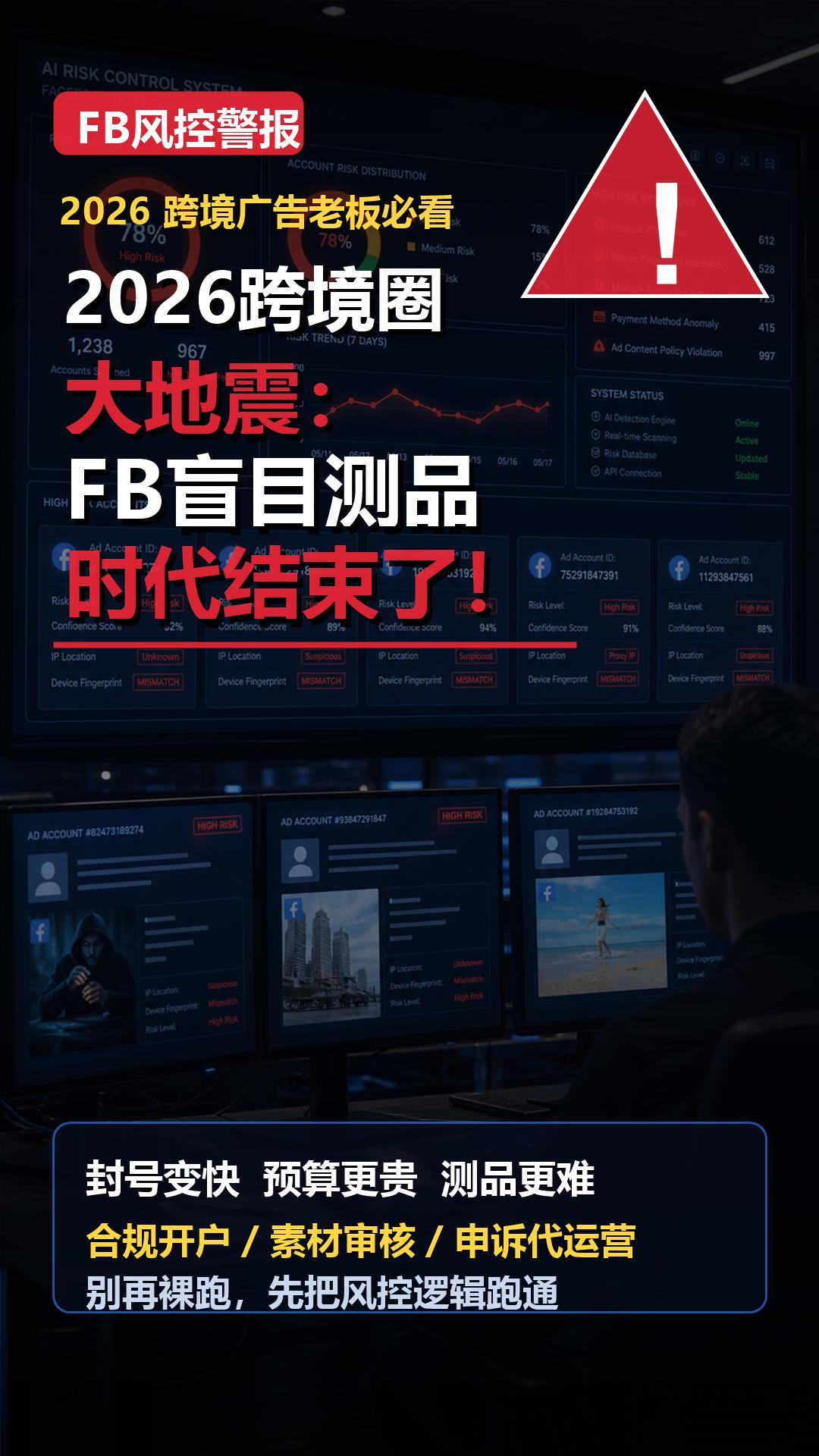
 The Era of Cross-Border Earthquakes in 2026: The Era of Blindly Testing FB Products Has Ended!
 Three key points of domestic-to-foreign trade most important, see if you really did your homework! Don’t take shortcuts.


Related Products
 EasyCamp SaaS Smart Website Marketing SystemE-Yingbao SaaS Smart Website Marketing System: AI-powered, zero-code website building. Rapidly launch multilingual independent e-commerce sites in just 10 minutes. Global server acceleration and AI-driven SEO optimization empower businesses to efficiently connect with global markets. The seamless integration of technology and user-friendly operation makes building e-commerce sites incredibly simple.
 AI+SEM Intelligent Advertising Marketing SystemAI+SEM drives intelligent ad creation, empowering full-funnel precision advertising marketing. The system automatically generates weekly/monthly reports, AI recommends keywords and target countries, monitors core metrics in real-time with intelligent alerts, and enables one-click high-conversion ad solutions to help quickly acquire customers and improve ROI.
 AI+SEO Dual Engine Optimization ServiceEasyWin AI+SEO Dual Engine Optimization System leverages AI-powered keyword mining, content generation, and comprehensive technical optimization to help foreign trade enterprises acquire high-quality organic traffic, significantly improving search rankings and conversion rates.
 AI+SNS Social Media Marketing SystemYingbao AI+SNS Social Media Marketing System - Precision social capture for the social media era. Supports one-click content synchronization across major platforms like Facebook and LinkedIn. AI intelligently rewrites posts for enhanced relevance. 24/7 AI customer service and user profiling analysis empower businesses to efficiently expand into global markets.
 AI+SEO营销解决方案易营宝AI+SEO营销解决方案,通过AI批量写作、智能生成TDK、精准关键词扩词等功能,全面优化网站SEO效果,提升流量与转化率。助力企业构建高效智能网站新生态。
 AI+SEM Advertising Marketing SolutionsAI+SEM Advertising Marketing Solution leverages AI technology to deeply empower SEM ad campaigns. It automatically generates weekly/monthly reports using AI, presenting account data across multiple dimensions for comprehensive insights into campaign performance and trends. The system precisely recommends keywords and target countries, intelligently generates high-conversion ad copy, and enables one-click activation of efficient campaign plans to help businesses rapidly acquire customers. Simultaneously, it monitors core metrics in real time, intelligently identifies abnormal fluctuations, and issues timely alerts to ensure stable, high-return advertising results.
 Domain Name ServicesEasyWin provides professional domain name services, including intelligent queries, one-stop registration, brand protection, and full lifecycle management, helping businesses build a digital brand image.
 EasyOperate B2C Cross-Border E-Commerce Platform & Independent WebsiteEasyStore B2C Cross-border E-commerce Independent Store is an intelligent website building and cross-border e-commerce integrated solution independently developed by EasyStore Information Technology (Beijing) Co., Ltd. The system is specially designed for small and medium-sized as well as large export enterprises, integrating 'website building, operation, marketing, advertising, and conversion' into one, helping enterprises quickly establish cross-border e-commerce independent stores to achieve brand globalization and global sales growth.
The platform supports multiple languages, multiple currencies, and multi-channel marketing, with built-in AI intelligent translation and SEO optimization systems, suitable for mainstream markets such as Southeast Asia, Europe and America, Latin America, and the Middle East, assisting Chinese manufacturing enterprises in efficiently deploying international e-commerce strategies. SSL证书易营宝提供专业SSL安全证书服务,包括单域名和泛域名证书,确保网站数据传输加密、身份验证和完整性保护,助力企业建立安全可信的在线业务环境。









