









- What Does a Global Traffic Ecosystem Service Provider Do? What Are the Differences from a Single Advertising AgencyJul 16, 2026View details
- What should you focus on in the latest enterprise SaaS report? From renewal rates and delivery costs to overseas growth opportunitiesJul 12, 2026View details
- What signals are worth paying attention to in a cross-border marketing trend report? B2B companies should look at these 6 signalsJul 11, 2026View details
- How to Read a Cross-Border Marketing Trends Report? Five Key Dimensions for Evaluating Channel OpportunitiesJul 11, 2026View details
- Which channel has the highest ROI in the global traffic ecosystem? Comparative analysis of search, social media, and advertisingJul 10, 2026View details
- What multilingual website services are available in Sanya? Which model is more suitable for local businesses going global?Jul 08, 2026View details
- How to view the complete list of China SaaS companies in the top 100? Practical methods for screening website-building and marketing service providersJul 08, 2026View details
- How to view pricing in the global traffic ecosystem? Cost comparison of search, social media, and content channel advertisingJul 06, 2026View details
Which SEO recommendations from webmaster tools can be implemented directly
When facing SEO recommendations from webmaster tools, which actions can be implemented directly, and which require systematic planning? This article will combine webmaster tool website analysis, search engine optimization techniques, and website traffic growth solutions to help you quickly identify high-priority optimization actions.
First determine: among the SEO recommendations from webmaster tools, which belong to actions that can be “implemented the same day”?

After many companies receive SEO recommendations from webmaster tools, their first reaction is “there are many problems,” and their second reaction is “I don’t know what to fix first.” For information researchers and project leaders, what is truly valuable is not the number of recommendations, but whether the first round of optimization can be completed within 1–3 days and whether improvements can be seen in crawling, indexing, or page experience.
Actions that can usually be implemented directly are concentrated on basic page items: duplicate titles, missing descriptions, images lacking explanations, dead links, abnormal redirects, mobile adaptation, pages opening too slowly, and core sections lacking internal link support. These types of issues are not necessarily complex, but they continuously hinder search engine understanding and user retention.
For technical evaluators, it is recommended to first distinguish 3 types of tasks: “front-end adjustable immediately,” “configurable in the CMS backend,” and “requiring server or program coordination.” This can control the execution cycle at three levels—2 hours, 1 day, and 1 week—avoiding the team spending a large amount of time on low-priority items.
When serving integrated projects that combine website building, SEO optimization, social media marketing, and advertising, Easy-Biz Information Technology (Beijing) Co., Ltd. usually first organizes an initial executable checklist, and then arranges mid- and long-term structural optimization. This not only ensures short-term results, but also reduces subsequent rework.
4 types of issues to prioritize for fixing
- Page element issues: such as titles being too short, multiple page titles being highly similar, or empty descriptions, which can usually be modified and updated on the same day.
- Link health issues: including 404 pages, invalid redirects, and broken internal links; it is recommended to check at least once a week.
- Content readability issues: thin main text, keyword stuffing, and category pages without introductory copy, all of which directly affect search understanding and inquiry conversion.
- Mobile experience issues: commonly seen in overly heavy first screens, buttons that are hard to tap, and cumbersome form filling, which usually require the front end to complete fixes within 3–7 days.
If an enterprise website has fewer than 100 pages, the first round of basic SEO corrections can generally be completed within 3–7 days; if there are many category structures and more than 500 pages of accumulated historical content, a phased approach is more suitable, fixing high-traffic pages and high-conversion pages first.
How can website analysis through webmaster tools be used to identify the website issues that truly affect traffic?

The value of website analysis through webmaster tools does not lie in listing dozens of scoring items, but in helping companies determine “which issues affect indexing and which issues affect conversion.” Especially for business decision-makers and quality control personnel, technical issues must be aligned with business goals rather than merely pursuing a superficial score.
In the integrated scenario of website + marketing services, it is recommended to divide the analysis dimensions into 3 layers: the first layer looks at crawling and indexing, the second layer looks at page quality, and the third layer looks at business opportunity capture. Only when the first two layers are linked with the third layer will a website traffic growth solution avoid remaining stuck in the stage of “traffic but no inquiries.”
Many enterprise websites do not lack content; rather, their content is scattered, the intent of categories is unclear, and different pages compete for the same keyword. If SEO recommendations from webmaster tools indicate duplicate titles, similar content, or diluted authority, this often means the website needs to restructure its internal linking and category logic, rather than simply publishing more articles.
The table below is suitable for technical evaluators, operations leaders, and management to review together, for quickly judging issue priorities and typical processing cycles.
From the perspective of execution order, crawling abnormalities should come first, followed by page quality, and only then by detailed conversion capture optimization. The reason is simple: if search engines cannot see or understand the site, even the best marketing content cannot deliver its value.
5 checkpoints recommended for technical evaluation
Don’t just look at the score, look at executability
- Whether the homepage, category pages, and detail pages form a clear hierarchy; a common recommendation is to keep them reachable within 3 levels.
- Whether there are bulk duplicate titles and descriptions, especially on filter pages, tag pages, and paginated pages.
- Whether the mobile first-screen load is too heavy, and whether images, scripts, and pop-ups affect the display of readable content within 3 seconds.
- Whether forms, phone numbers, online consultation, and document downloads are placed within the first two screens of high-intent pages.
- Whether logs, analytics, and conversion tracking are connected, making it convenient to review organic traffic and lead quality every week.
For website projects involving cross-department collaboration, these 5 checkpoints are more valuable for reference than a single score. They directly determine whether SEO recommendations remain at the reporting level or move into an implementation level that is deliverable, verifiable, and reviewable.
Which SEO recommendations should not be rushed into changes, but instead be included in systematic planning?
Not all SEO recommendations from webmaster tools are suitable for immediate execution. Anything involving information architecture, category renaming, URL adjustments, full-site template replacement, multilingual deployment, or content matrix construction should be included in 2–8 weeks of systematic planning. Otherwise, local optimization may cause new indexing fluctuations.
For example, if an enterprise website is preparing to simultaneously carry out smart website building, SEO optimization, and advertising, but the website’s original categories do not match the marketing path, then continuing to patch the old structure often leads to duplicate content, fragmented ad landing pages, and difficulty tracking subsequent data. Such issues need to be solved at the website architecture level.
For project managers and after-sales maintenance personnel, the core of systematic planning is not “changing a lot,” but “change once and run stably.” It is usually recommended to divide the process into 5 stages: requirement sorting, structural design, page optimization, launch verification, and data review, with clear acceptance items for each stage.
In complex projects, companies also pay simultaneous attention to compliant expression, content review, and data accuracy. In industries such as engineering, manufacturing, and service outsourcing, case studies, processes, and qualification descriptions on pages must balance authenticity and marketing expression. When organizing industry content methodologies, we also often refer to Common Problems and Countermeasure Analysis in Engineering Settlement Audits, a type of material framework emphasizing process, review, and risk control, to help companies optimize the logic of information presentation.
The table below is suitable for use in procurement decisions or proposal reviews, to determine the boundary between “modify immediately” and “modify after planning.”
This kind of judgment helps companies allocate resources to the most critical areas. Especially when budgets are limited, completing basic corrections first and then proceeding to architectural upgrades is usually more stable than making one large-scale overhaul at once.
How should different roles interpret SEO recommendations from webmaster tools in order to reduce communication costs?
For the same set of SEO recommendations, information researchers focus on “whether it is worth continuing to explore,” technical evaluators look at “whether it is easy to implement,” enterprise decision-makers look at “return on investment,” while distributors and end consumers care more about “whether the website is clear, trustworthy, and easy to contact.” Therefore, interpretation must be layered.
It is recommended to organize website analysis results from webmaster tools into three lists: management looks at priorities and timelines, the technical team looks at change items and dependencies, and the operations team looks at content and page conversion points. In this way, clear execution goals can be set within the three cycles of 7 days, 30 days, and 90 days.
For positions related to quality control and safety management, checks on information accuracy should also be added, including consistency of parameter descriptions, validity of contact information, consistency of downloadable document versions, and whether historical pages still retain invalid statements. These may not seem to belong to traditional SEO, but they significantly affect user trust and inquiry quality.
Leveraging artificial intelligence and big data capabilities, Easy-Biz Information Technology (Beijing) Co., Ltd. provides enterprises with integrated solutions ranging from smart website building to SEO optimization, and then to social media marketing and advertising. For enterprises seeking global growth, this integrated approach can reduce disconnects and repetitive communication in multi-vendor collaboration.
An implementation checklist suitable for procurement and evaluation meetings
- First confirm the website’s current core objective: customer acquisition, brand display, channel recruitment, or after-sales support. Different objectives correspond to different SEO recommendation priorities.
- Break the recommendations into measurable tasks, such as fixing 20 dead links, adding descriptions to 30 pages, and optimizing 10 high-value category pages.
- Assign a responsible person and deadline for each task; the common rhythm is 1 weekly review and 1 monthly summary.
- Conduct regression testing before launch, especially checking redirects, forms, analytics tags, and mobile display.
By advancing in this way, SEO recommendations are no longer just a “report,” but become a work checklist that is executable for the business, trackable for the project, and verifiable in results.
Common misunderstandings and FAQ: why has traffic growth not been obvious even after many changes were made?
Many enterprises have not failed to optimize; rather, the optimization sequence was wrong, the goals were wrong, or only the technical side was changed without changing the content. The real prerequisite for effective search engine optimization techniques is that page structure, content intent, and conversion paths match each other. Otherwise, even if indexing increases in the short term, it may not bring stable business opportunities.
If a website is redesigned frequently, URLs change repeatedly, and category positioning is unclear, search engines need to understand the website again, and this process commonly takes 2–6 weeks. If high-quality content is not continuously updated at the same time, traffic fluctuations will become even more obvious.
In addition, SEO recommendations should not be separated from the business loop. For example, if a page already has traffic but lacks a clear quotation entry, solution download, online consultation, or phone button, then a website traffic growth solution will be difficult to convert into sales leads.
FAQ 1: The titles and descriptions have all been changed—how long before changes can be seen?
A common situation is that the changes are gradually reflected in crawling and display within 1–4 weeks, but the specific speed is affected by the website’s update frequency, page importance, and historical quality. High-authority category pages are usually faster, while deep detail pages may be slower. It is recommended to check the sitemap and internal links at the same time after the changes are made.
FAQ 2: Do all pages need keyword placement?
No. Priority should be given to four types of pages: the homepage, core category pages, key service pages, and conversion-oriented content pages. If keywords are mechanically inserted across the whole site, topic duplication is likely to occur. For corporate websites, focusing first on 10–30 high-value pages is usually more effective than optimizing hundreds of pages at the same time.
FAQ 3: If webmaster tools indicate a low score, does that mean the website must be poor?
Not necessarily. Scores can only serve as indicators and cannot replace business judgment. Some websites may have average technical scores, but if the content and inquiry path are clear, conversion performance may still be good. What really matters is: whether crawling is normal, whether core pages are ranking, and whether users are willing to stay and make contact.
FAQ 4: How can we avoid affecting existing business after optimization?
It is recommended to back up first and then go live in stages. First adjust page elements that do not involve URLs, then adjust the link structure, and finally make changes at the template or category level. After each launch, observe for at least 7 days and recheck traffic, form submissions, phone clicks, and key landing page data.
Why choose us: from SEO recommendations from webmaster tools to website growth solutions, how can implementation be accelerated?
If you have already received SEO recommendations from webmaster tools but still are not sure what to fix first, how to schedule it, and how to balance website building, content, advertising, and conversion, then an integrated execution approach is more suitable. Breaking the issues into four lines—page correction, technical handling, content planning, and conversion optimization—is usually more efficient than outsourcing at a single point.
Since 2013, Easy-Biz Information Technology (Beijing) Co., Ltd. has been deeply engaged in global digital marketing services, building complete solutions around smart website building, SEO optimization, social media marketing, and advertising. For enterprises hoping to complete basic corrections within 30 days and advance structural upgrades within 60–90 days, this collaborative approach is more suitable for medium- and long-term growth.
If you need further evaluation, we can communicate around the following: diagnosis of current website issues, matching of keywords and categories, page templates and mobile experience, delivery timeline estimates, customized website traffic growth solutions, and collaborative implementation paths for multilingual or overseas promotion.
For projects jointly involving procurement, technology, operations, and management, a role-based evaluation checklist can also be prepared first, and then priorities and implementation rhythm can be determined. This not only reduces internal communication costs, but also ensures that every SEO recommendation from webmaster tools is truly transformed into trackable and verifiable growth actions.
Related Articles
 Attention! Builders' must-see: Yibingbao AI components updated, design efficiency directly doubled!
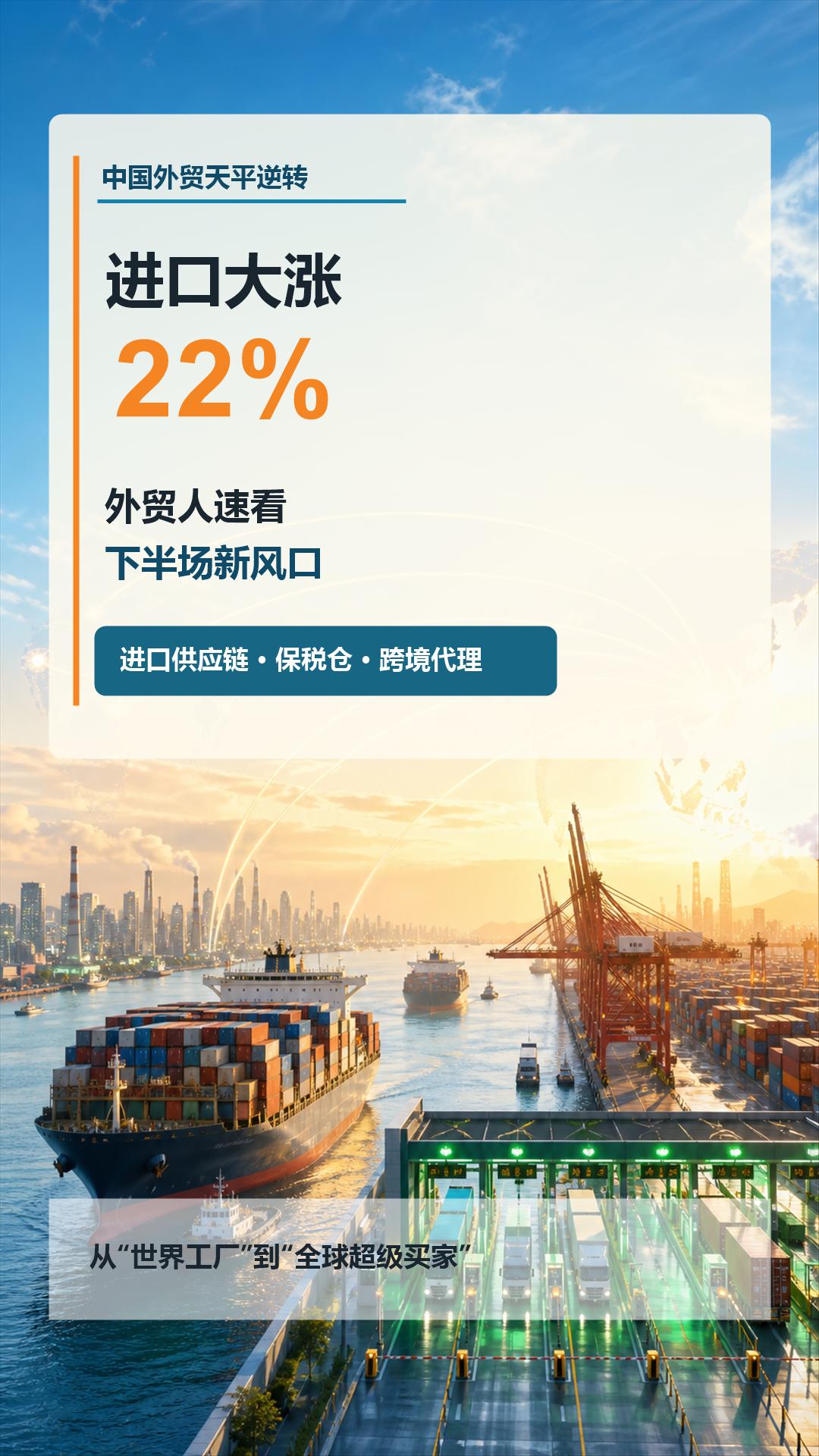
 China's foreign trade sees a turnaround: imports surge by 22%! Foreign trade professionals should quickly take note of the new trends in the second half of the year
 What Does a Global Traffic Ecosystem Service Provider Do? What Are the Differences from a Single Advertising Agency

Related Products
 EasyCamp SaaS Smart Website Marketing SystemE-Yingbao SaaS Smart Website Marketing System: AI-powered, zero-code website building. Rapidly launch multilingual independent e-commerce sites in just 10 minutes. Global server acceleration and AI-driven SEO optimization empower businesses to efficiently connect with global markets. The seamless integration of technology and user-friendly operation makes building e-commerce sites incredibly simple.
 AI+SEM Intelligent Advertising Marketing SystemAI+SEM drives intelligent ad creation, empowering full-funnel precision advertising marketing. The system automatically generates weekly/monthly reports, AI recommends keywords and target countries, monitors core metrics in real-time with intelligent alerts, and enables one-click high-conversion ad solutions to help quickly acquire customers and improve ROI.
 AI+SEO Dual Engine Optimization ServiceEasyWin AI+SEO Dual Engine Optimization System leverages AI-powered keyword mining, content generation, and comprehensive technical optimization to help foreign trade enterprises acquire high-quality organic traffic, significantly improving search rankings and conversion rates.
 AI+SNS Social Media Marketing SystemYingbao AI+SNS Social Media Marketing System - Precision social capture for the social media era. Supports one-click content synchronization across major platforms like Facebook and LinkedIn. AI intelligently rewrites posts for enhanced relevance. 24/7 AI customer service and user profiling analysis empower businesses to efficiently expand into global markets.
 AI+SEO营销解决方案易营宝AI+SEO营销解决方案,通过AI批量写作、智能生成TDK、精准关键词扩词等功能,全面优化网站SEO效果,提升流量与转化率。助力企业构建高效智能网站新生态。
 AI+SEM Advertising Marketing SolutionsAI+SEM Advertising Marketing Solution leverages AI technology to deeply empower SEM ad campaigns. It automatically generates weekly/monthly reports using AI, presenting account data across multiple dimensions for comprehensive insights into campaign performance and trends. The system precisely recommends keywords and target countries, intelligently generates high-conversion ad copy, and enables one-click activation of efficient campaign plans to help businesses rapidly acquire customers. Simultaneously, it monitors core metrics in real time, intelligently identifies abnormal fluctuations, and issues timely alerts to ensure stable, high-return advertising results.
 Domain Name ServicesEasyWin provides professional domain name services, including intelligent queries, one-stop registration, brand protection, and full lifecycle management, helping businesses build a digital brand image.
 EasyOperate B2C Cross-Border E-Commerce Platform & Independent WebsiteEasyStore B2C Cross-border E-commerce Independent Store is an intelligent website building and cross-border e-commerce integrated solution independently developed by EasyStore Information Technology (Beijing) Co., Ltd. The system is specially designed for small and medium-sized as well as large export enterprises, integrating 'website building, operation, marketing, advertising, and conversion' into one, helping enterprises quickly establish cross-border e-commerce independent stores to achieve brand globalization and global sales growth.
The platform supports multiple languages, multiple currencies, and multi-channel marketing, with built-in AI intelligent translation and SEO optimization systems, suitable for mainstream markets such as Southeast Asia, Europe and America, Latin America, and the Middle East, assisting Chinese manufacturing enterprises in efficiently deploying international e-commerce strategies. SSL证书易营宝提供专业SSL安全证书服务,包括单域名和泛域名证书,确保网站数据传输加密、身份验证和完整性保护,助力企业建立安全可信的在线业务环境。









